the image linked to by the post is the Pangram LLM-detection report of paragraphs in the first screenshot below, reading “100% AI”. in lieu of alt text for the screenshots below, I suggest scrolling through @eicker@lemmy.world’s profile and lemmy.world/comment/26323310, which the screenshots are of. Look at the vote counts.
the image linked to by the post is the Pangram LLM-detection report of paragraphs in the first screenshot below, reading “100% AI”. in lieu of alt text for the screenshots below, I suggest scrolling through @eicker@lemmy.world’s profile and lemmy.world/comment/26323310, which the screenshots are of. Look at the vote counts.
As he’s writing, he notices the handwriting of the text is the same as one of the other monks. He realises that all the bibles they’ve been copying from are, themselves, copies, and the original text must be being kept safe somewhere else. But as he writes, he makes a small spelling mistake, and starts to wonder how many other mistakes are in all the copies he’s looking at.
He brings these issues up with the head monk, and he agrees it’s a possibility. To settle their nerves, he tells the monk that he will examine the original text and look for any errors, then report back and try to fix the copies they’ve written thus far.
The next day, the monk goes to ask the head monk how things are, only to see the head monk crying at his desk with the original bible text open next to him.
“What’s wrong? Was there a mistake?”
“It says celebrate.”
As he’s writing, he notices the handwriting of the text is the same as one of the other monks. He realises that all the bibles they’ve been copying from are, themselves, copies, and the original text must be being kept safe somewhere else. But as he writes, he makes a small spelling mistake, and starts to wonder how many other mistakes are in all the copies he’s looking at.
He brings these issues up with the head monk, and he agrees it’s a possibility. To settle their nerves, he tells the monk that he will examine the original text and look for any errors, then report back and try to fix the copies they’ve written thus far.
The next day, the monk goes to ask the head monk how things are, only to see the head monk crying at his desk with the original bible text open next to him.
There are a few nuances to my approach, but the key detail is that I wanted it to also work in a browser so I needed the ability to build to a wasm to be used in js.
Signal libraries don’t offer browser based capabilities and so I created this to target web aswell as native.
I wanted to implement the Signal protocol for a series of secure messaging apps I’m working on, so I built this project to test and use in my own work. It’s still far from finished, but I think it’s at a stage where it’s worth sharing with the community.
IMPORTANT DISCLAIMER: This project is not professionally audited and is not production-ready. I do not recommend anyone use this in their own code yet. It is provided strictly for testing, experimentation, and demo purposes. I used AI as an assistant to help build this, so double-check everything before taking it seriously.
Spec Alignment: The goal is to fully align with the official Signal protocol spec.
Testing: It includes unit tests, but due to WASM testing limitations, I also added a Storybook-like UI to run and test it directly within a browser environment.
The impementation here is being used in a few experimental messaging apps (similarly unaudited and unreviewed):
I am also working towards adding it to an open source project soon as seen at: github.com/positive-intentions/chat for e2e open-source transparency in the implementation.
Vor dem Hintergrund hoher Mieten plus Nebenkosten sowie den Diskussionen um Besitz- und Eigentumsverhältnisse bzw. Enteignungen, Umbauten für (mehr) Barrierefreiheit und Nachhaltigkeit sowie den nötigen Neubau kommt mir ein Aspekt in der Diskussion gefühlt zu kurz:
Was macht ein nahezu ideales, aber dennoch realistisches Zuhause für euch aus und wie/wo setzt ihr an für euren eigenen Maßstab? Denkt ausnahmsweise nur an euch, absolut egoistisch ohne jede Rücksicht.
Ich schreibe unterhalb von diesem Beitrag gleich einen Superkommentar unter dem wiederum Stichworte auftauchen die mir einfallen und die ich darunter gern mit euch diskutieren würde. Ihr könnt gerne eigene ergänzen.
Es wäre aber schön wenn die Übersichtlichkeit erhalten bleibt und wir uns auf Aspekte beschränken, die bisher nur bedingt oder gar nicht mitentscheiden werden können. Stellt euch vor ihr seid im passenden politischen Gremium oder die entscheidende Stelle in der Verwaltung und könnt dort die verbindlichen Rahmen für die Förderung von jedem Neubau vorgeben bzw. in eine bestehende Wohnung ziehen, die das bietet was ihr euch wünscht.
Not so long ago, I made a post here about joining Mobile Linux club with my Pixel 3a XL. Back then, some people (shoutout to @Shatur@discuss.tchncs.de) asked me to share my experience after a while of use.
A lot of it will apply to all mobile Linux, while some points are rather device-specific.
There we go!
Quick recap of the setup
Phone: Google Pixel 3a XL (google-bonito)
OS: Nura (formerly known as postmarketOS) v26.06 - stable
DE: Plasma Mobile
The Good
All phone features do work. Calls, SMS, Mobile data are all operational. Calls do wake up the phone, as intended.
Wireless connectivity works great. Both Wi-Fi and Bluetooth are fully functional, and my Bluetooth headphones connect just fine (and there’s even a Linux-native app for them made by a cool person!).
Battery life, particularly idle, is incredible. On idle, the Pixel battery lasts almost a week, and it does survive a day of moderate use.
The collection of mobile-friendly Linux apps is larger than I expected. Many other apps can also work with simple workarounds, like putting the phone in landscape mode. Support of common open-source media software (Navidrome, Jellyfin…) is very good.
The controls are mostly intuitive to any Android user. Plasma didn’t reinvent the wheel here: for the most part, the controls are instantly familiar. There are some annoying exceptions, though, like using swipe up to close apps, but somehow not the app drawer.
The design is consistent and customizable. You can have all the same icons and menus as in desktop Plasma, and yet somehow they sit just right in the mobile phone design. You can customize the look with third-party styles, colors and icons, many of which are available both for desktop and for mobile. This way, I can get uniform design between both my PC and my phone, which is mind-blowing at first.
Waydroid support is built in. You can run Android apps out of the box. There are limitations - not every app will work right, and running Waydroid in the background drains a lot of battery - but most Android apps run well and even send notifications to the main notifications menu.
It is Linux, just the way you know it. If something works in desktop Linux, it should work here too. For example, I recently switched the mirrors (more on that later) through CLI and it reflected in Discover app store. I can type “sudo reboot” - and it does indeed reboot. All those little things work here. It’s Linux, you already know it.
SSH support. You can easily SSH to your phone and do whatever you want. Awesome if you run a mobile server, very useful when you just want to manage your phone from your computer. Works very well.
The Neutral
Linux phone is boring - but intentional. It is there to do exactly what you tell it to. Answer emails? Done. Check messages? Alright. Make a call? No problem. Launch a game? Will do. Much in the spirit of Linux philosophy, the phone will do exactly what you tell it to - and not a tiny bit more. Combine that with the same philosophy on the side of apps, as well as limited entertainment options - and you get a very, very boring phone. For many, it will be a huge advantage - but if you’re used to randomly binge on your phone for a bit of entertainment - this ain’t it. You’ll only address this phone with a clear intent of doing something.
There are things about design philosophy that do differ from Android - and not everyone will like it. For example, when you invoke one app from the other on Android, you have to go back to the source app, while on Plasma it opens as a “new window” and you can select the source in the active app menu. There is also no system-wide way to go “back”, and the respective gestures don’t exist. Overall, I like Android way more, but there are neat features here, too.
The Bad
The phone feels sluggish. I don’t know whether it’s specific to Nura, Plasma, or if it’s just Pixel 3a being old, but the system often doesn’t feel snappy at all. It doesn’t freeze, but something doesn’t feel right.
Some software is very limited. Nura in particular is based on Alpine, which is already not the first pick for a mobile/desktop distro. Add ARM to the mix, and you have a very poor selection of certain applications. For example, I could not find VPN software that would work on this phone in my heavily controlled jurisdiction. And it’s just my personal pain point - there’s plenty of software that simply isn’t available.
Notifications are hit or miss. Often times, notifications didn’t come from inactive apps until I opened them. This made me miss important messages, and it is unacceptable for such a device.
Some features need fiddling. For example, mobile data didn’t work out of the box or with the GUI settings, so I had to dive into setting the modem via CLI. It worked at the end, though.
Browser options are generally quite bad. Browsing on mobile Linux is generally less than enjoyable. Angelfish is almost good enough, and the rest falls short very quickly.
Official mirrors can be geographically restricted. As postmarketOS changed name and domain to Nura (nura.eco), their new domain effectively blocked me out. Combine that with lack of VPNs - and it made me change to alternative mirrors to restore update functionality. Given that these are official mirrors, this is not great.
Overall, it was a blast the first week I played around with it, but after the novelty had subsided, all the unpolished and raw parts of the system have hit me quite hard. Now, I’d rather quickly pop my Android phone to do what I actually want to do, and keep Linux phone for experimenting and helping some development. The system feels like it’s still far from prime time, but I’m happy I tried nonetheless. The enthusiast part of me is satisfied.
We’ll see how it goes from then on.
What is your experience daily driving Linux on a phone? Is there anyone with mightier devices running the system, or Mobian/other Linux enthusiasts? How is Linux working for you?
Most venoms are proteins or other large molecules. Antivenom is prepared by injecting small amounts of the venom into an animal, and when the animal’s immune system produces antibodies that target the venom, we extract them and refine them. So antivenom is just antibodies that target venom.
Can we create a vaccine that makes antivenom antibodies inside a person’s body, and have their immune system retain memory of the venom? It could be done by microdosing venom, or with compounds that are similar to the venom, but less harmful.
Edit for clarity: Microdosing is not my main point. I’m talking about whether antivenom can operate like a vaccine. Current route of antivenom: Venom is injected into another animal in small, controlled amounts -> Animal’s immune system produces antibodies -> Antibodies are extracted and refined -> Antibodies are used as treatment for a person who was envenomated Hypothetical vaccine route of antivenom: Compound similar to venom is injected into people like a vaccine -> Person’s immune system produces antibodies that target this compound, and will also target venom -> Person retains lasting immunity against venom, similar to immunity against diseases
They’re incapable of adaptation and adoption, like grandma who doesn’t want an iPhone because her touch tone landline telephone still works just fine and is familiar.
They’re incapable of adaptation and adoption, like grandma who doesn’t want an iPhone because her touch tone landline telephone still works just fine and is familiar.
Though the actress didn’t announce her departure from the spotlight until a career retrospective Instagram post in 2024, she told CBN that she actually made the decision to retire all the way back in 2020 — although, she did participate in the press run leading up to the release of “Ant-Man and the Wasp: Quantumania” in 2023. That was Lilly’s fourth live-action appearance as Hope van Dyne, a.k.a. The Wasp, and her final role in a narrative feature to date.
Though the actress didn’t announce her departure from the spotlight until a career retrospective Instagram post in 2024, she told CBN that she actually made the decision to retire all the way back in 2020 — although, she did participate in the press run leading up to the release of “Ant-Man and the Wasp: Quantumania” in 2023. That was Lilly’s fourth live-action appearance as Hope van Dyne, a.k.a. The Wasp, and her final role in a narrative feature to date.
Imagine a scenario where you are lending a not super tech savvy (maybe a little gullible) friend or relative your old gaming PC that already has a bunch of games installed and you want to prank them and scare them a bit by secretly modding the game.
What mods would you choose?
I thought this could make for a fun discussion in the lead up to Halloween. Kind of similar to finding a haunted copy of a game urban legend scenario.
The image attached to this post is from the From The Fog mod for Minecraft.
I considered including the Sirenhead mod for Fallout 4 but I don’t know if it would feel too out of place in the Fallout universe.
While true, imagine taking tens of billions in US military and financial aid, unlimited geopolitical support, dragging the US into a war and then saying this shit out loud about your ally.
While true, imagine taking tens of billions in US military and financial aid, unlimited geopolitical support, dragging the US into a war and then saying this shit out loud about your ally.
When composing their latest offering, the creators of the futurist communism-flavored spy adventure Zero Parades: For Dead Spies had to reckon with three proverbial elephants in the room.
First, their studio’s first game, Disco Elysium, was an instant classic and critical darling that revitalized the genre of Computer Role-Playing Games (CRPGs) and set sky-high expectations for their sophomore effort.
Second, they aren’t actually the creative talent responsible for Disco Elysium, but the businesspeople who took over studio ZA/UM and fired most of its founding talent, completing its transition from an Estonian artists’ collective to a subsidiary of a for-profit company.
Third, the game’s themes, which set the ideologies of communism, neoliberalism, and techno-fascism against each other, are becoming much more salient in the political world. The U.S. government has rediscovered its zeal for hunting communists at home and abroad and revived its longstanding obsession with Cuba, billionaire tech-men are attempting to achieve immortality, various trends associated with the People’s Republic of China are trending on U.S. TikTok, and remaining neoliberals continue to tinker around the edges as Rome burns (good riddance, but still).
These looming realities create a central irony at the core of Zero Parades, which was released on PC this May. While it attempts to comment upon ideologies that are increasingly relevant in the real world, it does so without the intellectual grounding in those ideologies that the original creative team brought to the table for Disco Elysium. Instead, the new ownership ape the style and basic subject matter of their first game without fully understanding the political substance that made it compelling. In this way, ZA/UM’s new owners have taken the crystallized output of a decade of labor from a Marxist artists’ collective and repackaged it for private profit, garbling their message in the process.
The warping of the first game’s distinct perspective is apparent in the opening of each game. In the first five minutes playing Disco Elysium, you are confronted with a labor strike, hints at racism in society, and anti-police sentiment directed at your character, a detective. Meanwhile, in Zero Parades, the initial framing suggests that political change isn’t driven by the streets or the shop floor, but by the elite, secretive machinations of spies and assassins.
Well, so I looked at the first article, and found some pretty interesting things in there, so I posted it:
Media in North Korea are under some of the strictest government control in the world. […]
The North Korean government places stringent restrictions on foreign reporters, visitors, and even residents of foreign origin. Freedom of movement is severely curtailed, interactions with local people are supervised, and photography is heavily regulated. Because of this reporters often find it difficult to check stories and establish hard facts. North Korean and Western journalists have different understandings about the role of the media. (The situation is different for Russian and Chinese journalists reporting on North Korea). North Koreans expect Western journalists to behave like Soviet journalists during the Cold War, while Western journalists would like to exert the freedom of the press more widely. Researching topics like prison camps are out of bounds, and North Korean officials are often reluctant to give statements on the record. As with tourists, foreign journalists are always accompanied by minders, and any encounters with locals have been arranged.
Nothing more, nothing less. My post was removed by the moderator. Lol.
P.S.: no, I’m not posting this to PTB, since there’s no doubt in my mind about what this is. I’m just sharing this for anyone who wants to have a laugh at the lunacy.
No Escaping the Numbers. Looking past the usual spin, the fiscal data for the US government is on an unsustainable course, and this is contributing to upward creep in bond yields in the United States and across the developed world. On Friday, the Treasury confirmed that the deficit for fiscal year 2026 was approaching $2 trillion, up from $1.78 trillion in 2025, which represents an increase of approximately 12% and the third highest on record behind the COVID years. With annual interest payments rising in tow, the only escape is growth, cost-cutting, or a combination of both. Absent that, the laws of economics will inevitably reassert themselves.
Dismantling the House that Washington Built. The more remarkable takeaway is how little regard the US administration shows toward a pillar of a global economic system that it both built and continues to benefit from. In branding the IMF’s concerns illegitimate and opting out of its deliberations, the Fund is left increasingly compromised for when it needs to impose unpopular reforms on other states. The Treasury statement is unabashedly a narrative crafted for domestic political gain, one that sacrifices more diffuse and systemic levers of US power. This is definitely a trend across the Trump administration’s foreign policy posture.
Why It Matters
No Escaping the Numbers. Looking past the usual spin, the fiscal data for the US government is on an unsustainable course, and this is contributing to upward creep in bond yields in the United States and across the developed world. On Friday, the Treasury confirmed that the deficit for fiscal year 2026 was approaching $2 trillion, up from $1.78 trillion in 2025, which represents an increase of approximately 12% and the third highest on record behind the COVID years. With annual interest payments rising in tow, the only escape is growth, cost-cutting, or a combination of both. Absent that, the laws of economics will inevitably reassert themselves.
Dismantling the House that Washington Built. The more remarkable takeaway is how little regard the US administration shows toward a pillar of a global economic system that it both built and continues to benefit from. In branding the IMF’s concerns illegitimate and opting out of its deliberations, the Fund is left increasingly compromised for when it needs to impose unpopular reforms on other states. The Treasury statement is unabashedly a narrative crafted for domestic political gain, one that sacrifices more diffuse and systemic levers of US power. This is definitely a trend across the Trump administration’s foreign policy posture.
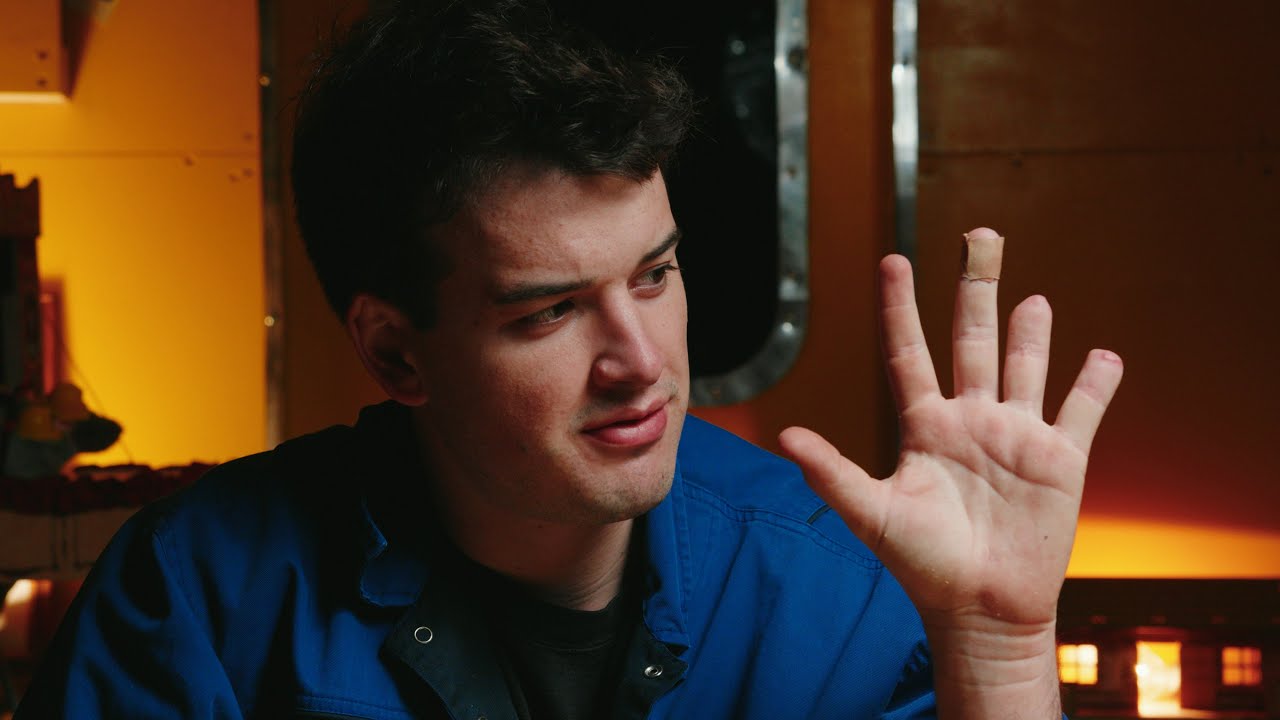
A surprisingly vivid account of this man’s accident and aftermath. Worth a watch if you want to feel what it’s like to lose bits of you in such circumstances.
A surprisingly vivid account of this man’s accident and aftermath. Worth a watch if you want to feel what it’s like to lose bits of you in such circumstances.
Canada is making big strides toward a sovereign space capability.
Ukraine’s Starshield satellite terminals stopped working after a still-unexplained order came from inside the White House, and Canada has spent years quietly building its own military space network like radar satellites, Arctic communications, and its own rocket launch pads. I trace Canada’s RADARSAT constellation, its new Telesat Lightspeed Arctic network, and a government document that literally says the goal is to “augment and replace” America’s WGS system.
This is a great video not just about Canada but about all allies of the US right now needing to rethink space capability in the wake of Elon Musk’s bullshit.