0

White Phosphorus Case: Legal Violations of International Conventions in the Face of Incendiary Weapons

خبرگزاری میزان پرونده فسفر سفید؛ نقض‌های قانونی کنوانسیون‌های بین‌المللی در مواجهه با سلاح‌های آتش‌زا www.mizanonline.ir
preview

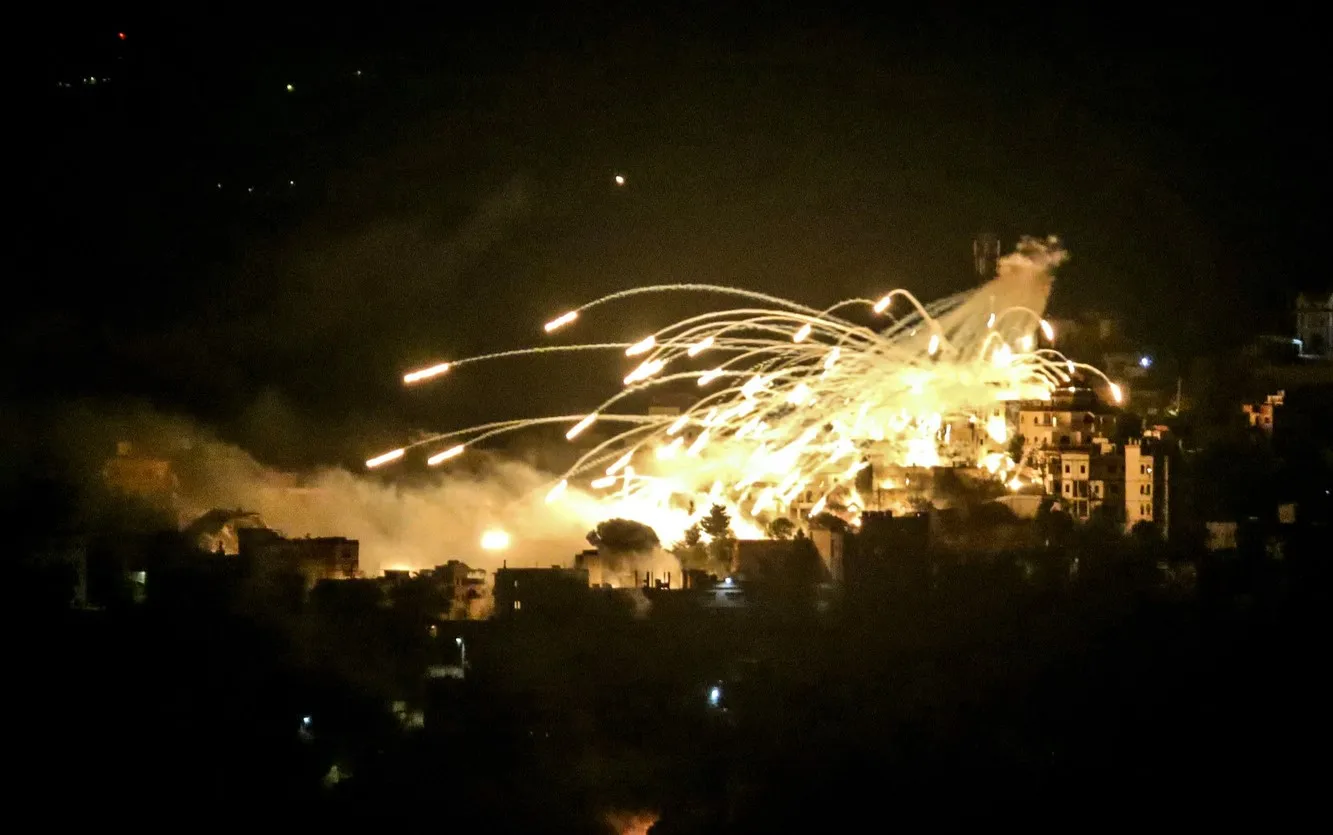
Human rights organizations published a 45-page report on the registration of 23 cases of the Zionist regime’s army of white phosphorus ammunition in southern Lebanon and called for the development of new international laws to contain these destructive weapons.

Human Rights Watch and the International Human Rights Clinic of Harvard Law School said in a recent report published that the Zionist army’s recent use of white phosphorus ammunition in Lebanon highlights the need to develop new international law to monitor and control these destructive weapons.

The groups called on countries to address the issue at a one-month disarmament meeting of the UN General Assembly, which is scheduled to be held in October 2016 (September/November 1405) in New York.

This 45-page report titled “Unreservable Burning: Inhuman Consequences of White Phosphorus Ammunition and the Need for Stronger Laws” has documented the ۲۳ approved use of these ammunition in southern Lebanon in the March period (Esfand/Farvardin) to May 2016 (May/Khordad 1405). The report also describes the horrific damage that the ammunition has caused during the armed conflict in recent years.

Ammos containing white phosphorus, which are exposed to oxygen by their content, are currently not subject to any specific treaty or treaty to control and monitor.

Bonnie Ducherty, senior arms consultant at Human Rights Watch and expert at the Harvard School of Law Clinic for International Human Rights, said White phosphorus ammunition can cause very painful burns and cause lifelong physical, psychological, and socio-economic damage. Countries must condemn the continued use of white phosphorus ammunition, call for further international dialogue, and ensure that international law appropriately addresses the unacceptable human consequences of these weapons.

The findings of this report are based on legal analysis, open-source research, 16 in-person and remote interviews, monitoring diplomatic processes and library studies.

Other uses of white phosphorus ammunition that have been reported since the year 2000 are the use of the use by the Zionist regime in Gaza during the years 2008 to 2009 and 2013; the use of the US-led coalition forces in Iraq and Syria in 2017; the use of the coalition forces led by the United States in Iraq and Syria in 2017; the use of the coalition forces led by Saudi Arabia in Yemen.

White phosphorus ammunition that explodes in the skies of residential areas are considered non-discriminatory weapons, meaning they are unable to separate the military and civilians, and therefore violate the general principles of international humanitarian law. However, despite the fire-tracking effects of these ammunition, white phosphorus is not subject to the Third Protocol of the Convention on Conventions (CCWs) adopted in the 1980s, which is dedicated to the provisions of incendiary weapons.

This protocol defines incendiary weapons as weapons designed primarily to create fire and burn people. This definition includes weapons designed for other purposes.

It doesn’t, even if they create the same effects of fire. White phosphorus ammunition is also not included in this category, as the main purpose of their design is to create a cover (smode) or lighting for military operations.

Human rights organizations assess white phosphorus ammunition based on the Martens principle; the principle in international humanitarian law that stipulates that in the absence of a particular treaty on a subject, civilians and military are protected by the principles of humanity and the requirements of public conscience.

The groups said in their report that the use of white phosphorus ammunition is an example of the use of the Martens principle. Inhuman and difficult wounds of treatment from these weapons are inconsistent with the principles of humanity. White phosphorus can burn people’s bodies to the bone, and the remaining particles in the wound may flare up again when removing the dressing and in contact with oxygen.

Protests by countries, international organizations, human rights groups and medical professionals show that the use of these ammunition is inconsistent with the requirements of public conscience. They stressed that in order to address these issues, stronger and more concrete international law is needed.

Dutchmant said diplomats, doctors, UN inspectors and others have expressed disgust with the brutal injuries caused by white phosphorus ammunition. Countries have already ratified treaties on toxic gases and blind lasers because they were inhumane and inconsistent with public conscience. They should take the same approach on white phosphorus ammunition.

Because white phosphorus ammunition is designed for use because of their burning capability, they are not considered chemical weapons and are not covered by the Chemical Weapons Convention.

Much of the debate on white phosphorus ammunition has been conducted under the supervision of the Convention on Convention on Convention. Dozens of countries have condemned the damage and called for exclusive discussions on the issue.

End of message/

0

Zionist regime's attacks on Lebanese hospitals

خبرگزاری میزان تداوم حمله‌های رژیم صهیونیستی به بیمارستان‌های لبنان www.mizanonline.ir
preview

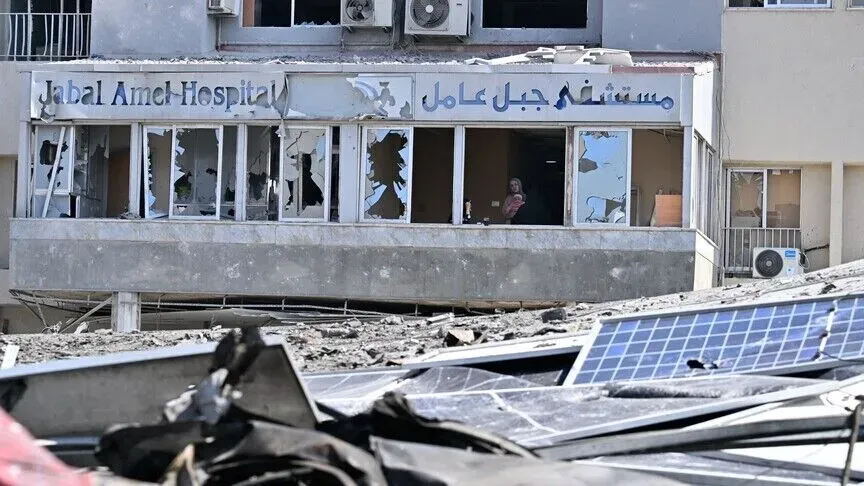
The Zionist regime, which has always considered hospitals as targets of the attack, again destroyed another hospital in southern Lebanon in a clear crime.

Mizan News Agency -

Lebanese media reported that the Israeli army set fire to a hospital in the south of the country.

The media announced that the Zionist military set fire to the hospital in the town of Mis al-Jabal in the Arayoun area (south of Lebanon).

The attack took place despite the so-called “Charcoub” agreement reached between Lebanon and the Zionist regime in June.

The agreement included provisions for the gradual withdrawal of Zionist forces from Lebanese territory and the deployment of the Lebanese army in areas that were evacuated by the occupying regime.

However, after the conclusion of the agreement, the Zionist military remained in several areas of southern Lebanon and continued to carry out attacks.

Earlier, the Israeli army targeted the Ghandor Hospital in the region of the Al-Nutabiyah district during attacks on southern Lebanon. The airstrike caused the complete destruction of the four-storey medical center.

Recent attacks on Lebanese hospitals are not the first examples of the destruction of medical centers in southern Lebanon. In several reports, human rights organizations have documented the destruction of health infrastructure in Lebanon over the past months and years.

According to data analyzed by the World Health Organization (WHO), the military invasion of hospitals, emergency bases and medical staff in Lebanon has paralyzed the bulk of emergency medical services in the south.

UN reports show that direct firing on aid forces, destroying ambulances and removing key hospitals from the service circuit have formed a replay pattern of pressure on Lebanon’s civilian infrastructure.

Analysts believe that targeting medical centers is part of a strategic doctrine for the collapse of the demilitarization and the deprivation of survival facilities in war zones.

From the perspective of International Humanitarian Law (IHL), hospitals and medical centers under all circumstances have absolute immunity and should not be targeted under any military attack.

According to the four Geneva Conventions (1949), in particular the Fourth Convention on the Protection of Civilians, as well as Additional Protocols, deliberate attacks on hospitals and medical units are prominent examples of war crimes.

The International Committee of the Red Cross (ICRC) has repeatedly emphasized that they are under the umbrella of international law, based on the principle of distinction and the principle of proportionality, medical and relief facilities, even if there are adjacent conflicts.

Article 8 of the Rome Statute (International Criminal Court - ICC) has also explicitly criminalized the deliberate conduct of attacks against buildings, materials, medical units and medical transportation. International lawmakers assert that no security justification or reciprocal claim can protect the deprivation of legal immunity from medical centers, and that the international community is obliged to prosecute the perpetrators of such actions.

The official statistics of Lebanon show that since March 2nd, the Zionist regime’s attacks on the martyrdom of at least four thousand and 386 people and the injury of 12 thousand and 407 others have been injured.

The Lebanese Ministry of Health announced that the total number of casualties caused by the Zionist regime’s attacks has reached eight thousand and ۹۵۳ martyrs and 30 thousand and 643 injured since October ۱۶ ۱۴۰۲.

End of message/

0

SPYON – deutsche Comedy-Serie auf ZDFneo

ZDF SPYON – deutsche Comedy-Serie auf ZDFneo - jetzt streamen im ZDF! www.zdf.de
preview

Fünf speziell begabte Azubis kämpfen sich zwischen streng geheimen Operationen und deutschem Behördenmief durch die Ausbildung zum Spion. Doch als Ausbilder Voss seiner Chefin Haberland und seinem Kollegen Kocabay seine Auserwählten für die praxisnahe Ausbildung zum Spion – oder wie der Geheimdienst sie sexy nennt: Verwaltungsfachwirtinnen und -wirte – vorstellt, können sie es nicht fassen. Welche Gurkentruppe hat Voss denn hier zusammengestellt? Steckt in diesen fünf besonderen Rohdiamanten wirklich das Zeug zu einer perfekt funktionierenden Geheimdienstmaschine?

Fünf speziell begabte Azubis kämpfen sich zwischen streng geheimen Operationen und deutschem Behördenmief durch die Ausbildung zum Spion. Doch als Ausbilder Voss seiner Chefin Haberland und seinem Kollegen Kocabay seine Auserwählten für die praxisnahe Ausbildung zum Spion – oder wie der Geheimdienst sie sexy nennt: Verwaltungsfachwirtinnen und -wirte – vorstellt, können sie es nicht fassen. Welche Gurkentruppe hat Voss denn hier zusammengestellt? Steckt in diesen fünf besonderen Rohdiamanten wirklich das Zeug zu einer perfekt funktionierenden Geheimdienstmaschine?

0

Ghalibaf's response to General Dan Kane: What was once a terrible nightmare for you has now become a reality.

خبرگزاری میزان پاسخ قالیباف به ژنرال دن کین: آنچه روزی برایتان کابوسی وحشتناک بود، الان به یک واقعیت تبدیل شده است www.mizanonline.ir
preview

Cross posted from lemmy.wtf/post/49244090

In a message in response to the chairman of the Joint Chiefs of Staff of the United States Armed Forces, the Speaker of the Islamic Consultative Assembly wrote:

“What was once a terrible nightmare for you has now become a reality, deal with it.”

General Dan Kain, chairman of the Joint Chiefs of Staff of the United States Armed Forces, had previously said at the U.S. Army’s Airspace and Cyberspace Conference:

“From now on, we must base the assumption that our units and military formations will be hunted by autonomous systems, will be disrupted across the frequency spectrum and will be tracked in real time.”

Mohammad Bagher Ghalibaf, Speaker of the Islamic Consultative Assembly, in response to General Kain, wrote on his account:

The era when your F-35s and F-15s are hunted 
and you have to report them damaged ✍️
has already begun. 
What was once pure nightmare fuel is now the daily
reality. Live with it.

Link

0

[Request] custom emotes, attachment resizes, & <img>

preview

Summit doesn’t show this tag correctly at the moment. Any chance this can be added to the roadmap? I didn’t see this already on there, apologies if it already is.

As viewed on:

Quokkau (Pylova/piefed fork): quokk.au/comment/6050921

Dbzer0 (lemmy): lemmy.dbzer0.com/post/75683239/28189796

Summit doesn’t show this tag correctly at the moment. Any chance this can be added to the roadmap? I didn’t see this already on there, apologies if it already is.

As viewed on:

Quokkau (Pylova/piefed fork): quokk.au/comment/6050921

Dbzer0 (lemmy): lemmy.dbzer0.com/post/75683239/28189796

0

RPG Playstyle Survey

Google Docs The Questing Beast RPG Playstyle Survey docs.google.com
preview

Questing Beast has a RPG Playstyle Survey. Please share. All data will be released once survey closes.

Knave and Maze Rats were created by Questing Beasts. I really like the tables in Knave 2E

Questing Beast has a RPG Playstyle Survey. Please share. All data will be released once survey closes.

Knave and Maze Rats were created by Questing Beasts. I really like the tables in Knave 2E

0

What is this hole for at the bottom of this keyboard/mouse combo?

preview

It’s a Rii Mini Keyboard i4, and my concern is that it’s a microphone. I just noticed the hole and think I’m probably wrong in what it is considering how big a deal it would be if it was a mic that isn’t advertised.

What could this hole be for or what is it? Thanks in advance, hope this doesn’t violate any rules.

0

Rocket Lab Electron "Owl By The Dozen" Launch Thread

preview

Owl By The Dozen

Scheduled for (UTC) 2026-09-19 03:22:00
Scheduled for (NZST) 2026-09-19 15:22:00
Launch site Rocket Lab LC-1B, Māhia Peninsula, New Zealand
Booster recovery No
Launch vehicle Electron + Curie
Customer Synspective
Payload StriX-12
Mass 100 kg
Target orbit LEO
Stream Link
Rocket Lab (official) www.youtube.com/watch?v=AnN8Pj8WvSo
Space Affairs www.youtube.com/watch?v=K3B0jMxH-Ug
The Launch Pad www.youtube.com/@TheLaunchPad/streams

Stats

  • 17th launch for Rocket Lab in 2026
  • 96th overall launch for Rocket Lab

Payload info:

Rocket Lab mission page

NextSpaceflight:

StriX-9

This is the sixth of a bulk buy of 10 Electron launches by Synspective to deliver their StriX satellites to low Earth orbit. StriX satellites can collect data with a ground resolution of 1-3m and a swath width of more than 10-30km. Each Electron launch will deliver 1 StriX satellite into orbit. This will be the overall 12th StriX satellite launched by Rocket Lab for Synspective.


Previous mission: Happily Ever Faster

Next mission: Owlright, Owlright, Owlright

0

We need a Worth rating with a recommendation how much money a game is worth too

preview

I’m currently watching a Marvel Wolverine review bash video, as this is the cool thing to do right now. I don’t even own a Playstation 5. Why do I watch that video? Well first its a creator I like to watch and scondly, I am fascinated by the topic of not liking AAA games. Sometimes games aren’t bad, if the price is good. So the game isn’t actually that bad if you wait for a sale? Usually ratings are tied to the price of the game, and sometimes not.

And it got me thinking… we need a rating that does exactly that, a price recommendation when the game is worth to buy. In example an old classic might get a good rating, because the game itself and the emulation is good. But it might have a too high of a price and they did not add features or updated it to modern audiences, that it feels like a useless “remaster”. Or a game itself feels redundant, because there are better options for cheaper price, then the worth it price could be low. But that does not mean the game itself is bad, regardless of its actual price.

Some personal examples with games on Steam (I will round up prices to have whole numbers only):

Final Fantasy 7 (original version, not remake)
Rating: 10/10
Worth the Price: 10 €
Price on Steam: 13 € (currently under 6 €)

Final Fantasy 7 Remake Intergrade
Rating: 9/10
Worth the Price: 30 €
Price on Steam: 40 € (currently 10 €)

I just noticed that I evaluated the worth price higher, because I purchased the games when it was more expensive. What do you think?

0

[FoAR] Foundations of Amateur Radio - Monitoring radio spectrum around you #podcast

preview

Previously I’ve talked about using radio spectrum monitoring to detect lightning to potentially protect your equipment. This triggered an email from Nick VA3NNW, who pointed out that AM demodulation of “one point twenty-one jiggawatts”, is really a red-herring, and indeed it is. Nick went on to point at another approach, which nudged things along.

So, let’s start with the herring, not sure about red, I prefer mine fresh, raw, and covered in finely cut raw onion. If you know, you know. If you don’t, think sweet fairy-floss. For extra culinary points, pair it with fresh crusty white bread, preferably still warm from the bakery, and slather it in butter. Yum! Beats bacon any day.

Oh, before I forget, pickled herring, lovely, fish aside, in terms of flavour and texture, not in anyway related to fresh herring, just so you know.

Where were we, ah, uh radio.

Before jumping back in, “squelch” is a radio term, it translates to “subdue forcibly”, in our case, we’re using it to describe a process where radio signals below a certain level, or volume if you like, are suppressed, so you’ll hear nothing until the level reaches above the specified level.

This is useful in all manner of scenarios where there’s background noise. In amateur radio, squelch is used on VHF and UHF repeaters, but on HF it often means that weak signals don’t get heard, keep that in mind next time you start diagnosing a silent radio, ask me how I know.

Anyway, my initial choice of “rtl-airband” as the tool of choice for lightning detection was based on the idea that I could use it to receive a chunk of bandwidth, then automatically apply the in-built squelch to make everything silent when there was nothing but local noise, then when lightning was afoot, noise would suddenly increase above the threshold imposed by the squelch, and I could detect that.

Nick pointed out that there’s a better tool for this, “rtl_power”, written by Kyle Keen in 2013, which can continuously monitor a whole lot more frequencies, collect them over a set period and intermittently output the power values, which can then be processed.

The tool allows you to specify which frequencies to monitor, how long for and at what resolution. This is extremely useful for exploring activity on a new band. You can use the data to create images of band activity and see what’s going on.

I have previously used it to find intermittent interference. Note that it doesn’t decode anything as such. It reports relative power levels for the spectrum you’re exploring.

As an aside, in the process of building a Docker container for rtl_power, because of course I did, it occurs to me that I often point at Docker as a solution, but I don’t think I’ve ever detailed why.

For starters, it allows you to install and test software without disrupting your local machine, so if you want to remove your experimental installation, you can, and nothing on your computer will be affected.

It also helps with security and permissions, allowing you to define what is allowed and what isn’t, helpful if you don’t trust the software you’re testing.

It allows you to run multiple versions of the same software side-by-side, something which otherwise would create a lot of hard work and head scratching.

If the software you’re exploring doesn’t exist on your version of operating system, there’s a good chance that someone has it packaged elsewhere, Docker will allow you to use that package on your system, or you can build it from source inside the Docker container and not have all the libraries and dependencies clutter your system.

There’s a thing called a “Dockerfile” … essentially a list of commands that document how something is installed. This means that you have a record on how it’s done. It means that when it breaks, you have a starting point for debugging, and because it’s a text file, you can version control it.

Then there’s the ability to automatically start a Docker container on reboot, so you don’t have to futz around with “cron” or “scheduled tasks” if you’re running that other operating system.

If that’s not enough, there’s thousands of Docker images just waiting for you to try. I will mention that I tend to build my own images, but you don’t need to start there.

So, that’s why I use Docker almost everywhere. I’d love for someone to figure out how to run Wayland applications over ssh, but I digress.

Back to rtl_power.

I realised that I don’t yet have any data on what lightning looks like specifically. What power levels does an RTL-SDR dongle report when lighting happens, what frequencies should I monitor for the best result, how often should I check, how much data should I collate in each sample … although we can check every second if we really want to, it seems to me that every minute or ten might be sufficient.

If you have opinions, or better yet, data, to share, feel free to get in touch.

I will end with a disclaimer.

I have only tasted North Sea herring fresh, so you’re on your own if you go fishing in a different ocean.

I’m Onno VK6FLAB

0

Summer Rose [RWBY] by SYTOkun

preview

cross-posted from: sh.itjust.works/post/66983183

Sourced from Pixiv. One of SYTOkun’s earlier work but I still like it. In general I love all the old fan designs for Summer’s weapon(s) from before we got her official one.

cross-posted from: sh.itjust.works/post/66983183

Sourced from Pixiv. One of SYTOkun’s earlier work but I still like it. In general I love all the old fan designs for Summer’s weapon(s) from before we got her official one.

0

Why I don't "read the article" anymore

preview

Not really sure if this is the right place to post this but I just need it written somewhere for reference when people inevitably give me shit for “not reading the article”. Here’s the thing:

  1. The only thing you’ve provided is a clickbaity title and a link that tells me almost nothing about the content of the article. This actively makes me not want to click. Include some context in your post, or add it to the title. I know you’re not supposed to “editorialize” the title, but I think it’s fair to make an exception in the case of clickbait.
  2. Site is broken/paywalled/blocking my connection or otherwise inaccessible. If you link to an Archive site, those are inaccessible 100% of the time. If you send me to Nitter, it will almost certainly be either broken or block my access. Invidious is almost always broken. Even if you pay to share a NYT link with me, they will still refuse me access until I give them an email address. Sorry, not doing it, don’t care that much.
  3. The post/article you’ve shared is just a long drawn out post with gobs of unnecessary context about a 1 or 2 sentence Xeet or Reddit post. Just share the source content.
  4. The post/article you’ve shared does not contain a source of the information at all. It’s so patently absurd that we allow publications to get away with this. They often have a couple dozen links that go nowhere except back to their own page.
  5. Advertising. I do not consent to sharing my cookie information with your 1056 advertising partners. Nor do I want to click your pop-up banner to allow “strictly necessary” (whatever the fuck that means) cookies. If I use my adblocker to remove the cookie banner without actually giving them any permissions at all so I can see the God damn page, it often breaks the page . If my ad blocker misses it, I’m just leaving .
  6. I’m not spending 1 hour watching your clickbait video. YouTube incentivizes creators to make longer videos, and so the creators will fill them with a ton of bloat to lengthen them. YouTube also very often blocks me as well, prompting me to “sign in to confirm you’re not a bot”. I’m not doing it.

In short, the modern internet just fucking blows too much for me to even bother trying to work around all this bullshit. If you link to some obscure blog from a URL I don’t recognize, I’ll probably click and read it, because those are the only selfless unmonetized publications left.

Thank you for coming to my Ted Talk.

0

The ethical cases for immigration as a human right

The Conversation The ethical cases for immigration as a human right theconversation.com
preview

Freedom of movement as a human right

To consider the moral foundations of criticisms of ICE, it is useful to first examine the arguments in favor of freedom of movement.

Several philosophers have argued for freedom of movement, often on the grounds that migration should be understood as a human right. For example, the philosopher Kieran Oberman argues that people have a basic interest in being able to move to any country in which they have core attachments, such as a job or close family members. This argument follows the claim, developed by philosophers such as John Stuart Mill and John Rawls, that individuals should be free to pursue their own life plans. They hold that this pursuit is essential to achieving self-realization.

0

“Not the Oklahoma Standard” : Lawsuit filed over abortion ban after fatal fetal diagnosis

News9.com “Not the Oklahoma Standard” : Lawsuit filed over abortion ban after fatal fetal diagnosis www.news9.com
preview

Hoffman said doctors told her her daughter would never be able to leave the hospital because of a fatal fetal diagnose.

“Which means that your baby is not compatible with life,” Hoffman said.

She said doctors gave her the option of continuing the pregnancy and providing comfort care after birth or leaving Oklahoma to terminate the pregnancy.

“The anatomy center basically told me that I had two options. I could leave the state and terminate the pregnancy, or I could carry to term where I would deliver her here, and my husband and I would just have to wait and watch her die.” Hoffman said she ultimately decided to leave the state. “So I knew immediately that that was not the option that was right for my family and my husband completely agreed with me.”

0

Are we any close to Tony Stark tech? Like a thinking AI in your home that can put up holograms and deliver your drinks from the other room and so on?

preview

Like this scene

www.youtube.com/watch?v=Qav7NJIsKL4

Like this scene

www.youtube.com/watch?v=Qav7NJIsKL4