0

[Question] Best organization to donate to?

preview

I’m looking to donate to, and am wondering what the community thinks is the best/most efficient cause. I prefer something working towards systemic change, bonus points for anything directly targeted at stopping dutch complicty. I’m considering the electronicintifada, previously donated to oxfamnovibs lawsuit to stop sensing F35 parts to Israel. Thank you!

I’m looking to donate to, and am wondering what the community thinks is the best/most efficient cause. I prefer something working towards systemic change, bonus points for anything directly targeted at stopping dutch complicty. I’m considering the electronicintifada, previously donated to oxfamnovibs lawsuit to stop sensing F35 parts to Israel. Thank you!

0

Il governo contro un libro di storia. Quando i fatti diventano scomodi

preview

Il governo contro un libro di storia. Quando i fatti diventano scomodi

@giornalismo
articolo21.org/2026/11/il-gove…
Da tre anni il ministro Valditara e gli zelanti guardiani ideologici della maggioranza sembrano ossessionati da un nemico che temono molto: l’insegnante libero e

Il governo contro un libro di storia. Quando i fatti diventano scomodi

@giornalismo
articolo21.org/2026/11/il-gove…
Da tre anni il ministro Valditara e gli zelanti guardiani ideologici della maggioranza sembrano ossessionati da un nemico che temono molto: l’insegnante libero e

-14

Sleep Microclimate & Thermal Regulation Engineering Guide (16) — HeatNap Heated Neck Pillows

preview

Hi everyone, I’m Roan Cong, Sales Manager at HeatNap. Our 10-person sleep-engineering team focuses on low-voltage carbon-fiber heating and breathable thermal microclimates (18°C–20°C) for deep sleep recovery.

Technical guide & specs: HeatNap Heated Neck Pillows (heatnap.com/collections/heated-neck-pillows)

0

Pelijournalismin legenda Niko Nirvi ei halua eläkkeelle – ”Kyllästyisin hengiltä”

Journalisti Pelijournalismin legenda Niko Nirvi ei halua eläkkeelle – ”Kyllästyisin hengiltä” - Journalisti journalisti.fi
preview

Pelit-lehteä ei ole tullut luettua varmaan 15 vuoteen ainakaan fyysisenä, satunnaisesti olen nettisivuja vilkaissut. Niko Nirvi on kyllä legenda, tykkäsin jo lapsena hänen tyylistään kirjoittaa ja pelejä koskevista näkemyksistä. Hämmentävää että hän on edelleen lehden toiminnassa mukana, mutta jos on yli 30 vuotta ollut samoissa hommissa ja tykkää, niin mitä sitä suotta eläkkeelle lähtemään.

Pelit-lehteä ei ole tullut luettua varmaan 15 vuoteen ainakaan fyysisenä, satunnaisesti olen nettisivuja vilkaissut. Niko Nirvi on kyllä legenda, tykkäsin jo lapsena hänen tyylistään kirjoittaa ja pelejä koskevista näkemyksistä. Hämmentävää että hän on edelleen lehden toiminnassa mukana, mutta jos on yli 30 vuotta ollut samoissa hommissa ja tykkää, niin mitä sitä suotta eläkkeelle lähtemään.

0

lol

preview

tweet: Millennials use “lol” like STOP at the end of a telegram lol

tumblr response: REGRET TO INFORM YOU YOUR SON HAS DIED FROM TRENCH FOOT LOL HE SERVED WITH COURAGE AND HONOR LOL PLEASE ACCEPT OUR DEEPEST CONDOLENCES LOL

tweet: Millennials use “lol” like STOP at the end of a telegram lol

tumblr response: REGRET TO INFORM YOU YOUR SON HAS DIED FROM TRENCH FOOT LOL HE SERVED WITH COURAGE AND HONOR LOL PLEASE ACCEPT OUR DEEPEST CONDOLENCES LOL

0

[vent] she doesnt love me

preview

so… yeah. heartbreak kinda sucks.

i met another trans girl earlier this year and we started a fwb situation. it was pretty good and i was in a slut phase, so i was hooking up with other people too and just having a good time. i slowly realized that hookups are kind of a lot of work and not really as fun as i was hoping, so i slowly stopped making an effort and ended up just seeing this girl semi-regularly. for a while i thought i could keep it casual, and i did, but i slowly started feeling more attached to her and that grew into full on feelings.

i didnt really want to have feelings, and things between us were supposed to be casual so i felt like if i made them known she would lose interest. so i ignored my feelings and hoped they would go away. well they didnt, they grew, and i had the niggling feeling that she didnt feel the same and ignored that too.

my feelings grew until i couldnt ignore them anymore. i thought about her all the time, i wondered what she was up to, i wanted to see her all the time, hear her thoughts, her feelings, do everyday things with her, hear about her day. i was happy to see her. i hate to say it but i loved her. but still i was so afraid because every time i love someone i get hurt and that niggling feeling was still there. so i didnt do anything for a while.

eventually i couldnt avoid it any more and told her what i was feeling. i said i was afraid of being hurt and i didnt want anything to change. it seemed like it went ok because initially she was normal. we had been seeing each other at least once or twice a week up to this point. she slowly got less responsive over text and she was never available. i didnt see her for 3 weeks and pretty much didnt hear from her at all the last week.

i texted her that i missed her and hoped she was ok. she texted back that she was doing great, that she had been having an intense fling with her friend from out of the country who was staying with her for the last few weeks and they had developed some intense feelings for each other and that she hoped i was doing well too…

i felt like i got stabbed in the chest. the last time i saw her i told her i was getting feelings and was afraid of being hurt and i barely hear from her for three weeks and she drops that on me. i dont want to relive the following exchange but suffice to say i ended things.

idk it hurt a lot. i cried for most of the rest of that day, this past sunday. i cried on the train to work the next day. i cried on my bike. i cried a little at work, even though i did my best to hold it in. i cried a little more when my best friend came over to keep me company. i cried a lot more after she left. just so much crying… im glad i did though. it didnt make it better but it was so nice to be able to express those emotions. sprinkled in there were a lot of moments when i just kinda froze in the middle of what i was doing for a minute or several, just feeling so down.

so she doesnt love me. for a while i kept trying to blame her for that somehow, to make myself angry at her for hurting me like that. i wanted to hurt her back, the way she hurt me. but… i cant. she doesnt love me or really care much about me, and i know now that she wouldnt, as much as i might want her to. somehow that helps, knowing theres nothing i can do, nothing i could have done to make her love me. she doesnt love me, and she wont, and she couldnt, and now i know. what a gift, to be free of that burden.

but fuck her though. she fumbled a baddie whether she knows it or not. its still gonna take a while but ill move past this and find people who do love me. thank fuck for estrogen because this would have been waaay harder on testosterone.

idk how to end this now. its more of a rant than i was expecting. thanks for reading if you got this far.

erinyes, the slut formerly known as applebusch

0

Asahi, Chiba - Camp 3 of my Camping Journey

preview

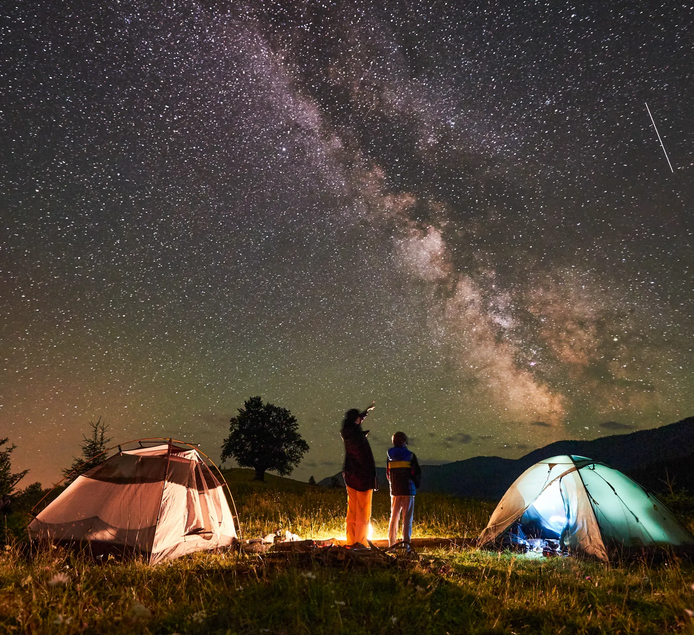
It took roughly a month for my next camping trip after my initial two day trip. I left of with an appetite to show my coworker I can get my setup beyond basic, so this one features new gear!

  • A cot, replacing the self-inflating mattress which took up a lot of space
  • A smaller (and better) pillow
  • A table
  • Cooking supplies
  • Compact Cassette Gas Burner
  • Solid Fuel firestarter
  • It’s hard to see, but there is a moving blanket under the cot, I was worried without it I could damage the tent interior.

This campsite (Sea & Sun Auto Campground https://maps.app.goo.gl/6Hpa4epBQgHGJJPR9) was quite nice, shielded from the coastal winds from all sites and I was able to pick a spot out of view of other campers. I liked the ground too.

The moving blanket gets strapped and secured atop the motorcycle bag with the blue shock cord you can faintly see in the pic when zooming in. It actually takes up a lot of space as I choose a big size.

I also prepared audiobooks of my favourite series, Spice and Wolf and started listening to that during setup and the rest of the day.

For cooking, I wanted to take a step forward, I had two cooking methods prepped, a gas cassette burner and a tiny portable grill that uses solid fuel firestarters. Instead of sourcing my food from the konbini and eat as-is, I wanted to cook a bit.

Unfortunately I absolutely fucking sucked at it lmao. I prepared some sausages and bacon, when it came time to cook, it became extremely clear, extremely fast, that a gas burner outputs WAY TOO MUCH energy and my shit burned and smoked almost instantly. I thought “ok ok, maybe not gas, lets try the other thing” and this one… is too underwhelming. Sure, it can get things warm, but these solid fuel firestarters don’t output enough energy to cook themselves. Oh well, warm sausages and half burnt bacon it is.

The night was…not good. See, I am a side sleeper, I can not for the life of me sleep on my back. But I did not know/realize that cots are not made for side sleepers. Even with my usual alcohol I could just not fall asleep, I was watching the hours go by, creeping closer to morning, and I knew I had to set down early due to an incoming typhoon hitting the area. At 4 am I tried a hail mary and just tried sleeping directly on the ground, on top of the moving blanket and… was actually able to get 1.5 hours in. Not much, but enough to make it back safely.

Coming back, lesson learned, cot is compact, but not for sleeping, need to find an alternative. I also wanted to lock in cooking. I finally realized the actual meaning of the “no fires” rule all campsites had I visited so far. It’s “no open fires”. So for the next trip I wanted to prepare a portable fire pit I’ve seen others use. I’ve also wanted to try out another tent. The popup is nice for convenience and space, but I don’t like driving with it on my back as it limits my visibility and makes me a more susceptible to wind coming in, so next post will include a new tent, yay.

Bonus Pics:

0

Zoonotic Diseases

preview

I lie here in my room, unable to exercise, unsure of when I will be well enough to sit upright for more than an hour and I seethe. I am one of countless victims of long covid, a chronic and sometimes permanent after-effect of a disease that you know well - a disease that most likely began in bats, then found its way to humans via racoon dogs or civets in a Chinese wet market. A zoonotic disease.

As of 2026 Officially reported covid deaths number over 7 million but based on elevated yearly expectations it’s estimated as many as 18 million actually died. 18 million! That’s the entire population of the Netherlands. DEAD. Billions suffered, countless millions more are still suffering and for what? Because some stupid selfish fucks couldn’t resist pleasing their delicate tastebuds (or probably in this case indulging their idiotic folk ‘medicine’).

It’s a story that has played out repeatedly. Animal agriculture, especially factory farming, is squarely responsible for: Swine flu, Bird flu, Hepatitis and Antibiotic resistant bacteria. Going further back you find the all time greats: Measles, Tuberculosis even Influenza!

Meat eaters are responsible for this. At best They allow it because they are ignorant, at worst because they are selfish and weak. Factor in all the other moral and environmental atrocities and I believe that one day we will discuss meat consumption in the same breath as slavery. Our great grandchildren will stare in horror and ask us ‘How could you?’

/rant

0

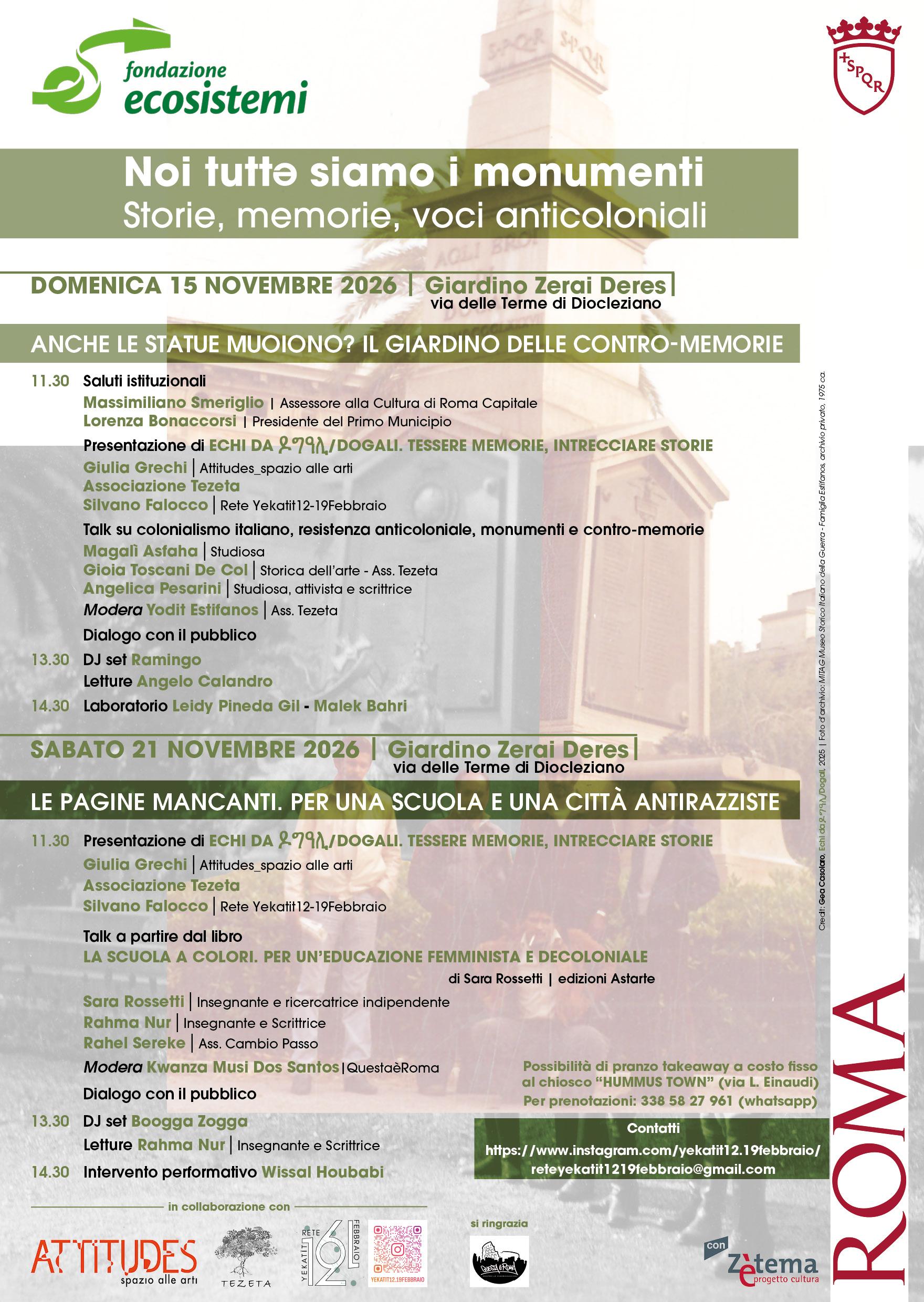
Noi tuttə siamo i monumenti - Storie, memorie, voci anticoloniali

Locandina della manifestazione "Noi tuttə siamo i monumenti - Storie, memorie, voci anticoloniali" (Roma, Giardino Zerai Deres, 15 e 21 nov. 2026, ore 11:30-16:30)
preview

Noi tuttə siamo i monumenti - Storie, memorie, voci anticoloniali
Il 15 e il 21 novembre 2026, due incontri pubblici e gratuiti al Giardino Zerai Deres di Roma per ripensare il patrimonio coloniale attraverso talk, letture, musica e pratiche artistiche, dalle 11:30 alle 16:30.
Realizzato nell’ambito delle attività della Rete Yekatit 12-19 febbraio.
Dom. 15 – Anche le statue muoiono? Il giardino delle contro-memorie.
Sab. 21 – Le pagine mancanti. Per una scuola e una città antirazziste

@Roma

0

NIS2 2027: le nuove procedure ACN e tutte le scadenze da rispettare

preview

NIS2 2027: le nuove procedure ACN e tutte le scadenze da rispettare
@lavoro
https://www.puntosicuro.it/sicurezza-informatica-C-90/nis2-2027-le-nuove-procedure-acn-tutte-le-scadenze-da-rispettare-AR-26931/
La Determinazione ACN n. 314287/2026 aggiorna registrazione, referenti, informazioni e categorizzazione dei soggetti NIS. Ecco le novità operative e il calendario degli adempimenti per il 2027.

0

Finally, an operating system for people who hate actually using their own computer.

preview

cross-posted from: reddthat.com/post/76421889

Linux doesn’t deserve this

Imagine taking the lightweight, privacy-focused appeal of Linux and completely ruining it by hardwiring AI models straight into the OS. Nobody is switching from Windows for more forced AI features.

cross-posted from: reddthat.com/post/76421889

Linux doesn’t deserve this

Imagine taking the lightweight, privacy-focused appeal of Linux and completely ruining it by hardwiring AI models straight into the OS. Nobody is switching from Windows for more forced AI features.

0

Linux doesn't deserve this

preview

Imagine taking the lightweight, privacy-focused appeal of Linux and completely ruining it by hardwiring AI models straight into the OS. Nobody is switching from Windows for more forced AI features.

Imagine taking the lightweight, privacy-focused appeal of Linux and completely ruining it by hardwiring AI models straight into the OS. Nobody is switching from Windows for more forced AI features.

0

🏔️ 🥾

preview

🏔️ 🥾

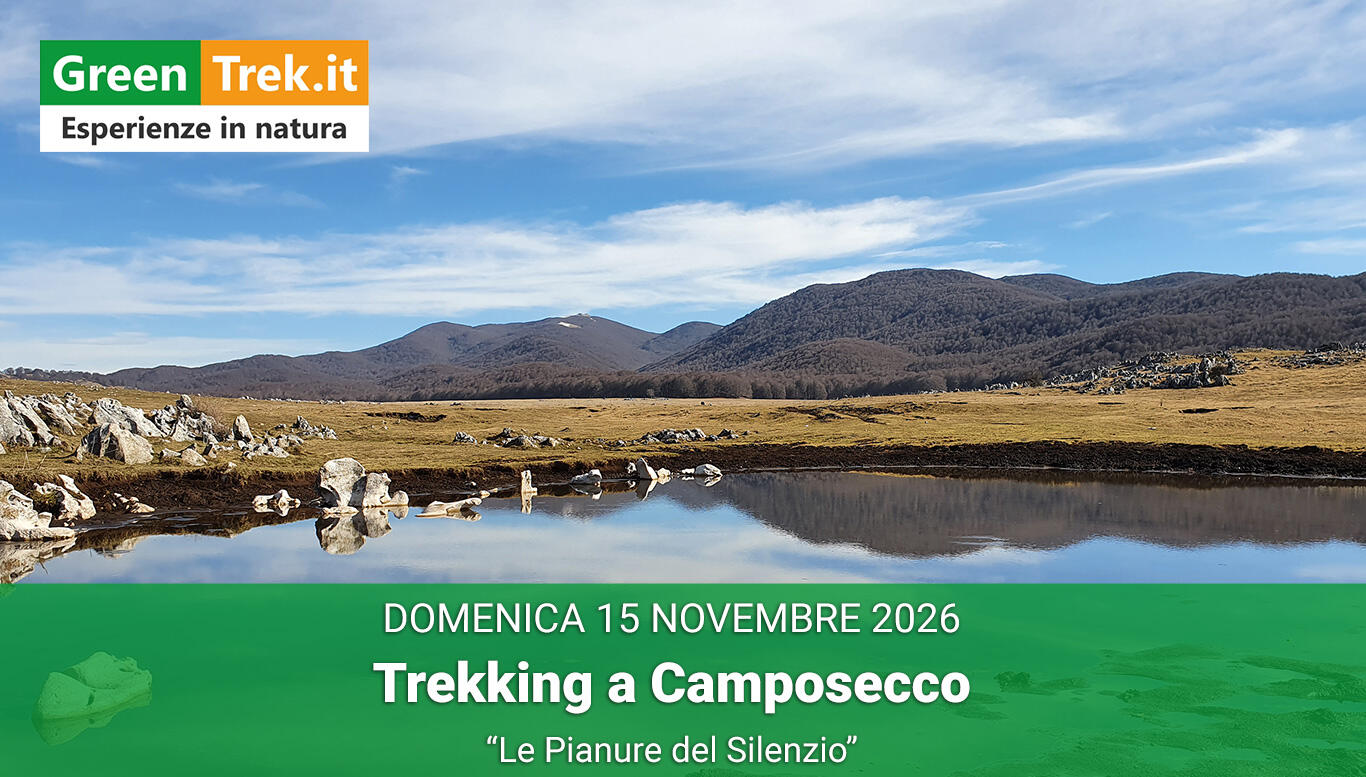
𝗘𝗦𝗖𝗨𝗥𝗦𝗜𝗢𝗡𝗘 𝗗𝗢𝗠𝗘𝗡𝗜𝗖𝗔 𝟭𝟱 𝗡𝗢𝗩𝗘𝗠𝗕𝗥𝗘 𝟮𝟬𝟮𝟲

𝗧𝗿𝗲𝗸𝗸𝗶𝗻𝗴 𝗮 𝗖𝗮𝗺𝗽𝗼𝘀𝗲𝗰𝗰𝗼 - “𝗟𝗲 𝗣𝗶𝗮𝗻𝘂𝗿𝗲 𝗱𝗲𝗹 𝗦𝗶𝗹𝗲𝗻𝘇𝗶𝗼”

La magica atmosfera dell’autunno, tra le meraviglie e i panorami di questa terra al confine tra #Lazio e Abruzzo.

Un’immersione nel silenzio, un antidoto contro lo stress e il caos della città.

𝗣𝗘𝗥 𝗜𝗡𝗙𝗢 𝗘 𝗣𝗥𝗘𝗡𝗢𝗧𝗔𝗭𝗜𝗢𝗡𝗘 𝗢𝗕𝗕𝗟𝗜𝗚𝗔𝗧𝗢𝗥𝗜𝗔
https://www.greentrek.it/escursioni/escursione-campaegli-camposecco/?mtm%5C_campaign=Pixelfed-Escursione-Camposecco-15-11-2026&mtm%5C_kwd=Escursione-Camposecco-Link-Sito-15-11-2026

@Roma@diggita.com

#trekking #escursioni #ambiente #escursionismo #escursione #montagna #montagne #natura #camminare #parco #foto #fotografia #hiking #outdoor

0

Elsa Billgren – hem, vintage och vardagsliv mellan Stockholm och Gotland

elle.se Elsa Billgren | ELLE.se elsa.elle.se
preview

Hos Elsa Billgren på ELLE möts personliga vardagsberättelser, hem och intresset för vintage och inredning. I bildrika inlägg får man följa livet mellan Stockholm och huset på Gotland, med familjeliv, måltider, utflykter och små detaljer som sätter stämningen i ett hem.

Ett aktuellt exempel är berättelsen om höstlovsdagarna på Gotland: morgonpromenader, grönsaker från en gård och fix i huset. Ett lästips för dig som uppskattar en personlig blogg där både miljöerna och de vardagliga ögonblicken får ta plats.

0

Any predictions for 7 Havens season 2?

preview

I just finished season 1 and absolutely loved it. I’ve been thinking more about what might happen in season 2 and was wondering if anyone has any interesting predictions.

I’ve been thinking a lot about what the anomaly is. To me it feels a lot like Vaatu, although we haven’t had any white vs red coloring to show Raava and Vaatu. I’m sure this isn’t what’s gonna happen because Nisha is too darn cute, but I’ve also been thinking about the idea of an evil avatar. Vaatu’s spirit embodied to balance Raava in the regular Avatar.

Also, people keep talking about the Cataclysms like it’s something we know anything about. Any ideas as to what it might be? I think it’s the spirit of fear overcoming the world, thus pushing the anomaly onto everyone. Hmm… Perhaps the anomaly is just a regular spirit of fear. I miss when spirit’s were less generic, like the face eater dude. It’d be cool if this spirit just ate and grew via fear, not being particularly evil or anything. Although that does leave out why when the Avatars touch the anomaly they see visions of their parents.

Perhaps we won’t ever get an answer and it’ll remain somewhat mysterious, perhaps the anomaly doesn’t return at all in later seasons? I’m not sure if I’d like that. I’d like it a lot more if it could be discussed somewhere on Lemmy tho…

0

Aloha, antichissima coppia di quasar

preview

Aloha, antichissima coppia di quasar

@astronomia

La più antica coppia compatta di quasar mai osservata è stata individuata a soli 900 milioni di anni dal Big Bang da un team guidato da Silvia Onorato ed Emanuele Paolo Farina dell’International Gemini Observatory. Al momento non esiste una spiegazione teorica su come questi due quasar abbiano potuto raggiungere una massa così elevata in una fase così

0

Spazi confinati in cantiere: cosa sono, rischi e come prevenirli

preview

Spazi confinati in cantiere: cosa sono, rischi e come prevenirli
@lavoro
https://www.puntosicuro.it/pubbliredazionale-C-119/spazi-confinati-in-cantiere-cosa-sono-rischi-come-prevenirli-AR-26923/
Scavi, cunicoli, vasche e serbatoi sono tra gli ambienti di lavoro più pericolosi. Norme, qualificazione delle imprese, permesso di lavoro e piano di soccorso: cosa deve prevedere la sicurezza in cantiere per evitare incidenti con più vittime.

0

Etruschi, a Veio le ragazze da marito arrivavano spesso da fuori: gli isotopi rivelano la mobilità nella società etrusca delle origini. Ma le mogli “forestiere” erano per i ricchi o per i poveri?

preview

Etruschi, a Veio le ragazze da marito arrivavano spesso da fuori: gli isotopi rivelano la mobilità nella società etrusca delle origini. Ma le mogli “forestiere” erano per i ricchi o per i poveri?

@culture

Le analisi di 44 individui sepolti nella necropoli di Quattro Fontanili, tra l’820 e il 730 a.C., individuano una presenza non locale soprattutto tra le donne di condizione medio-bassa. Le

0

Tonight We Rot Gives the Goth Scene Seven Nights Before the End of the World

Tabletop Sentinel Tonight We Rot Gives the Goth Scene Seven Nights Before the End of the World www.tabletopsentinel.com
preview

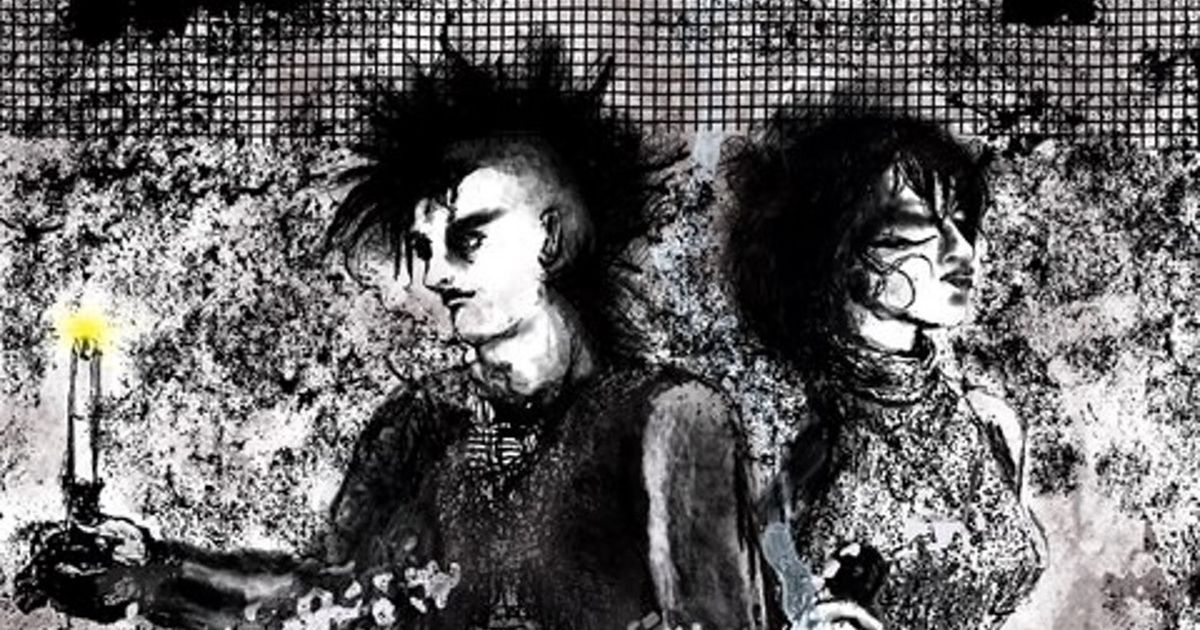
Tonight We Rot Gives the Goth Scene Seven Nights Before the End of the World. Dice & Miscreants’ MÖRK BORG-compatible RPG takes the apocalypse into record shops, goth clubs and illegal warehouse gigs. tabletopsentinel.com/…/tonight-we-rot-gives-the-g…

Tonight We Rot Gives the Goth Scene Seven Nights Before the End of the World. Dice & Miscreants’ MÖRK BORG-compatible RPG takes the apocalypse into record shops, goth clubs and illegal warehouse gigs. tabletopsentinel.com/…/tonight-we-rot-gives-the-g…

0

A genocidal militia was coming for his city. He was one of the last doctors left

preview

This is a long read. I copy pasted the article from the link here in case you can’t open the link as is a paid one. I encourage you to read this it’ll take about 30 mins. This story is devastating and it show us what true heroes are. I hope Sudan civil war ends today. There’s no reason for this horrors to persist and the state being a puppet of foreign powers is not fair. The people who suffered, the children who have died, and the combatants don’t even have a clear reason to fight except the interference of Gulf states and enemies of the state conspiring with murderers and assassins. Adam story isn’t unique and people need to see what’s happening in Sudan. Such a big country ignored as the horrors of the civil war keep unraveling.

By Katharine Houreld and Hafiz Haroun The woman spoke in a whisper. “You’re the doctor. I know you.” Adam could barely hear her over the babble of the other captives. Militiamen had seized them as they fled the slaughter; now they were trapped in a disused school on the edge of the Sudanese desert. The woman was one of the locals let in to sell peanuts. Until she spoke, Adam had been in a kind of trance. When the city fell in October 2025, he was already weak from the months-long siege. All he’d been given to eat in the two weeks since were a few mouthfuls of flatbread a day. As his body shut down, the past and present blurred. He day-dreamed about the last days of el-Fasher: joking with friends at the hospital; his dog, Bulldoze, padding behind him as he walked through the wards; the screams when the militia finally overran the city’s defences. The woman leaned closer, her headscarf slipping forwards. “You’re the doctor,” she repeated. “From Saudi hospital.” Suddenly Adam was alert. Fighters from the Rapid Support Forces (RSF), the militia that had captured him, were hunting down doctors. Hospital staff had evidence of the atrocities they had committed since they began fighting the Sudanese army in 2023; some doctors, like Adam, had spoken publicly about them. When Adam was first taken captive on the road out of el-Fasher, he’d been held under the scorching sun with thousands of others, and had watched RSF fighters search the crowds for people they considered enemies. They grabbed prisoners at random and shouted, “Where are the soldiers? Where are the doctors?” as they punched and kicked. The gunmen offered to let people go free if they informed on wanted men. Sometimes they snatched captives’ phones and searched them for incriminating material. Adam, who had left his phone at the hospital and shaved off his beard, managed to avoid discovery. Others weren’t so lucky. Several times he saw a fighter pull a man from the crowd and drag him behind the nearby trees. After a burst of shots, the fighter would come back alone. For all he knew the woman before him could be an RSF informant. “Sorry, you’re mistaken,” he told her politely. She moved on. A few days later she was back. She asked him again if he was the doctor, and he denied it a second time. He wasn’t sure he should have. He needed a friend. The only way out seemed to be to get a family member to pay a ransom to the RSF, but Adam had no way of contacting anyone. (Opening image) Adam, after a long shift in the operating room. (Above) Students from el-Fasher university celebrate their graduation, the year before war erupted In theory he could have escaped, as the school wasn’t heavily guarded. But the desert sands stretched all around him; he’d die of thirst without help. Someone might have mercy on him if he ran into the nearby village. But they might also report him to the RSF. Later, the woman tried a third time. “I know you,” she insisted. “You helped my sister.” Adam thought about his parents, who had escaped to safety, and his friends. He longed to see them again. With a deep sigh, he commended his life to God and leaned in close. “Yes,” he admitted. “I’m the doctor.” RSF forces stormed el-Fasher on October 26th 2025, briefly putting Sudan’s civil war on front pages. Humanitarians and diplomats had been warning for months that the RSF’s capture of the city, the last stronghold of the Sudanese army in the Darfur region, would lead to a bloodbath. The events that followed were only sparsely documented. Internet and phone signals were down, and those who survived often had their phones stolen. Researchers relied on satellite imagery to quantify the scale of the killing. The UN later concluded that it bore the “hallmarks of a genocide”. A year after its fall to the RSF, investigators are still working out how a city that once housed a million people was emptied. El-Fasher has yet to gain the name recognition of other sites of modern-day massacres, such as Srebrenica. Fighters offered to let people go free if they informed on someone Adam had a happy childhood there, even during the previous civil war. A rebellion in Darfur broke out in 2003 when Adam was six, the result of decades of neglect by the corrupt, authoritarian government in Khartoum. When armed rebels, drawn from the region’s African ethnic groups, attacked military bases, the Arab-dominated regime in the capital retaliated against the rebels’ communities. Warplanes bombed villages, burning families alive. The Janjaweed, a feared Arab militia, were sent in. They looted, gang-raped women, and bludgeoned children to death. But these horrors impinged only tangentially on Adam’s life in el-Fasher. For centuries, the city had been a hub on trans-Saharan caravan routes linking north, central and east Africa, and it retained its cosmopolitan roots. Children from different African ethnic groups as well as pupils with Arab roots studied together at Adam’s primary school. His classmates sometimes relayed gossip they’d overheard about bands of marauders in the countryside, but Adam was more interested in talking about football and anime series, like “Detective Conan”. Doctors at the Saudi hospital operate using light from their mobile phones (top). Fighters from Sudan’s paramilitary group, the Rapid Support Forces (bottom) Eventually a series of truces, together with the deployment of an armed peacekeeping force, tamped down the violence in Darfur. As Adam got older, he noticed things he’d overlooked as a young child: the refugee camp on the edge of the city; the portraits of the president, Omar al-Bashir, looking down from the walls of shops; the fact that no one would talk about politics in public. For him and his family at least, life was good. His parents both had decent jobs, and he and his two sisters grew up in a spacious house with a garden. Even as a child, Adam knew that he wanted to help people, so he studied hard in science in the hope of one day becoming a doctor. On special occasions, the family went out for dinner at shisha bars illuminated by lights strung between the trees like glowing cobwebs. Sometimes Adam’s father took him for coffee in el-Fasher’s main market, where the shops glittered with bangles made from gold mined in south Darfur. By the time Adam started studying medicine at el-Fasher university in 2014, the economy was crumbling. The Bashir regime’s dysfunction had helped create a surge in food and fuel prices. Critics were disappearing. Protesters around the country began demanding Bashir’s resignation; Adam helped organise demonstrations at the university. He and his fellow students were teargassed, beaten and sometimes jailed. In April 2019, after months of popular revolt, Bashir’s security chiefs forced him to step down. A fledgling transitional government took charge with the backing of the two main powerbrokers in the country: the Sudanese army and the RSF, the official paramilitary organisation that had emerged from the Janjaweed. For the first time in Adam’s life, peace and democracy seemed within reach. Adam and his fellow students would stay up late chatting about their dreams for a new country. Then in 2021, the army and the RSF overthrew the civilian government in a coup. Adam was deep in his studies by then, and struggled to juggle exam preparation with participating in pro-democracy protests. Classes were often cancelled owing to the tumult. But eventually, towards the end of 2022, he graduated. His proud father hosted a barbeque for their family and friends; guests sipped sweet, sticky glasses of ruby-red hibiscus juice while frankincense smoke curled through the evening air. Afterwards Adam and the other graduates zoomed around town, cheering loudly and hooting their car horns. People escaped to eastern Chad (top). Abdel Fattah al-Burhan, the head of the Sudanese army, at the Flamingo marine base in Port Sudan in 2023 (bottom) The next week he started work at el-Fasher’s teaching hospital. Later, he’d marvel at how cosseted he was there. One of the hospital’s 30 consultants was always there to give him advice. When he had to tell a young woman she had cancer, older staff counselled him on how to break the news gently. On the morning of April 15th 2023 Adam was at home getting ready for a shift when his phone buzzed and he looked down. He didn’t know it at the time, but it was the moment his old life ended. Wassim, a 25-year-old laboratory technician who would later become one of Adam’s closest friends, was at the teaching hospital when the news broke. He had recently graduated, and had brought his CV to the hospital seeking an internship. As he waited he heard the crack of gunshots outside, but assumed it was just another protest being dispersed. Within half an hour, bloodied civilians began stumbling in. Hospital staff triaged them while shouting out the updates flashing on their phones. Gunmen were fighting near the military barracks a few streets away. The RSF and the army were at war. Staff and patients fled the building. Two other hospitals caught up in the fighting also had to close. Along with other doctors, nurses and support staff, Adam made his way to South hospital, then the only one operating. Adam ran to help with triage when someone yelled: “South Hospital has been overrun by the RSF!” The next few days were chaos, with casualties piling up and the hospital stretched beyond its limits. Fortunately, the Sudanese are used to handling crises without any help from the state. The network of volunteers that had helped organise pro-democracy ­demonstrations became an emergency-response force: mending, scrubbing and scrounging for supplies to keep the hospital working. Wassim, his internship application long forgotten, joined in. One of the most prominent figures in the network was Abdullah, a graduate in management studies. Abdullah and Adam were university friends, and had sometimes marched in the same protests. Abdullah’s easy manner and confidence meant he was often called on to give speeches at community events, and he was well-known even before the war. Once it started, he got to work asking people for money and medicine on behalf of the hospital. Sometimes there was a pretty young woman at the hospital, who caught Abdullah’s attention. Aisha, an economics graduate, had been visiting an ailing relative when the war broke out and then pitched in to assist with the volunteer effort. She helped Abdullah look after a mentally ill man who had been injured, and later they distributed medicines together. Abdullah was drawn to her spirit and grit. The aftermath of an attack on the World Food Programme’s offices. Saudi hospital’s obstetrics clinic (clockwise from top left) Adam, too, threw himself into the collective effort, sometimes joining Wassim for night-time raids on abandoned hospitals in search of supplies. He decided he was most needed at the Saudi maternity hospital (or “Saudi”, as everyone called it), which had reopened two weeks after the start of the war. Other doctors and volunteers began splitting their time between Saudi and South. For a few months it looked as though el-Fasher might be spared the worst of the conflict ravaging other parts of Sudan. The governor of Darfur, Minni Minnawi, was a former rebel leader. His fighters had been at war with both the Sudanese army and the RSF’s predecessor, the Janjaweed, for years, and trusted neither. Shortly after the fighting broke out, Minnawi declared his forces’ neutrality. Instead of becoming a battle site, el-Fasher was divided into zones of influence. Minnawi’s men held a buffer zone in the centre. The RSF held the east. The Sudanese Armed Forces (SAF) held the west and parts of the south, where South and Saudi hospitals were located. Like most people, Adam and Wassim knew fighters in all three groups. The city was tense, but it functioned. Then in November 2023, Minnawi announced that he was going to fight alongside the Sudanese armed forces, citing RSF atrocities. Panic gripped el-Fasher. Families strapped bulging suitcases onto cars and fled. One night Saudi’s senior medical director called Adam. They’d worked closely together, and he wanted to tell Adam himself that he was leaving. Then came the kicker: he asked Adam to take over his responsibilities, alongside two other people. Saudi had a staff of 400, and was the only specialist maternity hospital in Darfur, a region of 12m people. Adam was ten months out of medical school. That night he lay awake for hours, his mind churning. Would the older staff accept him? Where should he start? He began compiling lists of available staff in his head. He awoke feeling calmer. There was no point trying to fake authority. He had to earn trust by being humble: cleaning the floors himself and leaning on his more experienced colleagues. Rather than make a big speech, he met staff individually. “You are the real leaders of the hospital,” he told them. He was particularly reliant on the hospital’s middle-aged administrative director, Mahasin, who was a surrogate mother to the younger staff. She ticked them off over behaviour she considered risky, such as leaving the hospital for coffee or parties, and cooked up enormous vats of food for them. Injured children in Saudi hospital, looking at the dead body of their mother (top). One of the shipping containers used as bomb shelters (bottom) The hospital was Adam’s home now. He moved in with some essential belongings, including Bulldoze. A few months later fighting reached the neighbourhood where his family lived. His parents and sisters decided to flee, packing only a few bags of clothes and Adam’s degree certificate. He escorted them to the city gates in the morning, hugged them, then went back to work. He found it hard to concentrate on anything until they called that evening to say they had made it out safely. As the RSF seized town after town in Darfur, reports of atrocities mounted. Adam’s mother begged him to flee himself. In November the RSF captured el-Geneina, a city 300km west of el-Fasher. Civilians from the tribes fighting the RSF were executed; some were tortured to death. Those who tried to escape were shot. If they did that to el-Geneina, his mother said, what did he think the RSF would do in el-Fasher, the centre of resistance? After several of these entreaties, Adam snapped. He told his mother he was already dead. “Consider that I have given my life to this city,” he said. “Consider me a martyr.” They spoke most days, but she never brought up the subject of him leaving again. The war sometimes got to Adam. He took care to hide black moods from his colleagues. Often the only place he could find solitude was in the operating room, where he’d lean against the walls and brood in the antiseptic dark. Small victories buoyed him, such as the time his team was able to save a baby who had been shot in its mother’s womb. But the injuries were becoming worse as both sides’ weapons got more powerful. When the war first broke out, Adam and his colleagues had mainly treated people for bullet wounds. But then both sides obtained more sophisticated equipment, including drones. Though the RSF tried to keep their foreign benefactors a secret, an overwhelming body of evidence pointed to the UAE (the UAE denies the accusation). By the summer of 2024, people were arriving at Saudi eviscerated, or with limbs sliced off. “No one cared any more. You would hear a bomb hit the hospital and just shrug” One day in June 2024 about 50 wounded people arrived at Saudi within half an hour. Many were women and children with gaping shrapnel wounds. Adam ran to help with triage when someone yelled: “South hospital has been overrun by the RSF!” He refused to believe it at first. So many of his friends were working there. Then he froze as he noticed how dirty and tired the new arrivals looked: they had run the 5km distance between the two hospitals. The rumour was true. Over the next few days, staff from South hospital limped in. Many had scaled the hospital walls under fire to escape. Among them was the director-general of the facility, who had been beaten, stabbed in the face and left for dead.

The staff didn’t know what happened after they fled, but they found out a few days later when a team was briefly able to re-enter. Some patients were shot in their beds; the bodies of their relatives lay sprawled in the lobby. A handful of survivors said the RSF had rounded up men of military age. Saudi was now the last functioning hospital in the city. They got used to the sounds of drones overhead. The smaller ones whined; the bigger, military-grade ones sounded like small planes. Sometimes quadrocopters hovered for hours, blades whirring, before releasing a bomb. Adam managed to get hold of some shipping containers, and the team buried them to use as bomb shelters. But there were no sirens to alert them to attacks, and often people didn’t make it to the shelter in time. Amna, a pharmacist with a penchant for romance novels who had joined them after escaping South hospital, was killed in a direct hit on Saudi’s pharmacy. Soon Adam gave up trying to run to the shelter when the bombs fell. Ignoring Mahasin’s scolding, he would enjoy his coffee in the sunshine instead, with Bulldoze by his side. “No one cared any more,” Adam recalled. “You would hear a bomb hit the hospital and just shrug.” Once a ward was hit in the middle of the night. Adam ran into the darkness, guided by screams. Then he heard a drone loitering above. Second strikes were common if there was a sign of life, so Adam couldn’t switch on his torch. In the darkness, a young boy clutched his leg and begged him, “Uncle, save me!” But he couldn’t help anyone without light. For hours, the screaming continued, then slowly subsided. Around 70 people died. The hospital was targeted so often that the staff set up operating theatres and emergency rooms in abandoned buildings. But it didn’t make them much safer: the drones just tracked the wounded to these secret outposts, and attacked them too. In spite of the risks, hundreds of people—patients, doctors, staff from other hospitals and their families— moved into Saudi hospital. Nowhere in the city was safe; at least in Saudi they had each other. Room Three, where Adam and his friends lived, was the hospital’s beating heart. It had only four beds, but more than a dozen people would crash there at a time. There was a spate of marriages between doctors, lab technicians, nurses and pharmacists, and celebrations in the hospital included a henna party People didn’t come just to sleep. Room Three was where they went when they were feeling hopeless and alone. Room Three was life. “In Room Three someone was always dancing, someone was always singing,” one surgeon told me later. “Someone was farting.” Room Three was also directly opposite Room Four, where some of the young female staff slept. Inhabitants of both rooms rolled out mats in the corridor between them, and chatted there over coffee and music. Sometimes they fell in love with each other: there was a spate of marriages between doctors, lab technicians, nurses and pharmacists. The love story that gripped the hospital was that of the two volunteers: Abdullah and Aisha. Abdullah was a great favourite with the hospital staff, as was his mother, Zeinab, who cooked for them. When Aisha’s family home was overrun by RSF fighters in 2024, she moved in with Zeinab. In January 2025 a stray bullet hit Zeinab in the chest. Before she died, she made Abdullah promise to take care of Aisha. Abdullah and Aisha married a few months later. At the ceremony Abdullah asked for a moment’s silence for his mother. Everyone wept. He told his mother he was already dead. “Consider that I have given my life to this city” Then they threw a party in one of the damaged emergency rooms. Blue and purple balloons dangled from the walls and people danced to Sudanese love songs. The men threw their hands in the air while women sang along. “It was like there was no war,” Adam said. “We were not living like rats underground.” Two days after Abdullah’s and Aisha’s wedding in April 2025, the RSF overran ZamZam, a camp for families displaced during the last war, which lay on the main road out of el-Fasher. The UN says at least 1,000 people were killed; the real number is probably much higher. The camp had a medical clinic run by Relief International, an aid agency. Though other charities pulled out as the RSF approached, Relief International staff stayed at their posts. One of the doctors, 26-year-old Mahmoud Babikir Idris Adam, also worked shifts at the Saudi hospital. He had been one of the guests at Abdullah’s and Aisha’s wedding celebration. When RSF fighters overran ZamZam they shot Mahmoud dead in his clinic, together with eight of his colleagues. Adam found out shortly afterwards. It was one of the only times in the war that he cried. The hospital pharmacy after a strike in which one of the staff was killed. The operating theatre in Saudi hospital. Sandbags reinforcing the hospital walls (left to right) After ZamZam, el-Fasher was the RSF’s last significant target in Darfur. RSF soldiers began bulldozing earth into piles to make a barrier round the city. Most exit roads were blocked by RSF checkpoints, and the soldiers manning them were much less inclined to let people pass through for a bribe than they had been in the past. Now travellers were frequently raped, held for ransom or executed. Men of military age were especially at risk. The Yale Humanitarian Lab, which monitored the RSF’s barrier construction from space, described it as a “kill box”. There was hardly anything to eat. By then, the hospital’s windows had all been blown out and replaced by sandbags. The medical staff tried to distract themselves. Adam obtained a PlayStation 5; between shifts he and the other staff lost themselves in “Grand Theft Auto”, “fifa” and “Assassin’s Creed”. The men pooled their remaining supplies of cologne and swapped bottles of Sauvage and Baccarat for novelty. Adam contributed a heady scent called Rose Tobacco. His friend Yasir, who was also a doctor, instituted a weekly fashion ritual called “smart Tuesdays”. He and one of the volunteers would put on their most colourful clothes and take pictures of each other pulling model poses. If they were going to die, they said, they might as well be dressed for it. There were other small comforts. A black-and-white cat came to the hospital; Yasir adopted it and named it c5 after the incoming RSF rockets. When Bulldoze came home after going missing for three days in August, Adam was so happy he gave the dog some of his precious rice. Music was another balm. A song by Abdullah Alawad, a Sudanese singer with a white streak in his beard, became their anthem. Once Yasir used flour to whiten his own beard, and they recorded a cover version on their phones, bawling out the chorus together: “A person can die but their memory lives on.” No one wanted to acknowledge the fear they all lived with. Wassim, the lab technician, felt suicidal some days. “My family was in danger, everyone around me was in danger, every morning a lot of people died. Children died of starvation,” he said when I met him much later. “I felt like it was better for me to die.” At his lowest point he confided in Adam. The doctor talked him round, promising that God saw their work and would not forget them. Animal feed made out of crushed peanut waste was often all the staff had to eat. Rancid cooking oil found in a jerrycan (top). Some doctors tied sheets around their stomachs to alleviate the stabs of starvation (bottom) That summer, the staff’s resolve started to crumble. The bombardment was unrelenting, and roads out were getting more dangerous every day. Izzadin, one of the surgeons, watched as his operating team dwindled. A few asked him whether they should flee, but he refused to advise them. Some just stopped showing up; others came tearfully to say goodbye. Izzadin thanked them and gave them his blessing: “May Allah preserve you and help you reach a safe area.” Wassim watched the other lab technicians leave. He was getting calls from a former classmate in the RSF, warning that the militia were about to seize the city and offering to get him out. The classmate spoke with contempt for those still in el-Fasher. He spat out a racist slur sometimes used to describe the dark-skinned people of Darfur: slaves. “He called many times, saying ‘we are coming,’” said Wassim. Eventually, he blocked his old classmate’s number. By the end of the summer, a kilo of rice, which fed a dozen medical staff for a day, cost more than $750. Sometimes surgeons would operate on an injured child and find his bowels full of leaves. Often all the staff had themselves was animal feed made out of crushed peanut waste. They re-used the same coffee grounds for weeks. Some doctors tied sheets around their stomachs to alleviate the stabs of starvation. Adam had weighed 88kg at the beginning of the war: now he was just 38kg. The men pooled their remaining cologne supplies and swapped bottles of Sauvage and Baccarat Medical supplies were also scarce, and doctors were forced to use medicines that were several years out of date. The only remaining spinal anaesthesia had expired in 2021. The RSF executed anyone caught smuggling medicine into the city, but some people did it anyway. One of them was an elderly man the Saudi team had operated on; he was frail but would walk three days across the desert to bring back supplies. After hearing the hospital was nearly out of anaesthetic, some women walked to a town 90km away to buy ketamine, which they smuggled back in their bras. The doctors’ cheerfulness became their armour. When a new load of casualties arrived, Yasir would announce, “Life is beautiful!” before getting down to work. But by September it had become hard to maintain. On September 19th a missile slammed into a mosque near the hospital. The imam was married to Mahasin, the hospital’s administrator, who rushed to the site. Her husband was badly injured and begged her to look for their two young sons in the rubble. By the time she found their bodies, her husband had died. She buried them all in their bedsheets and left the city with her teenage daughter. An unexploded artillery shell found in the compound. A volunteer spent weeks scrounging ingredients to make a celebratory serving of hot chocolate. Adam’s favourite cologne, which he took with him on his escape (left to right) The hospital was down to two surgeons. Adam and his friends still didn’t want to go. If Saudi went unstaffed, most of the remaining population would leave and the city would be easy to capture. In any case, leaving was now as dangerous as staying. Yasir’s brother was killed at a roadblock trying to escape. A volunteer had left and was never heard from again. By October everything was breaking. A bomb blasted a hole in the wall of the maternity ward that was big enough to walk through. There was an outbreak of cholera. On October 25th Abdullah decided he had to get Aisha, who was now pregnant, to safety. They left with a group of other civilians. Among them was a man who had written social-media posts supporting the Sudanese army. An RSF fighter recognised him at a roadblock, and pulled his family aside. The soldier grabbed the man’s six-year-old son and cut the boy’s throat as he struggled and screamed for his mother. Then he released the man, telling him: “You couldn’t save your son. Go live with this pain.” One of the RSF soldiers beckoned to Aisha. Abdullah stepped forward instead, meekly explaining that his wife was pregnant. To his surprise, the RSF soldier waved them through. “Go with my best wishes,” he told them. Abdullah­ looked the man in the face, astonished. It was the first time he’d seen evidence of humanity in an RSF fighter. He never forgot it. That evening Adam and the remaining crew talked about whether they should follow Abdullah and Aisha out of el-Fasher. They were determined to live or die together, so they held a vote. Adam, like the majority of them, voted to stay. It felt appalling to leave the patients to the RSF. But he sensed it would all be over soon no matter what he did. That night, as explosions shook the building, he walked through the hospital in the dark, saying a silent goodbye. He patted Bulldoze. Ali, one of the last pharmacists, lay awake listening to the RSF artillery. In the early hours he fetched the others and told them they should vote again on leaving. “It’s the end,” he said. Reluctantly, Adam agreed. It was shortly before sunrise. They had no plan—they just ran outside. All Adam took with him was a bottle of water and his Rose Tobacco. Terrified families filled the streets; mothers carried crying children. A few were riding donkeys but most were on foot. They were heading west, towards the city’s last collapsing defence. Adam’s dog Bulldoze. The precious hot chocolate. Video games that helped the doctors relax between shifts (clockwise from top left) Behind them, giddy RSF fighters roared in from the south, east and north, looting and shooting. Crowds of people seeking refuge at the university were strafed and mortared. Families were forced to lie down at gunpoint and crushed with armoured vehicles. Later, videos would emerge of an RSF commander gleefully murdering groups of unarmed people. He boasted that he had personally killed more than 2,000. Adam and the rest of the hospital workers joined a flood of people heading west, but the RSF seized them on the road. In the chaos, Adam’s friends were put on trucks while he was marched to the abandoned school. For the first time since the siege began, he and his colleagues were separated. Wassim, Ali and Yasir were imprisoned in the yard of the abandoned Children’s hospital, along with thousands of others. For three days, there was virtually no water. Some prisoners died of dehydration. When a commander eventually brought in a tank, dying men swarmed towards it, trampling each other. A fighter shot into the crowd, killing three people. After hearing the hospital was nearly out of anaesthetic, some women walked to a town 90km away to buy ketamine, which they smuggled back in their bras Maddened by thirst, the prisoners broke into the septic tank and began to scoop up the fetid water with their hands. There was another cholera outbreak and diarrhoea coated the ground. The RSF fighters, terrified the disease would spread, appealed for doctors to come forward from the crowd. An official said there had been orders from the top not to kill people with medical skills. The Saudi team worried it was a trap. On the other hand, they were as good as dead anyway. Eventually, one by one, they pitched in, isolating cholera patients with a barricade of broken chairs and branches, and treating them as best they could with the medicines they were given. Over the course of the next ten days they managed to contain the outbreak, though not before 200 people had died. Afterwards, the RSF took them back to Saudi. The militia’s leaders seemed to want the hospital working again. In the courtyard the team found a small boy crying. He whispered to them that his mother and father, both patients, had been killed by RSF gunmen just after the doctors had left. The UN later said around 460 people were shot dead when the hospital was taken—mostly patients in their beds. A few weeks later Wassim, Ali and Yasir all managed to escape, reaching the border with Chad via a circuitous route of small villages. They worried all the time about what had happened to Adam. The operating theatre in Saudi hospital (top). A Rapid Support Forces fighter (bottom) Far away, in the darkened schoolroom on the edge of the desert, Adam was listening to the peanut-seller explain how she would help him escape. Tell the guards you need to relieve yourself, she said, then meet me at the back of the building. He did as she said, walking unsteadily into the glaring sun. The woman guided him surreptitiously to her home, where he hid for 20 days. Adam moved from house to house, mostly at night. Each time a person hid him, he’d ask them to try to find someone on the path ahead who might help. Sometimes a friendly driver would give him a lift. It took him a month to reach Khartoum. He was desperate to find out what had happened to his friends, but was still afraid that the RSF would track him down. In the end he made a fake Facebook account, and found one of the hospital volunteers online. It’s Adam, he wrote. I’m alive. Today, el-Fasher is a ghost town. Satellite images show grass growing on its market. Several staff from the Saudi hospital are still missing. The surviving members of the team are scattered. Many cannot sleep or are plagued by nightmares. One woman can’t stop dreaming about scrambling over a ditch full of dead bodies. This summer I met Adam in the town where he’s been hiding. He was still nervous about RSF reprisals, and asked me not to name it. “Those who survived, some are bitter,” he said. “When we were working, the world said we were heroes. But now we are forgotten.” Every time he connects his phone to the internet it is flooded with messages from desperate colleagues: asking for medicine, a job or money. It overwhelms him. But he can’t switch off. He is a helper. If he doesn’t help, who is he? In a strange way, he said, he and the others felt nostalgia for the siege. Not for the suffering, but for the purpose and unity they had back then, and the family they became. “Even now, I feel as though I never truly left el-Fasher. My soul is still there,” said Adam. “The city is not destroyed as long as some of its people are alive.”■ Names have been changed Katharine Houreld is a journalist based in Rome. Previously she was East Africa bureau chief for the Washington Post. Hafiz Haroun is a Sudanese journalist Illustrations by Michelle Thompson

This is a long read. I copy pasted the article from the link here in case you can’t open the link as is a paid one. I encourage you to read this it’ll take about 30 mins. This story is devastating and it show us what true heroes are. I hope Sudan civil war ends today. There’s no reason for this horrors to persist and the state being a puppet of foreign powers is not fair. The people who suffered, the children who have died, and the combatants don’t even have a clear reason to fight except the interference of Gulf states and enemies of the state conspiring with murderers and assassins. Adam story isn’t unique and people need to see what’s happening in Sudan. Such a big country ignored as the horrors of the civil war keep unraveling.

By Katharine Houreld and Hafiz Haroun The woman spoke in a whisper. “You’re the doctor. I know you.” Adam could barely hear her over the babble of the other captives. Militiamen had seized them as they fled the slaughter; now they were trapped in a disused school on the edge of the Sudanese desert. The woman was one of the locals let in to sell peanuts. Until she spoke, Adam had been in a kind of trance. When the city fell in October 2025, he was already weak from the months-long siege. All he’d been given to eat in the two weeks since were a few mouthfuls of flatbread a day. As his body shut down, the past and present blurred. He day-dreamed about the last days of el-Fasher: joking with friends at the hospital; his dog, Bulldoze, padding behind him as he walked through the wards; the screams when the militia finally overran the city’s defences. The woman leaned closer, her headscarf slipping forwards. “You’re the doctor,” she repeated. “From Saudi hospital.” Suddenly Adam was alert. Fighters from the Rapid Support Forces (RSF), the militia that had captured him, were hunting down doctors. Hospital staff had evidence of the atrocities they had committed since they began fighting the Sudanese army in 2023; some doctors, like Adam, had spoken publicly about them. When Adam was first taken captive on the road out of el-Fasher, he’d been held under the scorching sun with thousands of others, and had watched RSF fighters search the crowds for people they considered enemies. They grabbed prisoners at random and shouted, “Where are the soldiers? Where are the doctors?” as they punched and kicked. The gunmen offered to let people go free if they informed on wanted men. Sometimes they snatched captives’ phones and searched them for incriminating material. Adam, who had left his phone at the hospital and shaved off his beard, managed to avoid discovery. Others weren’t so lucky. Several times he saw a fighter pull a man from the crowd and drag him behind the nearby trees. After a burst of shots, the fighter would come back alone. For all he knew the woman before him could be an RSF informant. “Sorry, you’re mistaken,” he told her politely. She moved on. A few days later she was back. She asked him again if he was the doctor, and he denied it a second time. He wasn’t sure he should have. He needed a friend. The only way out seemed to be to get a family member to pay a ransom to the RSF, but Adam had no way of contacting anyone. (Opening image) Adam, after a long shift in the operating room. (Above) Students from el-Fasher university celebrate their graduation, the year before war erupted In theory he could have escaped, as the school wasn’t heavily guarded. But the desert sands stretched all around him; he’d die of thirst without help. Someone might have mercy on him if he ran into the nearby village. But they might also report him to the RSF. Later, the woman tried a third time. “I know you,” she insisted. “You helped my sister.” Adam thought about his parents, who had escaped to safety, and his friends. He longed to see them again. With a deep sigh, he commended his life to God and leaned in close. “Yes,” he admitted. “I’m the doctor.” RSF forces stormed el-Fasher on October 26th 2025, briefly putting Sudan’s civil war on front pages. Humanitarians and diplomats had been warning for months that the RSF’s capture of the city, the last stronghold of the Sudanese army in the Darfur region, would lead to a bloodbath. The events that followed were only sparsely documented. Internet and phone signals were down, and those who survived often had their phones stolen. Researchers relied on satellite imagery to quantify the scale of the killing. The UN later concluded that it bore the “hallmarks of a genocide”. A year after its fall to the RSF, investigators are still working out how a city that once housed a million people was emptied. El-Fasher has yet to gain the name recognition of other sites of modern-day massacres, such as Srebrenica. Fighters offered to let people go free if they informed on someone Adam had a happy childhood there, even during the previous civil war. A rebellion in Darfur broke out in 2003 when Adam was six, the result of decades of neglect by the corrupt, authoritarian government in Khartoum. When armed rebels, drawn from the region’s African ethnic groups, attacked military bases, the Arab-dominated regime in the capital retaliated against the rebels’ communities. Warplanes bombed villages, burning families alive. The Janjaweed, a feared Arab militia, were sent in. They looted, gang-raped women, and bludgeoned children to death. But these horrors impinged only tangentially on Adam’s life in el-Fasher. For centuries, the city had been a hub on trans-Saharan caravan routes linking north, central and east Africa, and it retained its cosmopolitan roots. Children from different African ethnic groups as well as pupils with Arab roots studied together at Adam’s primary school. His classmates sometimes relayed gossip they’d overheard about bands of marauders in the countryside, but Adam was more interested in talking about football and anime series, like “Detective Conan”. Doctors at the Saudi hospital operate using light from their mobile phones (top). Fighters from Sudan’s paramilitary group, the Rapid Support Forces (bottom) Eventually a series of truces, together with the deployment of an armed peacekeeping force, tamped down the violence in Darfur. As Adam got older, he noticed things he’d overlooked as a young child: the refugee camp on the edge of the city; the portraits of the president, Omar al-Bashir, looking down from the walls of shops; the fact that no one would talk about politics in public. For him and his family at least, life was good. His parents both had decent jobs, and he and his two sisters grew up in a spacious house with a garden. Even as a child, Adam knew that he wanted to help people, so he studied hard in science in the hope of one day becoming a doctor. On special occasions, the family went out for dinner at shisha bars illuminated by lights strung between the trees like glowing cobwebs. Sometimes Adam’s father took him for coffee in el-Fasher’s main market, where the shops glittered with bangles made from gold mined in south Darfur. By the time Adam started studying medicine at el-Fasher university in 2014, the economy was crumbling. The Bashir regime’s dysfunction had helped create a surge in food and fuel prices. Critics were disappearing. Protesters around the country began demanding Bashir’s resignation; Adam helped organise demonstrations at the university. He and his fellow students were teargassed, beaten and sometimes jailed. In April 2019, after months of popular revolt, Bashir’s security chiefs forced him to step down. A fledgling transitional government took charge with the backing of the two main powerbrokers in the country: the Sudanese army and the RSF, the official paramilitary organisation that had emerged from the Janjaweed. For the first time in Adam’s life, peace and democracy seemed within reach. Adam and his fellow students would stay up late chatting about their dreams for a new country. Then in 2021, the army and the RSF overthrew the civilian government in a coup. Adam was deep in his studies by then, and struggled to juggle exam preparation with participating in pro-democracy protests. Classes were often cancelled owing to the tumult. But eventually, towards the end of 2022, he graduated. His proud father hosted a barbeque for their family and friends; guests sipped sweet, sticky glasses of ruby-red hibiscus juice while frankincense smoke curled through the evening air. Afterwards Adam and the other graduates zoomed around town, cheering loudly and hooting their car horns. People escaped to eastern Chad (top). Abdel Fattah al-Burhan, the head of the Sudanese army, at the Flamingo marine base in Port Sudan in 2023 (bottom) The next week he started work at el-Fasher’s teaching hospital. Later, he’d marvel at how cosseted he was there. One of the hospital’s 30 consultants was always there to give him advice. When he had to tell a young woman she had cancer, older staff counselled him on how to break the news gently. On the morning of April 15th 2023 Adam was at home getting ready for a shift when his phone buzzed and he looked down. He didn’t know it at the time, but it was the moment his old life ended. Wassim, a 25-year-old laboratory technician who would later become one of Adam’s closest friends, was at the teaching hospital when the news broke. He had recently graduated, and had brought his CV to the hospital seeking an internship. As he waited he heard the crack of gunshots outside, but assumed it was just another protest being dispersed. Within half an hour, bloodied civilians began stumbling in. Hospital staff triaged them while shouting out the updates flashing on their phones. Gunmen were fighting near the military barracks a few streets away. The RSF and the army were at war. Staff and patients fled the building. Two other hospitals caught up in the fighting also had to close. Along with other doctors, nurses and support staff, Adam made his way to South hospital, then the only one operating. Adam ran to help with triage when someone yelled: “South Hospital has been overrun by the RSF!” The next few days were chaos, with casualties piling up and the hospital stretched beyond its limits. Fortunately, the Sudanese are used to handling crises without any help from the state. The network of volunteers that had helped organise pro-democracy ­demonstrations became an emergency-response force: mending, scrubbing and scrounging for supplies to keep the hospital working. Wassim, his internship application long forgotten, joined in. One of the most prominent figures in the network was Abdullah, a graduate in management studies. Abdullah and Adam were university friends, and had sometimes marched in the same protests. Abdullah’s easy manner and confidence meant he was often called on to give speeches at community events, and he was well-known even before the war. Once it started, he got to work asking people for money and medicine on behalf of the hospital. Sometimes there was a pretty young woman at the hospital, who caught Abdullah’s attention. Aisha, an economics graduate, had been visiting an ailing relative when the war broke out and then pitched in to assist with the volunteer effort. She helped Abdullah look after a mentally ill man who had been injured, and later they distributed medicines together. Abdullah was drawn to her spirit and grit. The aftermath of an attack on the World Food Programme’s offices. Saudi hospital’s obstetrics clinic (clockwise from top left) Adam, too, threw himself into the collective effort, sometimes joining Wassim for night-time raids on abandoned hospitals in search of supplies. He decided he was most needed at the Saudi maternity hospital (or “Saudi”, as everyone called it), which had reopened two weeks after the start of the war. Other doctors and volunteers began splitting their time between Saudi and South. For a few months it looked as though el-Fasher might be spared the worst of the conflict ravaging other parts of Sudan. The governor of Darfur, Minni Minnawi, was a former rebel leader. His fighters had been at war with both the Sudanese army and the RSF’s predecessor, the Janjaweed, for years, and trusted neither. Shortly after the fighting broke out, Minnawi declared his forces’ neutrality. Instead of becoming a battle site, el-Fasher was divided into zones of influence. Minnawi’s men held a buffer zone in the centre. The RSF held the east. The Sudanese Armed Forces (SAF) held the west and parts of the south, where South and Saudi hospitals were located. Like most people, Adam and Wassim knew fighters in all three groups. The city was tense, but it functioned. Then in November 2023, Minnawi announced that he was going to fight alongside the Sudanese armed forces, citing RSF atrocities. Panic gripped el-Fasher. Families strapped bulging suitcases onto cars and fled. One night Saudi’s senior medical director called Adam. They’d worked closely together, and he wanted to tell Adam himself that he was leaving. Then came the kicker: he asked Adam to take over his responsibilities, alongside two other people. Saudi had a staff of 400, and was the only specialist maternity hospital in Darfur, a region of 12m people. Adam was ten months out of medical school. That night he lay awake for hours, his mind churning. Would the older staff accept him? Where should he start? He began compiling lists of available staff in his head. He awoke feeling calmer. There was no point trying to fake authority. He had to earn trust by being humble: cleaning the floors himself and leaning on his more experienced colleagues. Rather than make a big speech, he met staff individually. “You are the real leaders of the hospital,” he told them. He was particularly reliant on the hospital’s middle-aged administrative director, Mahasin, who was a surrogate mother to the younger staff. She ticked them off over behaviour she considered risky, such as leaving the hospital for coffee or parties, and cooked up enormous vats of food for them. Injured children in Saudi hospital, looking at the dead body of their mother (top). One of the shipping containers used as bomb shelters (bottom) The hospital was Adam’s home now. He moved in with some essential belongings, including Bulldoze. A few months later fighting reached the neighbourhood where his family lived. His parents and sisters decided to flee, packing only a few bags of clothes and Adam’s degree certificate. He escorted them to the city gates in the morning, hugged them, then went back to work. He found it hard to concentrate on anything until they called that evening to say they had made it out safely. As the RSF seized town after town in Darfur, reports of atrocities mounted. Adam’s mother begged him to flee himself. In November the RSF captured el-Geneina, a city 300km west of el-Fasher. Civilians from the tribes fighting the RSF were executed; some were tortured to death. Those who tried to escape were shot. If they did that to el-Geneina, his mother said, what did he think the RSF would do in el-Fasher, the centre of resistance? After several of these entreaties, Adam snapped. He told his mother he was already dead. “Consider that I have given my life to this city,” he said. “Consider me a martyr.” They spoke most days, but she never brought up the subject of him leaving again. The war sometimes got to Adam. He took care to hide black moods from his colleagues. Often the only place he could find solitude was in the operating room, where he’d lean against the walls and brood in the antiseptic dark. Small victories buoyed him, such as the time his team was able to save a baby who had been shot in its mother’s womb. But the injuries were becoming worse as both sides’ weapons got more powerful. When the war first broke out, Adam and his colleagues had mainly treated people for bullet wounds. But then both sides obtained more sophisticated equipment, including drones. Though the RSF tried to keep their foreign benefactors a secret, an overwhelming body of evidence pointed to the UAE (the UAE denies the accusation). By the summer of 2024, people were arriving at Saudi eviscerated, or with limbs sliced off. “No one cared any more. You would hear a bomb hit the hospital and just shrug” One day in June 2024 about 50 wounded people arrived at Saudi within half an hour. Many were women and children with gaping shrapnel wounds. Adam ran to help with triage when someone yelled: “South hospital has been overrun by the RSF!” He refused to believe it at first. So many of his friends were working there. Then he froze as he noticed how dirty and tired the new arrivals looked: they had run the 5km distance between the two hospitals. The rumour was true. Over the next few days, staff from South hospital limped in. Many had scaled the hospital walls under fire to escape. Among them was the director-general of the facility, who had been beaten, stabbed in the face and left for dead.

The staff didn’t know what happened after they fled, but they found out a few days later when a team was briefly able to re-enter. Some patients were shot in their beds; the bodies of their relatives lay sprawled in the lobby. A handful of survivors said the RSF had rounded up men of military age. Saudi was now the last functioning hospital in the city. They got used to the sounds of drones overhead. The smaller ones whined; the bigger, military-grade ones sounded like small planes. Sometimes quadrocopters hovered for hours, blades whirring, before releasing a bomb. Adam managed to get hold of some shipping containers, and the team buried them to use as bomb shelters. But there were no sirens to alert them to attacks, and often people didn’t make it to the shelter in time. Amna, a pharmacist with a penchant for romance novels who had joined them after escaping South hospital, was killed in a direct hit on Saudi’s pharmacy. Soon Adam gave up trying to run to the shelter when the bombs fell. Ignoring Mahasin’s scolding, he would enjoy his coffee in the sunshine instead, with Bulldoze by his side. “No one cared any more,” Adam recalled. “You would hear a bomb hit the hospital and just shrug.” Once a ward was hit in the middle of the night. Adam ran into the darkness, guided by screams. Then he heard a drone loitering above. Second strikes were common if there was a sign of life, so Adam couldn’t switch on his torch. In the darkness, a young boy clutched his leg and begged him, “Uncle, save me!” But he couldn’t help anyone without light. For hours, the screaming continued, then slowly subsided. Around 70 people died. The hospital was targeted so often that the staff set up operating theatres and emergency rooms in abandoned buildings. But it didn’t make them much safer: the drones just tracked the wounded to these secret outposts, and attacked them too. In spite of the risks, hundreds of people—patients, doctors, staff from other hospitals and their families— moved into Saudi hospital. Nowhere in the city was safe; at least in Saudi they had each other. Room Three, where Adam and his friends lived, was the hospital’s beating heart. It had only four beds, but more than a dozen people would crash there at a time. There was a spate of marriages between doctors, lab technicians, nurses and pharmacists, and celebrations in the hospital included a henna party People didn’t come just to sleep. Room Three was where they went when they were feeling hopeless and alone. Room Three was life. “In Room Three someone was always dancing, someone was always singing,” one surgeon told me later. “Someone was farting.” Room Three was also directly opposite Room Four, where some of the young female staff slept. Inhabitants of both rooms rolled out mats in the corridor between them, and chatted there over coffee and music. Sometimes they fell in love with each other: there was a spate of marriages between doctors, lab technicians, nurses and pharmacists. The love story that gripped the hospital was that of the two volunteers: Abdullah and Aisha. Abdullah was a great favourite with the hospital staff, as was his mother, Zeinab, who cooked for them. When Aisha’s family home was overrun by RSF fighters in 2024, she moved in with Zeinab. In January 2025 a stray bullet hit Zeinab in the chest. Before she died, she made Abdullah promise to take care of Aisha. Abdullah and Aisha married a few months later. At the ceremony Abdullah asked for a moment’s silence for his mother. Everyone wept. He told his mother he was already dead. “Consider that I have given my life to this city” Then they threw a party in one of the damaged emergency rooms. Blue and purple balloons dangled from the walls and people danced to Sudanese love songs. The men threw their hands in the air while women sang along. “It was like there was no war,” Adam said. “We were not living like rats underground.” Two days after Abdullah’s and Aisha’s wedding in April 2025, the RSF overran ZamZam, a camp for families displaced during the last war, which lay on the main road out of el-Fasher. The UN says at least 1,000 people were killed; the real number is probably much higher. The camp had a medical clinic run by Relief International, an aid agency. Though other charities pulled out as the RSF approached, Relief International staff stayed at their posts. One of the doctors, 26-year-old Mahmoud Babikir Idris Adam, also worked shifts at the Saudi hospital. He had been one of the guests at Abdullah’s and Aisha’s wedding celebration. When RSF fighters overran ZamZam they shot Mahmoud dead in his clinic, together with eight of his colleagues. Adam found out shortly afterwards. It was one of the only times in the war that he cried. The hospital pharmacy after a strike in which one of the staff was killed. The operating theatre in Saudi hospital. Sandbags reinforcing the hospital walls (left to right) After ZamZam, el-Fasher was the RSF’s last significant target in Darfur. RSF soldiers began bulldozing earth into piles to make a barrier round the city. Most exit roads were blocked by RSF checkpoints, and the soldiers manning them were much less inclined to let people pass through for a bribe than they had been in the past. Now travellers were frequently raped, held for ransom or executed. Men of military age were especially at risk. The Yale Humanitarian Lab, which monitored the RSF’s barrier construction from space, described it as a “kill box”. There was hardly anything to eat. By then, the hospital’s windows had all been blown out and replaced by sandbags. The medical staff tried to distract themselves. Adam obtained a PlayStation 5; between shifts he and the other staff lost themselves in “Grand Theft Auto”, “fifa” and “Assassin’s Creed”. The men pooled their remaining supplies of cologne and swapped bottles of Sauvage and Baccarat for novelty. Adam contributed a heady scent called Rose Tobacco. His friend Yasir, who was also a doctor, instituted a weekly fashion ritual called “smart Tuesdays”. He and one of the volunteers would put on their most colourful clothes and take pictures of each other pulling model poses. If they were going to die, they said, they might as well be dressed for it. There were other small comforts. A black-and-white cat came to the hospital; Yasir adopted it and named it c5 after the incoming RSF rockets. When Bulldoze came home after going missing for three days in August, Adam was so happy he gave the dog some of his precious rice. Music was another balm. A song by Abdullah Alawad, a Sudanese singer with a white streak in his beard, became their anthem. Once Yasir used flour to whiten his own beard, and they recorded a cover version on their phones, bawling out the chorus together: “A person can die but their memory lives on.” No one wanted to acknowledge the fear they all lived with. Wassim, the lab technician, felt suicidal some days. “My family was in danger, everyone around me was in danger, every morning a lot of people died. Children died of starvation,” he said when I met him much later. “I felt like it was better for me to die.” At his lowest point he confided in Adam. The doctor talked him round, promising that God saw their work and would not forget them. Animal feed made out of crushed peanut waste was often all the staff had to eat. Rancid cooking oil found in a jerrycan (top). Some doctors tied sheets around their stomachs to alleviate the stabs of starvation (bottom) That summer, the staff’s resolve started to crumble. The bombardment was unrelenting, and roads out were getting more dangerous every day. Izzadin, one of the surgeons, watched as his operating team dwindled. A few asked him whether they should flee, but he refused to advise them. Some just stopped showing up; others came tearfully to say goodbye. Izzadin thanked them and gave them his blessing: “May Allah preserve you and help you reach a safe area.” Wassim watched the other lab technicians leave. He was getting calls from a former classmate in the RSF, warning that the militia were about to seize the city and offering to get him out. The classmate spoke with contempt for those still in el-Fasher. He spat out a racist slur sometimes used to describe the dark-skinned people of Darfur: slaves. “He called many times, saying ‘we are coming,’” said Wassim. Eventually, he blocked his old classmate’s number. By the end of the summer, a kilo of rice, which fed a dozen medical staff for a day, cost more than $750. Sometimes surgeons would operate on an injured child and find his bowels full of leaves. Often all the staff had themselves was animal feed made out of crushed peanut waste. They re-used the same coffee grounds for weeks. Some doctors tied sheets around their stomachs to alleviate the stabs of starvation. Adam had weighed 88kg at the beginning of the war: now he was just 38kg. The men pooled their remaining cologne supplies and swapped bottles of Sauvage and Baccarat Medical supplies were also scarce, and doctors were forced to use medicines that were several years out of date. The only remaining spinal anaesthesia had expired in 2021. The RSF executed anyone caught smuggling medicine into the city, but some people did it anyway. One of them was an elderly man the Saudi team had operated on; he was frail but would walk three days across the desert to bring back supplies. After hearing the hospital was nearly out of anaesthetic, some women walked to a town 90km away to buy ketamine, which they smuggled back in their bras. The doctors’ cheerfulness became their armour. When a new load of casualties arrived, Yasir would announce, “Life is beautiful!” before getting down to work. But by September it had become hard to maintain. On September 19th a missile slammed into a mosque near the hospital. The imam was married to Mahasin, the hospital’s administrator, who rushed to the site. Her husband was badly injured and begged her to look for their two young sons in the rubble. By the time she found their bodies, her husband had died. She buried them all in their bedsheets and left the city with her teenage daughter. An unexploded artillery shell found in the compound. A volunteer spent weeks scrounging ingredients to make a celebratory serving of hot chocolate. Adam’s favourite cologne, which he took with him on his escape (left to right) The hospital was down to two surgeons. Adam and his friends still didn’t want to go. If Saudi went unstaffed, most of the remaining population would leave and the city would be easy to capture. In any case, leaving was now as dangerous as staying. Yasir’s brother was killed at a roadblock trying to escape. A volunteer had left and was never heard from again. By October everything was breaking. A bomb blasted a hole in the wall of the maternity ward that was big enough to walk through. There was an outbreak of cholera. On October 25th Abdullah decided he had to get Aisha, who was now pregnant, to safety. They left with a group of other civilians. Among them was a man who had written social-media posts supporting the Sudanese army. An RSF fighter recognised him at a roadblock, and pulled his family aside. The soldier grabbed the man’s six-year-old son and cut the boy’s throat as he struggled and screamed for his mother. Then he released the man, telling him: “You couldn’t save your son. Go live with this pain.” One of the RSF soldiers beckoned to Aisha. Abdullah stepped forward instead, meekly explaining that his wife was pregnant. To his surprise, the RSF soldier waved them through. “Go with my best wishes,” he told them. Abdullah­ looked the man in the face, astonished. It was the first time he’d seen evidence of humanity in an RSF fighter. He never forgot it. That evening Adam and the remaining crew talked about whether they should follow Abdullah and Aisha out of el-Fasher. They were determined to live or die together, so they held a vote. Adam, like the majority of them, voted to stay. It felt appalling to leave the patients to the RSF. But he sensed it would all be over soon no matter what he did. That night, as explosions shook the building, he walked through the hospital in the dark, saying a silent goodbye. He patted Bulldoze. Ali, one of the last pharmacists, lay awake listening to the RSF artillery. In the early hours he fetched the others and told them they should vote again on leaving. “It’s the end,” he said. Reluctantly, Adam agreed. It was shortly before sunrise. They had no plan—they just ran outside. All Adam took with him was a bottle of water and his Rose Tobacco. Terrified families filled the streets; mothers carried crying children. A few were riding donkeys but most were on foot. They were heading west, towards the city’s last collapsing defence. Adam’s dog Bulldoze. The precious hot chocolate. Video games that helped the doctors relax between shifts (clockwise from top left) Behind them, giddy RSF fighters roared in from the south, east and north, looting and shooting. Crowds of people seeking refuge at the university were strafed and mortared. Families were forced to lie down at gunpoint and crushed with armoured vehicles. Later, videos would emerge of an RSF commander gleefully murdering groups of unarmed people. He boasted that he had personally killed more than 2,000. Adam and the rest of the hospital workers joined a flood of people heading west, but the RSF seized them on the road. In the chaos, Adam’s friends were put on trucks while he was marched to the abandoned school. For the first time since the siege began, he and his colleagues were separated. Wassim, Ali and Yasir were imprisoned in the yard of the abandoned Children’s hospital, along with thousands of others. For three days, there was virtually no water. Some prisoners died of dehydration. When a commander eventually brought in a tank, dying men swarmed towards it, trampling each other. A fighter shot into the crowd, killing three people. After hearing the hospital was nearly out of anaesthetic, some women walked to a town 90km away to buy ketamine, which they smuggled back in their bras Maddened by thirst, the prisoners broke into the septic tank and began to scoop up the fetid water with their hands. There was another cholera outbreak and diarrhoea coated the ground. The RSF fighters, terrified the disease would spread, appealed for doctors to come forward from the crowd. An official said there had been orders from the top not to kill people with medical skills. The Saudi team worried it was a trap. On the other hand, they were as good as dead anyway. Eventually, one by one, they pitched in, isolating cholera patients with a barricade of broken chairs and branches, and treating them as best they could with the medicines they were given. Over the course of the next ten days they managed to contain the outbreak, though not before 200 people had died. Afterwards, the RSF took them back to Saudi. The militia’s leaders seemed to want the hospital working again. In the courtyard the team found a small boy crying. He whispered to them that his mother and father, both patients, had been killed by RSF gunmen just after the doctors had left. The UN later said around 460 people were shot dead when the hospital was taken—mostly patients in their beds. A few weeks later Wassim, Ali and Yasir all managed to escape, reaching the border with Chad via a circuitous route of small villages. They worried all the time about what had happened to Adam. The operating theatre in Saudi hospital (top). A Rapid Support Forces fighter (bottom) Far away, in the darkened schoolroom on the edge of the desert, Adam was listening to the peanut-seller explain how she would help him escape. Tell the guards you need to relieve yourself, she said, then meet me at the back of the building. He did as she said, walking unsteadily into the glaring sun. The woman guided him surreptitiously to her home, where he hid for 20 days. Adam moved from house to house, mostly at night. Each time a person hid him, he’d ask them to try to find someone on the path ahead who might help. Sometimes a friendly driver would give him a lift. It took him a month to reach Khartoum. He was desperate to find out what had happened to his friends, but was still afraid that the RSF would track him down. In the end he made a fake Facebook account, and found one of the hospital volunteers online. It’s Adam, he wrote. I’m alive. Today, el-Fasher is a ghost town. Satellite images show grass growing on its market. Several staff from the Saudi hospital are still missing. The surviving members of the team are scattered. Many cannot sleep or are plagued by nightmares. One woman can’t stop dreaming about scrambling over a ditch full of dead bodies. This summer I met Adam in the town where he’s been hiding. He was still nervous about RSF reprisals, and asked me not to name it. “Those who survived, some are bitter,” he said. “When we were working, the world said we were heroes. But now we are forgotten.” Every time he connects his phone to the internet it is flooded with messages from desperate colleagues: asking for medicine, a job or money. It overwhelms him. But he can’t switch off. He is a helper. If he doesn’t help, who is he? In a strange way, he said, he and the others felt nostalgia for the siege. Not for the suffering, but for the purpose and unity they had back then, and the family they became. “Even now, I feel as though I never truly left el-Fasher. My soul is still there,” said Adam. “The city is not destroyed as long as some of its people are alive.”■ Names have been changed Katharine Houreld is a journalist based in Rome. Previously she was East Africa bureau chief for the Washington Post. Hafiz Haroun is a Sudanese journalist Illustrations by Michelle Thompson

0

Stellantis’ agreement to sell Brampton plant a ‘betrayal,’ Carney says

preview

Stellantis’ agreement to sell Brampton plant a ‘betrayal,’ Carney says
Carney must ‘fire’ industry minister, Poilievre says over Stellantis sale

globalnews.ca/news/12144343/st…

Stellantis’ agreement to sell Brampton plant a ‘betrayal,’ Carney says

Carney must ‘fire’ industry minister, Poilievre says over Stellantis sale

globalnews.ca/news/12144343/st…

0

The Story of the First No-Nut November

McSweeney's Internet Tendency The Story of the First No-Nut November www.mcsweeneys.net
preview

William Bradford reminded the men that they were a Christian people, and had never before engaged in such carnal pleasures. “Right?” he asked.
They all did t…

William Bradford reminded the men that they were a Christian people, and had never before engaged in such carnal pleasures. “Right?” he asked.
They all did t…

0

Il vortice polare rallenta, che inverno ci aspetta?

preview

Il vortice polare rallenta, che inverno ci aspetta?

@astronomia
https://www.galileonet.it/il-vortice-polare-rallenta-che-inverno-ci-aspetta/
Per il secondo anno consecutivo, la circolazione atmosferica che trattiene il freddo alle alte latitudini rallenta prima del previsto. Un fenomeno che gli esperti osservano con attenzione, anche se poco si sa sulle possibili conseguenze per l’inverno italiano
L’articolo Il vortice polare rallenta, che inverno ci aspetta? sembra essere il

0

I-638 Supporter Clarifies They’re Not Anti-Trans, Just Anti-Female

The Needling I-638 Supporter Clarifies They’re Not Anti-Trans, Just Anti-Female theneedling.com
preview

After advocating for and celebrating the passage of I-638—which effectively forces every girl to get a genital exam in order to play school sports—one local man says he’s tired of everyone assuming…

After advocating for and celebrating the passage of I-638—which effectively forces every girl to get a genital exam in order to play school sports—one local man says he’s tired of everyone assuming…

0

Patente a crediti: le novità della Nota INL 2469/2026 nei cantieri

preview

Patente a crediti: le novità della Nota INL 2469/2026 nei cantieri
@lavoro
https://www.puntosicuro.it/appalti-costi-della-sicurezza-C-115/patente-a-crediti-le-novita-della-nota-inl-2469/2026-nei-cantieri-AR-26926/
La Nota INL 2469/2026 chiarisce requisiti, crediti aggiuntivi e modalità di gestione della patente a crediti: un quadro operativo per imprese e lavoratori autonomi che operano nei cantieri.

0

A MIDI website I loved got slopified, so I brought it back!

preview

www.furbnet.com/index.iva

It aims to recreate the old HamieNET site, with period-correct extra features.

You can read more about what the site is and what drove me to recreate it on the about page.

I will also occasionally post development updates, as well as other (related and unrelated) miscellany to my PeerTube channel, which can be followed from your fediverse platform of choice (including probably the one you’re reading this on!) !furbland_channel@cuddly.tube

If anyone has any questions or comments, or is at all curious about the inner workings of the site/parts I’m particularly proud of, don’t hesitate to leave a comment! :D