0

RomArchive

preview

geteilt von: feddit.org/post/34745484

Die Sammlung vom RomArchive enthält Objekte aus zehn Archivbereichen: Bildende Kunst, Bilderpolitik, Film, Flamenco, Literatur, Musik, Tanz, Theater und Drama, Bürgerrechtsbewegung der Sinti und Roma, und »Voices of the Victims«. Die Objekte konzentrieren sich auf die Selbstdarstellung und stammen aus Privatsammlungen, Museen, Archiven und Bibliotheken weltweit.

Grimme Online Award 2020 in der Kategorie „Wissen und Bildung“

0

La "crue soudaine" au Népal était prédite par une étude de 2025

preview

En faisant des recherches sur l’origine de la catastrophe qui a eu lieu au nord de Kathmandu, je suis tombé sur cette étude publiée l’année dernière en juillet (dans le Journal of Tourism and Himalayan Adventures) qui étudie tout particulièrement le lag glaciaire de Lirung Langtang (le lac en cause dans l’évènement) et conclut à l’existence d’un risque élevé de GLOF -glacier lake outburst flood, c’est-à-dire précisément ce qui s’est passé.

Je copie ici l’abstract :

Glaciers are natural reservoirs of freshwater that cater to the millions of people in a mountainous country like Nepal. However, these freshwater sources are retreating at an alarming rate, altering the downstream flow. Furthermore, this has led to an increase in glacial lake areas and their number, which may eventually be at risk of Glacial Lake Outburst Floods (GLOFs). This study focuses on the expansion of Lirung Glacial Lake in the Langtang Basin from 2010 to 2024, utilizing multi-temporal satellite imagery from Landsat and Sentinel. The Normalized Difference Water Index (NDWI) was applied to delineate lake boundaries, which were then analyzed in conjunction with climate data from the basin. The result shows that over 14 years, the lake’s area has increased at an approximate rate of 0.0035 km² per year from 1.55 km² in 2010 to 6.36 km² in 2024, which is an increase of 60.8%, indicating significant glacier retreat. The mean annual temperature in the basin is increasing, and precipitation is slightly declining, which are conditions favorable for accelerated glacier mass loss. These findings underscore the heightened risk of GLOFs, with potential impacts on downstream communities and critical infrastructure, including Nepal’s only glacial lake-fed micro-hydropower plant. The study highlights the urgent need for continuous monitoring, community-based early warning systems, and adaptive water resource management to safeguard mountain communities and their livelihoods in the face of climate change.

Grosso modo, il a été observé que le lac a augmenté en surface sur les quinze dernières années et qu’un débordement est imminent, entraînant des risques pour les personnes ainsi que pour “la centrale hydroélectrique”.

Ça me rend fou quand je vois que c’est étudié, connu, prédit (!) et que rien n’a été fait. En tout cas pas suffisamment.

0

What are your favorite TVP recipes?

preview

I just bought some more textured vegetable protein (TVP). My local stores don’t stock it and it does make me gassy, so I don’t get it that often. But it is a good, lean, vegan protein.

So, do you have a tasty recipe that uses TVP?

I just bought some more textured vegetable protein (TVP). My local stores don’t stock it and it does make me gassy, so I don’t get it that often. But it is a good, lean, vegan protein.

So, do you have a tasty recipe that uses TVP?

0

OAI university endpoints

preview

I’m using university journal portal OAI endpoints for the third time in a row to fix a typo and handle DOI lookups.

Does anyone know how disrespectful or intrusive this is considered to be?

A few years ago, I scraped arXiv and they blocked my IP almost immediately; perhaps if I had used arXiv’s OAI interface, they wouldn’t have blocked me.

But I really have no idea just how disrespectful or intrusive this is!

0

Quick update, my azolla is getting very dense and the water is deep green with healthy algae, the duckweed is nitrogen starved

preview

I’ve been turning the pump on to oxygenate for about 10 minutes a day, seems to be working fine, no gross smell or rot. The azolla is starting to look matted, growing on top of each other thick. This is my suspicion, that azolla per horizontal space, can actually take up more mass than duckweed, given that duckweed is very thin and flat, while azolla is thicker and “stockier”.

So still, even though the duckweed competes strongly with the azolla, I’ve completely stopped putting nitrogen in, and only put phosphorous, potassium, and iron chelate. The duckweed is still mixed in there, but severely limited in size due to lack of nitrogen, which is where the azolla is succeeding, although the azolla grows slightly slower.

If the goal is to get the most consistent robust growth just using P, K, Fe, then azolla is the massive winner by far. If you have any questions please let me know. The biggest insight is that the azolla started growing faster around 5 pH (slightly acidic), better than when it was around 7 pH (neutral).

I also suspect that the algae in the water has been fixing all the nitrogen in the water, further starving the duckweed, while the azolla has been minimally impacted by it.

0

NEW ALBUM: Realest Undead by Last Grasp #postpunk #deathrock #darkwave #florida

play · youtube.com
YouTube Last Grasp - Done When I'm Dead www.youtube.com
preview

lastgrasp.bandcamp.com/album/realest-undead

A project I can easily recommended. Lots of great albums and tracks.

lastgrasp.bandcamp.com/album/realest-undead

A project I can easily recommended. Lots of great albums and tracks.

0

what to get as a second custom board for around $150?

preview

NOTE: I’m in europe so i need to get my things from eu sites, luckily i have some but not a lot so i would like some recommendations. Also i want sort of an iso layout or a swedish layout (no idea what its called)

so i have basically forgot everything since i built my board like 2 or 3 years ago and the board has been fine, but it doesn’t sound like i want to anymore, the stabs suck balls, the layout doesn’t work for me anymore, the force thingo on my switches is too much etc. So i want to get a new board but i don’t want to spend that much since i have spent a lot of money on other crap, and yes i know that basically anything under $200 is not gonna be the best but i just want something better than what i have now and yeah

so my board rn is a kbd67 lite with akko haze pink silent switches, unlubed stabs and some random amazon keycaps

these are the seperate parts i am looking for in my custom build (no prebuilt):

75% layout or something similar, basically just the most compact board with arrow keys and an f row

polycarbonate plate i think?

some sort of mounting i guess

iso or swedish layout

i would like a colored transparent case but that may be hard to find

switches with less than 43g of force

not sure what sound profile i want but maybe like clacky or something?

standard cherry keycap profile or whatever its called

pre-lubed stabs and switches since im not ready to lube them on my own

either linear or tactile switches, im not sure but i will try some tactiles in a store soon

via compatible

thats basically it!!! if you need more info then please say so

0

What Fell in Kerala — Lessons for the Global Left

Prometheus Magazine What Fell in Kerala — Lessons for the Global Left - Prometheus Magazine prometheus-mag.com
preview

On the morning of May 4, 2026, as the assembly election results came in from the state of Kerala, India, the Congress-led United Democratic Front had secured a landslide, ending a decade of Left Democratic Front (LDF) rule, headed by the Communist Party of India (Marxist) (CPI(M)). The LDF, which had held 99 seats after the 2021 election, was reduced to just 35. A large share of the cabinet, including several senior ministers, lost their seats. With the fall of Kerala, India is left without a communist-led state government for the first time since 1977, after five decades.

Some commentators called it an anti-incumbency wave. The party had been in power too long. Voters were tired. The former LDP Chief Minister and member of the CPI(M) Politburo, Pinarayi Vijayan, had grown arrogant. All of that is true. But it is not enough. What happened in Kerala on May 4 is part of a pattern that much of the global left names only partially, even as some currents theorise it explicitly as left and social-democratic parties that govern well but do not transform the underlying structure of power – that manage capitalism rather than challenge it – eventually lose, and lose badly. Recent debates about non-reformist reforms and democratic socialism have tried to codify this dilemma as a strategy problem: how to win reforms that build power for deeper rupture instead of stabilising the status quo. Kerala is the latest entry in this long list, and it will not be the last.

0

California Legislature Passes Law to Make California the First State to Require Corporations to Disclose Slavery Profits

ARRT California Legislature Passes Law to Make California the First State to Require Corporations to Disclose Slavery Profits - ARRT alliancefor.org
preview

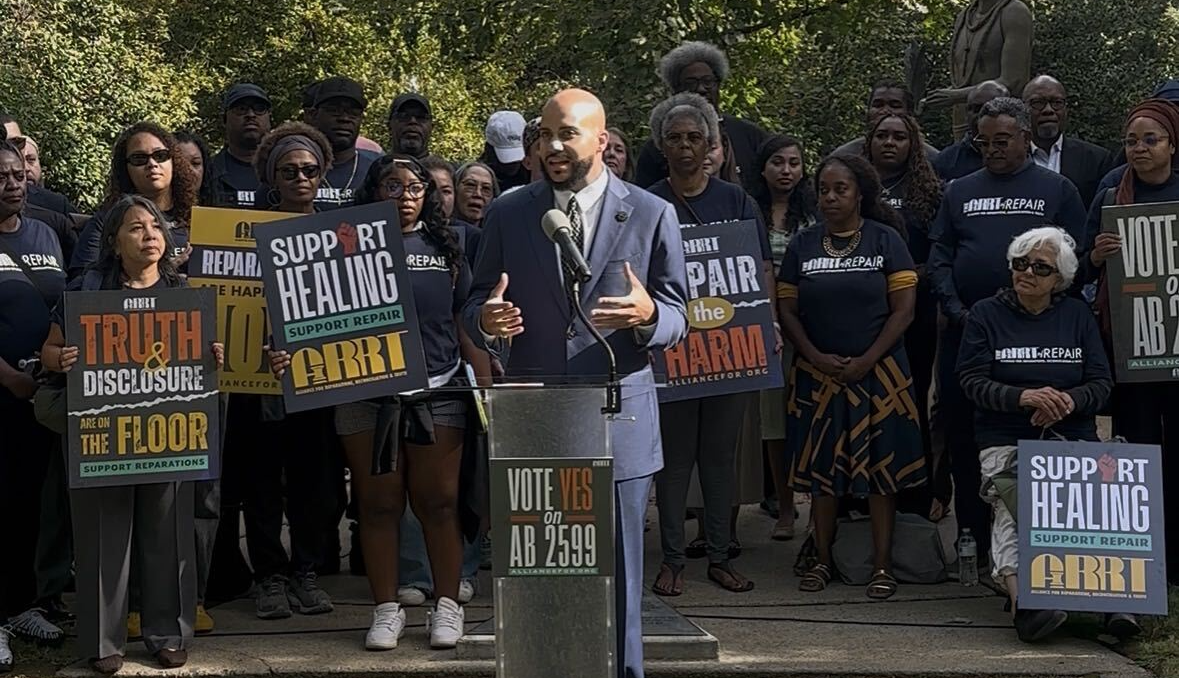
SACRAMENTO, Calif., August 25, 2026 – California is on the brink of becoming the first state in the nation to require corporations to declare under oath whether they or their predecessors profited from slavery.

With its passage in the full Senate today, the California State Legislature adopted AB 2599, The Truth in Disclosure Act, authored by Assemblymember Isaac Bryan and a top priority for the California Legislative Black Caucus. The bill will now be sent to Governor Gavin Newsom for his signature.

The bill requires corporations doing business in California with annual revenue of $100 million in gross receipts or more to submit sworn affidavits — subject to perjury penalties — disclosing whether they or predecessor entities engaged in or profited from slavery-era transactions, with all filings posted to a publicly searchable state database.

0

What we can and cannot say about climate change and the Nepal disaster

What we can and cannot say about climate change and the Nepal disaster www.theclimatebrink.com
preview

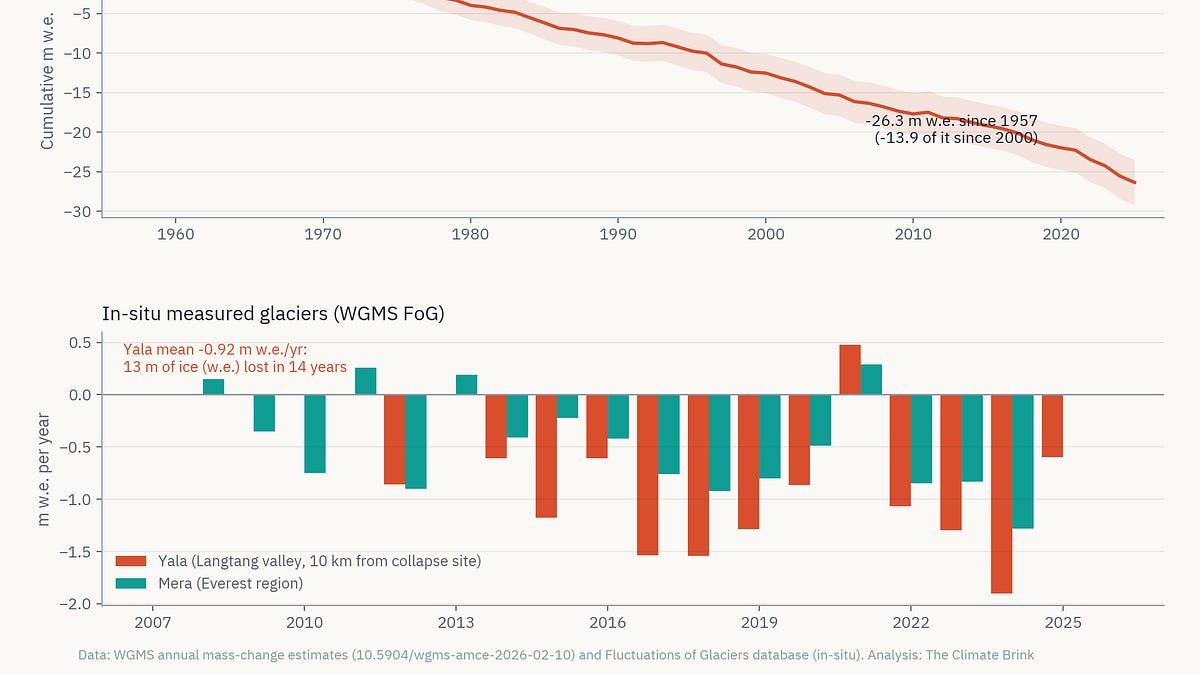
Within hours, some people on social media were confidently asserting that climate change caused the disaster, while others were just as confidently asserting it had nothing to do with it. In this piece I’ll try and lay out what the data and the scientific literature actually supports.

The short version is this: any formal attribution of this specific collapse to climate change is premature, and single events like this are genuinely hard to attribute even after careful study. At the same time, the collapse happened on a mountain that has warmed rapidly for decades, immediately after four consecutive summers that all rank among the five warmest in at least 86 years, and in a valley that has been losing ice at an accelerating rate. A rapidly warming climate and retreating glaciers are increasing risks of these sorts of events in the region, whether or not we can ultimately attribute this particular event.

0

[OC] People tried to beat the stock market 100K+ times in a simulation. They lost, a lot.

preview

Hello,

I made beatthecouch.com in July and it’s basically a game where you try to beat the S&P 500 and buy/sell when you want. Your opponent is a couch. It buys on day one and never sells.

Now over 100K+ games later, the hypothesis stands: it’s not wise to try to trade and time the market. Here’s the original data from the actual games itself.

Source: the game’s own database, every completed game Jul 12 to Aug 28. Tool: Python and matplotlib. Market data: S&P 500 daily total returns 1928 to 2019.

thanks!

0

Panama, Alberta: Canada and the return of U.S. hemispheric imperialism | CCPA

CCPA Panama, Alberta: Canada and the return of U.S. hemispheric imperialism | CCPA www.policyalternatives.ca
preview

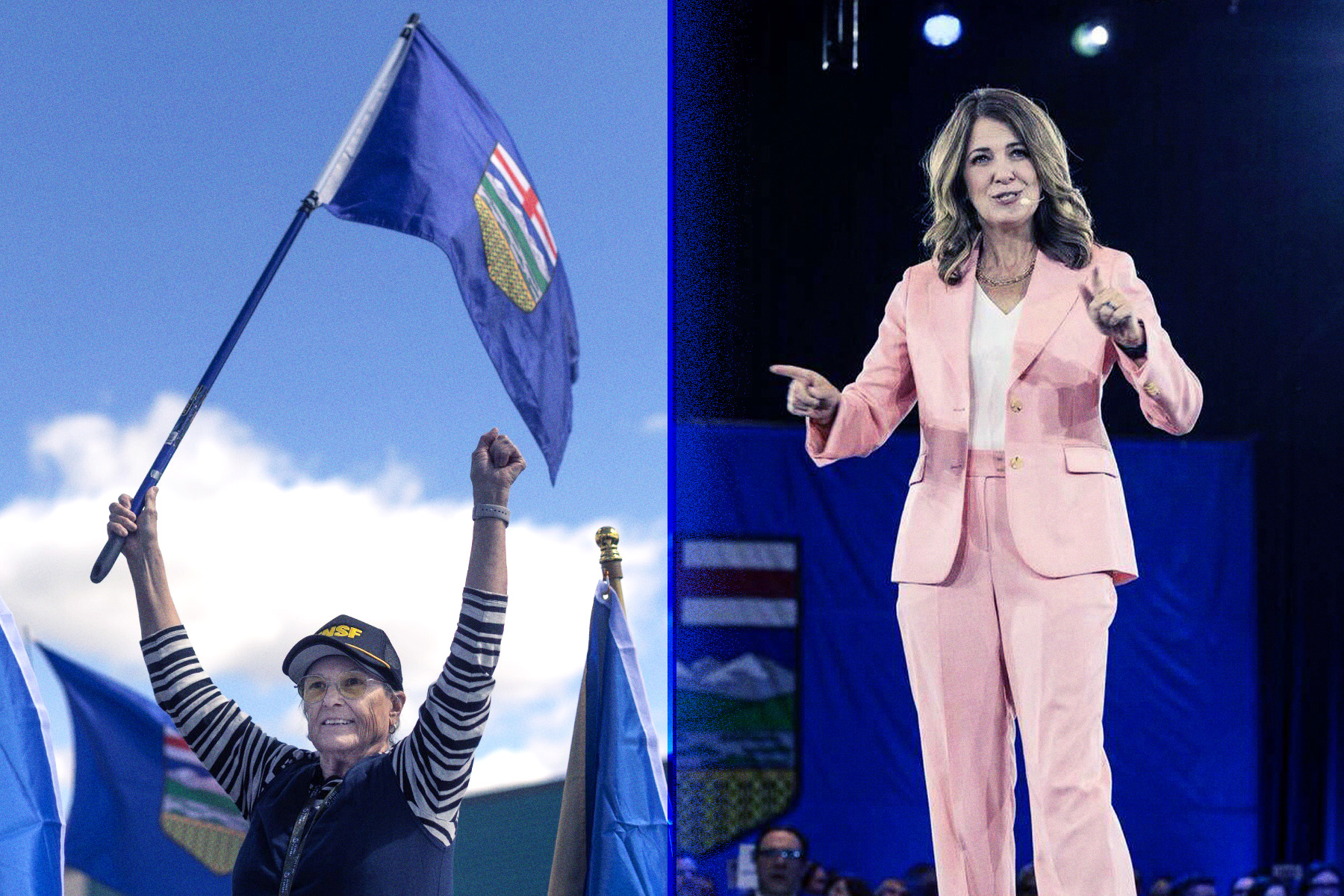
“Nobody’s independent in the modern world,” says one of the men leading Alberta’s independence movement.

Speaking to CTV, Jeff Rath was, at that moment, dodging a question about his level of coordination with the U.S. government. He rattled off a series of theories about how “communist Ottawa” was in league with “communist China” to keep Albertans as “resource slaves.”

Rath—legal counsel for the Alberta Prosperity Project (APP) and something of an unofficial spokesperson for the Alberta separatist movement—has made no secret of his affinity for the U.S. government during the ongoing campaign to launch a separation referendum in Canada’s richest province. He has, however, attempted to keep the identity and content of his meetings with them under wraps.

Some of the meetings have allegedly taken place in sensitive compartmented information facilities (SCIF), soundproof and highly secure rooms behind multiple complex locks where electronic devices like cell phones are not permitted. SCIFs are typically reserved for high-level classified meetings.

Those meetings, if you believe Rath, have covered a wide range of topics, including converting an independent Alberta to U.S. currency and border arrangements. U.S. officials have not confirmed any of the details of their meetings, but some regime officials, like Treasury Secretary Scott Bessant, have voiced support for Alberta secession.

“We are exchanging information with senior officials in the U.S. state department,” he said. “We have an agreement with the people that we’re meeting with, that we aren’t disclosing the identities of the people that we’re meeting with.”

“The Americans see it within their national interest,” Rath said elsewhere, “both under the Monroe Doctrine […] and their new National Security Strategy, to support Alberta independence.” The Americans, he says, support “freeing” Alberta’s oil fields.

Tropical Americanism:

When the U.S. government kidnapped Venezuela’s president and his wife from their home in the middle of the night on January 3, the State Department posted an image online of Donald Trump emblazoned with the words “This is OUR hemisphere.” In a celebratory press conference, Trump announced that the operation was an application of the “Donroe document,” and that “American dominance in the Western Hemisphere will never be questioned again.”

What Trump called the “Donroe [doctrine],” the more serious figures in his regime’s inner circle refer to as the “Trump Corollary” to the Monroe Doctrine, an American foreign policy principle first outlined by President James Monroe in 1823. Monroe’s principle was that the United States would use its military might to “defend” the hemisphere against European empires, such as the British, French, and Spanish, who were, at the time, carving up much of the world into colonies and fighting to preserve existing colonies in the Americas. The Monroe Doctrine stated that the U.S. would be the “protector” of the Americas from European powers.

At the time, the announcement was met with cautious optimism in the rest of the hemisphere, particularly among the recently independent states of South America. El Libertador himself, Simon Bolivar, expressed gratitude, as did the leaders of newly independent Colombia and Argentina as well as Mexico.

Before long, it became clear that the “protection” that the United States was offering was the protection of a mafia boss. Within 20 years, the United States had gone to war with Mexico and stolen half of its territory—nearly all of what is now the Southwestern U.S., from Texas to California—as part of its grand designs of “manifest destiny.” The U.S. army conquered and territorialized Puerto Rico and Cuba in the Caribbean, as well as Hawaii and the Philippines in the Pacific.

Southern slave aristocrats like William Walker imagined a slave empire stretching all the way through the Caribbean and central America. Walker led a government-backed battalion of U.S. settlers in an ultimately failed 1856 attempt to conquer Nicaragua and use it as a beachhead to take the entire region. “Tropical America,” he wrote, is the “natural seat of empire” for U.S. slavery.

Imperial secession:

Panama—at the time a province of Colombia, not an independent country—was a particularly successful example of U.S. imperial strategy in the region at the turn of the 20th century. Ever since Vasco Núñez de Balboa crossed the isthmus and “discovered” the Pacific ocean in 1513, the area had been of interest to the great powers because of its status as the narrowest point between the Atlantic and Pacific oceans. While the conquistadors dreamed of building a canal, Spain’s King Philip II prohibited it, believing that if God wanted the oceans joined then He would have built a river.

That changed when Latin America’s independence revolutions marched victoriously across the continent. They sought U.S. financing for the construction of a railroad across the 75-kilometer strip of land, and opened to a French conglomerate for the construction of a canal. Hundreds of workers died for every kilometer of canal dug through the swamps and mountains—mostly imported Chinese and Black Caribbean workers, dead of disease or worked to death by their U.S. and European overseers.

When the French venture went bankrupt, the U.S.—which had already been “providing security” to the remote and rebellious province via a defence treaty with Colombia—made a novel proposal: it would take over the canal project in exchange for permanent sovereignty over the canal, which would become a U.S. territory subject to U.S. law. When the Colombian government refused, the U.S. began financing and arming a separatist movement in the Colombian province.

Members of the secessionist movement, such as Manuel Amador Guerrero, who would go on to be Panama’s first president, toured the United States and held secret meetings with U.S. government officials, where they raised significant funds and received guidance directly from arch-imperialist U.S. President Teddy Roosevelt. Those secessionists unilaterally declared Panama to be an independent country in 1903, doing so in violation of Colombian law and holding no vote on the question.

The United States provided diplomatic recognition to the newly independent country immediately. It also sent a large Navy battalion to defend it against the Colombian government—alongside a team of engineers to start planning the canal.

In exchange for this backing, the leaders of the new state signed an agreement with the United States granting it what Colombia had previously refused—sovereignty over the future Panama Canal. The canal itself, as well as eight kilometers in each direction, would be governed as a U.S. territory, separating Panama in two with a border fence and armed U.S. soldiers.

The Canal Zone, as it was called, was an apartheid system modelled on the U.S. Jim Crow south. It divided residents into white “gold roll” workers and mostly Black “silver roll” workers, who lived in substandard housing. It had a number of bizarre moralistic bylaws, such as one outlining that only married couples could occupy homes, while unmarried people lived in shared housing. White and Black workers entered the Canal Zone through separate doors, had access to separate food systems, and lived with vastly different access to resources.

The U.S. fully controlled the Canal Zone until 1979, despite regular protests from Panamanians, who were sometimes killed by U.S. soldiers for crimes such as raising the Panamanian flag. After decades of popular pressure, in 1979 the U.S. agreed to jointly administer the Zone with Panama until 1999, when the country finally recovered sovereignty over the area after nearly 100 years. Recently, U.S. regime officials, including President Donald Trump, have publicly mused about taking it back.

Monroe’s favourite child:

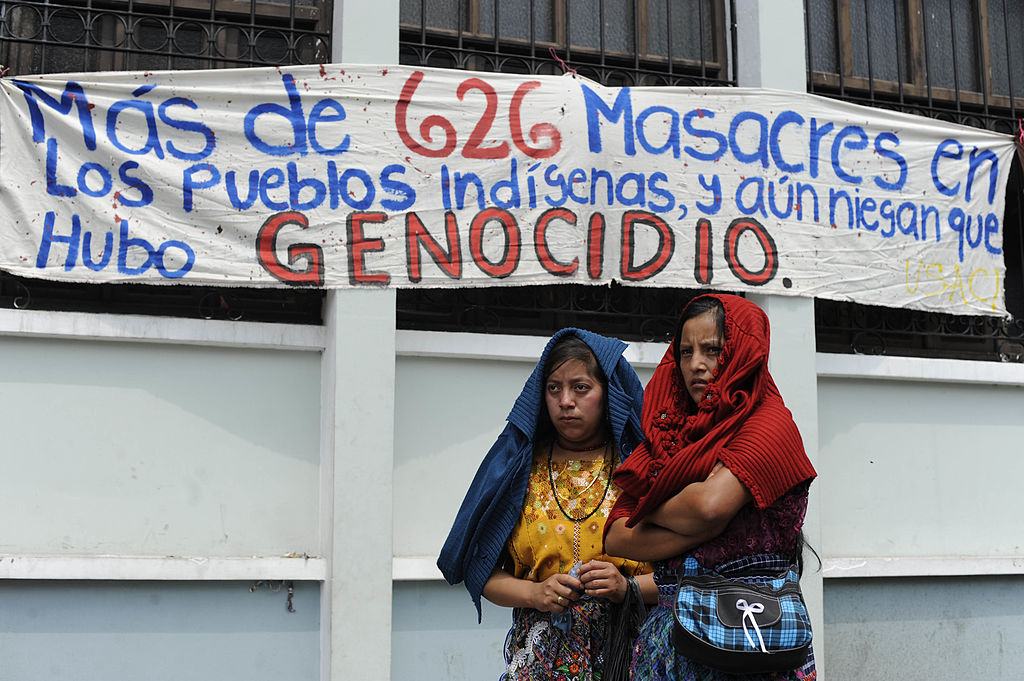
Over the course of the 20th century, the United States applied the Monroe Doctrine to systematically destroy democratic governments everywhere in the region. Monroe’s hand stretched over the “banana wars” of the early 1900s, in which the U.S. Marine Corps engaged in dozens of “small wars” against independent-minded governments in Central America and the Caribbean, and onto the U.S.-imposed military dictatorships on the entire South American continent in the 1960s and 70s. Its grip tightened at the School of the Americas (hosted in Panama), where U.S. military officers trained legions of Latin American soldiers in the art of torture, assassination, and repression of dissent. Monroe’s fingerprints covered the “Operation Condor” transnational assassination program, and the U.S.-sponsored genocide against Maya Indigenous Peoples in Central America in the 1980s The Monroe Doctrine has, since its inception, served as justification for brutal U.S. domination over Latin America.

Along the way, the Monroe doctrine was adapted by new and more aggressive leaders. Theodore Roosevelt’s “Roosevelt Corollary” justified limitless U.S. military involvement as an “international police power” in the hemisphere, launching military interventions against countries for crimes like failure to pay debts to European banks or engaging in land reform. The 1980s “Reagan Doctrine” elaborated on U.S. strategy, advocating for arming and supporting far-right terrorist groups in order to destabilize left-wing and socialist governments, with the most famous example being Nicaragua’s Contras.

Canada has long been something of an exception to U.S. domineering in the Americas. After an initial period of uncertainty—U.S. presidents in the early days of the republic did imagine annexing Canada, and famously lost the War of 1812 trying to remove British sovereignty over the territory—the U.S. recognized Canadian sovereignty in 1871 with the Treaty of Washington, and annexationist claims mostly fell to the wayside. Canada sheltered under the umbrella of British power and developed itself as a junior partner of the expanding U.S. empire.

Successive Canadian governments worked towards greater integration with the United States, as well as coordination on extracting resources for the U.S. market, both from within Canada and, later, via Canadian mining companies operating in Latin America. Canada acted as a hemispheric partner in the Cold War and (with some notable exceptions, such as diplomatic support of post-revolutionary Cuba) supported U.S. efforts to suppress democratic, anti-colonial, and socialist movements in the hemisphere that threatened the profits of U.S. and Canadian investors. Canada integrated with the U.S. imperial machine, rather than being targeted by it.

That bargain is collapsing under the “Trump Corollary” to the Monroe Doctrine. Initially outlined in a Foreign Policy article titled “The Trump Doctrine”, by right-wing ideologue Michael Anton in 2019, the corollary was fleshed out and became policy with a document titled National Security Strategy of the United States of America, which the Office of the President released in November 2025. The document, likely also written by Anton, outlines a number of principals for Trump-era foreign policy, guided by explicit ethnic chauvinism and a strategy of using military threats to achieve foreign policy goals. In practice, it has meant engaging in unprovoked attacks against Venezuela, illegal blockades of Cuba, and open threats against countries with left-wing leadership like Mexico and Colombia.

The Trump corollary, to the extent it has been elaborated, is a plan for complete dominance of the Western hemisphere, including Canada and Greenland, both of which have grown of interest to U.S. capital and the U.S. security state as a result of climate change and growing imperial competition with Russia and China. U.S. security planners are already drawing up fanciful plans for militarizing the North with missile defence programs like the “Golden Dome,” and U.S. capital is hungrily eyeing the critical minerals that are increasingly accessible as Arctic ice recedes.

Those environmental changes are also turning the Northwest Passage into an increasingly important shipping corridor. While it’s a long way from being the Panama Canal, the Northwest Passage is seeing significant growth in ship traffic—up nearly 80 per cent between 2013 and 2022, and likely to grow faster due to plans to increase Northern industrial and military activity.

The Canadian government views the Northwest Passage as a Canadian territorial waterway. The U.S. does not recognize Canadian sovereignty over the passage, and believes it constitutes international waters.

The Trump corollary also explicitly rejects the idea that countries in the hemisphere should be allowed to do business with non-U.S. partners. “We want other nations to see [the U.S.] as their first partner of choice,” the National Security Strategy reads, but “we will (through various means) discourage their collaboration with others.” It tasks U.S. embassies with being “aware of major business opportunities in their country, especially major government contracts,” and states that “the terms of our agreements, especially with those countries that depend on us most and therefore over which we have the most leverage, must be sole-source contracts for our companies.”

Stars and stripes over the oil sands:

Jeff Rath’s claims about China controlling Alberta oil are obviously absurd, and only the most foolish of rubes actually believes them. As are his claims about Ottawa putting the brakes on extraction. Alberta’s oil production has climbed steadily over the past decade, from 2.9 million barrels per day when Justin Trudeau took office in 2015 to 4.1 million in 2025— scrapping Canada’s climate commitments in the process.

And while it’s true that Alberta’s oil industry is under the thumb of foreign interests, those interests aren’t Chinese—they are overwhelmingly U.S. interests. A 2020 study by Environmental Defence estimated 70 per cent of oil sands production is foreign owned, and 52 per cent of the total is owned by U.S. capital, compared to only 5.2 per cent Chinese ownership.

If we look at the “big four” companies in the patch—which account for the vast majority of total production—we find that the companies, despite having headquarters in Canada, are majority-owned by U.S. investors, with an average of 60 per cent U.S. ownership and 27 per cent Canadian. Those companies only paid a miserly 14.3 per cent of their profits in taxes. During the post-pandemic oil boom, this all meant approximately $58 billion in profits left Alberta to U.S. investors, according to a 2025 report by Canadians for Tax Fairness and the Alberta Federation of Labour.

All this happened without a concurrent employment boom, because the increases in production largely occurred in well-established sites and accelerated through automation. The big four made $3.14 in profit for every dollar they paid to workers in the post-pandemic boom, compared to $0.92 during the 2011-14 boom.

This is why so many Albertans have a sensation—one helping drive secessionist sentiment—that the oil industry never recovered from the 2014 price collapse: because employment never did. Even today, though the U.S.-dominated oil industry is more profitable than ever and produces more barrels of oil to match. None of this is the result of Ottawa’s environmental policy, of course. Rather, it is the result of U.S.-owned companies looking to squeeze every drop of profit that they can out of Alberta’s resources and shipping them across the 49th parallel.

Rath, for his part, claims the unnamed U.S. officials he met have promised to immediately recognize an independent Alberta if they succeed in their secession referendum. He also says they promised him a $500 billion loan during the transition period.

Ballots and bombings:

In March 2026, the far-right leaders of 17 countries in the western hemisphere met at one of Donald Trump’s Florida golf resorts to announce the new military coalition, which they called the Shield of the Americas.

These leaders, aligned with the Trump administration, announced their fealty to the U.S. and their plan to allow the U.S. military unlimited access to their territory for strikes against cartels and drug gangs. The U.S. regime apparatchik administering the project is former Homeland Security chief Kristi Noem, who had just finished leading the invasion and occupation of Minneapolis by federal troops with Immigration and Customs Enforcement (ICE).

This takes place in the context of increasingly aggressive U.S. military action across the hemisphere, where Operation Southern Spear has seen the bombing of (alleged) drug boats in international waters, bombing of farms with (alleged) drug labs, and targeted killings of (alleged) gang members. The U.S. has justified these actions by designating various drug cartels as terrorist organizations.

The Trump Corollary is, in practice, a merger of the War on Drugs with the War on Terror, and one that uses both as a thin facade to cover attacks on countries in the hemisphere which don’t toe the line. Reality, under the Trump Corollary, is irrelevant—just like there was no flood of fentanyl pouring over the Canadian border into the U.S., the “Cartel de los Soles” that Venezuelan President Nicolás Maduro supposedly led does not actually exist.

Meanwhile, the U.S. government has also been openly meddling in elections across the hemisphere as well to ensure far-right parties take power. Trump promised a US$40 billion bailout to Argentina if they voted for the far-right party, and the U.S. intervened directly to prevent the election of a left-wing government in Honduras after Trump issued a presidential pardon to former far-right Honduran president Juan Orlando Hernández, who was convicted of major drug trafficking.

Will they intervene to support Alberta’s far-right secessionist movement? If you listen to Jeff Rath, they already are.

0

The Blueprint Behind Danielle Smith’s Plan to Break Up with Canada | The Walrus

The Walrus The Blueprint Behind Danielle Smith’s Plan to Break Up with Canada | The Walrus thewalrus.ca
preview

During the last United States presidential campaign, an ominous 920-page policy document emerged into the public eye. Known as Project 2025 and released by the Heritage Foundation, it laid out a blueprint for a maximalist version of executive power, a sidelining of congressional power, and a radical overhaul of government, the bureaucracy, and American society writ large.

It was a playbook for the far right and unreservedly so. It raised such a spectre during the campaign that candidate Donald Trump denied any knowledge of the document. But within his first year back in the Oval Office, Trump had managed to implement much of the Project 2025 agenda in his quest to “Make America Great Again.” We’ve all seen how that has been going for the United States and, frankly, for the rest of the world. The only word that captures it is “revolutionary.”

There are probably only a few dozen people or so who have actually read Project 2025 cover to cover. I don’t count myself as one of them. But I did read Alberta’s own little version of the document, and it was illuminating to say the least.

Like many Albertans, I’ve been struggling to keep pace with the rate at which the United Conservative Party has legislated since Danielle Smith took the helm in 2022, often in unconstitutional ways that target minorities and override treaty rights. They have passed legislation, often in the middle of the night, that will leave extraordinary impacts on citizens of the province, alter the nature of our democratic society, and could ultimately see Alberta remove itself from Confederation. On four occasions, they have invoked the notwithstanding clause to override Canada’s Charter of Rights and Freedoms.

Some people, such as federal justice minister Sean Fraser, have described this approach as a form of “democratic backsliding” designed “to cater to a unique political opportunity that may be a good fundraising email but will potentially violate constitutionally protected rights of vulnerable people.”

Similar to our neighbours in the US, Albertans are in our own anti-democratic revolutionary political vortex, in which we’re being pulled into the unknown by a MAGA-adjacent far-right UCP government.

It might have helped to see some of this coming. Turns out we could have, if only we’d read the Free Alberta Strategy sooner.

The Free Alberta Strategy was written in 2021 by Rob Anderson, Barry Cooper, and Derek From at the height of anti–Justin Trudeau sentiment in the province and in the altered-reality state of the COVID-19 pandemic lockdown, when so many radical ideas were incubated in a stew of isolation and myopia-inducing screen time. Anderson is a lawyer with a history in provincial politics who is now Premier Smith’s chief of staff. Cooper is a political science professor at the University of Calgary. From is also a lawyer.

The document is a shade under fifty pages and contains a smattering of footnotes from Ted Morton, Jack Mintz, Lorne Gunter, Preston Manning, Pierre Poilievre, and the Fraser Institute. Not exactly a non-partisan affair.

It certainly isn’t written with any attempt at neutrality or objectivity either. On the contrary, it is laced with incendiary rhetoric that seeks to demonize Eastern Canada in simplistic and snide ways. It sets Alberta up as an oppressed victim of Confederation that has been “pillaged” by a federal government that has become an “existential threat to our province’s economic viability and the core freedoms of our people.”

The strategy asserts that “Ottawa has fundamentally breached its constitutional agreement with Alberta.” Accordingly, it has become incumbent upon the provincial government to “repudiate this arrangement on behalf of its people, to renegotiate its terms of membership in Confederation and, if Canada’s federal and provincial leaders refuse to negotiate, to form an independent nation.”

The authors then call on the government of Alberta, at the time led by Premier Jason Kenney, to pass a Sovereignty Act that would allow the province to disregard all federal laws at its discretion; turf the Royal Canadian Mounted Police and replace it with a provincial force; create independent provincial legislation for financial institutions, presumably to end federal regulatory oversight over banks working in the province; end equalization transfers; opt out of federal health, education, resource development, environmental regulation, and property rights; replace the Canada Pension Plan with an Alberta version; do the same with employment insurance; replace the federal government in international diplomacy and negotiation; and give the provincial legislature the power to make all future judicial appointments.

These are the strategic moves the authors believe will “offload the burden of Ottawa’s tyrannical economic policies against the Province, and secure self-determination for the people of Alberta within a reformed confederation, or if necessary, as an independent nation.”

According to the authors, “a vast majority of Albertans” agree that the province, in recent years, has been “economically terrorized by the Government of Canada.” “Eco-extremists,” they say, have looted the province of “well over $600 billion” through transfer programs.

Anderson, Cooper, and From blame the federal government for increases in suicides, bankruptcies, and overdoses. And they suggest the feds have “commenced a deliberate strategy to phase out and eliminate Alberta’s largest and most critical industry.” Policies such as the carbon tax, clean fuel regulations, and environmental impact assessments are characterized as “assaults.”

All of this dramatically sets up an extortion play which is the core of the strategy: “In the event that Ottawa refuses to recognize Alberta’s provincial rights of sovereignty, and instead continues its strategy of economic tyranny, co-opted management of our resource sector and the marginalization of our citizens, it may leave our province with no other recourse but to leave Confederation entirely.”

Rather than co-operative federalism, this is shakedown federalism. It’s a “do what we say or we are done” strategy rooted in an inflated sense of grievance that doesn’t jibe with any discernible reality.

Politicians and political scientists are careful to acknowledge the real sense of grievance that some Albertans feel vis-à-vis their relationship with the federal government. You can’t argue with people’s feelings after all, but you can take issue with how they choose to rationalize and justify them. There’s nothing on the public record that could plausibly support characterizing the federal government’s relationship with Alberta as something equivalent to economic terrorism, as the authors of the Free Alberta Strategy assert. To the contrary, since 2010, oil production in the province has more than doubled, from 2 million barrels a day to 4.1 million barrels a day.

The Free Alberta Strategy didn’t get much traction with Kenney’s UCP, perhaps because in year one of Kenney’s reign, Canada’s prime minister, Justin Trudeau, ramped up investment in the TMX pipeline, which runs from Edmonton to tidewater at Burnaby, British Columbia. The project eventually cost the federal government $34.2 billion. Even for Kenney, it would have been a stretch to describe this massive outlay of public dollars as an “assault” or a form of “terrorism” committed against his province by the evil overlords in Ottawa.

But since Kenney was given the bum’s rush by the far-right separatist wing of the party he created, the strategy has come back into vogue. In fact, Kenney’s successor, Premier Smith, is hewing closely to much of the plan.

Before going further, it’s important to be fair to the authors of the Free Alberta Strategy and not portray them as fully responsible for planting the anti-democratic seeds the UCP has sown.

The trio of Anderson, Cooper, and From were careful to recommend a transparent approach to adopting their strategy and, if necessary, a democratic path to ending Alberta’s place in Confederation. They prescribed their strategy first be adopted as official policy, that the policy be outlined clearly to Albertans, and that a democratic process gives the government the mandate to pursue the strategy.

With the mandate in hand, after a successful electoral victory with the Free Alberta Strategy as a platform, they suggested holding a pre-referendum blue-ribbon panel on provincial secession and that a detailed plan be drafted by policy experts, lawyers, and members of the private and public sectors that would cover the full ambit of requirements to establish an independent Alberta. They argued for a full year to be given to consultations, discussions, and debates on the merits of the plan and its risks and rewards.

Smith’s UCP did not follow this recommended process. Just as Trump denied any knowledge of Project 2025 and then proceeded to implement vast portions of its radical agenda within his first year back in the White House, Smith’s UCP did not campaign on the Free Alberta Strategy’s tenets but has embraced them wholeheartedly since forming government. Smith’s UCP doesn’t, therefore, have a democratic mandate to pursue these ideas, by any standard. Yet they have implemented the components of the strategy at a ferocious pace.

First, through Bill 54, which made it comprehensively easier to bring about a secession referendum by reducing the number of signatures required, and then Bill 14, which was passed in order to eliminate any bearing the Charter of Rights of Freedoms and the Treaties might have on the process, the UCP has shown it intends to construct a credible threat of separatism that it can use to extort the rest of Canada.

They have taken the Free Alberta Strategy into Trumpian territory by running on one set of issues and governing on their opposite. Believe it or not, the planks of the UCP’s winning 2023 campaign platform were tax cuts, safe streets, mental health supports, education and career training, investing in tourism, improving health care for women and children, and a guarantee to maintain public health care. None of the ideas included in the Free Alberta Strategy were campaigned on by Smith’s UCP.

However, in December 2022, just two months after Smith won the leadership of the UCP, her party introduced the Alberta Sovereignty within a United Canada Act, which achieves one of the Free Alberta Strategy’s major milestones. This really should have been a wake-up call to the electorate that under Smith’s leadership, the UCP would tack hard to the right. “It’s not like Ottawa is a national government,” said Smith after the legislation passed its final reading at 1 a.m. on December 7.

Provisions in the Sovereignty Act armed Smith’s government with a set of new powers to disregard federal laws at its own discretion. In effect, this kneecaps the role of the courts in this province by setting the provincial legislature as the arbiter of the constitutionality of federal law.

In a radical revision of constitutional democracy, the act allows the provincial cabinet to decide whether it is in or out on specific aspects of federalism, including federal regulations and even enforcement of the Criminal Code by provincial entities. The dean of the University of Calgary’s law school, Ian Holloway, called the legislation an “unconstitutional gambit” and accused the premier of “engaging in a game of political chicken.”

Smith’s government furthered this line of legislation in late 2025 with the International Agreements Act, which seeks to put the province on an equal plane with the federal government when it comes to managing international relations. It asserts that no international agreement signed by the federal government is binding on the province. Something like a major climate change agreement would presumably not be binding on Alberta unless agreed to by the provincial legislature.

This assertion of provincial autonomy over international relations runs counter to all norms of statecraft. But it is a tactic explicitly described in the Free Alberta Strategy, which states in its section on international relations that Alberta “can no longer afford to entrust its interests to hostile and unreliable federal governments. It must take full control of its own international and interprovincial trade and commerce.”

How Alberta’s Separatist Movement Could Shake North America Is Danielle Smith the Most Powerful Politician in Canada? Is Danielle Smith a Separatist? Among the ideas the UCP has drawn from the Free Alberta Strategy is establishing a provincial police force. The strategy casts the RCMP as an arm of the federal government, and Alberta has begun building its own alternative, the Alberta Sheriffs Police Service.

There remains a great deal of ambiguity with respect to these sheriffs’ purpose, jurisdiction, and relationship with other police services in the province. The sheriffs were originally established to do prisoner transport but evolved to take on traffic control roles and security around the legislature grounds. The latest evolution of the service appears aimed at broadening their authority and increasing their complement to the point that they could eventually be in position to take over from the RCMP at the end of the current policing contract, which expires in 2032.

Setting up a provincial police service is no easy task and doesn’t happen overnight or without extraordinary cost. It is notable that this is being done against the grain of overwhelming public opinion. A survey conducted for the National Police Foundation on the prospect of an Alberta provincial police force found only 31 percent of respondents were in favour of replacing the RCMP, while three quarters were satisfied with the policing services received from the Mounties; 71 percent of respondents said they felt the public had not been adequately consulted on the proposal, and 81 percent said there were more pressing issues for the province to address.

In an additional move inspired by the Free Alberta Strategy, the premier sent Prime Minister Mark Carney a letter on January 23, 2026, threatening to withhold “the necessary funding to support any new judicial positions in the province” until the federal government agreed to make significant changes to how judges are appointed in Alberta. The premier has, for now, stopped short of the nuclear option articulated by the Free Alberta Strategy, which recommends the provincial legislature appoint all future judges serving in Alberta.

Instead, the premier is proposing a major reform of the appointments process that would see the establishment of a special advisory committee comprising “four non-partisan experts—two from Alberta and two appointed by the federal government.” The committee would make recommendations to the two ministers of justice (federal and provincial), who would then be expected to “work collaboratively to identify the successful appointee(s).”

The premier also wants this committee to influence appointments to the Supreme Court of Canada and make recommendations to the prime minister about who should fill vacancies on the top bench.

Federal justice minister Fraser saw the letter as a threat to judicial independence and the rule of law and told media “it’s essential that we have a judiciary who’s able to make decisions without fear or favour amongst those who have the power to appoint or, in theory, remove a judge from the bench.” The Canadian Bar Association and its Alberta branch also expressed “grave concerns” about Premier Smith’s proposal, which they saw as a threat that, if carried out, would ultimately “punish Albertans by limiting access to a properly functioning justice system.”

Under Smith’s leadership, the UCP has also toyed with the idea of breaking with the Canada Pension Plan and establishing a provincial plan instead. Smith floated the idea—one of the main pillars of the Free Alberta Strategy—as part of a 2023 survey she put to all residents of the province who wanted to participate. It took twenty-one months for her government to finally release the results of the survey, which showed that only 10 percent of respondents supported the idea of an Alberta Pension Plan.

The other tactical moves recommended in the Free Alberta Strategy—legislating an end to equalization payments and establishing an independent banking act—have yet to be attempted.

The UCP’s shakedown approach to federalism clearly has its intellectual roots in the Free Alberta Strategy. The approach derives from an understanding of Confederation as being fundamentally unfair to Western Canadians, who, according to one of its authors, Barry Cooper, have been under the thumb of an imperialist power structure seated in Laurentian Canada since before Confederation. It seeks to use the ultimate threat of separation as leverage to reset the terms of the Canadian federation.

For his part, Cooper—a committed separatist—does not believe the Laurentians are capable of comprehending “what they have done.” In an interview for this article, he characterized this as a “failure of imagination” to meet “the just complaints of Alberta and Saskatchewan.”

In June 2020, Cooper joined BC political talk show host Stuart McNish to discuss Alberta separatism. Cooper articulated his theory that Western Canadians have been exploited by the Ontario/Ottawa/Quebec imperial complex and went on to expound a sense of fatalism about the future of Canadian federalism. In his view, Western Canadians will eventually conclude that the relationship with Laurentian Canada will never change or evolve in meaningful enough ways to make it worth remaining in Canada.

According to Cooper: “Eventually you have to do something. Of course it is treasonous, of course it is illegal, and of course it is going to be very unpleasant, and we’re going to have to have . . . help from abroad. We’re going to have to rely on the Americans. It will depend on whether or not Saskatchewan and Alberta have leaders who are willing to understand the very serious implications, which means, among other things, getting the Americans on board.”

Here, Cooper seems to have presaged the now well-publicized efforts of the Alberta Prosperity Project to conscript the help of the Trump administration in their efforts to split Alberta from the rest of Canada. And while the Smith government hasn’t overtly and explicitly declared its separatist intentions, nor openly courted the Trump administration’s support in becoming an independent state, it has legislated in a MAGA-adjacent, far-right fashion.

With Trumpian disregard for constitutional norms, Smith’s government has used the notwithstanding clause to attack the rights of organized labour and of gender-diverse people in the province. With Trumpian xenophobia, it has signalled an intent to crack down on immigration and the rights of immigrants and refugees in the province. It has introduced two-tier health care through Bill 11 and encouraged two-tier education by subsidizing private schools at the highest rate in Canada and increasing funding to charter schools at a rate three times higher than its increase to public schools.

These moves could be construed as demonstrating the UCP’s alignment with the Trump administration. This is not insignificant, particularly in light of the US’s November 2025 National Security Strategy, which states that “we will reward and encourage the region’s governments, political parties and movements broadly aligned with our principles and strategy.”

Cooper was forthright in stating that while he hasn’t spoken with either Rob Anderson—now the premier’s chief of staff—or Premier Smith in a number of years, he is “quite supportive of what she has done.”

As Project 2025 has done in the US, the Free Alberta Strategy has begun to fundamentally alter Alberta politics and society. It provides a clear window into the moves Premier Smith’s UCP will make in destabilizing relations with the rest of Canada and setting Alberta on a path to separation. Canadian citizens can orient themselves amid the chaos by understanding that Smith and her government are intent on pursuing the Free Alberta Strategy to its logical conclusion. If they want a preview of where this is all headed, they need only keep an eye on our neighbours to the south.


During the last United States presidential campaign, an ominous 920-page policy document emerged into the public eye. Known as Project 2025 and released by the Heritage Foundation, it laid out a blueprint for a maximalist version of executive power, a sidelining of congressional power, and a radical overhaul of government, the bureaucracy, and American society writ large.

It was a playbook for the far right and unreservedly so. It raised such a spectre during the campaign that candidate Donald Trump denied any knowledge of the document. But within his first year back in the Oval Office, Trump had managed to implement much of the Project 2025 agenda in his quest to “Make America Great Again.” We’ve all seen how that has been going for the United States and, frankly, for the rest of the world. The only word that captures it is “revolutionary.”

There are probably only a few dozen people or so who have actually read Project 2025 cover to cover. I don’t count myself as one of them. But I did read Alberta’s own little version of the document, and it was illuminating to say the least.

Like many Albertans, I’ve been struggling to keep pace with the rate at which the United Conservative Party has legislated since Danielle Smith took the helm in 2022, often in unconstitutional ways that target minorities and override treaty rights. They have passed legislation, often in the middle of the night, that will leave extraordinary impacts on citizens of the province, alter the nature of our democratic society, and could ultimately see Alberta remove itself from Confederation. On four occasions, they have invoked the notwithstanding clause to override Canada’s Charter of Rights and Freedoms.

Some people, such as federal justice minister Sean Fraser, have described this approach as a form of “democratic backsliding” designed “to cater to a unique political opportunity that may be a good fundraising email but will potentially violate constitutionally protected rights of vulnerable people.”

Similar to our neighbours in the US, Albertans are in our own anti-democratic revolutionary political vortex, in which we’re being pulled into the unknown by a MAGA-adjacent far-right UCP government.

It might have helped to see some of this coming. Turns out we could have, if only we’d read the Free Alberta Strategy sooner.

The Free Alberta Strategy was written in 2021 by Rob Anderson, Barry Cooper, and Derek From at the height of anti–Justin Trudeau sentiment in the province and in the altered-reality state of the COVID-19 pandemic lockdown, when so many radical ideas were incubated in a stew of isolation and myopia-inducing screen time. Anderson is a lawyer with a history in provincial politics who is now Premier Smith’s chief of staff. Cooper is a political science professor at the University of Calgary. From is also a lawyer.

The document is a shade under fifty pages and contains a smattering of footnotes from Ted Morton, Jack Mintz, Lorne Gunter, Preston Manning, Pierre Poilievre, and the Fraser Institute. Not exactly a non-partisan affair.

It certainly isn’t written with any attempt at neutrality or objectivity either. On the contrary, it is laced with incendiary rhetoric that seeks to demonize Eastern Canada in simplistic and snide ways. It sets Alberta up as an oppressed victim of Confederation that has been “pillaged” by a federal government that has become an “existential threat to our province’s economic viability and the core freedoms of our people.”

The strategy asserts that “Ottawa has fundamentally breached its constitutional agreement with Alberta.” Accordingly, it has become incumbent upon the provincial government to “repudiate this arrangement on behalf of its people, to renegotiate its terms of membership in Confederation and, if Canada’s federal and provincial leaders refuse to negotiate, to form an independent nation.”

The authors then call on the government of Alberta, at the time led by Premier Jason Kenney, to pass a Sovereignty Act that would allow the province to disregard all federal laws at its discretion; turf the Royal Canadian Mounted Police and replace it with a provincial force; create independent provincial legislation for financial institutions, presumably to end federal regulatory oversight over banks working in the province; end equalization transfers; opt out of federal health, education, resource development, environmental regulation, and property rights; replace the Canada Pension Plan with an Alberta version; do the same with employment insurance; replace the federal government in international diplomacy and negotiation; and give the provincial legislature the power to make all future judicial appointments.

These are the strategic moves the authors believe will “offload the burden of Ottawa’s tyrannical economic policies against the Province, and secure self-determination for the people of Alberta within a reformed confederation, or if necessary, as an independent nation.”

According to the authors, “a vast majority of Albertans” agree that the province, in recent years, has been “economically terrorized by the Government of Canada.” “Eco-extremists,” they say, have looted the province of “well over $600 billion” through transfer programs.

Anderson, Cooper, and From blame the federal government for increases in suicides, bankruptcies, and overdoses. And they suggest the feds have “commenced a deliberate strategy to phase out and eliminate Alberta’s largest and most critical industry.” Policies such as the carbon tax, clean fuel regulations, and environmental impact assessments are characterized as “assaults.”

All of this dramatically sets up an extortion play which is the core of the strategy: “In the event that Ottawa refuses to recognize Alberta’s provincial rights of sovereignty, and instead continues its strategy of economic tyranny, co-opted management of our resource sector and the marginalization of our citizens, it may leave our province with no other recourse but to leave Confederation entirely.”

Rather than co-operative federalism, this is shakedown federalism. It’s a “do what we say or we are done” strategy rooted in an inflated sense of grievance that doesn’t jibe with any discernible reality.

Politicians and political scientists are careful to acknowledge the real sense of grievance that some Albertans feel vis-à-vis their relationship with the federal government. You can’t argue with people’s feelings after all, but you can take issue with how they choose to rationalize and justify them. There’s nothing on the public record that could plausibly support characterizing the federal government’s relationship with Alberta as something equivalent to economic terrorism, as the authors of the Free Alberta Strategy assert. To the contrary, since 2010, oil production in the province has more than doubled, from 2 million barrels a day to 4.1 million barrels a day.

The Free Alberta Strategy didn’t get much traction with Kenney’s UCP, perhaps because in year one of Kenney’s reign, Canada’s prime minister, Justin Trudeau, ramped up investment in the TMX pipeline, which runs from Edmonton to tidewater at Burnaby, British Columbia. The project eventually cost the federal government $34.2 billion. Even for Kenney, it would have been a stretch to describe this massive outlay of public dollars as an “assault” or a form of “terrorism” committed against his province by the evil overlords in Ottawa.

But since Kenney was given the bum’s rush by the far-right separatist wing of the party he created, the strategy has come back into vogue. In fact, Kenney’s successor, Premier Smith, is hewing closely to much of the plan.

Before going further, it’s important to be fair to the authors of the Free Alberta Strategy and not portray them as fully responsible for planting the anti-democratic seeds the UCP has sown.

The trio of Anderson, Cooper, and From were careful to recommend a transparent approach to adopting their strategy and, if necessary, a democratic path to ending Alberta’s place in Confederation. They prescribed their strategy first be adopted as official policy, that the policy be outlined clearly to Albertans, and that a democratic process gives the government the mandate to pursue the strategy.

With the mandate in hand, after a successful electoral victory with the Free Alberta Strategy as a platform, they suggested holding a pre-referendum blue-ribbon panel on provincial secession and that a detailed plan be drafted by policy experts, lawyers, and members of the private and public sectors that would cover the full ambit of requirements to establish an independent Alberta. They argued for a full year to be given to consultations, discussions, and debates on the merits of the plan and its risks and rewards.

Smith’s UCP did not follow this recommended process. Just as Trump denied any knowledge of Project 2025 and then proceeded to implement vast portions of its radical agenda within his first year back in the White House, Smith’s UCP did not campaign on the Free Alberta Strategy’s tenets but has embraced them wholeheartedly since forming government. Smith’s UCP doesn’t, therefore, have a democratic mandate to pursue these ideas, by any standard. Yet they have implemented the components of the strategy at a ferocious pace.

First, through Bill 54, which made it comprehensively easier to bring about a secession referendum by reducing the number of signatures required, and then Bill 14, which was passed in order to eliminate any bearing the Charter of Rights of Freedoms and the Treaties might have on the process, the UCP has shown it intends to construct a credible threat of separatism that it can use to extort the rest of Canada.

They have taken the Free Alberta Strategy into Trumpian territory by running on one set of issues and governing on their opposite. Believe it or not, the planks of the UCP’s winning 2023 campaign platform were tax cuts, safe streets, mental health supports, education and career training, investing in tourism, improving health care for women and children, and a guarantee to maintain public health care. None of the ideas included in the Free Alberta Strategy were campaigned on by Smith’s UCP.

However, in December 2022, just two months after Smith won the leadership of the UCP, her party introduced the Alberta Sovereignty within a United Canada Act, which achieves one of the Free Alberta Strategy’s major milestones. This really should have been a wake-up call to the electorate that under Smith’s leadership, the UCP would tack hard to the right. “It’s not like Ottawa is a national government,” said Smith after the legislation passed its final reading at 1 a.m. on December 7.

Provisions in the Sovereignty Act armed Smith’s government with a set of new powers to disregard federal laws at its own discretion. In effect, this kneecaps the role of the courts in this province by setting the provincial legislature as the arbiter of the constitutionality of federal law.

In a radical revision of constitutional democracy, the act allows the provincial cabinet to decide whether it is in or out on specific aspects of federalism, including federal regulations and even enforcement of the Criminal Code by provincial entities. The dean of the University of Calgary’s law school, Ian Holloway, called the legislation an “unconstitutional gambit” and accused the premier of “engaging in a game of political chicken.”

Smith’s government furthered this line of legislation in late 2025 with the International Agreements Act, which seeks to put the province on an equal plane with the federal government when it comes to managing international relations. It asserts that no international agreement signed by the federal government is binding on the province. Something like a major climate change agreement would presumably not be binding on Alberta unless agreed to by the provincial legislature.

This assertion of provincial autonomy over international relations runs counter to all norms of statecraft. But it is a tactic explicitly described in the Free Alberta Strategy, which states in its section on international relations that Alberta “can no longer afford to entrust its interests to hostile and unreliable federal governments. It must take full control of its own international and interprovincial trade and commerce.”

How Alberta’s Separatist Movement Could Shake North America Is Danielle Smith the Most Powerful Politician in Canada? Is Danielle Smith a Separatist? Among the ideas the UCP has drawn from the Free Alberta Strategy is establishing a provincial police force. The strategy casts the RCMP as an arm of the federal government, and Alberta has begun building its own alternative, the Alberta Sheriffs Police Service.

There remains a great deal of ambiguity with respect to these sheriffs’ purpose, jurisdiction, and relationship with other police services in the province. The sheriffs were originally established to do prisoner transport but evolved to take on traffic control roles and security around the legislature grounds. The latest evolution of the service appears aimed at broadening their authority and increasing their complement to the point that they could eventually be in position to take over from the RCMP at the end of the current policing contract, which expires in 2032.

Setting up a provincial police service is no easy task and doesn’t happen overnight or without extraordinary cost. It is notable that this is being done against the grain of overwhelming public opinion. A survey conducted for the National Police Foundation on the prospect of an Alberta provincial police force found only 31 percent of respondents were in favour of replacing the RCMP, while three quarters were satisfied with the policing services received from the Mounties; 71 percent of respondents said they felt the public had not been adequately consulted on the proposal, and 81 percent said there were more pressing issues for the province to address.

In an additional move inspired by the Free Alberta Strategy, the premier sent Prime Minister Mark Carney a letter on January 23, 2026, threatening to withhold “the necessary funding to support any new judicial positions in the province” until the federal government agreed to make significant changes to how judges are appointed in Alberta. The premier has, for now, stopped short of the nuclear option articulated by the Free Alberta Strategy, which recommends the provincial legislature appoint all future judges serving in Alberta.

Instead, the premier is proposing a major reform of the appointments process that would see the establishment of a special advisory committee comprising “four non-partisan experts—two from Alberta and two appointed by the federal government.” The committee would make recommendations to the two ministers of justice (federal and provincial), who would then be expected to “work collaboratively to identify the successful appointee(s).”

The premier also wants this committee to influence appointments to the Supreme Court of Canada and make recommendations to the prime minister about who should fill vacancies on the top bench.

Federal justice minister Fraser saw the letter as a threat to judicial independence and the rule of law and told media “it’s essential that we have a judiciary who’s able to make decisions without fear or favour amongst those who have the power to appoint or, in theory, remove a judge from the bench.” The Canadian Bar Association and its Alberta branch also expressed “grave concerns” about Premier Smith’s proposal, which they saw as a threat that, if carried out, would ultimately “punish Albertans by limiting access to a properly functioning justice system.”

Under Smith’s leadership, the UCP has also toyed with the idea of breaking with the Canada Pension Plan and establishing a provincial plan instead. Smith floated the idea—one of the main pillars of the Free Alberta Strategy—as part of a 2023 survey she put to all residents of the province who wanted to participate. It took twenty-one months for her government to finally release the results of the survey, which showed that only 10 percent of respondents supported the idea of an Alberta Pension Plan.

The other tactical moves recommended in the Free Alberta Strategy—legislating an end to equalization payments and establishing an independent banking act—have yet to be attempted.

The UCP’s shakedown approach to federalism clearly has its intellectual roots in the Free Alberta Strategy. The approach derives from an understanding of Confederation as being fundamentally unfair to Western Canadians, who, according to one of its authors, Barry Cooper, have been under the thumb of an imperialist power structure seated in Laurentian Canada since before Confederation. It seeks to use the ultimate threat of separation as leverage to reset the terms of the Canadian federation.

For his part, Cooper—a committed separatist—does not believe the Laurentians are capable of comprehending “what they have done.” In an interview for this article, he characterized this as a “failure of imagination” to meet “the just complaints of Alberta and Saskatchewan.”

In June 2020, Cooper joined BC political talk show host Stuart McNish to discuss Alberta separatism. Cooper articulated his theory that Western Canadians have been exploited by the Ontario/Ottawa/Quebec imperial complex and went on to expound a sense of fatalism about the future of Canadian federalism. In his view, Western Canadians will eventually conclude that the relationship with Laurentian Canada will never change or evolve in meaningful enough ways to make it worth remaining in Canada.

According to Cooper: “Eventually you have to do something. Of course it is treasonous, of course it is illegal, and of course it is going to be very unpleasant, and we’re going to have to have . . . help from abroad. We’re going to have to rely on the Americans. It will depend on whether or not Saskatchewan and Alberta have leaders who are willing to understand the very serious implications, which means, among other things, getting the Americans on board.”

Here, Cooper seems to have presaged the now well-publicized efforts of the Alberta Prosperity Project to conscript the help of the Trump administration in their efforts to split Alberta from the rest of Canada. And while the Smith government hasn’t overtly and explicitly declared its separatist intentions, nor openly courted the Trump administration’s support in becoming an independent state, it has legislated in a MAGA-adjacent, far-right fashion.

With Trumpian disregard for constitutional norms, Smith’s government has used the notwithstanding clause to attack the rights of organized labour and of gender-diverse people in the province. With Trumpian xenophobia, it has signalled an intent to crack down on immigration and the rights of immigrants and refugees in the province. It has introduced two-tier health care through Bill 11 and encouraged two-tier education by subsidizing private schools at the highest rate in Canada and increasing funding to charter schools at a rate three times higher than its increase to public schools.

These moves could be construed as demonstrating the UCP’s alignment with the Trump administration. This is not insignificant, particularly in light of the US’s November 2025 National Security Strategy, which states that “we will reward and encourage the region’s governments, political parties and movements broadly aligned with our principles and strategy.”

Cooper was forthright in stating that while he hasn’t spoken with either Rob Anderson—now the premier’s chief of staff—or Premier Smith in a number of years, he is “quite supportive of what she has done.”

As Project 2025 has done in the US, the Free Alberta Strategy has begun to fundamentally alter Alberta politics and society. It provides a clear window into the moves Premier Smith’s UCP will make in destabilizing relations with the rest of Canada and setting Alberta on a path to separation. Canadian citizens can orient themselves amid the chaos by understanding that Smith and her government are intent on pursuing the Free Alberta Strategy to its logical conclusion. If they want a preview of where this is all headed, they need only keep an eye on our neighbours to the south.

0

The US is No Different

preview

The most rigorous measurement of support comes from analysis (2009–2021). In 2021, U.S. federal agencies invested ~$407 million in OSS development. Code.gov -This is OSS broadly, not Linux-specific.

A 2026 UN/UNESCO/Software Heritage report shows:

  • 288,411 public repositories with at least one government contributor
  • 92,831 distinct government contributors across 193 countries

-Demonstrating widespread global investment.

Linux-specific cost cannot be isolated because it’s developed by corporations (Red Hat, Intel, Google, Meta, AMD), volunteers, universities (subsidized), and Nonprofits like Linux Foundation.

Government contributions aren’t tracked by project, and are often indirect (unaccounted for), such as with funding research labs that contribute patches.)

The U.S. federal government spends over $100 billion/year on IT contracts. About $12 billion/year is software licensing & development (includes proprietary).

0

Langford tries new tool for mitigating wildfires: a herd of goats

CBC Langford tries new tool for mitigating wildfires: a herd of goats | CBC News www.cbc.ca
preview

They’re horned. They’re hairy. And they’re Langford’s newest tool for mitigating wildfires.

They’re horned. They’re hairy. And they’re Langford’s newest tool for mitigating wildfires.

0

I Made A Wearable Computer To Bypass The Law - Flamethrower

play · youtube.com
YouTube I Made A Wearable Computer To Bypass The Law www.youtube.com
preview

947,807 views Premiered May 3, 2025 #linux #raspberrypi #diy
This is how (and why) I made my own, fully functional wearable cellphone with a Raspberry Pi Zero and how I bypassed both the law and every single restriction in a school network with it!
Please like and subscribe if you enjoyed :)

Intro & Outro Song: Lensko - Cetus [NCS Release]
Music provided by NoCopyrightSounds
Free Download/Stream: ncs.io/cetus
Watch: • Lensko - Cetus | House | NCS - Copyright F…

0

After decades-long ban, Central Saanich farmers welcome return of potato

CBC After decades-long ban, potato farming is allowed again in Central Saanich, B.C. | CBC News www.cbc.ca
preview

The federal ban was in response to a devastating pest — the golden nematode, a microscopic invertebrate roundworm.

And the government didn’t just close the lid on potatoes. It also prohibited the growth of nightshades — which include tomatoes and eggplants — in Central Saanich.

The federal ban was in response to a devastating pest — the golden nematode, a microscopic invertebrate roundworm.

And the government didn’t just close the lid on potatoes. It also prohibited the growth of nightshades — which include tomatoes and eggplants — in Central Saanich.

0

Viruses Handled Differently

preview

With Linux; you need to keep your whole system updated (which many don’t do because it often causes breakage on Linux.) Windows doesn’t even need a system update (and reboot) to update Windows Defender. Linux users bragging about uptime is really them displaying their ignorance concerning security.

-“We just distrohop or blame ourselves when something bad happens!”

0

Cider season! And a Campden question

Steel fermenter with filter half-full of apple juice
preview

The apple trees have been harvested, 46 kg apples pressed and 20 litres of juice almost done with filtration into the fermenter.

Also in the fermenter: 3 litres of beer wort featuring 1 kg of mostly Simpsons Premium English caramalt. And waiting for its time is a 1,5 l yeast starter with 1 dl sugar and 1 dl dark syrup, providing yet more alcohol and some complex nonfermenting sugars. Hoping to eke out some residual sweetness from the cara and the syrup in the final product.

Quick check regarding the use of Campden tablets. Added one per 5 l of apple juice at the press. Kind of a half dose compared to what the winemakers use. That was 10 in the morning. Is it likely my happy starter will handle the sulfite if I pitch 12 hours after adding the tablets? Or should I wait the recommended 24 hours?

The happy starter:

0

Olivia Rodrigo’s Daisy Chain Fields is a festival-scale roar for abortion rights and women’s health

Los Angeles Times Olivia Rodrigo’s Daisy Chain Fields is a $10 million roar for abortion rights and women’s health www.latimes.com
preview

cross-posted from: sh.itjust.works/post/65880998

Daisy Chain Fields is an ambitious escalation of Rodrigo’s activism in this sphere, which has paralleled her chart-topping success after debuting as a teenager with her LP “Sour” in 2021. The festival — with similarly-aligned acts including Chappell Roan, Doechii, Bikini Kill, Katseye and others — will be a globally-prominent cultural event, underlining the urgency for reproductive and women’s rights work amid the current right-wing backlash. It raises funds to benefit 10 like-minded advocacy groups, and intertwines her music career and women’s rights advocacy in ways few pop artists at her scale are attempting.

“We are ecstatic to have Olivia supporting our work, not only financially, but using her voice and reach to shine a light on these urgent issues,” said Nancy Northup, president and chief executive of the Center for Reproductive Rights, which challenged abortion bans in 11 states, and filed the first lawsuit on behalf of women denied abortions in 50 years. “Women are continuing to suffer under these bans, and that won’t stop until abortion is federally protected once again. Her support will help us continue filing lawsuits and advocating for laws that expand reproductive rights, both in the U.S. and globally.”

0

Natural Dyeing With Amaranth - Rosemary And Pines Fiber Arts

Rosemary And Pines Fiber Arts Natural Dyeing With Amaranth - Rosemary And Pines Fiber Arts rosemaryandpinesfiberarts.de
preview

I just harvested my amaranth but I won’t get a chance to dye with it for another month. I’ll post my results here!
I just harvested my amaranth but I won’t get a chance to dye with it for another month. I’ll post my results here!

0

Would activitypub fit a fanfiction archive similar to AO3?

preview

I’m building a fanfiction archive and I was wondering whether I should add federation just to the forum or to the whole site and if I add it to the whole site whether or not ActivityPub would be a good fit, like is it possible using ActivityPub to share the load of hosting the files across different instances or is that something unrelated and it’s only useful for typical social interactions?

I’m building a fanfiction archive and I was wondering whether I should add federation just to the forum or to the whole site and if I add it to the whole site whether or not ActivityPub would be a good fit, like is it possible using ActivityPub to share the load of hosting the files across different instances or is that something unrelated and it’s only useful for typical social interactions?

0

Überseefestival

Überseefestival 2025 Überseefestival 2025 ueberseefestival-bremen.de
preview

Crossposted from feddit.org/post/34736216

Der zweite von zwei Tagen hat bereits begonnen, aber ich möchte auf das Überseefestival hinweisen. Es findet auf dem Gelände der Alten Zollkantine statt und der Eintritt ist kostenlos, es wird über Spenden finanziert. Falls ihr also gerade in Bremen nicht wisst, was ihr machen könnt, es lohnt sich, falls das Wetter nicht zu arg wird.
Crossposted from feddit.org/post/34736216

Der zweite von zwei Tagen hat bereits begonnen, aber ich möchte auf das Überseefestival hinweisen. Es findet auf dem Gelände der Alten Zollkantine statt und der Eintritt ist kostenlos, es wird über Spenden finanziert. Falls ihr also gerade in Bremen nicht wisst, was ihr machen könnt, es lohnt sich, falls das Wetter nicht zu arg wird.

0

A syilx Youth’s fight to save her horses, and the thread that cannot burn

Indiginews A syilx Youth’s fight to save her horses, and the thread that cannot burn indiginews.com
preview

When the fire came to the Okanagan Indian Band, Sienna Belanger’s first instinct was to catch her horses.

Winds had reached 115 km/h, with sustained speeds of 80 km/h, according to the BC Wildfire Service. Six-foot-tall flames ripped through the grassland.

“I only managed to get one of my horses,” she said. “Then we just opened up the gate and ran with them down to our bottom field. They got loose. All I could do was hope and pray.”

0

What Twenty Years of Social Media Has Done to Our Memories

The Walrus What Twenty Years of Social Media Has Done to Our Memories | The Walrus thewalrus.ca
preview

I love social media. Not only is it a welcome distraction during life’s many dull hours, but it’s also a world-historically essential archive of our recent past. Whether we prefer to admit it or not, social media is where our history lives now, and the platforms have shaped how that history is told.

I love social media. Not only is it a welcome distraction during life’s many dull hours, but it’s also a world-historically essential archive of our recent past. Whether we prefer to admit it or not, social media is where our history lives now, and the platforms have shaped how that history is told.

0

Thinking of streaming my journey to Sag A

preview

I know its been done a thousand times, but its one I’ve always wanted to do.

I started playing a decade-ish(?) ago in university when the game first launched. I graduated and got a job, so I haven’t played in ages.

I’m setting up an owncast instance to stream my shenagins.

Im wondering if there’s any tips for the trip, or anyone want to watch?