0

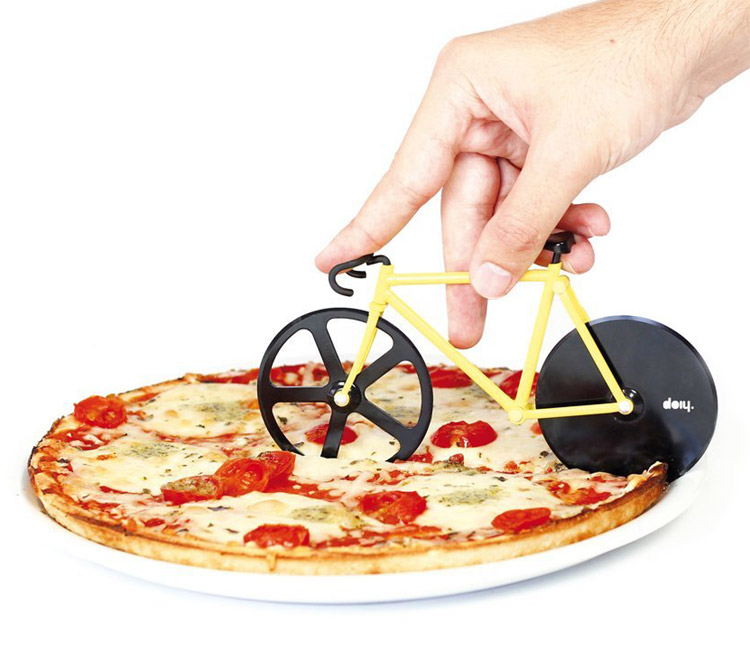
Il sindaco di Como ha vietato le bici in centro, dopo essere stato investito da una bici in centro

preview

Il sindaco di Como ha vietato le bici in centro, dopo essere stato investito da una bici in centro

https://www.ilpost.it/2026/08/10/como-divieto-bici-centro-storico-rapinese-sindaco-investito

Caro sindaco, in provincia di Como muoiono decine di persone all’anno in scontri stradali che coinvolgono automobili. Perche non vietiamo anche quelle?

@ciclismo #populismo #violenzaStradale

0

What are these?

Credit: NASA/JPL
preview

I see these images almost every day. What are they? Is that the sun and are they recording or sampling atmospheric conditions? In the past they were preceded by four images of star fields (if you download and zoom in.) What are those? (Image in comments). Are they related? Credit: NASA/JPL

I see these images almost every day. What are they? Is that the sun and are they recording or sampling atmospheric conditions? In the past they were preceded by four images of star fields (if you download and zoom in.) What are those? (Image in comments). Are they related? Credit: NASA/JPL

0

Liox and Marcius

preview

Liox sat up on the metal table as the surgeon stepped back. He examined his body, all the stiff metals coated with fresh blood, but for once all was his own. His metal eyes shone bright as he tested the new augments. Data flooded into his brain in a pounding rush, and yet he felt great. He felt better than great. Liox slid off the table, a bubbling chuckle blooming into a black hearted laugh that echoed around the dinky back room. He was unstoppable now. No one can survive even three augments, and yet here he was with a full eight, and he felt wonderful. Where would he go now? Who would be his next victim? So many options; Liox mulled it over as he played music with the surgeon’s screams.

Detective Marcius pursed his lips tight as he bent over. The breakfast he shoveled down squirmed in his stomach as he looked the room over, the stench of fresh blood and flesh assaulting his nose. This was the third murder this week alone, and they were getting worse. He stepped into the room, latex gloved and masked up. Hours passed searching the room over and over, and not a single clue. Whatever grisly monster tore these bodies apart left no traces; they never did. The trail was always cold. Besides the blood and flesh everywhere, the room was always left exactly as it was. He tried to play the scene out in his head, and shivered. He couldn’t imagine it. Whoever had done this wasn’t human anymore. He was dealing with a genuine monster.

Liox smiled. He was perfect. There was a beauty to his metallic flesh, a certain artistry to the way the augments operated together. Every time he moved, he created art. Crude art, though; he needed subjects to truly create art. They should be grateful; their raw, untainted meat will be the paint on the brush that is his body, as the canvas he worked on will remain untouched. And yet, there were those who envied him, those who pushed their bodies to the limit as he had and mimicked his art. Unworthy copycats, all of them! How dare they try to approach perfection like him? How dare they attempt to transcend their own weakness, and thus taint their flesh? No, this would not stand. The smile wilted on his face. They will suffer, all of them. He would have to deal with it.

Marcius frowned. Another day, another murder. The city was falling apart, and worse yet, he had grown accustomed to it. New cases kept springing up faster than his department could handle them, and the media let everyone know about it. Fear was spreading fast. More and more illegal augments made their way onto the streets as people took extreme measures to protect themselves and their homes. At the same time, more and more good cops were leaving the city. Sometimes, it felt like Marcius was the only detective left trying to stop the madness. He remembered an old story from his childhood. Something about a knight being the last one to stand against an evil barbarian’s rampage, and giving his life to defeat him. Despite it all, Marcius couldn’t help but smile.


A very old short story of mine. Originally written in middle school, I believe, then redone later in high school. This is the second draft.

0

Buffalo sauce dino nugs living free in the mac and cheese forest

preview

Served on a yellow, star-shaped Pikachu plate.

Sigh, I make things like channa masala and nan from scratch, but this is the dinner I make that my wife loves best. Hot and ready after a 12 hour hospital shift.

Served on a yellow, star-shaped Pikachu plate.

Sigh, I make things like channa masala and nan from scratch, but this is the dinner I make that my wife loves best. Hot and ready after a 12 hour hospital shift.

0

Ford O2 sensors, same or different?

preview

I noticed on the 2001 expedition I bought that it looks like they put an O2 sensor with the long cord before the cat. All the ones online say the long cord is the back one.

There is conflicting info online. Does it matter, are all o2 sensors the same? Before cat, after cat doesn’t matter?

I noticed on the 2001 expedition I bought that it looks like they put an O2 sensor with the long cord before the cat. All the ones online say the long cord is the back one.

There is conflicting info online. Does it matter, are all o2 sensors the same? Before cat, after cat doesn’t matter?

0

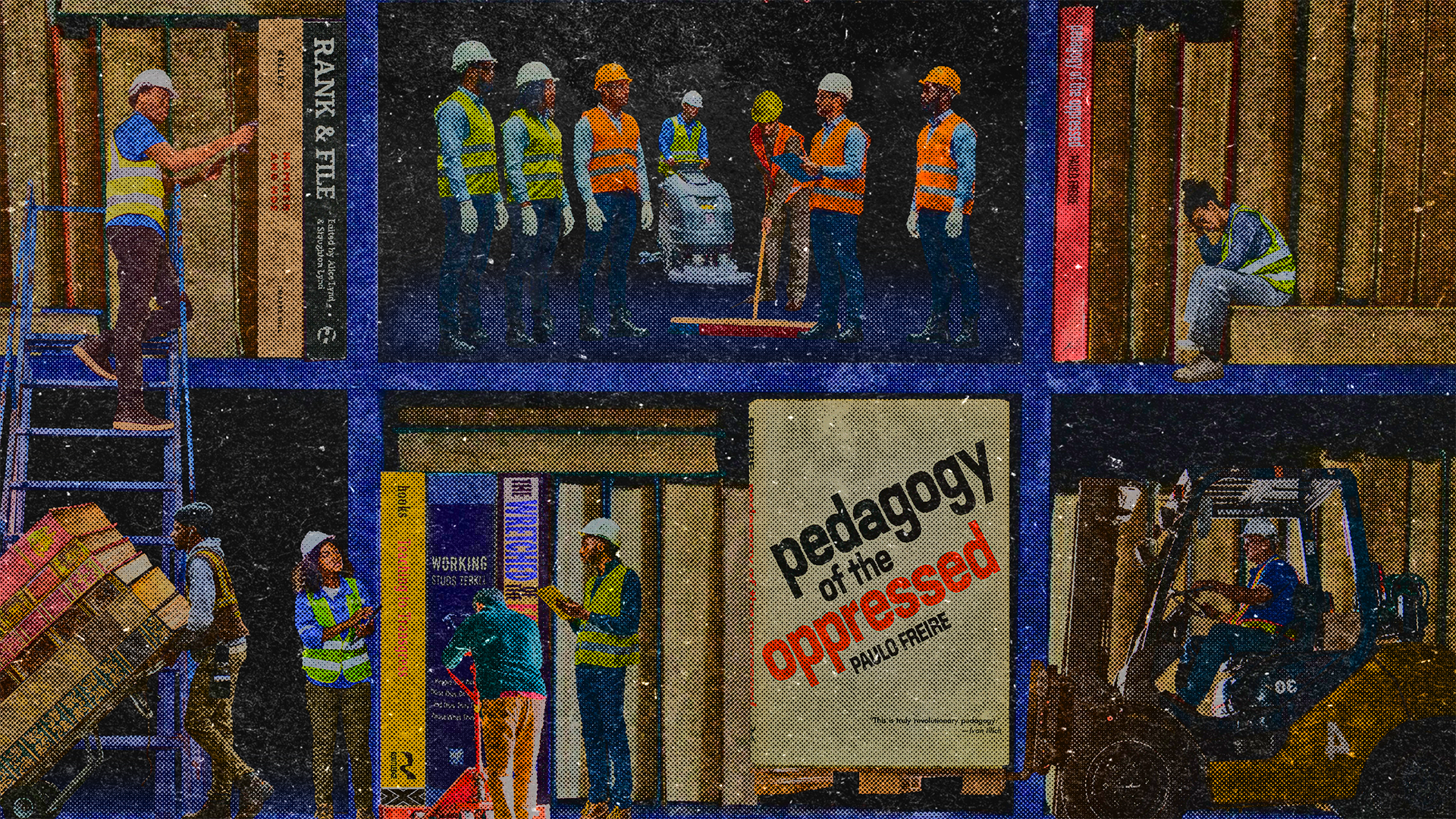
Pedagogy of the Southern Worker: The Union of Southern Service Workers’ method of education and struggle

Scalawag Pedagogy of the Southern Worker – Scalawag scalawagmagazine.org
preview

The Union of Southern Service Workers (USSW) is an organization of workers in the low-wage, high-turnover service industry of the U.S. South, with members in North Carolina, South Carolina, Alabama, and Georgia. From the beginning, the union has placed political education at the center of its strategic vision. USSW understands that to transform workplaces and communities, workers must understand the roots of the system that exploits them and develop the skills necessary to fight back. As with any union or community organization, USSW runs campaigns to win concrete, material victories. But the real fruit of the union’s organizing work lies in the constant political formation within an expanding base of dedicated worker militants. Unlike the traditional union model, USSW treats political education not as ancillary training, but as a core component of its method; it is a dimension of the union’s approach that makes victories durable and transforms workers into long-term leaders.

Having grown up in New York, Tahtebah “Tee” Gonzalez immediately felt the culture shock of working in the U.S. South. At Dunkin’, his pay was just $9 an hour, just barely above minimum wage and a third of Fulton County’s living wage. The conditions of low pay, overwork, and understaffing boiled over when Tee and his coworkers discovered that other workers in the same shopping center would be paid extra to work a busy weekend in downtown Atlanta during the Dragon-Con convention.

When a USSW organizer visited his store days later, Tee and his coworkers were already agitated and ready to act. Within a week, they had organized a weekend-long strike. The action won them a raise they had once considered impossible. More importantly, it proved to Tee that workers held real power: When they fight together, they can win.

That breakthrough—shifting from isolated frustration to collective action—was the spark of political consciousness. But in the USSW, the spark does not fade. Tee’s first strike was only the beginning of a longer process of formation, sustained by the union’s model of political education and leadership development. Through Worker Power Schools, collective study, and the discipline of organizing, Tee deepened his understanding of the system that exploits workers and gained the skills to lead others. What began as a fight over wages became a journey of transformation: from an exhausted service worker into a committed leader of a broader struggle for dignity and justice in the South.

0

Transphobia is rotting women’s sports media

Xtra Magazine Transphobia is rotting women’s sports media | Xtra Magazine xtramagazine.com
preview

This surge in discourse—like most other ongoing “debates” around trans people in politics and culture—is entirely manufactured, most recently sparked by Cunningham’s statements and egged on by a media ecosystem well versed in alienating trans people and stoking moral panic.

Let’s lay some facts out. There are currently no trans women athletes in any major women’s professional league or on track to enter the leagues any time soon. While research into human biology is always evolving, there is no “new” groundbreaking data that has broken open the conversation around hormones and physical advantage. And no, there is no trans woman dominating at professional—or any level, for that matter—women’s sports.

That’s all to say: There is no discernable reason for roughly half of the women’s sports stories on The Athletic to be related to trans people, as they were at one point last week, or for players, coaches, executives and owners to be expected to weigh in on how they feel about the prospect of a trans woman playing professional sports. And while some have met the moment with thoughtful shows of solidarity (see: Reeve’s shirt on the court) or clear statements of allyship (Valkyries player Gabby Williams, I see you), it’s frankly insulting to athletes and fans of all genders—trans and cis—that airtime continues to be devoted to this.

0

BIFL cookware (pots & pans) for induction

preview

What’s your favorite brand of BIFL cookware for induction?

I’m looking to upgrade my kitchen with industrial-quality pots and pans. After about a month of searching, I came to the conclusion that the most important requirements are:

  1. 3-ply (or 5-ply). Fully clad (not just the bottom disc).
  2. 18/8 or 18/10 stainless steel on the inside
  3. 18/0 (or 200-grade or 400-grade) magnetic stainless steel on the outside.
  4. Thick layers of metal (ideally >= 3mm of aluminum)
  5. strong, serviceable rivets on handles (not welded)
  6. Handles on both sides of the pot (helper handle)
  7. Handles have a hole in them, for hanging
  8. Fits a 28 cm (or 11”) lid (easily replaceable standard size that’s interchangeable between metric and dumb units)
  9. Top rim should either have a pour spout or flared lip, for easier pouring
  10. NSF certified

From what I’ve read, stainless steel isn’t a very good conductor (NIST says that aluminum transfers heat 16x better than aluminum). But stainless steel is a better surface to cook-on, because it’s less reactive and won’t absorb flavours. So, 3-ply sandwiches a thick aluminum layer between two different types of stainless steel (nickle-free [eg 18/0 or 200- or 400-grade] on the outside, which – though less corrosion resistant – is important for induction) and either 18/8 or 18/10 on the inside.

5-ply is also a thing, but my research suggests that it doesn’t really matter how many layers. What’s more important is the thickness of the material.

And that’s why I’m here. Because, confidingly, the manufacturers of these pots don’t seem to even know how thick the layers of their 3-ply cookware is!

Ideally I’d just find the technical specifications of their cookware on their website, make a spreadsheet, and then buy the one with the thickest material (or close to the thickest, depending on my trade-off between quality vs weight & cost).

But I’ve called maybe a dozen manufacturers, and none seem to know the specifications of their own cookware :(

So, fediverse, I ask you: does anyone know what the thickness of the layers in these manufacturer’s 3-ply cookware is? Otherwise, what’s been your experience? How do you feel about these brands? Is there some other one (not listed) that you prefer?

  • Browne Thermalloy
  • All-Clad
  • Made-in
  • Tramontina
  • Cuisinart
  • Other?

Edit: I should be clear that I’m specifically asking about 3-ply or 5-ply stainless steel cookware. This is for a community house, so I need something that can be (ab)used by housemates who don’t know or care for the seasonings on the pans. And I don’t want cast iron, because it’s more likely to break the glass-topped induction cooktop.

0

Tate deploys 58 Hirebotics robot welders across multiple facilities

The Robot Report Tate deploys 58 Hirebotics cobot welders across multiple facilities - The Robot Report www.therobotreport.com
preview

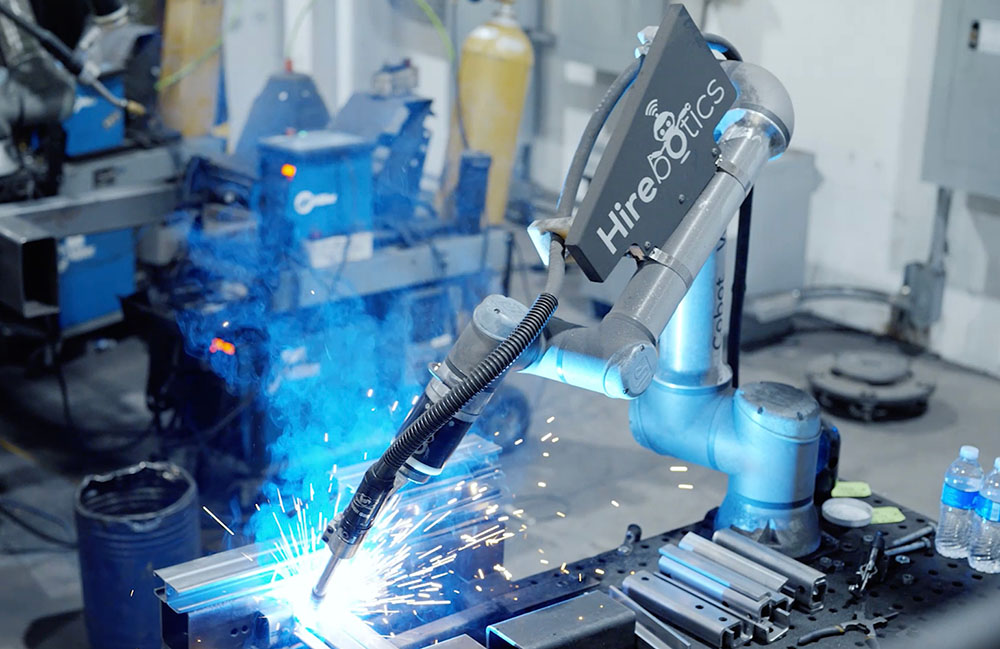
Hirebotics LLC last week announced that Tate Inc. has deployed 58 of its robotic welding systems. The data center infrastructure developer has deployed them across its manufacturing facilities in Arkansas, Virginia, and Kentucky.

For 120 years, Tate has supplied structural ceilings, containment systems, and airflow management products. The Columbia, Md.-based company now faces intense demand for large data centers and tight project timelines with zero tolerance for manufacturing errors.

Tate wanted to scale, but it didn’t want to lose out on precision. So, in 2024, it decided to transition from manual welding to an agile, cloud-connected automation network powered by Hirebotics and its cloud-based, no-code Beacon Pro control platform. Beacon Pro enables the company to program, run, and monitor the Cobot Welders from any smartphone or tablet.

Tate looked at about nine automation providers, according to Daniel Adams, director of sales at Hirebotics. He said a few factors contributed to Tate’s decision. First, when Tate brought specific parts to Hirebotics, the Nashville, Tenn.-based company‘s team was able to perform welds on the parts within 30 minutes of Tate’s arrival.

Next, ease of use was a top priority for Tate, said Abrams. The construction provider was able to program the robots while the Hirebotics team was still on site.

Finally, Hirebotics was willing to collaborate. Adams said the company worked closely with Tate to figure out how its process would change when it automated welding with force- and power-limited robot arms.

Hirebotics shipped Tate’s first two robots in September 2023. “Tate had pretty quick adoption,” Adams told The Robot Report. “They had a bunch of people on staff who had been welding by hand for their entire careers, but they were able to see the benefits to both the company and themselves.”

To train Tate’s employees, Hirebotics used a combination of self-training with tutorial videos and Hirebotics employees providing hands-on training onsite. It typically only took only 10 to 20 minutes to train the employees to use the robots, Adams said.

“The majority of users are surprised at how quickly they can become operational with the robot,” he recalled.

“It was a fantastic process to learn to manipulate not only the movements of the welder themselves, but [also] to control the amperage, the heat, and travel speed,” said Jonathon Cook, a cobot welding programmer at Tate. “We can manipulate and curate every single weld that we make here for Tate to be exactly how it’s supposed to be as by spec every single time. And that truly is a marvel within itself.”

In addition to traditional welding projects within all three facilities, Tate has pioneered a unique workflow in its Arkansas plant, where the cobot systems handle the upstream precision step of tacking and pre-assembling parts to feed downstream industrial robots. This helps to keep production moving at a steady pace.

Since implementing Hirebotics’ robots, Tate has reported a 12x increase in per-welder throughput on critical structural assemblies while simultaneously expanding its team of certified welders.

Tate also said the cobots eliminated costly rework caused by manual welder-to-welder variability. The team also encoded precision discipline directly into the Beacon Pro software. Certified programmers dial in exact torch angles and travel speeds, which enables floor operators to execute perfect welds with confidence.

With automation, Tate said its facilities operate as a single, unified ecosystem, sharing weld programs, parameters and enhanced playlists across company facilities in real time. This guarantees consistent production standards nationwide, Tate said.

“No production components are hand-welded anymore,” Adams said. “The consistency, quality, and speed improved significantly after installing the cobots. Previously, they had some quality issues with hand welding that led them to require automation. The flexibility of the cobots allows them to automate all their welding and get consistent parts.”

Having worked with the Cobot Welder for two years across these three facilities, Tate also has become one of the first operations to deploy Hirebotics’ new Cobot Painter. This system uses the same platform, role-based access, and operators with a new cobot also powered by the Beacon Pro platform.

0

‘It's an incredibly exciting time’ - ICT

ICT ‘It's an incredibly exciting time’ - ICT ictnews.org
preview

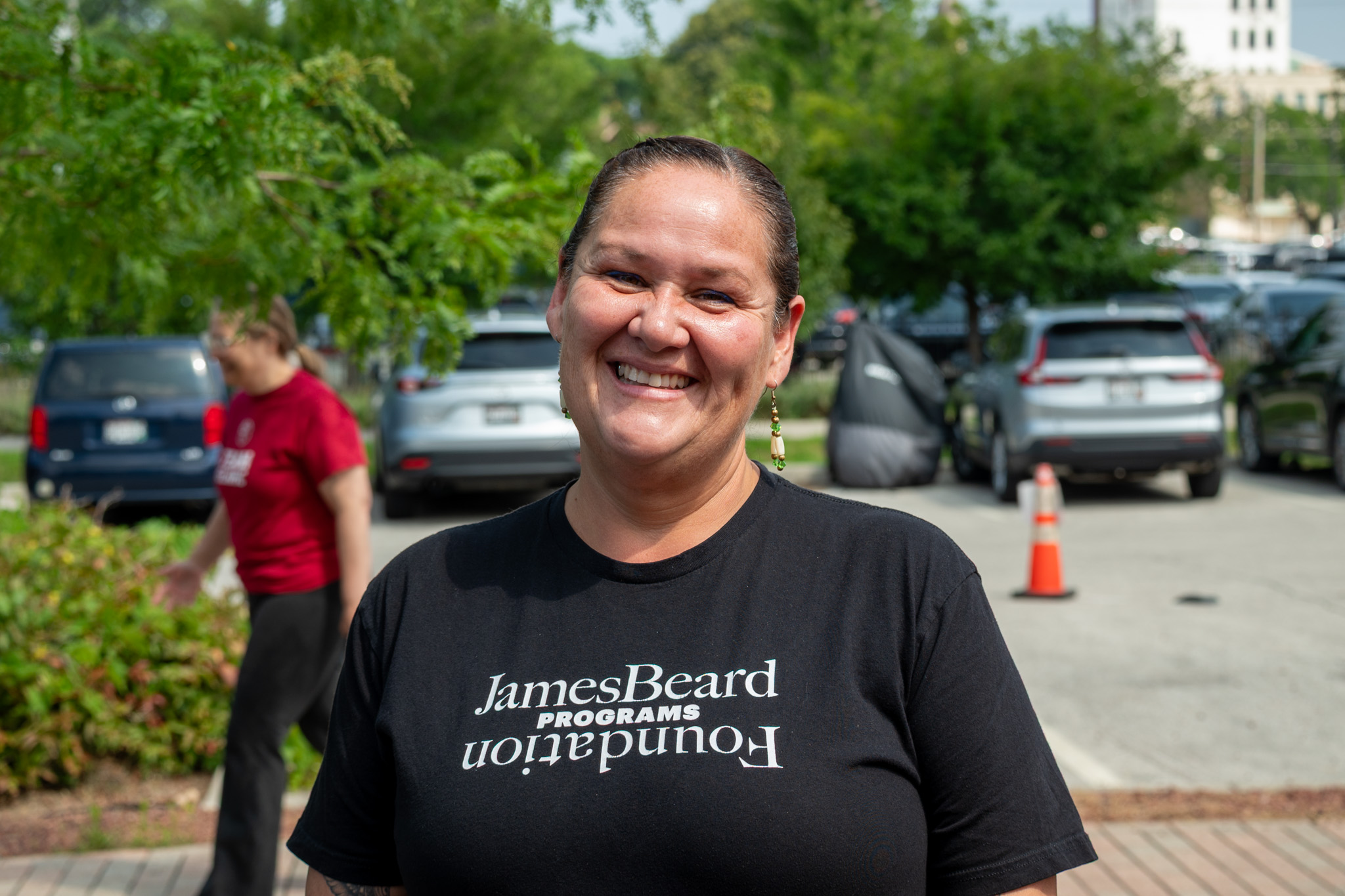
“I think there is not only an interest in renewed ancestral recipes, but also there’s been this wonderful uptick in people figuring out their own way,” Terry said. “You know,

I don’t just have to eat wild rice with berries and maple syrup. I am capable of like elevating this or transforming it or there’s so much food science to be relearned about all of these ingredients. It’s actually an incredibly exciting time.”

The Indigenous food sovereignty movement has helped elevate awareness of the benefits and importance of traditional foods, Terry said.

“I think there is not only an interest in renewed ancestral recipes, but also there’s been this wonderful uptick in people figuring out their own way,” Terry said. “You know,

I don’t just have to eat wild rice with berries and maple syrup. I am capable of like elevating this or transforming it or there’s so much food science to be relearned about all of these ingredients. It’s actually an incredibly exciting time.”

The Indigenous food sovereignty movement has helped elevate awareness of the benefits and importance of traditional foods, Terry said.

0

Explainer: The Pueblo Revolt of 1680 - ICT

ICT Explainer: The Pueblo Revolt of 1680 - ICT ictnews.org
preview

In 2005, the statue was revealed and Po’pay became the first person represented in the National Statuary Hall Collection to be born on what would become American soil.

Fragua said each item near or on Po’pay symbolizes Pueblo culture and tradition.

“On his back are the scars that remain from the whipping he received for his participation and faith in the Pueblo ceremonies and religion,” Fragua wrote in the statue’s description.

0

Trailmakers of the Northwest by Paul Leland Haworth

preview

Published in 1921, this book recounts the exploration of the Canadian Northwest and the history of the region’s fur trade. Drawing heavily on the firsthand accounts of the explorers themselves, the author also enriches the narrative with observations from his own extensive travels and with stories gathered from trappers and gold prospectors. In addition to describing the hardships and achievements of the explorers, the book offers glimpses of Indian life, including buffalo hunts, as well as the daily work and living conditions of the region’s trappers. - Summary by Ted Lienhart

Published in 1921, this book recounts the exploration of the Canadian Northwest and the history of the region’s fur trade. Drawing heavily on the firsthand accounts of the explorers themselves, the author also enriches the narrative with observations from his own extensive travels and with stories gathered from trappers and gold prospectors. In addition to describing the hardships and achievements of the explorers, the book offers glimpses of Indian life, including buffalo hunts, as well as the daily work and living conditions of the region’s trappers. - Summary by Ted Lienhart

0

Peder Victorious by O. E. Ralvaag

preview

Peder Victorious is the sequel to Giants in the Earth and follows the Norwegian immigrant community in the Dakota Territory. The novel centers on Peder, the son of Per Hansa and Beret Holm, following the loss of Per in a snowstorm twenty years earlier. The book continues the exploration of the frontier immigrant experience, as the first generation of settlers feels their home culture slipping away and the new generation, born in America, struggles to find their blended identities. This is a story of a boy’s growth into adulthood, and a mother’s gradual acceptance of the changes inevitably wrought by time and circumstance. - Summary by Tom Shoesmith

Peder Victorious is the sequel to Giants in the Earth and follows the Norwegian immigrant community in the Dakota Territory. The novel centers on Peder, the son of Per Hansa and Beret Holm, following the loss of Per in a snowstorm twenty years earlier. The book continues the exploration of the frontier immigrant experience, as the first generation of settlers feels their home culture slipping away and the new generation, born in America, struggles to find their blended identities. This is a story of a boy’s growth into adulthood, and a mother’s gradual acceptance of the changes inevitably wrought by time and circumstance. - Summary by Tom Shoesmith