New Order’s Blue Monday was released on 7 March 1983, and its cutting-edge electronic groove changed pop music forever. But what would it have sounded like if it had been made 50 years earlier? In a special film, using only instruments available in the 1930s - from the theremin and musical saw to the harmonium and prepared piano - the mysterious Orkestra Obsolete present this classic track as you’ve never heard it before.
New Order’s Blue Monday was released on 7 March 1983, and its cutting-edge electronic groove changed pop music forever. But what would it have sounded like if it had been made 50 years earlier? In a special film, using only instruments available in the 1930s - from the theremin and musical saw to the harmonium and prepared piano - the mysterious Orkestra Obsolete present this classic track as you’ve never heard it before.
Jeff Foust
4–5 minutes
WASHINGTON — The island nation of Mauritius signed the Artemis Accords July 17, becoming the 70th nation to do so in less than six years.
In a ceremony in the Mauritian city of Ébène, Navindsing Jugmohunsing of the country’s Ministry of Tertiary Education, Science and Research signed the accords. U.S. State Department officials attended the event, while NASA Deputy Administrator Matt Anderson provided remarks by video.
“The accession of Mauritius to the Artemis Accords marks a defining chapter in our new space journey,” Jugmohunsing said in a statement. “As a small island developing state in the Indian Ocean, we are committed to ensuring that space serves humanity by protecting our oceans and coastlines and amplifying the voices of nations like ours.”
“Mauritius stands ready to help shape the future of space governance while unlocking new opportunities for innovation and partnership,” he added.
Mauritius signed the Artemis Accords one day after Serbia did so at an event at NASA Headquarters. Mauritius is the 70th country to sign the Accords and the 11th so far this year.
The Artemis Accords outline best practices in space exploration on topics such as deconfliction of space activities, utilization of space resources and exchange of scientific data. NASA officials say they also plan to use the Accords to coordinate international cooperation in the agency’s lunar exploration plans, such as development of a moon base.
“Together, we are creating the foundation for future exploration while ensuring that space remains peaceful, accessible and beneficial for all,” Anderson said in a statement. “That work requires capable partners and a shared commitment to responsible exploration.”
NASA and the State Department rolled out the Artemis Accords in 2020, with seven nations joining the United States as original signatories.
“Going from seven nations joining the U.S. in signing the Accords in 2020 to 70 signatories in 2026 is a huge accomplishment,” Mike Gold, president of Redwire Space and a former NASA associate administrator who coordinated the development of the Accords, told SpaceNews. “The success of the Accords demonstrates the inherent optimism and hope that the space program represents not only in America but around the world.”
He supported the agency’s efforts to use the Accords as a mechanism for coordinating international participation in Artemis. “The Artemis Accords are inseparable from the Artemis program,” he said. “I’m so excited to see the U.S. lead the way in bringing the world to the lunar frontier.”
Three of the Artemis Accords signatories — Senegal, Serbia and Thailand — had previously joined the Chinese-led International Lunar Research Station to develop a lunar base.
“Through the Artemis Accords, we’re not just launching our astronauts, we’re launching our values to the moon,” Gold said, “which is why every ILRS nation, such as Serbia, that commits to the principles of the Artemis Accords is a special victory for a peaceful and prosperous future in space.”
Article text
Jeff Foust
4–5 minutes
WASHINGTON — The island nation of Mauritius signed the Artemis Accords July 17, becoming the 70th nation to do so in less than six years.
In a ceremony in the Mauritian city of Ébène, Navindsing Jugmohunsing of the country’s Ministry of Tertiary Education, Science and Research signed the accords. U.S. State Department officials attended the event, while NASA Deputy Administrator Matt Anderson provided remarks by video.
“The accession of Mauritius to the Artemis Accords marks a defining chapter in our new space journey,” Jugmohunsing said in a statement. “As a small island developing state in the Indian Ocean, we are committed to ensuring that space serves humanity by protecting our oceans and coastlines and amplifying the voices of nations like ours.”
“Mauritius stands ready to help shape the future of space governance while unlocking new opportunities for innovation and partnership,” he added.
Mauritius signed the Artemis Accords one day after Serbia did so at an event at NASA Headquarters. Mauritius is the 70th country to sign the Accords and the 11th so far this year.
The Artemis Accords outline best practices in space exploration on topics such as deconfliction of space activities, utilization of space resources and exchange of scientific data. NASA officials say they also plan to use the Accords to coordinate international cooperation in the agency’s lunar exploration plans, such as development of a moon base.
“Together, we are creating the foundation for future exploration while ensuring that space remains peaceful, accessible and beneficial for all,” Anderson said in a statement. “That work requires capable partners and a shared commitment to responsible exploration.”
NASA and the State Department rolled out the Artemis Accords in 2020, with seven nations joining the United States as original signatories.
“Going from seven nations joining the U.S. in signing the Accords in 2020 to 70 signatories in 2026 is a huge accomplishment,” Mike Gold, president of Redwire Space and a former NASA associate administrator who coordinated the development of the Accords, told SpaceNews. “The success of the Accords demonstrates the inherent optimism and hope that the space program represents not only in America but around the world.”
He supported the agency’s efforts to use the Accords as a mechanism for coordinating international participation in Artemis. “The Artemis Accords are inseparable from the Artemis program,” he said. “I’m so excited to see the U.S. lead the way in bringing the world to the lunar frontier.”
Three of the Artemis Accords signatories — Senegal, Serbia and Thailand — had previously joined the Chinese-led International Lunar Research Station to develop a lunar base.
“Through the Artemis Accords, we’re not just launching our astronauts, we’re launching our values to the moon,” Gold said, “which is why every ILRS nation, such as Serbia, that commits to the principles of the Artemis Accords is a special victory for a peaceful and prosperous future in space.”
"The Odyssey” is in movie theaters, and GreenStage’s Shakespeare in the Park has kicked off, but the best drama in Seattle on Saturday night was found at Interbay Stadium.
In its second season of existence, Salmon Bay FC defeated Vermont Green FC 1-1 (5-4) in penalty kicks to win the USL W League championship in front of a sold-out home crowd.
Sandra Erwin
3–4 minutes
WASHINGTON — The U.S. Space Force has more than tripled the ceiling of a major national security launch contract to $17 billion as the military prepares for a sharp increase in satellite missions.
The Space Force raised the maximum value of the National Security Space Launch Phase 3 Lane 1 contract vehicle from $5.6 billion to $17 billion, according to a July 17 notice. The increase substantially expands the amount the service can spend on launch task orders competed among seven companies through fiscal 2029.
The higher ceiling sets the maximum cumulative value of task orders that can be placed under the Lane 1 contracts. Providers must compete for individual missions and meet applicable flight-readiness requirements before they are eligible to bid.
The seven companies in the Lane 1 vendor pool are SpaceX, United Launch Alliance, Blue Origin, Rocket Lab, Stoke Space, Impulse Space and Relativity Space.
Lane 1 is the commercial-style portion of the Space Force’s main launch procurement program. It covers missions that don’t require the full certification and mission-assurance procedures reserved for the military’s most complex and sensitive satellites.
Companies admitted to the multiple-award, indefinite-delivery, indefinite-quantity contract become eligible to compete for task orders as missions arise.
The structure is intended to expand competition by giving newer providers a path into the national security market once their vehicles or transportation systems have demonstrated sufficient readiness. That distinguishes Lane 1 from Phase 3 Lane 2, which covers the government’s highest-priority missions and is limited to providers with launch systems certified under the National Security Space Launch program.
The expanded Lane 1 ceiling follows a separate increase in demand for the Space Force’s most complex launches.
In April, Space Systems Command said it had identified 25 additional Phase 3 Lane 2 missions beyond the 54 launches originally planned over five years.
Taken together, the higher Lane 1 ceiling and the 25 additional Lane 2 missions show that the military’s projected launch needs have expanded sharply since the Phase 3 acquisition strategy was established in 2024.
Article text
Sandra Erwin
3–4 minutes
WASHINGTON — The U.S. Space Force has more than tripled the ceiling of a major national security launch contract to $17 billion as the military prepares for a sharp increase in satellite missions.
The Space Force raised the maximum value of the National Security Space Launch Phase 3 Lane 1 contract vehicle from $5.6 billion to $17 billion, according to a July 17 notice. The increase substantially expands the amount the service can spend on launch task orders competed among seven companies through fiscal 2029.
The higher ceiling sets the maximum cumulative value of task orders that can be placed under the Lane 1 contracts. Providers must compete for individual missions and meet applicable flight-readiness requirements before they are eligible to bid.
The seven companies in the Lane 1 vendor pool are SpaceX, United Launch Alliance, Blue Origin, Rocket Lab, Stoke Space, Impulse Space and Relativity Space.
Lane 1 is the commercial-style portion of the Space Force’s main launch procurement program. It covers missions that don’t require the full certification and mission-assurance procedures reserved for the military’s most complex and sensitive satellites.
Companies admitted to the multiple-award, indefinite-delivery, indefinite-quantity contract become eligible to compete for task orders as missions arise.
The structure is intended to expand competition by giving newer providers a path into the national security market once their vehicles or transportation systems have demonstrated sufficient readiness. That distinguishes Lane 1 from Phase 3 Lane 2, which covers the government’s highest-priority missions and is limited to providers with launch systems certified under the National Security Space Launch program.
The expanded Lane 1 ceiling follows a separate increase in demand for the Space Force’s most complex launches.
In April, Space Systems Command said it had identified 25 additional Phase 3 Lane 2 missions beyond the 54 launches originally planned over five years.
Taken together, the higher Lane 1 ceiling and the 25 additional Lane 2 missions show that the military’s projected launch needs have expanded sharply since the Phase 3 acquisition strategy was established in 2024.
Manga artist Inio Asano, the creator of Goodnight Punpun and Dead Dead Demon’s Dededede Destruction, recently appeared as a guest on WEEKLY OCHIAI, a talk show hosted by Japanese media artist Yoichi Ochiai. In the interview, published partly on YouTube (the full version can be watched via the News Picks platform), Asano talked about the “Unreal Engine” technique for creating his manga, and touched on why he put Mujina Into the Deep on hiatus, as well as the use of generative AI in the manga scene.
To begin with, Asano says that Mujina Into the Deep ended up turning into an action manga because he wanted to create a story where he could freely experiment with 3D-modeled environments. “Initially, it was supposed to be a simple, grounded story about this hopeless middle-aged man in a shopping street. But when I created the town in 3D, I was like, I could make a manga that’s much better suited for this – and it naturally became an action manga.”
Those who follow Asano on X might be familiar with the fact that over 90% of the backgrounds in Mujina Into the Deep were made by the mangaka himself using Unreal Engine and Blender. While he uses paid assets when he can, he also models his own when needed.
Asked about whether utilizing AI could help with streamlining the process of modeling and placing all of the individual assets on such a vast open world, Asano explains that “it’s definitely possible, but there is a very difficult problem of what extent you can use AI to.”
“Right now, publishers are not in a position where they can overtly say that they allow AI use,” Asano comments. “It’s a strange situation; You’re not allowed to use it precisely because you’re a professional.” He explains that, while there are several reasons why Mujina Into the Deep was put on a hiatus until 2027, the manga scene’s current attitude towards AI is one of them.
“In the current state of things, mangaka are not allowed to use AI. But using AI actually drives up the quality by a mile. So doesn’t that mean it would be best to not draw the manga now? Maybe they suddenly lift the ban [on AI] next year, so it might be better to start drawing after that happens. I’m currently on standby in that sense,” Asano says. Though he didn’t elaborate if or to what extent he hypothetically plans to use AI, he said that using it could significantly speed up the modeling process.
As a side note, Asano says that, while he doesn’t find any particular inspiration for his stories in other forms of media, he is passionate about video games. Apparently, all of his work after Dededede, including Mujina Into the Deep, is heavily inspired by the GTA franchise. As he explains, he creates all of his stories by creating an “open world” for them first.
After using classic bifold wallets for the longest time, I switched it up last year and bought a cheap ‘modern’ alternative instead. The experience I had with it, gave me valuable insight on what works for me and the direction I’d like to explore next. Below you may find what it boils down to:
A small volume is required. I don’t think I’ll consider something bigger than the wallets found below.
Card capacity of at least 7 cards. More (to an extent) is better for future-proofing.
The bill compartment should ‘comfortably’ accommodate unfolded bills with size 160 x 77 (in mm).
I think I can live with just a small coin compartment.
Easy/premium access (and back-insertion) for at least 1 or 2 cards.
I love closures to be safe, sound and secure. This doesn’t only apply to the wallet as a whole, but also for its compartments.
With the above criteria (and plenty of searching), I found the following wallets (in alphabetical order):
I would love to hear any feedback on these wallets. Furthermore, I’m more than willing to accept any other suggestions/products. Thanks in advance! Much appreciated!
Canvas 2026 is underway! We have roughly 24 hours left until the event concludes, so get your pixels in!
If this is the first time seeing this, Canvas is a collaborative pixel canvas that runs every year, just for 48 hours. Anyone in the Fediverse is welcome to join!
Drop your templates & group names below to get some help from people who have some free pixels
In this video, creator BadEmpanada examines the history and function of MEMRI TV (Middle East Media Research Institute), arguing that it serves as a tool for Israeli propaganda by disseminating cherry-picked, decontextualized, and often poorly translated media from the Arab and Muslim world (0:00 - 4:31).
Key takeaways include:
Mechanism of Propaganda:BadEmpanada explains that MEMRI relies on the ignorance of Western audiences regarding the Middle East and plays into existing negative stereotypes to frame Palestinians and their supporters as irrational, barbaric, or extremist (4:31 - 15:44).
The ‘Vibe Shift’ Post-October 7th: The video argues that since October 7, 2023, traditional pro-Israel narratives have lost their effectiveness. Due to the proliferation of social media and direct imagery from the Gaza conflict, the public is now more aware of the realities on the ground, causing previous propaganda tactics—like those used by MEMRI—to fall flat or even backfire (15:44 - 23:03).
Rebuttal of Nick Crowley: The video includes a critique of a 2022 video by popular YouTuber Nick Crowley regarding the Palestinian children’s show Tomorrow’s Pioneers. BadEmpanada contends that while Crowley framed the show as sinister indoctrination, it actually reflects the grim reality of Palestinian children living under occupation and military violence. The video highlights that Crowley has since unlisted his video, acknowledging that he had inadvertently participated in pro-Israel propaganda (23:03 - 48:44).
Conclusion: The creator concludes that the era of traditional Zionist propaganda is effectively dead, as increased global awareness has made it much harder to manipulate public perception of the conflict (48:44 - 53:18).
You could argue that my mind is always trying to find weaknesses, flaws, or potential dangers around me. I do have a baseline level of paranoia that is undeniably tied to my schizophrenia and frankly, I find that to be a beautiful quirk of my mind. However sometimes it can make me see problems where there are none, which at times can make me overly cautious.
But at its core I feel at ease that my mind is actively trying to protect me. Its not fear either since im usually solving a problem. There is a solution to these dangers or weaknesses.
Me and my mind are like buddies.
You could argue that my mind is always trying to find weaknesses, flaws, or potential dangers around me. I do have a baseline level of paranoia that is undeniably tied to my schizophrenia and frankly, I find that to be a beautiful quirk of my mind. However sometimes it can make me see problems where there are none, which at times can make me overly cautious.
But at its core I feel at ease that my mind is actively trying to protect me. Its not fear either since im usually solving a problem. There is a solution to these dangers or weaknesses.
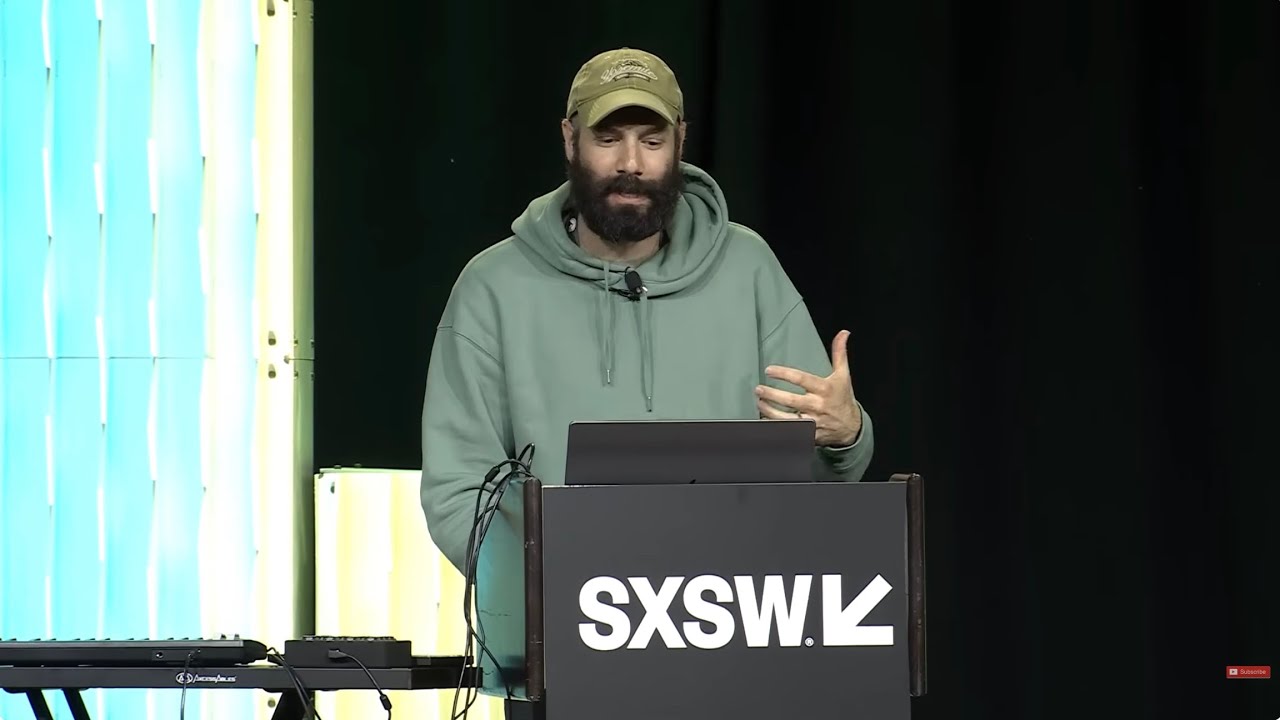
Ich war noch nie so zerrissen über ein Video, was ich geschaut habe. Das ist vom Patreon-CEO. Er geht so die Historie durch, wann in der Geschichte Technologie Menschen ersetzt hat und es ist echt emotional, an einer Stelle hab ich sogar bissl geweint (er auch, auf der Bühne). Er sagt dort, dass er sehr zwiespältige Ansichten bzgl. KI hat, weil er selbst auch Musiker und Künstler, aber auch Unternehmer ist - und diese Technologie ihm zwar im Unternehmen sehr hilft, aber moralisch sehr verwerflich ist, was den künstlerischen Bereich angeht.
Es hat mich emotional echt abgeholt, aber in den Kommentaren schreiben viele, dass er selbst doch sehr davon profitieren würde, dass Künstler auf Patreon ihre letzten Groschen zusammensammeln müssen während die großen Techkonzerne mit ihrer gestohlenen Kunst das große Geld machen und das ist auch irgendwie wahr.
Ich kauf’ ihm schon ab, dass er das ernst meint, aber er predigt da dennoch als jemand, der sicher nie wieder in seinem Leben Geldsorgen haben muss als Künstler.
Und es wirkt schon ein bisschen wie “Das ist ne neue Technologie, embraced das mal, dann wird es euch allen gut gehen” und ich glaube das ist zu naiv gedacht. Nicht jeder kann ein großer Künstler wie Charlie Chaplin oder Quentin Tarantino sein und so einen großen Erfolg haben, dass man basically machen kann, worauf man Bock hat, ohne auf das System angewiesen zu sein. Viele kleine Künstler werden nie wirklich entdeckt und führen ein sehr bescheidenes Leben.
Dennoch - sehenswert. Schon allein die Musik und die nachträglichen Schnitte und Grafiken werten den Vortrag sehr auf.
We currently just found Sleep Tight Science which is knowledge based and low sensory fun. It’s neat because my kiddo is kinda absorbing knowledge while she rests.
Precious bedtime podcasts include:
• Ms. Honeybee (not my favorite, listened when they were 3~5)
• Circle Round (original hosts are starting new podcast)
• koala moon (short lived on our part. Not many free stories)
• super great kids stories (circle round vibes, kiddo was a little scared of some stories)
• stories to share (older kid reading books to younger kids. About 5~10 mins each depending on story)
Just needing some art tips on how to make this character look better, I was able to fit them in on the 2024 canvas when it expanded, but that’s not looking to be the case this year
Got them on the canvas looking decent enough, though I’m not sure about the outline due to the background (changed from dark gray to white after a bit of experimenting), it used to have a white outline like all the other artworks but I changed that (and maybe not for the better)
Here’s what I’m talking about next to some other stuff
This video features Max Blumenthal of The Grayzone interviewing the anonymous director of Explosive Media, an Iranian animation studio known for producing viral, politically charged Lego videos. The conversation explores how this team utilizes satire and media techniques to critique American policy and global political narratives.
Key Highlights of the Interview:
Reverse Engineering Propaganda: The director explains that his team (a group of about 10, including researchers and psychologists) reverse engineers US media operations by studying their tactics and “American diet” of media to turn those same concepts back against US narratives (4:06 - 4:41).
The Choice of Lego: Using Lego as a visual medium serves two purposes: it acts as a universal language to convey concepts more easily, and it lowers the intensity of violent war imagery, making it less overwhelming for the audience (8:10 - 8:33).
Messaging Strategy: The studio focuses its content on American audiences rather than Israeli leadership, believing that the American public is more receptive to engagement and potential change. The director notes that they purposefully use provocative labels, such as calling Donald Trump a “loser,” because they understand how such language affects his personality (6:51 - 7:11, 13:42 - 14:48).
Motivation and Mentality: The director describes a shift in his own worldview following the assassination of Qassem Soleimani, which he calls a “fatal mistake” by the Trump administration. He notes that this event inspired a period of intense study and a move toward media activism as a way to defend Iran against censorship and foreign pressure (11:47 - 12:28).
Future Projects: The team is currently researching a new animated documentary focused on the US embassy in Iran during the Pahlavi era, intending to examine the history of the “den of espionage” and the events surrounding its closure (18:46 - 20:02).
This is partially a rant, partially a question and partially a commitment device.
Earlier today I was thinking about how much I liked HL2 and didn’t like Doom 2016 when it dawned on me. Sure, the moment to moment gameplay of HL2 feels tighter and the level variety is much greater; but the thing I enjoyed about it the most was the complete lack of optional content.
In HL2 here’s no score, no collectibles, no upgrades and no side objectives. You play with the tools given to you in the way you find the most fun. Doom 2016 not only has those things, but they’re not even restricted to a end of the level screen like the original Doom. You actually have to do optional objectives if you want to upgrade your weapons! So I played most of it with the long list of things I needed to do before finishing the level constantly occupying my mind.
Recently I started playing 2 new games, both of which I just realized I’m doing similar things in: Meteo Exodus and Lego Skywalker Saga. With Metro, I had a guide detailing the places of collectibles open from the moment I stated playing. This was out of habit, I played the previous 2 games the same way because I hated to see “not found” in place of a journal entry. But this game seems to place the entries in much more obvious spots compared to those two, and it’s obviously supposed to be an exploration game.
With Lego, I was playing the story with minimal exploration because I knew some secrets would be unattainable without freeplay so if I want them I will need to replay the level anyways. But I also know from experience that exploring as you go is the most fun part..
So I guess the question is, what should I do? Go on as I’ve been or somehow overcome the urge? If so, how?
I kind of think the solution to this problem is modding. Like to make the progression system of Doom 2016 be only based on which level you’re in, unlock all diary entries you haven’t found when finishing a level in Metro, or have freeplay powers the first time you play a level in Lego.
What do you think?
This is partially a rant, partially a question and partially a commitment device.
Earlier today I was thinking about how much I liked HL2 and didn’t like Doom 2016 when it dawned on me. Sure, the moment to moment gameplay of HL2 feels tighter and the level variety is much greater; but the thing I enjoyed about it the most was the complete lack of optional content.
In HL2 here’s no score, no collectibles, no upgrades and no side objectives. You play with the tools given to you in the way you find the most fun. Doom 2016 not only has those things, but they’re not even restricted to a end of the level screen like the original Doom. You actually have to do optional objectives if you want to upgrade your weapons! So I played most of it with the long list of things I needed to do before finishing the level constantly occupying my mind.
Recently I started playing 2 new games, both of which I just realized I’m doing similar things in: Meteo Exodus and Lego Skywalker Saga. With Metro, I had a guide detailing the places of collectibles open from the moment I stated playing. This was out of habit, I played the previous 2 games the same way because I hated to see “not found” in place of a journal entry. But this game seems to place the entries in much more obvious spots compared to those two, and it’s obviously supposed to be an exploration game.
With Lego, I was playing the story with minimal exploration because I knew some secrets would be unattainable without freeplay so if I want them I will need to replay the level anyways. But I also know from experience that exploring as you go is the most fun part..
So I guess the question is, what should I do? Go on as I’ve been or somehow overcome the urge? If so, how?
I kind of think the solution to this problem is modding. Like to make the progression system of Doom 2016 be only based on which level you’re in, unlock all diary entries you haven’t found when finishing a level in Metro, or have freeplay powers the first time you play a level in Lego.
The most pessimistic of pessimists would whisper that the carrier gets broken up in parts and sold, the mentioned slots alone reportedly being valued at more than what at least Castlelake currently has bid for the company. Castlelake has remained coy on its plans, with Apollo on the other hand reportedly supporting the current strategy of easyJet. This further implies that it wouldn’t break up the company and sell it for parts.
Given that we after all are discussing private equity companies, a plausible scenario sees the new owner streamlining and carefully examining the operator for opportunities where cost-cutting measures can be implemented. Perhaps it even seeks to further increase competition with Ryanair, currently weighing in at roughly twice the size when it comes to strict fleet numbers?
Some called it reckless dumping. Others warned it would be detrimental to an already dwindling ecosystem. And for a while, these concerns seemed valid. Even the researchers running this giant experiment had their doubts as no visible progress was initially seen.
All of these things and more helped revive fish, turtle, and dolphin populations to numbers not seen in over two and a half decades. Layer by layer, the ocean floor had rebuilt itself until the results were visibly undeniable.
In a note from COO Dan Janki in May, the airline indicated it was happy with its on-time performance, but “we need to improve controllable cancels and IROP recovery.” I’m not sure I agree. Oh sure, it does have a problem with cancellations and irregular operations, but on-time performance has suffered as well. While there are several issues that have led to this decline, one of the hot button topics is centered around pilot availability.
A letter from Ryan Gumm, SVP Flight Operations from April, explained that trips that needed coverage saw acceptance rates plummet from 37 percent to two percent. To me, this sounds like an effort to blame labor, so I spoke with Delta’s pilots union chair Eric Criswell to get his side. Eric said they don’t have access to the dataset that Delta referred to in that latter, but he wanted to point out that the number of trips made available has jumped significantly in the last year. You would expect acceptance rates to drop in a bigger pool. From the union’s perspective, staffing is a primary concern in this whole mess.
While BA2673 was blocking the runway at Gatwick, other flights bound for the airport were put into holding patterns. Because of the extended holds and the unknown amount of time needed to remove the aircraft from the runway, nine flights declared fuel emergencies in the course of diverting to alternate airports. Squawking 7700 is the internationally recognized transponder code for general emergency and alerts air traffic control to flights requiring priority assistance. A total of 14 flights diverted away from Gatwick to nearby airfields, including London-Stansted, London-Luton, London-Heathrow, Birmingham, and Bristol.
While BA2673 was blocking the runway at Gatwick, other flights bound for the airport were put into holding patterns. Because of the extended holds and the unknown amount of time needed to remove the aircraft from the runway, nine flights declared fuel emergencies in the course of diverting to alternate airports. Squawking 7700 is the internationally recognized transponder code for general emergency and alerts air traffic control to flights requiring priority assistance. A total of 14 flights diverted away from Gatwick to nearby airfields, including London-Stansted, London-Luton, London-Heathrow, Birmingham, and Bristol.
I feel like the focus is too much on ADD and when the subject of Hyperactivity/Restlessness comes, it is always about kids. To an extent, most of us with Hyperactivity learn to regulate our impulse but for me anyway, movement is still a very important part of my life.
Needing to walk while studying(which is really just rereading my notebook), going for a walk to chill out after rage buildup, and pacing around when i excited or inspired by a story. Pacing to organize my thoughts and figure things outs. I get restless easily, cant stand to listen to calm music, or really any music that isn’t exciting. I get impatience easily, talking really fast, can’t eat slowly, walk quickly etc…
And those are just some examples. For a couple of years i didn’t really think i had ADHD because i couldn’t see myself in the symptoms people talked about online. Sure i had attention issues, but my thoughts never felt disorganized or all over the place. Actually narrating a Monologue in my brain is how i learned organize my thoughts. Yes, i still jumped all over the place but it never felt random XD.
Honestly, what has helped me with understanding my ADHD is the autism community, especially when it comes to stimming. I feel like i use movement to sooth myself the same way alot of autistic people do, both with movement and other stuff
Does anyone else relate to not feeling seen as an adult with ADHD in the community?