0
0

Bleeding Heartland
How Brenna Bird has left Iowa's environment defenseless
www.bleedingheartland.com
0

ABC 6 News - kaaltv.com
Inflatable pumpkin tumbles into traffic, forces driver to swerve
www.kaaltv.com
0

taz.de
Öffentlich-Rechtliche werden rechter: Die Medienmänner für die neue Medienwelt
taz.de
0

YouTube
XZIBIT, B REAL, DEMRICK (SERIAL KILLERS) - DICKIES & BANDANAS FT. KURUPT
www.youtube.com
77


Unit 42
AI-Powered Espionage Campaign Targets Government Linux Infrastructure
unit42.paloaltonetworks.com
preview
0


Nikkei Asia
Palau says flood of drugs brought by Chinese risks destabilization
asia.nikkei.com
preview
cross-posted from: lemmy.sdf.org/post/60541382
Palau President Surangel Whipps Jr. claims the Pacific island nation of just 18,000 people is under assault from an influx of illegal drugs that threaten governmental and social stability. The culprits, he says, are Chinese nationals.
“Drugs have been on the rise, especially crystal meth, and we now have 13 Chinese imprisoned in Palau,” Whipps told reporters during the Pacific Islands Forum Leaders Meeting (PIFLM) his country hosted from late August to early September, expressing exasperation at a situation that has compounded prison overcrowding.
[…]
Palau is one of few countries that maintain diplomatic relations with Taiwan rather than China and Whipps has been critical of Beijing. In 2024, he accused it of being behind a cyberattack on his country. China’s foreign ministry countered that the country “firmly opposes and cracks down on all forms of cyberattacks.”
[…]
In May 2025, a court in the Northern Mariana Islands sentenced a Chinese national to 25 years in prison in a methamphetamine case that stretched from Saipan and Guam to Palau, where he had fled and was convicted of manslaughter in the killing of another Chinese national before being extradited.
Whipps cited the case as an example of the problem’s cross-border nature and called for greater cooperation and improvement in sharing information in the Pacific region to prevent such “bad actors” from entering the region “because they are destroying our youth, destabilizing our countries.”
[…]
Palau, located east of the Philippines and north of Indonesia, is not the only Pacific country facing drug challenges, the causes of which vary. The leaders recognize the problem and agreed in their PIFLM communique last month to “strengthen cooperation against transnational organized crime and illicit drug trafficking through enhanced intelligence sharing, coordination and maritime security cooperation.”
[…]
David Manning, Papua New Guinea’s police commissioner, told Nikkei Asia that while meth and its precursors brought there arrive “mostly out of Asia,” the “large majority” of illegal drugs coming through is cocaine from Central and South America.
That route, commonly known as the Pacific Drug Highway, brings narcotics via yachts and semi-submersibles destined for the lucrative Australian and New Zealand markets. Between January and May, 17 metric tons of illicit drugs, mostly cocaine, were seized in the Pacific, compared to 4.6 tons in all of 2025, Australian Federal Police said in May.
[…]
Virginia Comolli, head of the Pacific Program at the Global Initiative against Transnational Organized Crime, said Chinese criminal groups are exploiting opportunities in Palau, as it “presents a combination of characteristics that can make it attractive to transnational criminal networks.” Those include its proximity to Asia and “limited law-enforcement, border-control and regulatory capacity.”
[…]
In January, Whipps declared 2026 as the year to Just Say No to Illegal Drugs and launched a national working group in February to coordinate a unified response. He signed a bill in May that expands drug testing and increases penalties for serious drug-related offenses.
Palau is also beefing up border security, from investing in airport X-ray machines to stationing narcotics officers in post offices. In June, Japan delivered new drug detection devices, expanding Palau’s customs screening capabilities at different points of entry. The U.S. has also provided drug-sniffing dogs.
“We’re sending a message out there that Palau is a nation of laws, and we are going to not just sit idly by while foreign influences come and bring the drugs to try and destroy our communities,” Olegeriil said. “This is my message: we’re coming after you.”
[…]
11

preview
Episode one and kickstarter ad thingy.
watch?v=dtD2IdJ1nVo
Episode one and kickstarter ad thingy.
watch?v=dtD2IdJ1nVo
329

6
preview
-22

Software and Politics
jeferson.me
preview
In my view, all software is political in one way or another. Also, when software makes an attempt to be “politically neutral”, in doing so it is making a political point.
So let’s pick the Linus questionable part regarding the not a Social Warrior place, and I feel that it is time to either think about it or talk about it.
All feedback is welcomed.
126


preview
Inugami-san and Nekoyama-san
Inugami-san and Nekoyama-san
0

GitHub
Release Hollo 0.9.24 · fedify-dev/hollo
github.com
0


64


ZDNET
Munich dumps proprietary for open source (again) - but no Linux desktop - ZDNET
www.zdnet.com
0


"Mit Freunden ist alles schöner": Neben der Maus stehen jetzt auch Elefant und Ente vor dem WDR
www1.wdr.de
0
GitHub
Release Hollo 0.8.16 · fedify-dev/hollo
github.com
0


preview
Supercharged slots:

Supercharged slots:
42

preview
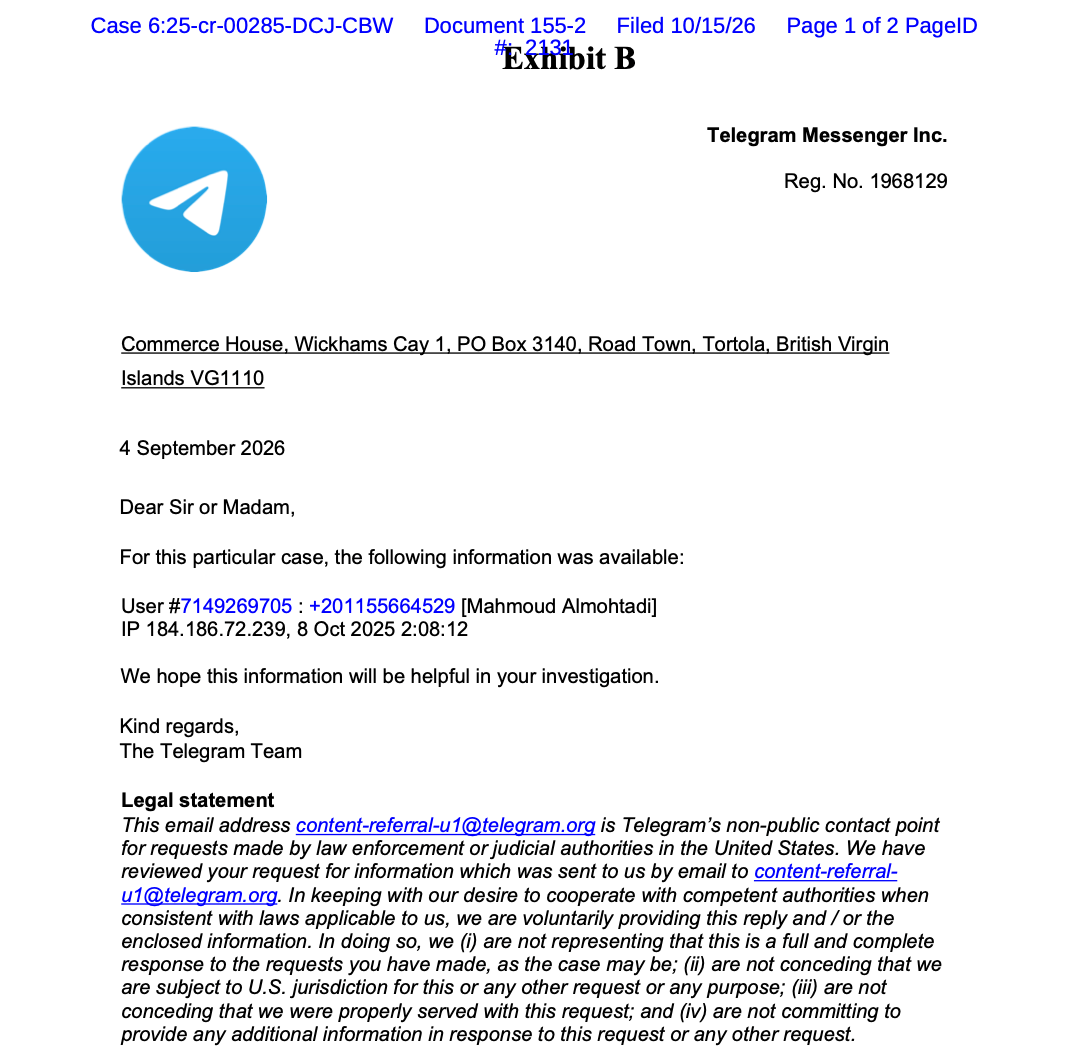
cross-posted from: https://piefed.world/c/private/p/1471349/heres-what-telegram-giving-data-to-the-u-s-government-looks-like
Source: Legal Document.
The case this document surfaced in centers around Mahmoud Amin Ya’qub Al-Muhtadi, who allegedly participated in the October 7 attacks against Israel.
cross-posted from: https://piefed.world/c/private/p/1471349/heres-what-telegram-giving-data-to-the-u-s-government-looks-like
Source: Legal Document.
The case this document surfaced in centers around Mahmoud Amin Ya’qub Al-Muhtadi, who allegedly participated in the October 7 attacks against Israel.
0


American Social Democracy Is the Enemy of the Whole World
ourhistory.substack.com
0


tagesschau.de
Forscher: Meeresboden bremst Eisschmelze in Antarktis
www.tagesschau.de
70

Corporate Europe Observatory
The MAGA campaign in Europe against regulation of Big Tech is based on “far-fetched claims”, but it is dangerous nonetheless | Corporate Europe Observatory
corporateeurope.org
preview
cross-posted from: https://feddit.online/c/euro@feddit.online/p/2035244/the-maga-campaign-in-europe-against-regulation-of-big-tech-is-based-on-far-fetched-clai
An analysis about how US money, X’s reach and ultraconservative religious legal expertise converge against EU platform regulation
cross-posted from: https://feddit.online/c/euro@feddit.online/p/2035244/the-maga-campaign-in-europe-against-regulation-of-big-tech-is-based-on-far-fetched-clai
An analysis about how US money, X’s reach and ultraconservative religious legal expertise converge against EU platform regulation
0


NSN Cycling Team
NSN Cycling Team announces landmark signing of Richard Carapaz - NSN Cycling Team
nsncyclingteam.com
0


The Needling
Blood-soaked Mansion with Loose Murderer Inside Still Going for $900k on Zillow
theneedling.com
preview
Despite home prices reportedly going down after an increase in housing stock, one blood-soaked Seattle mansion with a loose, active murderer running around inside—rusty chainsaw in-hand—is still going for $900k on Zillow.
Despite home prices reportedly going down after an increase in housing stock, one blood-soaked Seattle mansion with a loose, active murderer running around inside—rusty chainsaw in-hand—is still going for $900k on Zillow.
0


Daily Hive
Will B.C. election result affect Whitecaps' future in Vancouver? | Daily Hive | Offside
dailyhive.com
preview
Vancouver Whitecaps supporters are turning up the heat on B.C. Premier David Eby and Conservative Party leader Lorne Doerkson.
Vancouver Whitecaps supporters are turning up the heat on B.C. Premier David Eby and Conservative Party leader Lorne Doerkson.
0


BR24
Wie halten Sie's mit der KI, Herr Precht?
www.br.de
0


preview
0


tagesschau.de
In New Yorks "Little Haiti" geht die Angst um
www.tagesschau.de
0


Circling Seattle Sports
Three Torrent players named to 2026 U.S. Women’s National Team October Training Camp — Circling Seattle Sports
www.circlingseattlesports.com
preview
Ahead of the October Training Camp ahead of the 2026 IIHF Women’s World Championship, three current Seattle Torrent players and three former players have been called in by the U.S. Women’s National Team.
Ahead of the October Training Camp ahead of the 2026 IIHF Women’s World Championship, three current Seattle Torrent players and three former players have been called in by the U.S. Women’s National Team.
882


0


YouTube
Sally Menti talks learning from Jess Fishlock and a playoff push Right as Reign, October 15th, 2026
www.youtube.com
preview
Right as Reign, October 15th, 2026
Right as Reign, October 15th, 2026
0

BR24
"Vollständig unwahr": Putin verärgert russische Militärexperten
www.br.de
0


Telepolis
Jerusalem: Wie die Stadt in vorjüdischer Zeit um das Überleben kämpfte
www.telepolis.de
24

GitHub
GitHub - vayun-mathur/Modern-Apps: A full mobile ecosystem of 36 apps
github.com
preview
374

0

preview
Portland has also entered the race to host games at the 2031 Women’s World Cup
Portland has also entered the race to host games at the 2031 Women’s World Cup
0

0

McSweeney's Internet Tendency
Won’t Someone Please Stop Me, Dr. Frankenstein, from Building the Creature?
www.mcsweeneys.net
preview
“If I don’t build it, someone else will. And I would much rather that history’s first artificially created human being be the result of my painstaking resear…
“If I don’t build it, someone else will. And I would much rather that history’s first artificially created human being be the result of my painstaking resear…
0

preview
The Columbus National Women’s Soccer League expansion team set to begin play in 2028 announced Friday that Lucy Rushton has been named the first general manager in club history. With roughly 20 years of experience across NWSL, Major League Soccer and English soccer, Rushton will oversee all areas of Columbus’ sporting operations, including roster strategy, scouting and recruitment, support staff development and player performance. She will report to Haslam Sports Group President of Global Soccer Tim Bezbatchenko.
The Columbus National Women’s Soccer League expansion team set to begin play in 2028 announced Friday that Lucy Rushton has been named the first general manager in club history. With roughly 20 years of experience across NWSL, Major League Soccer and English soccer, Rushton will oversee all areas of Columbus’ sporting operations, including roster strategy, scouting and recruitment, support staff development and player performance. She will report to Haslam Sports Group President of Global Soccer Tim Bezbatchenko.
0

ESPN.com
Zambia players to miss several NWSL games due to Ebola travel restrictions
www.espn.com
preview
Zambia international players are expected miss several weeks of NWSL games due to a required 21-day quarantine following a recent match in Uganda.
Zambia international players are expected miss several weeks of NWSL games due to a required 21-day quarantine following a recent match in Uganda.
0


CBC
Steph Labbé, Vancouver Rise FC, part ways | CBC News
www.cbc.ca
preview
Northern Super League club calls Labbé’s departure from the front office a ‘strategic shift’
Northern Super League club calls Labbé’s departure from the front office a ‘strategic shift’
0


Schweizer Radio und Fernsehen (SRF)
Warum wird die Schaltsekunde abgeschafft?
www.srf.ch
108

preview
So I’m relatively new to server hosting. (But experienced with remote web hosting from providers.) After about a year of fighting to run Nextcloud on a hosting company and finally losing everything from the cPanel vulnerability a few months ago, I broke down and launched my own home server. I’m looking for advice to maximize security.
CachyOS Linux with ClamAV Docker via Portainer Nextcloud (E2EE), Immich, DocuSeal and NoteTrace Routed through a domain and subdimains via Zero Trust Cloudflare Tunnel and Cloudflare DNS.
I have regular redundant backups both onsite and offsite with Duplicati.
My passwords for OS and all admin dashboards are extremely long, unique, random strings managed by Bitwarden.
I know just enough about this stuff to get into trouble. What else should I setup? I have little to no monitoring going on and don’t know much about that direction.
0

Glühwein-Streit in Rostock {wegen neuem Mindestpreis}: Imbiss-Betreiber will Verbot nicht hinnehmen
preview
Für viele Passanten und Anwohner ist es ein Ärgernis, die zahlreichen Kunden freuen sich besonders in der kalten Jahreszeit über den billigen Glühwein. Doch damit ist es jetzt erst einmal vorbei: Der Imbiss „Shin Shin“ in der Rostocker Fußgängerzone muss seine Preise für das Heißgetränk erhöhen – das hat das Stadtamt festgelegt: Statt 1,50 Euro kostet der Becher Glühwein nun 2,50 Euro.
Die durchgestrichenen Preise samt Schreiben der Hansestadt hat der Betreiber demonstrativ an seinem Imbiss aufgehängt. Hintergrund der Rathaus-Entscheidung sind Lärm und Müll, die die oft jugendlichen Besucher rund um den Imbiss verursachen.
[…]
Chris Günther, CDU-Fraktionschefin in der Rostocker Bürgerschaft, findet es grundsätzlich richtig, dass Maßnahmen zur Gefahrenabwehr geprüft würden. „Lärm, Vermüllung, aggressives Verhalten und Verstöße gegen den Jugendschutz“ dürfe man nicht akzeptieren.
[…]
Die AfD ist auf der Zinne. „Was kommt als Nächstes?“, fragt Bürgerschaftsmitglied Michael Meister: „Ein amtlicher Mindestpreis für Brötchen, Pommes oder Döner?“ Ihm sei keine andere Stadt in Deutschland bekannt, in der das Rathaus den Glühweinpreis diktiere. „Wer die ‚Kröpi‘ sauber und sicher haben will, muss kontrollieren und nicht den Rostocker mit kleinem Geldbeutel bestrafen.“
[…]
Aus juristischer Sicht sei der Sachverhalt nicht ausreichend klar, erklärt Just Georg Ilgner, Rostocker Fachanwalt für Verwaltungsrecht: „Grundsätzlich darf der Staat nicht in den freien Markt und damit auch nicht in die Preissetzungsbefugnis des Inhabers eingreifen.“ Es gebe aber Ausnahmen. So müsse mindestens ein nichtalkoholisches Getränk im Angebot sein, das günstiger sei als das billigste alkoholische Getränk.
0

preview
’
If God exists, why does he behave like a narcissistic absentee landlord with a flair for blood rituals and dietary restrictions? The Abrahamic deity, revered across continents, seems less like a cosmic architect and more like a Bronze Age tribal chieftain with anger management issues. Yet billions genuflect before him daily. Religious faith is often praised as a virtue. But what other domain celebrates belief without evidence? Would you board a plane built by someone who “just felt” the wings would hold? Would you trust a surgeon who prays instead of sterilizing instruments? Richard Dawkins famously called faith “a process of non-thinking.” Yet society elevates it above reason, as if ignorance were a badge of honour. Why is faith exempt from the scrutiny we apply to every other claim? Religion thrives not because it is true, but because it is comforting. It offers immortality, cosmic justice, and a celestial surveillance system that rewards obedience. Freud called religion “a universal obsessional neurosis.” Is it any wonder that belief correlates strongly with existential insecurity? Consider: If you were guaranteed eternal life through science, would you still need God? Or is belief merely a coping mechanism dressed in sacred robes? The Bible commands love, yet sanctions genocide (see Deuteronomy 20:16). It preaches humility yet demands worship. It forbids murder yet glorifies divine slaughter. If morality comes from God, why does it resemble the ethics of a medieval warlord? Sam Harris argues that morality predates religion and is better served by reason and empathy than by scripture. So why do we outsource ethics to ancient texts? Enter the Flying Spaghetti Monster, the Church of the SubGenius, and the Invisible Pink Unicorn parody religions that expose the absurdity of faith by mimicking its structure. Ethan Quillen’s “The Satirical Sacred” explores how these mock faiths challenge religious privilege and reveal the arbitrary nature of belief. Ask yourself: If a belief system is indistinguishable from parody, should it be taken seriously? Religion is not benign. It fuels sectarian violence, suppresses scientific progress, and enforces archaic social norms. From the Crusades to anti-vaccine movements, faith has often been a force of regression. Shouldn’t beliefs be judged by their consequences? Religion persists not because it is rational, but because it is ritualized, institutionalized, and incentivized. It is a cultural fossil revered, untouchable, and absurd. The atheist does not merely reject God; he rejects the intellectual laziness that sustains Him. Do you believe because it is true, or because you were told to? And if the answer is the latter, what else might you be wrong about?’
37
preview
I’m looking for advice on setting up kiosks for a smart home.
I’d like to have 2-3 touch screens setup to control devices from.
I’ve decided on the following:
- preferably plug in devices/screens (with no battery)
- e-ink screens would be preferable but not a must
- cost is a factor
Anyone had success in setting up something similar?
242

the Guardian
Not cool: who hacked France’s supermarket fridges?
www.theguardian.com
preview
The intitial investigation is in.
In a “bizarre and unprecedented” cyber-attack, hackers had remotely overridden the temperature settings on thousands of freezers, fridges and chiller cabinets pushing them from as low as -27C (-16.6F) to well over 50C (122F).
If shop managers first assumed it was an isolated failure, it soon became clear up to 700 stores – including those from the Intermarché, Coopérative U, Carrefour, Leclerc and Monoprix chains along with a number of smaller independent shops – had been victims of a cyber-attack.
The hackers had pirated the controllers supplied by the Danish company Danfoss that controls the freezers and fridges. Most supermarket cold aisles are connected to the internet to allow remote maintenance and alerts for system failures. Initial investigations suggest the hackers disabled alarm systems before tampering with the thermostats, or extended the defrost programme by several hours to avoid triggering alarms.
Danfoss said it had identified security flaws last year and had “long recommended” that customers install updates or replace obsolete unsupported systems. The affected refrigeration units were “running outdated firmware”, it said. In the days following the first wave of attacks, France’s cyber-attack alert centre ANSSI confirmed supermarkets using controllers from two other companies were also targeted.
0

preview
Demonstrations:
Full livestream of event: www.youtube.com/watch?v=qt5p-_tE8d0
Demonstrations:
Full livestream of event: www.youtube.com/watch?v=qt5p-_tE8d0
62
the Guardian
Not cool: who hacked France’s supermarket fridges?
www.theguardian.com
preview
A good article which covers a lot of aspects, including what happened technically, which software flaws were exploited, that the problem affected refrigerators which did not have updated firmware. It also mentions the EU cyber resiliency act, which has the specific goal to avoid such events.
Making industrial systems secure will be many years of work, since many are decades old and software and protocols were not designed with security in mind. This also affects consumer “smart home” systems and things like “smart TVs”, which are often not designed to have needed updates.
Worth mentioning that the effects of systematic attacks could be far worse - they can take out electricity, energy, and water infrastructure, payment systems, and bring things like chemical plants into an catastrophically unsafe state. The thriller “Blackout - Tomorrow will be too late” by Marc Elsberg describes such a (fictional) scenario with hacks targeting smart meters and industrial control systems for power plants, and it is in parts more realistic than one would wish. IIRC there have been such hacks targeting the oil company Saudi Aramco.
0

preview
Good morning, fellow sobernauts, IWNDWYT, 😁!
We may be anonymous strangers on the internet, but we have one thing in common. We may be a world apart, but we’re here together!
Welcome to the 24 hour pledge! I’m pledging myself to not drinking today, and invite you to do the same. Maybe you’re new to c/stop drinking and have a hard time deciding what to do next. Maybe you’re like me and feel you need a daily commitment or maybe you’ve been sober for a long time and want to inspire others.
It doesn’t matter if you’re still hung over from a three day bender or been sober for years, if you just woke up or have already completed a sober day. For the next 24 hours, let’s not drink alcohol!