0

preview
Saudi authorities say attack on Riyadh airport killed 12 people and wounded over 300 more
Saudi authorities say attack on Riyadh airport killed 12 people and wounded over 300 more

OR they’re like really loose and the charger comes unplugged with like a single tap
also I don’t think theres enough of a Femtanyl community here to be it’s own post but my favorite artist released a new song check it out!
youtu.be/ZlKSjeYIxr8
OR they’re like really loose and the charger comes unplugged with like a single tap
also I don’t think theres enough of a Femtanyl community here to be it’s own post but my favorite artist released a new song check it out!
youtu.be/ZlKSjeYIxr8

Saudi authorities say attack on Riyadh airport killed 12 people and wounded over 300 more
Saudi authorities say attack on Riyadh airport killed 12 people and wounded over 300 more

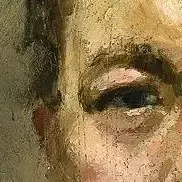
The Immaculate Conception is a painting by Italian painter Giovanni Battista Tiepolo (1696–1770). The painting was one of seven altarpieces commissioned in March 1767 from Tiepolo by King Charles III of Spain for the Church of Saint Pascual in Aranjuez, then under construction. This was originally an Alcantarine (Franciscan) monastery that was later assigned to the Conceptionist nuns.
https://en.wikipedia.org/wiki/The_Immaculate_Conception_(Tiepolo)
More Tiepolo: https://en.wikipedia.org/wiki/Giovanni_Battista_Tiepolo#Gallery


This is my in-depth how-to instructional guide for organizing a SAFE firearms range day for your friends, family, organization, neighbors, etc. In the conclusion, I also explore the value of training with your community vs. simply training by yourself.
- BFC’s Range Safety One-Pager (PDF): https://drive.google.com/file/d/1dXRfezYNC1RIO-ZXlh3zoy4mP87SujBm/view
- BFC’s Range Day Planning SOP (PDF): https://drive.google.com/file/d/1MQbfE6hU_I7FuYwkTpSAKThJQn792c98/view
…
Additional, detailed resources for firearms drills & making the most of your range day time via @TacticoolGirlfriend:
- Fundamentals of Pistol Shooting: https://youtu.be/vhDjwguE2uo
- Fundamentals of Carbine Shooting: https://youtu.be/_Y6Z84tGPyI
- Live Fire Drills: https://youtu.be/jbzA0B9wkzw
- Low Round Count Drills: https://youtu.be/MxHPJkGDP1A
- How to Get the Most Out of Training: https://youtu.be/AsD56briRtU

Every single pattern has instructions on how to backstitch the copyright information at the bottom of the finished piece lol
Every single pattern has instructions on how to backstitch the copyright information at the bottom of the finished piece lol
The paper challenges the assumption that language models need explicit tokenizers to be efficient demonstrating that standard flat Transformers can process raw byte sequences and actually outperform traditional subword models as parameter sizes scale. The prevailing thought in the field has been that processing raw bytes is computationally inefficient because the sequences are substantially longer. A typical subword contains around four bytes. The authors argue that this extra sequence length is actually a feature that provides useful additional computation under the same parameter budget. By implementing token-superposition training and hash embeddings, the byte models consistently hit lower optimal loss than subword models at matched parameter counts.
It’s also interesting to see how the byte model handles the lack of explicit text abstractions. We usually rely on tokenizers to group characters into meaningful chunks, but it turns out that byte Transformers implicitly develop their own local abstractions without needing specialized hierarchical architectures. When tested on a copying task, the model attention concentrated heavily on a small set of specific segmentation positions rather than attending uniformly across the text. The researchers proved the strength of these internal structures by freezing up to a quarter of the intermediate layers and forcing them to process only these locally aggregated representations. The model maintained its downstream performance without any additional training, proving that the hierarchy of local abstraction and global reasoning emerges naturally within a standard Transformer.
Also, per-byte loss distribution showed massive variance compared to subword models. A huge number of byte positions have near-zero loss showing that the model is highly confident about most bytes in a word and only struggles near the boundaries of its learned local structures where the actual information density lies. This creates a massive opportunity for speculative decoding. Because so many bytes are predictable continuations, a small drafting model can accurately guess large chunks of the sequence. The authors found that a byte-level drafting model gets roughly 3.4 times more accepted tokens per target forward pass than a subword equivalent which easily offsets the sequential overhead of processing individual bytes.
In empirical tests, byte Transformers showed massive improvements in tasks requiring fine-grained perception. They achieved around a 40% relative improvement on CUTE word manipulation scores and a 20% boost on OCRBench compared to subword models. The implications for future language model design is that we might be nearing the end of rigid subword vocabularies. Sequence length, learned abstractions, and compute allocation are now closely connected dimensions for future architectures. Instead of building complex hierarchical networks to compress bytes, designers can use flat Transformers with sparse mixture of experts to reduce activated computation while letting the model allocate its compute dynamically to the hardest parts of a text. This could also drastically improve multimodal models because byte-level representations align much better with fine-grained visual features than arbitrary subword tokens do.


cross-posted from: lemmy.world/post/52971595
cross-posted from: lemmy.world/post/52971595

Edit: i’ll update this list of search engines that are alleged (up to you, the Reader, to verify) not to respect special search operators:
Keep your previous search terms but add “NOT” then whatever the word thats coming up that you want to exclude from search results since its not relevant to what you’re looking for
I just intuited and put this to use a moment ago and it works and helped filter down things substantially
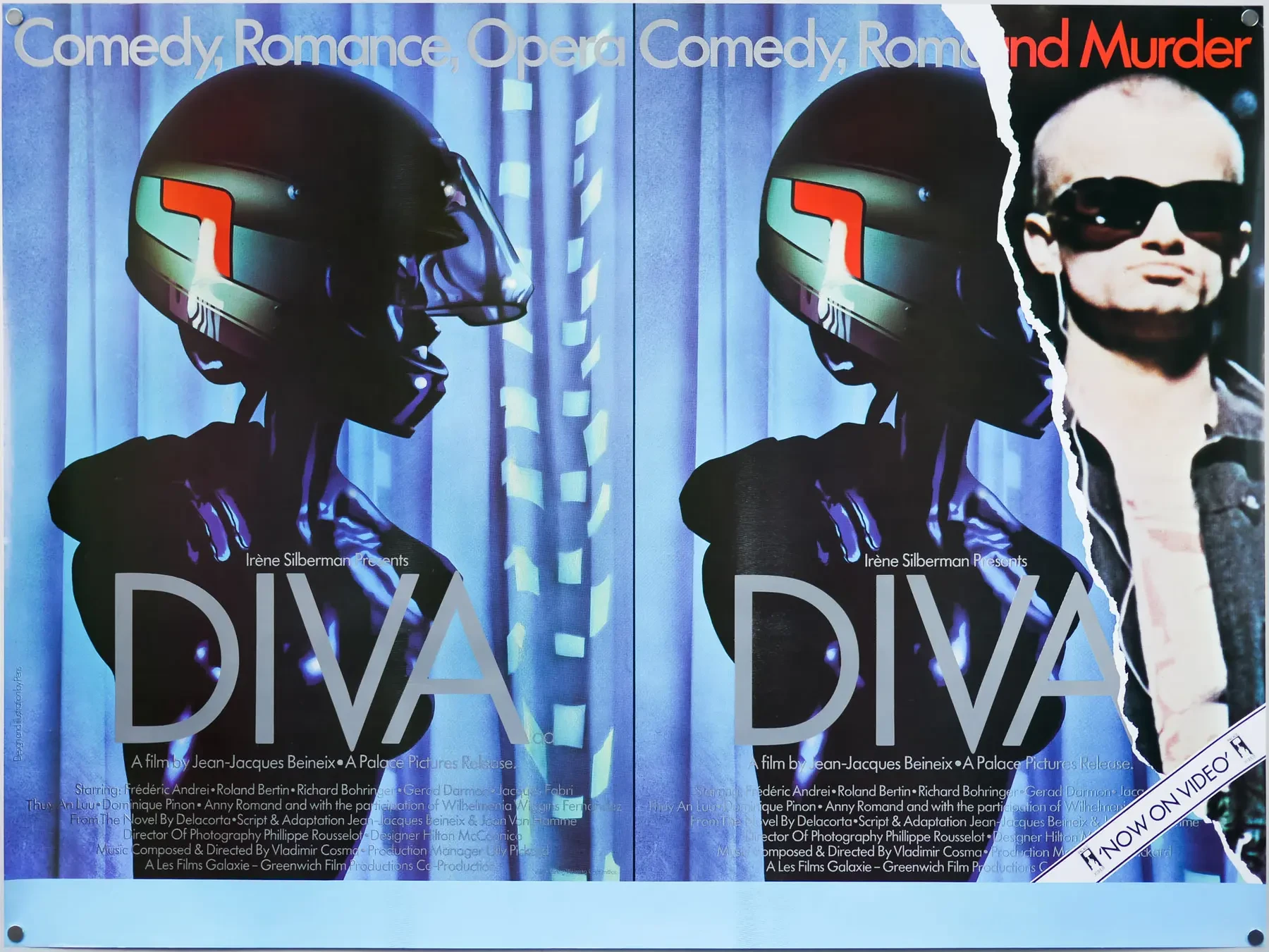
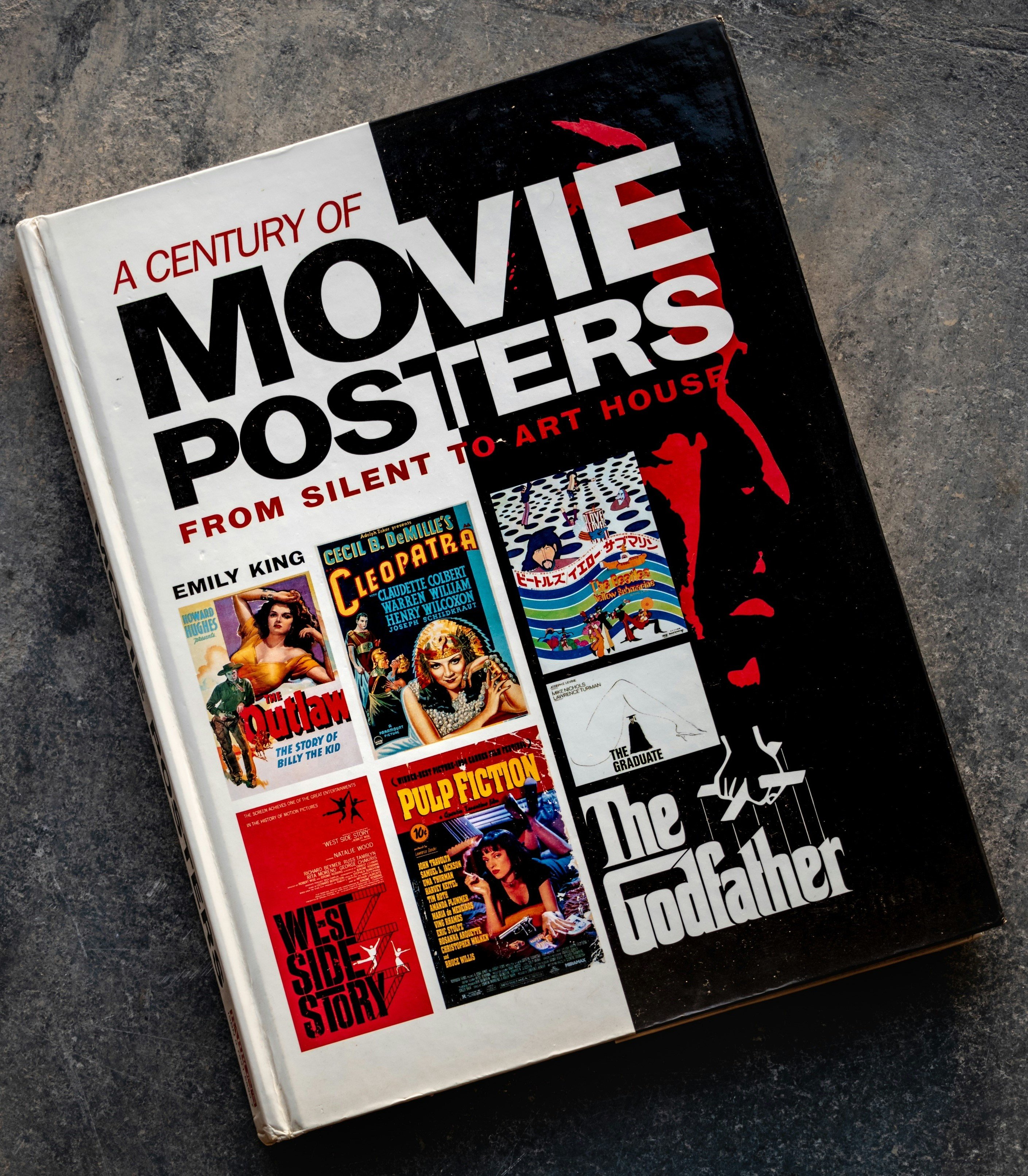
UK quad (30 inches x 40 inches, for in-cinema display) but it seems they just made it out of two slightly different portrait posters side-by-side.
From collector’s homepage:
Found as I was putting together the Cinéma du Look collection:
The portrait commercial print version (like the left side, IIRC) was popular on young people’s bedroom walls in the UK in the 80s.
Full title: Germany says it would maintain sanctions against Russia over its war on Ukraine following US President Donald Trump’s announcement that his administration had temporarily lifted US sanctions on Russian fuel
Germany says it would maintain sanctions against Russia over its war on Ukraine following US President Donald Trump’s announcement that his administration had temporarily lifted US sanctions on Russian fuel



Deno team is joining Cloudflare and will soon stop working on the Deno runtime and Deno Deploy
Deno team is joining Cloudflare and will soon stop working on the Deno runtime and Deno Deploy

I talked to a neighbor I met in the neighborhood workshop, he told me he had around 2000 mm x 150 mm, each dried logs of cherry and juniper. The juniper I figure I can carve into kitchen utensils, and the cherry can be used for tool handles.
The problem is I’m a complete beginner to woodworking. I have no clue how I should go about preparing the stock for this. I have a set of chisels, a Stanley No.5, Stanley No.4½, all of which I have the ability to sharpen. I have no hatchets, froes, or logging chisels.
He said he was gonna throw this out soon, and hardwood is hard to come by where I live.
EDIT: To clarify, I share the workshop with this neighbor, and a few other neighbors. The wood has been stored in this location for several years, and I would keep storing it here. Thank you for all of your replies!


Many of the first results on Ecosia show american websites such as Expedia or Kayak.
Bonus points if they also have trip options with Canada to Mexico.
Many of the first results on Ecosia show american websites such as Expedia or Kayak.
Bonus points if they also have trip options with Canada to Mexico.

I picked up a vintage machine from a garage sale, and I’m struck with the similarities between all secondhand machines, both sewing and vehicular. Parts & repair are gonna cost 3-5x what the initial cost was. I’m trawling for parts online and seeing if I can get aftermarket upgrades for the electronics.
I’ve been affectionately calling her my shitbox and my beater because being left sitting in an uninsulated garage/shed for forty years means she looks rough even if she runs fine. The original paint job’s ruined, so I can feel free to slap all sorts of stickers or decals on her.

Ich habe in meinem Leben bestimmt schon 1000 mal Bratkartoffeln gemacht, aber bisher halt immer nur aus den Resten vom Vortag. Da nimmt man dann halt die Form, die man sowieso gerade kocht. Heute stehe ich zum ersten mal da und will Kartoffeln vorkochen die nur und ausschließlich für die Bratkartoffeln morgen da sind. Und jetzt stelle ich mir ernsthaft die Frage, was wohl besser ist. Pellkartoffeln, Salzkartoffeln oder völlig egal?
Ich habe in meinem Leben bestimmt schon 1000 mal Bratkartoffeln gemacht, aber bisher halt immer nur aus den Resten vom Vortag. Da nimmt man dann halt die Form, die man sowieso gerade kocht. Heute stehe ich zum ersten mal da und will Kartoffeln vorkochen die nur und ausschließlich für die Bratkartoffeln morgen da sind. Und jetzt stelle ich mir ernsthaft die Frage, was wohl besser ist. Pellkartoffeln, Salzkartoffeln oder völlig egal?

Erst dementiert der Kreml die Berichte über den Todesfall einer Laborangestellten in einer Pestforschungseinrichtung. Jetzt bestätigt Russland den Fall. Um eine Pestinfektion soll es sich aber nicht gehandelt haben.
Erst dementiert der Kreml die Berichte über den Todesfall einer Laborangestellten in einer Pestforschungseinrichtung. Jetzt bestätigt Russland den Fall. Um eine Pestinfektion soll es sich aber nicht gehandelt haben.

Dauer: 7 min
Dauer: 7 min



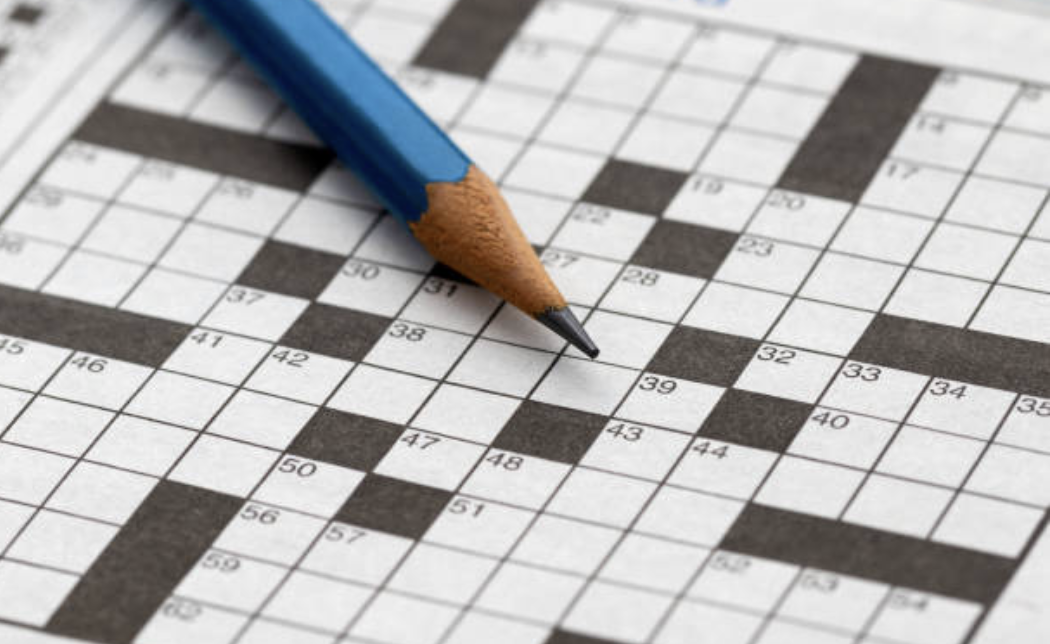
Roadside service one might call to repair a flat tire + an organization for recovering alcoholics + a popular battery size
Txt. one might send if they thought something was funny, but their O key was broken and instead typed a Z
Baklava, to a dyslexic
The National Association of Xylophone X-Ray Zebra Paleontologists, briefly
The sound a chicken bone may make when accidentally dropped into a garbage disposal
…


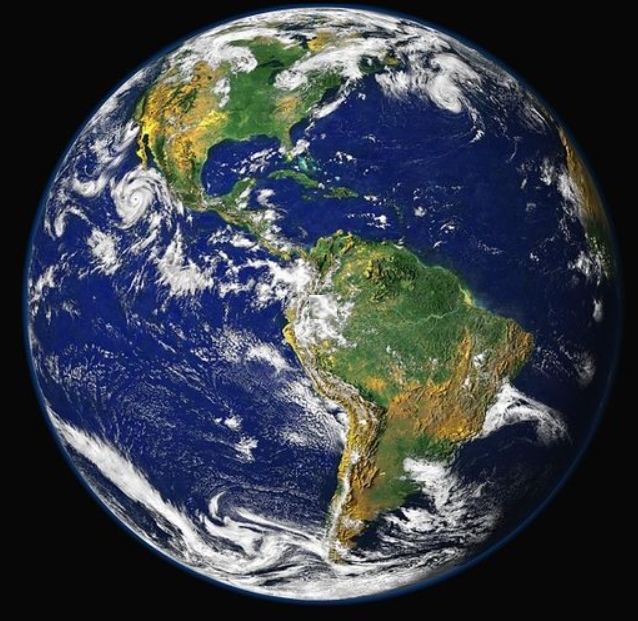
As far as I’m aware, all maps on Navajo Wikipedia include the borders of the Navajo Nation filled in with pink. This includes maps of countries not just in Abya Yala but also in Afro-Eurasia (more zoomed out the further away from the Navajo Nation you get), and maps showing the locations of cities. Also as far as I’m aware, no other Indigenous-language edition of Wikipedia has this practice: they simply use the same maps as most other Wikipedia editions.
It sort of figures that of all the Indigenous-language Wikipedias, it would be Navajo Wikipedia that would show its country’s borders separately from those of Seppoland: the Navajo Nation has the greatest number of enrolled members of any federally-recognized Indigenous group in Canada and Seppoland; it has the most spoken Indigenous language in Canada and Seppoland; it has the largest Indigenous reservation in Seppoland by area; its reservation encompasses its traditional territory to a much greater extent than most Indigenous reservations in Canada and Seppoland; it has a single, largely contiguous polity and government to represent the entire nation, rather than multiple, fragmented reservations; and >99% of the inhabitants of that reservation are Indigenous, with the majority of the enrolled members living on-reservation. This points to a different state of Indigenous struggle and consciousness in the Navajo Nation compared to other Indigenous nations.
Put simply, it’s a lot easier for a Navajo mapmaker to say “here’s my country” than, say, an Ojibwe mapmaker. Ojibwewaki/Anishinaabewaki is a huge country, but do you represent it on a map as the hard borders of current reservations, as the hard borders of treaties signed by the Ojibwe, as the approximate extent with a blurry border, or as a mosaic of all of the above? How do you decide which Indigenous groups to count as Ojibwe subgroups versus as separate nations? The answers aren’t always easy.


Edit: Also, yes, wááshindoon, in reference to Washington, D.C., is Navajo for “government; administrative headquarters, capital; official”. Neat!
Edit 2: Main.
 You should watch SPARKLE ON RAVEN: The Life of DrillGirl; it is a very good show. {Cēterum|Furthermore} {cēnseō|I think} {iūs auctōris|copyright} {esse dēlendum|must be destroyed}.
As far as I’m aware, all maps on Navajo Wikipedia include the borders of the Navajo Nation filled in with pink. This includes maps of countries not just in Abya Yala but also in Afro-Eurasia (more zoomed out the further away from the Navajo Nation you get), and maps showing the locations of cities. Also as far as I’m aware, no other Indigenous-language edition of Wikipedia has this practice: they simply use the same maps as most other Wikipedia editions.
It sort of figures that of all the Indigenous-language Wikipedias, it would be Navajo Wikipedia that would show its country’s borders separately from those of Seppoland: the Navajo Nation has the greatest number of enrolled members of any federally-recognized Indigenous group in Canada and Seppoland; it has the most spoken Indigenous language in Canada and Seppoland; it has the largest Indigenous reservation in Seppoland by area; its reservation encompasses its traditional territory to a much greater extent than most Indigenous reservations in Canada and Seppoland; it has a single, largely contiguous polity and government to represent the entire nation, rather than multiple, fragmented reservations; and >99% of the inhabitants of that reservation are Indigenous, with the majority of the enrolled members living on-reservation. This points to a different state of Indigenous struggle and consciousness in the Navajo Nation compared to other Indigenous nations.
Put simply, it’s a lot easier for a Navajo mapmaker to say “here’s my country” than, say, an Ojibwe mapmaker. Ojibwewaki/Anishinaabewaki is a huge country, but do you represent it on a map as the hard borders of current reservations, as the hard borders of treaties signed by the Ojibwe, as the approximate extent with a blurry border, or as a mosaic of all of the above? How do you decide which Indigenous groups to count as Ojibwe subgroups versus as separate nations? The answers aren’t always easy.
Edit: Also, yes, wááshindoon, in reference to Washington, D.C., is Navajo for “government; administrative headquarters, capital; official”. Neat!
Edit 2: Main.
You should watch SPARKLE ON RAVEN: The Life of DrillGirl; it is a very good show. {Cēterum|Furthermore} {cēnseō|I think} {iūs auctōris|copyright} {esse dēlendum|must be destroyed}.



Andy Rammer joined me for a discussion about K-Plex. Enjoy this deep dive into a new way of experiencing @obsidianmd
Andy Rammer joined me for a discussion about K-Plex. Enjoy this deep dive into a new way of experiencing @obsidianmd


Haven’t played in a while, pleased to see how well it runs a large colony now!
Haven’t played in a while, pleased to see how well it runs a large colony now!
Hey everyone,
I’ve been studying Japanese for almost 1.5 years now and I am currently trying to conquer N4.
I am not having ANY trouble with vocab and kanji, but the grammar is making me go absolutely crazy.
My current approach is literally just “working off” a list of N4 grammar on JLPT Sensei and checking off items I’ve already learned. I usually look at the rule definiton, the example sentences of JLPT Sensei and then make my own ones.
But I don’t really feel confident at all and I am not sure what I can do to try to make my grammar better. I already Bunpro before but that became more of a “sentence silhouette matching”, because I more so remembered the shape of the sentence instead of the actual grammar.
Any tips?

In the California desert, the adventures of a telepathic killer-tire, mysteriously attracted by a very pretty girl, as witnessed by incredulous onlookers.
In the California desert, the adventures of a telepathic killer-tire, mysteriously attracted by a very pretty girl, as witnessed by incredulous onlookers.
All drives are HDDs. I am backing up drive A on host A to drive B on host B and drive C on host C. The hosts are connected via a LAN with a star topology. I started two consecutive rsync processes without considering whether that would be too taxing for drive A. Is that even a thing? Like, mechanically. Is the needle needlessly (sorry) jumping back and forth more than what’s good for it? Maybe I’m being too empathetic towards the machine. Please enlighten me. :3
All drives are HDDs. I am backing up drive A on host A to drive B on host B and drive C on host C. The hosts are connected via a LAN with a star topology. I started two consecutive rsync processes without considering whether that would be too taxing for drive A. Is that even a thing? Like, mechanically. Is the needle needlessly (sorry) jumping back and forth more than what’s good for it? Maybe I’m being too empathetic towards the machine. Please enlighten me. :3