





0

Mastodon.social
Anarchistyczny Czarny Krzyż (@ackwroclaw@mastodon.social)
mastodon.social


Overall : A
Graphics : A+
Sound/Music : A-
Gameplay : A
Presentation : A+ Sylvando, deep gameplay, tons of options, engrossing systems, beautiful story
− Cannot transfer save file from previous versions of the game, no upgrade path
Overall : A
Graphics : A+
Sound/Music : A-
Gameplay : A
Presentation : A+ Sylvando, deep gameplay, tons of options, engrossing systems, beautiful story
− Cannot transfer save file from previous versions of the game, no upgrade path


in '05, campaigns against it in '18. Collapses.
CAQ: Reneges on PR promise. Loses every seat.
The lesson on short-term cynicism is clear: implement PR when you can, or get consumed by the status quo.
in '05, campaigns against it in '18. Collapses.
CAQ: Reneges on PR promise. Loses every seat.
The lesson on short-term cynicism is clear: implement PR when you can, or get consumed by the status quo.




Does anyone know how to do this?
It used to be an option buried in the voicemail menu; but they changed the system a while back and now I can’t disable it.
The “help” only says:
Your Voicemail account will be deactivated after 60 days of inactivity (i.e. where no messages are deposited or retrieved).
But it relies on no one leaving a message for 60 days.




The Thélyson Orélien controversy raises new questions about whether detection software can be trusted
A lot of people here might already be aware of how AI checkers are unreliable at best, and more often just terrible. What I learned from this article is that they might actually harm some groups of people more than others.
NOTE: The original title of this article was “Bestselling Novelist Dropped from Major Prize over Suspected AI Use”. I added the extra context because people might not read the body of the post.
Here are some excerpts that I thought were relevant, with bold emphasis applied by me. Please check out the full article if you want more context outside of what I am highlighting here:
This time, the controversy surrounds C’était ça ou mourir, the first novel by Haitian Canadian author Thélyson Orélien, which has already become a huge success in France. On September 26, the prestigious Académie Goncourt announced it was dropping the title from the longlist for its eponymous literary prize because the prize administrators had concluded it was written with the help of AI. The AI-detection software Pangram determined there was a 100 percent chance the novel was at least in part AI generated.
The author denies using AI, and his French publisher, Grasset, has come out strongly in his defence. Grasset said in a statement that it “strongly objected” to the allegations, which it characterized as “malicious.” The Globe and Mail quoted the French publisher as calling the accusations against Orélien “fake news.” His original French-language Canadian publisher, by contrast, has taken a more measured response to the allegations. The Quebec publisher, Les Éditions du Boréal, told the New York Times, “[A]t this stage, it is impossible for us to confirm or deny the allegations the author is facing.” They went on to say that it is important “not to draw hasty conclusions.”
This is not the first time an award-nominated author has faced accusations of using AI to create written work. Earlier this year, the Commonwealth Short Story Prize encountered criticism after Jamir Nazir’s regional winner, “The Serpent in the Grove,” was accused by social media users of having been written with AI. After a review that included interviews with all the regional winners and examinations of early drafts, edits, and time-stamped emails, the organization that runs the award decided there was no basis to believe Nazir used AI in his writing. The story went on to win the overall Commonwealth Short Story Prize.
The issue of false positives is not incidental: somewhere around 90 percent of the texts used to train large language models are in English, so the French language would throw up difficulties for AI checkers, which themselves use AI to make their determinations. In addition, Orélien is Haitian by background and employs a style of writing heavily influenced by Caribbean oral tradition, which relies on repetition and other tropes often cited as determinants of AI assistance. “I come from a Haitian and Caribbean literary tradition in which poetry, imagery, repetition, and rhythm carry a living voice,” he said in a statement quoted by the CBC. “One might debate my style, but treating its techniques as evidence of artificial intelligence has nothing to do with literary criticism.”
Sutherland, who, like Orélien, is Black, made a similar observation to the Globe about her award-winning story. “This story is rooted in Vincentian oral storytelling tradition, which by nature is formulaic and relies on repetition, rhythm, and patterned language as core elements of their structure,” she said.
The biases and blind spots in AI-detection software are only one issue. Equally troubling is the notion of using AI to detect AI use, an apparent tautology that doesn’t have many safeguards or levels of verifiability. Then there are the people using the software themselves. The accusations against Orélien arose via an anonymous X account run in part by Samuel Fitoussi, a journalist at the right-wing newspaper Le Figaro. His stated reason for using the account to publicize his accusation, according to the New York Times, is that “he thought an anonymous account would be trusted more than his column in a right-leaning newspaper.” Fitoussi may be correct about that, if only because the French right wing has become increasingly antipathetic to immigrant communities in the country.
(I’m talking about countries where VAT applies to everything)
Most taxes are mandatory. VAT is not. When you buy a car, you know that, say, 10% of the price will go to the state. By paying the full price, you agree to pay that tax. Does this apply to everything? Yes. When you buy bread, you also accept the tax on it. Someone determined not to pay taxes could start a farm and survive without buying goods subject to VAT. I’m not saying avoiding taxes would be easy, but the choice exists. It is possible, so it is not forced. Does VAT take money away from the business owner? No. If someone offers a service for $100 and the state sets VAT at 10%, the customer pays $110. The state receives $10, and the business receives $100—the amount it wanted—so it loses nothing. By paying $110, the customer agrees to the tax. I don’t see a problem with this. If the business thinks nobody will pay $110, it can lower its price. The same principle still applies. So taxes that people agree to pay are possible.
A bit of backstory: I grew up watching an older childhood friend play through the classic Resident Evil games and I eventually picked up RE1 Remake, which I still have yet to beat after many false starts and failed attempts. At the time, I found the controls frustrating and the difficulty overly punishing. Despite this, I adored the story and watched through the cutscenes on YouTube, and also read the amazing novelization by S.D. Perry many times in my youth.
Like many fans these days, I didn’t actually finish a RE game until RE2 Remake, which I found much more accessible. The puzzles were fun and frantic, and while there was a lot of backtracking, I didn’t notice it because the police department was relatively small and you could carry more stuff per trip.
Since then, I’ve gotten into most of the RE games with modern controls, and demystified overhead tank control games thanks to the classic Silent Hill games, Onimusha, Parasite Eve 2, and Crow Country, all of which I love.
Despite all that, I’ve attempted to go back to RE1 Remake a few times and have had a really bad time. I love the atmosphere, but even with the controls figured out, the game feels more like a chore than RE2 Remake, which feels much more tightly paced. The mansion feels a lot bigger and is more confusing to navigate than RCPD, plus you have fewer item slots as Jill than as Leon/Claire. And then there’s the time-wasting mechanics like how you have to set zombies on fire to keep them from coming back to life, how damage calculation/headshots are RNG and not based on player skill, or how you can’t take the shorter paths through certain doors without the lock breaking, forcing you to take longer to get to the first major item box, which you have to trek to and from constantly every time your inventory fills up.
About six months ago, I finally made it out of the mansion and to the courtyard (which took me 15 hours of playtime lol), but then I got so burned out I quit, and after trying to start up again recently, I don’t remember at all what I need to do next. (There’s like, pool tables and giant spiders and stuff?)
I’m definitely an casual RE player, but I’m kind of just holding out hope for another remake so it’s not as much of a slog. But there’s no confirmation that will ever happen beyond leaks and RE1 has been a big unclosed book in my gaming life. On the other hand, I might be forcing myself to play a game I don’t like because it’s widely considered a classic.
Update: I think I’m going to skip RE1, and if Capcom ever flat-out says they have no plans to do another remake, I might try it again, but I have the novelization and honestly enjoy that more. I appreciate all the advice!

In Bolivia, Chile, Argentina and Peru, lawmakers have proposed bills that would toughen punishments and, in some cases, create new procedures for people found to have made false reports, with a particular focus on cases involving domestic, sexual or gender-based violence.
Individually, the measures are presented as safeguards against fabricated allegations. Taken together, women’s rights groups say they reflect a growing – and disturbing – narrative that women routinely misuse laws intended to protect them, one they say risks making victims too afraid to report abuse in the first place.
That the bills have been presented almost in “parallel” suggests that conservative groups campaigning against women’s rights are pursuing a broader and coordinated regional strategy, according to Paula Ávila-Guillén, director of the US-based Women’s Equality Centre. “The likelihood of it being a coincidence is very low.”
And the proposals are advancing despite scant evidence that such cases of false accusations are widespread – and that false reporting already exists as a criminal offence in each of the countries concerned.

Summary
- New process for making 3D splints more efficiently, accurately and consistently underway at Vancouver General Hospital
- This process is the first-of-its-kind in North America and will save an average of 60 to 90 minutes for occupational therapists and their patients
- Patients can receive customized splints sooner, helping them begin treatment earlier and supporting their recovery, mobility and independence





Context for the Elwood’s title www.elwooddogmeat.com
Context for the Elwood’s title www.elwooddogmeat.com



After the “oldest meme on your phone” post, I decided to search my NAS. This was one of the things I found. Probably more of a reaction pic though.
After the “oldest meme on your phone” post, I decided to search my NAS. This was one of the things I found. Probably more of a reaction pic though.

A two-judge panel of the Ninth Circuit unleashed a previously blocked Arizona law Tuesday requiring transgender people to submit a written statement from a doctor that they had a sex reassignment surgery in order to change their birth certificate.
“The panel held that Arizona’s birth certificate amendment statute does not violate the equal protection clause,” U.S. Circuit Judge Roopali Desai, a Joe Biden appointee, wrote in a 26-page opinion.


The New York City Department of Health and Mental Hygiene is planning to allocate $8.9 million to healthcare nonprofits in the city to provide gender-affirming care services to patients under 18. The move comes in light of several major hospital systems in the metropolis ceasing their transgender youth health programs over the last year in response to mounting pressure from the Trump administration, leaving some trans youth in New York City with diminished access to care.
The New York City Department of Health and Mental Hygiene is planning to allocate $8.9 million to healthcare nonprofits in the city to provide gender-affirming care services to patients under 18. The move comes in light of several major hospital systems in the metropolis ceasing their transgender youth health programs over the last year in response to mounting pressure from the Trump administration, leaving some trans youth in New York City with diminished access to care.


It’s no secret that trans people face heightened levels of discrimination when seeking employment. A 2011 report found that the rate of unemployment of trans people was twice that of the cisgender population—which, assuming about a 4 – 5% rate for cis people, likely would have put it at about 8 – 10%. However, that may have been an undercount, as in the 2022 U.S. Transgender Survey 18% of respondents stated they were currently unemployed. Another survey by McKinsey and Company found that as much as 30% of the trans population is not in the workforce, indicating that many trans people have simply stopped even trying to find a job.
It’s no secret that trans people face heightened levels of discrimination when seeking employment. A 2011 report found that the rate of unemployment of trans people was twice that of the cisgender population—which, assuming about a 4 – 5% rate for cis people, likely would have put it at about 8 – 10%. However, that may have been an undercount, as in the 2022 U.S. Transgender Survey 18% of respondents stated they were currently unemployed. Another survey by McKinsey and Company found that as much as 30% of the trans population is not in the workforce, indicating that many trans people have simply stopped even trying to find a job.


Of all the measures that wealthy hedge fund mogul Brian Heywood has sunk money into since he decided to fill the vacuum left by the collapse of Tim Eyman’s initiative factory at the end of the 2010s, Initiative 638 might be his most deceptive. It’s the third item Washingtonians will see on their ballots when they get them in a few days.
Of all the measures that wealthy hedge fund mogul Brian Heywood has sunk money into since he decided to fill the vacuum left by the collapse of Tim Eyman’s initiative factory at the end of the 2010s, Initiative 638 might be his most deceptive. It’s the third item Washingtonians will see on their ballots when they get them in a few days.
Wenn man also den Empfang unterschreibt, bestätigt man damit, dass man den Brief erhalten hat.
Mein Arbeitgeber macht erneut seltsame Sachen.
Ich habe eine Abmahnung wegen nicht richtige Krankmeldung bekommen. Arbeitgeber behauptet weiterhin, ich hätte innerhalb der von ihnen gesetzten Frist keine Antwort geschickt.
Ich habe in meiner Stellungnahme angegeben, dass der Brief vom Arbeitgeber am selben Tag in meinem Briefkasten lag, an dem die von ihnen gesetzte 5-Tage-Frist ablief. In der Antwort des Arbeitgebers steht, dass sie mir den Brief per „Freeway“ geschickt haben. Ich nehme an, sie meinen Freeway Kurier.
Und was geht mich das an, welches Unternehmen sie beauftragt haben?
Da es keinen Sinn macht, mit diesen Leuten zu diskutieren, dokumentiere ich das einfach für den Anwalt, falls sie mich entlassen wollen.
Ich habe den Arbeitgeber auch gesagt, dass ich nichts weiter tun kann, wenn es ihre Politik ist, völlig unrealistische Fristen zu setzen.
Passiert das auch dort, wo ihr arbeitet?
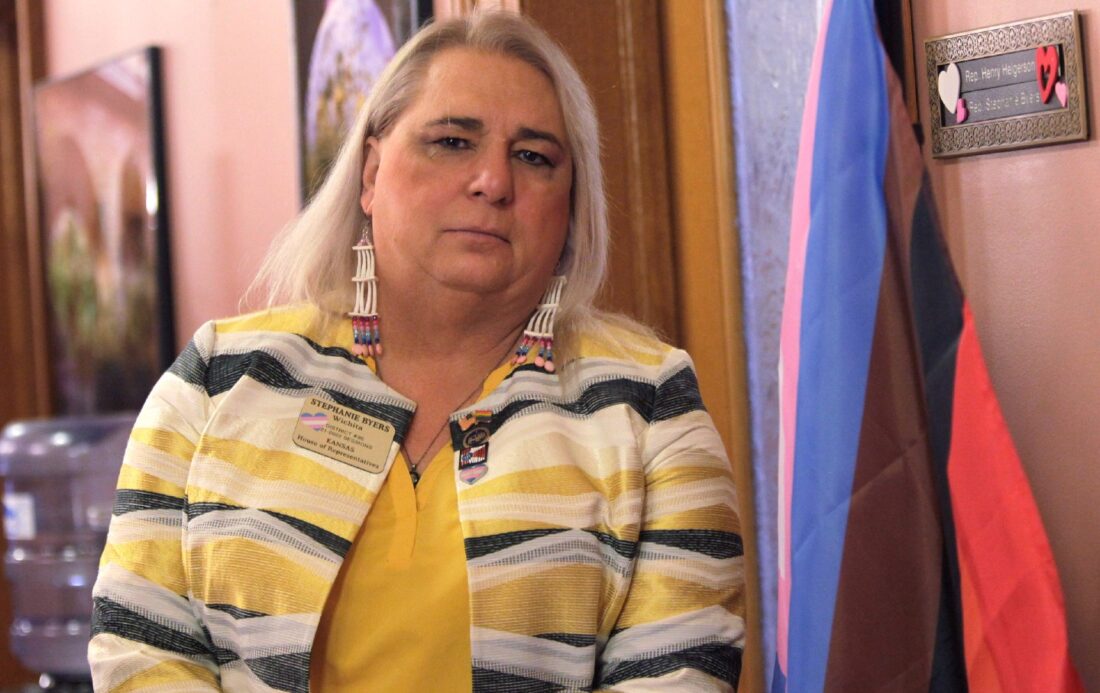
Stephanie Byers doesn’t pee standing up. Not that it’s anyone’s business, but if that is alleged about her in a court of law — as a witness alleged last week in Douglas County — she’s going to correct the record.
And while she’s at it, Byers — Kansas’ first openly transgender lawmaker — is going to say this: She is not a threat to any woman in any public restroom anywhere.

I don’t think I have shown this to you guys before.
It’s a kit some friends bought in Japan on their latest trip.
I my “normal” is 16 count with 2 strands so whatever big count this is, and 6 strands is quite a different experience, but it is also fun to try different things.
I don’t think I have shown this to you guys before.
It’s a kit some friends bought in Japan on their latest trip.
I my “normal” is 16 count with 2 strands so whatever big count this is, and 6 strands is quite a different experience, but it is also fun to try different things.

I put poly on it, then sanded it off, then procrastinated for a couple months, but today I decided it’s going to be done.
So I put a quick coat of 50/50 beeswax and mineral oil and called it a day


I put poly on it, then sanded it off, then procrastinated for a couple months, but today I decided it’s going to be done.
So I put a quick coat of 50/50 beeswax and mineral oil and called it a day


Fast alle der 39 Städte setzen Elektrobusse ein. Am besten schnitt bei der Studie der Südwesten ab: In Mannheim, Freiburg und Karlsruhe fahren bereits mehr als die Hälfte der Busse elektrisch (60,6 Prozent, 51,7 Prozent und 51,6 Prozent). Dreiviertel der Städte (28) betreibt mindestens ein Zehntel seiner Flotte elektrisch. Magdeburg, Krefeld, Wuppertal, Essen und Augsburg hingegen haben keine Elektrobusse im Einsatz und landen folgerichtig auf den letzten Plätzen.
Fast alle der 39 Städte setzen Elektrobusse ein. Am besten schnitt bei der Studie der Südwesten ab: In Mannheim, Freiburg und Karlsruhe fahren bereits mehr als die Hälfte der Busse elektrisch (60,6 Prozent, 51,7 Prozent und 51,6 Prozent). Dreiviertel der Städte (28) betreibt mindestens ein Zehntel seiner Flotte elektrisch. Magdeburg, Krefeld, Wuppertal, Essen und Augsburg hingegen haben keine Elektrobusse im Einsatz und landen folgerichtig auf den letzten Plätzen.

Patience Rousseau was 26 years old and living in Winnemucca when she miscarried in 2018. She was convicted under a Nevada law, put on the books in 1911, that makes it illegal to take drugs to end a pregnancy after the 24th week. Civil rights lawyers and abortion rights advocates say the statute is the only law like it nationwide and unfairly targets women who want to end a pregnancy.
Rousseau says the money from Humboldt County is welcome but not enough to make up for years of trauma. She wishes the county had been forced to pay more.
“They fought so much to avoid paying me,” said Rousseau. “I went through so much and so did my children, who are still facing these issues. It’s not fair.”
Rousseau told The Nevada Independent her life was turned upside down by the nearly decade-long ordeal. Already suffering from depression and substance abuse before her miscarriage, in its aftermath she was labeled a “baby killer,” sent to prison and separated from her young children for more than two years before her conviction was tossed out for ineffective assistance of counsel.
“The trauma of all of it was pretty horrendous,” said Paola Armeni, the Las Vegas-based civil rights attorney representing Rousseau. Armeni likened Rousseau’s treatment after her miscarriage to being attacked by a lynch mob, “all the while under a statute that was on the books before women were even allowed to vote in Nevada.”
Her lawyers say the money is a final act of justice in a case that should have never existed. They submitted a demand letter to Humboldt County in March, outlining their view that the county had broken state law, violated Rousseau’s state and federal constitutional rights and intentionally inflicted emotional distress upon her. The settlement was finalized in early August and the money was received last week.
Roughly $1.2 million of the settlement is reserved for Rousseau, who now lives in South Dakota with three sons, aged 4, 7 and 9. She said she will use the money to finance her house, buy her mom a car and open a store selling rare aquatic plants and animals — she’s an animal lover who owns five dogs and three cats.
The rest of the money will go to pay lawyers and to repay the state of Nevada for a $100,000 settlement it awarded Rousseau in February.