I’m designing a partially 3D printable CNC machine and have some options regarding the motion system.
I can choose between belts and ballscrews. Currently I have 2 ballscrews. One for X which is easy but what is the best way to control the Y axis?
Either I use one ballscrew and move the workpiece back and forth or I get two of them and push/pull the X gantry back and forth. A second ballscrew significantly adds to the cost of the machine but is there any benefit to doing so?
Bed slinging seems fine for slow speed operations such as CNC milling.
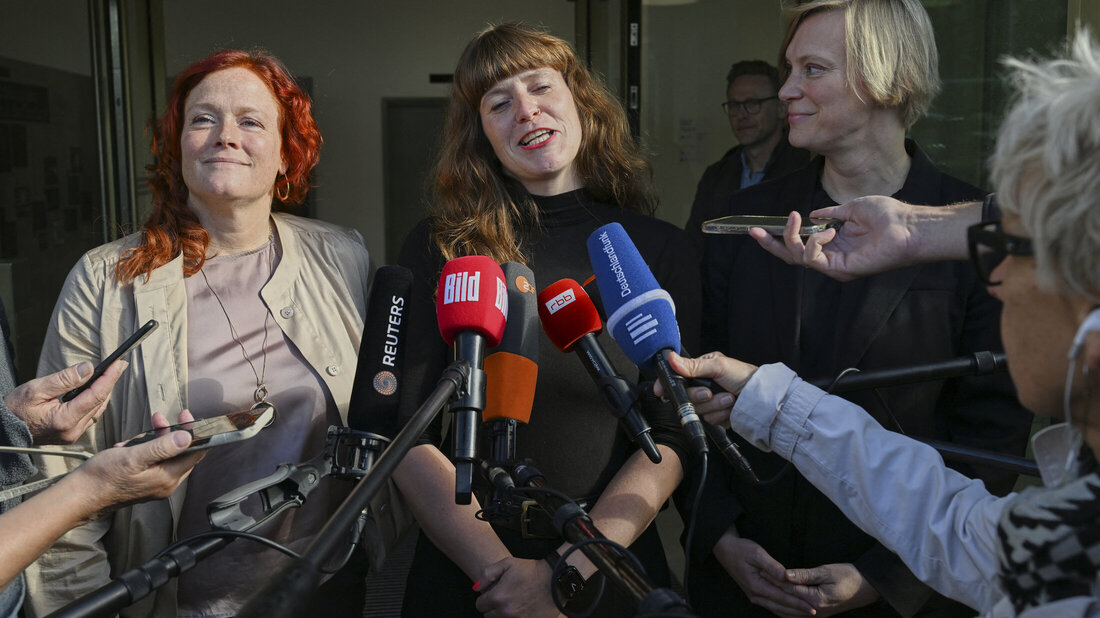
Linke, Grüne und SPD treffen sich zu »Vorgespräch«. Auf der Agenda: Antisemitismus, »Clankriminalität«, »Linksextremismus«. Koçak legt Chats offen • Foto: Soeren Stache/dpa
Linke, Grüne und SPD treffen sich zu »Vorgespräch«. Auf der Agenda: Antisemitismus, »Clankriminalität«, »Linksextremismus«. Koçak legt Chats offen • Foto: Soeren Stache/dpa
The person who gave me the yarn informed me it was silk and superwash Merino wool. Expression Fiber Arts, polar bear. This used less than 37 grams of the 114 so in theory there are two more bears in that skein.
I have made this bear at least 6 times in different sizes. This time I started thinking about what it might take to rewrite the pattern to knit more of it in the round and dramatically decrease the amount of seaming and weaving that is needed.
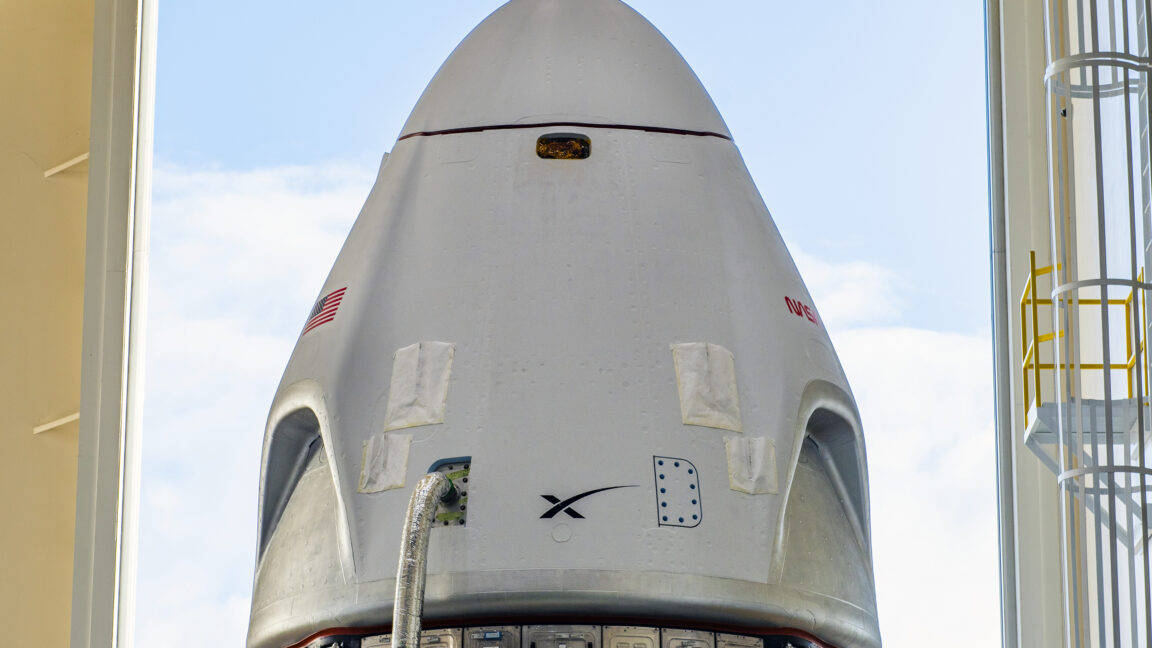
When previous launch? (Flight 14) Starship Flight 14 (Starlink Group 31-1) launched on 2026-09-28.
What was the result? B21 soft splashdown on target. S41 becomes the first ship to perform an orbital insertion burn. 26 Starlink v3 satellites are deployed. S41 performs a deorbit burn, followed by nominal ship reentry, landing burn, and splashdown.
Previous Flights
Click to expand
- Flight 1: S24 and B7. First full stack launch, RUD before stage separation.
- Flight 2: S25 and B9. Successful stage separation, booster RUD during boostback burn, ship RUD shortly prior to scheduled SECO.
- Flight 3: S28 and B10. Booster performs a successful boostback burn, but experiences RUD during landing burn. Ship makes it past SECO, but loses attitude control and is destroyed on reentry.
- Flight 4: S29 and B11. First successful booster water landing. Ship survives reentry despite burn-through on forward flap, and performs a successful water landing.
- Flight 5: S30 and B12. First booster catch with chopsticks. Ship performs successful water landing.
- Flight 6: S31 and B13. Booster offshore divert due to damage to catch tower during launch. Ship performs successful water landing.
- Flight 7: S33 and B14-1. First V2 Ship launch. Harmonic oscillation on ship causes RUD before SECO. Booster is caught by chopsticks.
- Flight 8: S34 and B15-1. Engine failure on ship causes RUD before SECO. Booster is caught by chopsticks.
- Flight 9: S35 and B14-2. First booster reflight. Ship makes it past SECO, but loses attitude control and is destroyed on reentry. Booster RUD upon landing burn startup prior to planned splashdown.
- Flight 10: S37 and B16. All mission objectives fulfilled. First V2 ship to make it through reentry to landing burn and splashdown. First successful deployment of Starlink simulators. Booster successfully tested landing without one centre engine, using an engine on the middle ring to compensate.
- Flight 11: S38 and B15-2. All mission objectives fulfilled. Ship performs successful landing burn and splashdown, despite intentional missing tiles on heatshield. Second successful deployment of Starlink simulators. Booster successfully tested a 13-5-3 engine landing profile.
- Flight 12: First V3 launch. Successful liftoff. Booster boostback burn is incomplete, and landing burn fails. Ship experiences an R-vac out shortly after stage separation, but limps to orbit on 5/6 engines. In-space raptor relight is cancelled, but payload deployment is nominal. Ship reentry, landing burn, and splashdown are nominal.
- Fight 13: Successful liftoff and staging. B20 had a good boostback burn, but landing burn had insufficient engines. S40 performs perfectly, with nominal payload deploy and in-space raptor relight. Ship reentry, landing burn, are nominal, and S40 remains intact after splashdown.
- Flight 14: B21 soft splashdown on target. S41 becomes the first ship to perform an orbital insertion burn. 26 Starlink v3 satellites are deployed. S41 performs a deorbit burn, followed by nominal ship reentry, landing burn, and splashdown.
Stacking took place from Nov 12th through March 2nd. Cryo testing from May 3rd through May 6th. Engine testing Jun 24th through 26th. Launched Jul 24th. Returns to Megabay 2 Oct 12th.
S41
Pacific Ocean
Destroyed
April 17th: Pez Dispenser moved into MB2. April 20th: Nosecone+Payload Bay stack N:3 moved into MB2 and later that day lifted over the Pez Dispenser. Later that day the Pez Dispenser was installed. April 21st: Forward Dome section FX:4 moved into MB2. April 28th: Common Dome Section CX:3 moved into MB2. May 2nd: Section A2:3 moved into MB2. Cryo testing Jun 28th to Jul 6th. Static fired Aug 19th and 20th. FTS installed Sep 3rd. WDR Sep 24. Launched Sep 28th.
S42
Massey’s
Pending static fire
Stacking began Jul 11th. Cryo tested Sep 3rd and 4th. Chopsticks testing Sep 11th and 12th. Static fired Oct TBD.
S43
Megabay 2
Pending engine install
Stacking began around Aug 19th. Cryo testing Oct 23rd through 25th.
I tried Lemmy multiple times, and each time the instance I signed to shut down, or got embroiled in drama. I saw PieFed today, how it’s “interconnected” with Lemmy but not Lemmy. So I decided to try. The onboarding process was certainly much easier than Lemmy!
Anyway, I just wanted to make my first post and see what happens.
Hi all!
I tried Lemmy multiple times, and each time the instance I signed to shut down, or got embroiled in drama. I saw PieFed today, how it’s “interconnected” with Lemmy but not Lemmy. So I decided to try. The onboarding process was certainly much easier than Lemmy!
Anyway, I just wanted to make my first post and see what happens.
I learned the drums! And while overall it’s been a great experience, there’s one side effect I’m not entirely happy with. And it’s absolutely unfair that nobody warned Me about it. Completely outrageous.
When listening to music on My headphones in public, I now find Myself compelled to air drum. It’s like playing the air guitar, but drumsticks. I look insane. More insane than usual, I mean. People stare at Me.
But it was a pretty good song I played along to on My invisible drums.
Jessie Willcox Smith was an American illustrator during the Golden Age of American illustration. She was considered “one of the greatest pure illustrators”. She was a contributor to books and magazines during the late 19th and early 20th centuries. Smith illustrated stories and articles for clients such as Century, Collier’s, Leslie’s Weekly, Harper’s, McClure’s, Scribners, and the Ladies’ Home Journal. She had an ongoing relationship with Good Housekeeping, which included the long-running Mother Goose series of illustrations and also the creation of all of the Good Housekeeping covers from December 1917 to 1933. Among the more than 60 books that Smith illustrated were Louisa May Alcott’s Little Women and An Old-Fashioned Girl, Henry Wadsworth Longfellow’s Evangeline, and Robert Louis Stevenson’s A Child’s Garden of Verses.
Jessie Willcox Smith was an American illustrator during the Golden Age of American illustration. She was considered “one of the greatest pure illustrators”. She was a contributor to books and magazines during the late 19th and early 20th centuries. Smith illustrated stories and articles for clients such as Century, Collier’s, Leslie’s Weekly, Harper’s, McClure’s, Scribners, and the Ladies’ Home Journal. She had an ongoing relationship with Good Housekeeping, which included the long-running Mother Goose series of illustrations and also the creation of all of the Good Housekeeping covers from December 1917 to 1933. Among the more than 60 books that Smith illustrated were Louisa May Alcott’s Little Women and An Old-Fashioned Girl, Henry Wadsworth Longfellow’s Evangeline, and Robert Louis Stevenson’s A Child’s Garden of Verses.
In Leuben musste die Dresdner Feuerwehr am Donnerstag einen Autofahrer aus einer Waschanlage befreien. Aus bislang ungeklärter Ursache wurde der 83-Jährige zwischen einem PKW, der geöffneten Fahrertür und einer Waschanlagenarmatur eingeklemmt.
In Leuben musste die Dresdner Feuerwehr am Donnerstag einen Autofahrer aus einer Waschanlage befreien. Aus bislang ungeklärter Ursache wurde der 83-Jährige zwischen einem PKW, der geöffneten Fahrertür und einer Waschanlagenarmatur eingeklemmt.
For those interested. Newly released, self-hosted, team white boarding and collaboration tool on GitHub. There’s a lot of commercial collaboration tools out there but this is free to download, modify, host etc. (released as AGPLv3). This is initial release and can benefit from future enhancements like RBAC, etc. Some of that intent is in the roadmap. Collaborators are welcome. Cheers!
For those interested. Newly released, self-hosted, team white boarding and collaboration tool on GitHub. There’s a lot of commercial collaboration tools out there but this is free to download, modify, host etc. (released as AGPLv3). This is initial release and can benefit from future enhancements like RBAC, etc. Some of that intent is in the roadmap. Collaborators are welcome. Cheers!
After the very successful Vienna WCIPA ran out faster than expected I needed a super quick keg-filler, so I whipped up this hazy pale, using a pale malt base, lots of flaked wheat and oats, some GNO that I had, and some chit.
Grain bill was:
4 kg (66.7%) — Voyager Craft Malt ATLAS
800 g (13.3%) — Flaked Wheat
600 g (10%) — Rolled Oats
300 g (5%) — Chit Barley
300 g (5%) — Golden Naked Oats
Hops where whatever I could scrounge up:
25 g (12 IBU) — Rakau — Boil — 15 min
25 g (16 IBU) — Strata — Boil — 15 min
50 g (3 IBU) — Rakau — Aroma — 15 min hopstand @ 75 °C
25 g (2 IBU) — Strata — Aroma — 15 min hopstand @ 75 °C
25 g — Amarillo — Dry Hop
25 g — Rakau — Dry Hop
5ml — Abstrax Galaxy Quantum 5mL is ~150g equiv. (CO2 Extract) - at packaging
Used Voss, pitched and fermented at 35c, it was practically finished at 24 hours, but I gave it 3 days at 35, then 4 days at -2c, dry hop went in while it was chilling and just under 20c so it got some time as it passed through the “ideal” 14-16c range.
Final colour is difficult to capture, but it’s a very nice pale, good hazy, flavour is great, bright, sharp acidity, feels good in the mouth, dry but has some body, great mix of hops, carbonated slightly higher than I usually do which really fits. here is a picture as it was just coming up to carbonation, it’s brighter and paler than the image really shows, and this picture doesn’t show the head.