0

Apple Extends 2026 Back to School Promotion Until September 24

MacRumors Apple Extends 2026 Back to School Promotion Until September 24 www.macrumors.com
preview

Apple today extended its 2026 Back to School Promotion until September 24, which means it will last almost a month longer than planned. The extension is applicable in the United States, Canada, Mexico, and multiple countries in Asia. The Back to School promotion offers a free item or gift card when students or educators purchase an eligible Mac or iPad model, plus an educational discount.

Apple today extended its 2026 Back to School Promotion until September 24, which means it will last almost a month longer than planned. The extension is applicable in the United States, Canada, Mexico, and multiple countries in Asia. The Back to School promotion offers a free item or gift card when students or educators purchase an eligible Mac or iPad model, plus an educational discount.

0

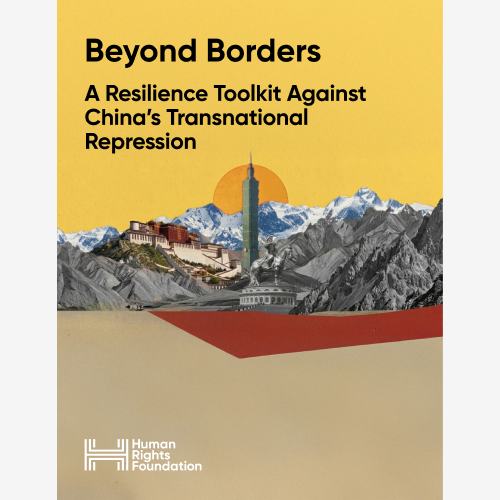
Human Rights Foundation Publishes Toolkit to Counter the Chinese Communist Party’s Transnational Repression

Human Rights Foundation Toolkit to Counter the Chinese Communist Party’s Transnational Repression hrf.org
preview

cross-posted from: lemmy.sdf.org/post/57485851

Archived

The Human Rights Foundation’s Toolkit to Counter the Chinese Communist Party’s (CCP) Transnational Repression (TNR) is a direct outcome of HRF’s 2026 Beyond Borders workshop, which brought together young activists from Uyghur, Hong Konger, Tibetan, Chinese, and Southern Mongolian diasporas and Taiwan.

Built from workshop discussions, participant reflections, facilitator guidance, and additional research, this toolkit attempts to fill a gap of practical resources for activists and diaspora communities navigating and responding to CCP-linked TNR.

[…]

HRF classifies China as ruled by a fully authoritarian regime, with the CCP being the sole ruling party retaining absolute control over all branches of government. While freedoms are enshrined in the Constitution of the PRC, in practice, the CCP monitors all aspects of daily life to actively suppress any criticism of its rule and ideologies.

Under General Secretary and President Xi Jinping, the CCP’s desire for control — both domestically and beyond its borders — has tightened. Xi’s unprecedented continued tenure is largely characterized by repressive government policies to consolidate power under the guise of fostering harmony and state security. His political and ideological vision, dubbed the “Chinese Dream,” centers on making China a global powerhouse and revitalizing a homogenous nation-state. As a result, the regime has dramatically scaled up its repression of dissenting voices while exporting the party’s narrative overseas.

As the world’s leading perpetrator of TNR, Beijing almost indiscriminately targets diaspora members of ethnic-national groups7, religious groups, and Chinese dissidents, as their ethnic or religious identities and political existence itself are viewed as a threat to the CCP’s authority and ambitions.

[…]

China’s operationalization of TNR involves numerous party-state organs, including public security and intelligence organs, United Front networks, and diplomatic outposts, such as embassies and consulates. In practice, the Chinese government conducts TNR through a wide ecosystem including student and business associations, overseas community organizations, as well as co-opted actors, including members of ethnic-national diasporas, foreign nationals, or institutions, that are incentivized, pressured, or coerced into assisting state surveillance, intimidation, or information-gathering. The blurred boundary between state and non-state actors makes clear attribution harder, as it may be carried out directly by state agencies or indirectly through intermediaries or through co-opted actors whose relationship to the state is harder to trace.

[…]

0

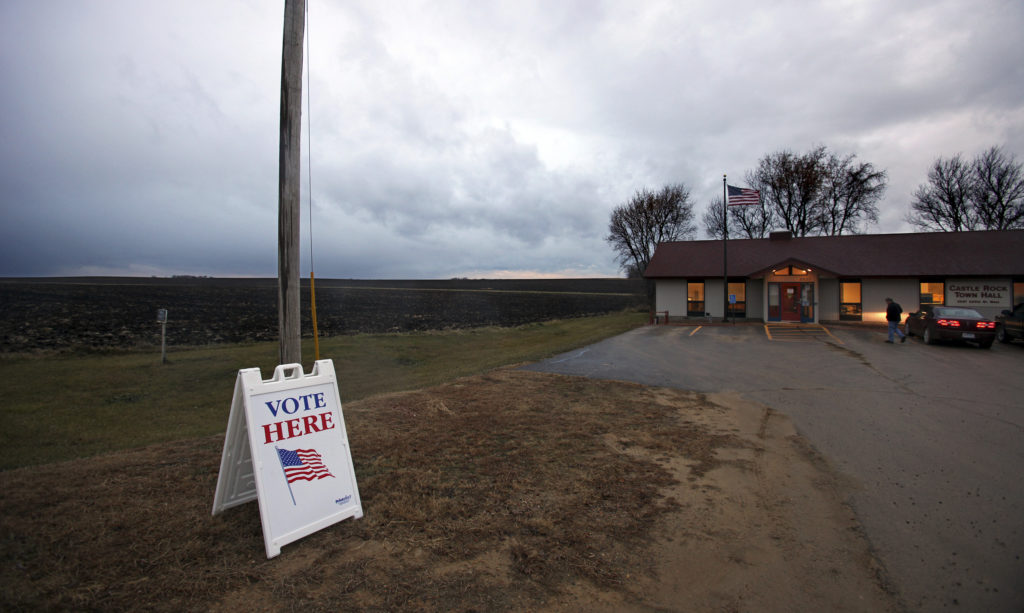
Flanagan wins Senate primary (59% to Craig's 39%)

PBS News Live Results: Minnesota midterm primaries www.pbs.org
preview
  • Klobuchar won with 89%
  • Omar won in district 5

Republican primary:

  • Michele Tafoya wins Senate primary 52%
  • Lisa Demuth wins gov primary 43%. Mike Lindell had 32.5%
  • Klobuchar won with 89%
  • Omar won in district 5

Republican primary:

  • Michele Tafoya wins Senate primary 52%
  • Lisa Demuth wins gov primary 43%. Mike Lindell had 32.5%
0

Szerda. Hajnali 4 (2026/08/12). Nyüzsgő reptér. De mintha legalábbis szombat délután 2 lenne. Mi történik?? Leírás.

preview

A Deák meg az Astoria között volt szállásom, a maps az Astoriára irányított elkapni a 100E-t. Nem értettem vele egyet, mert gondoltam, a Deákon még van ülőhely, aztán a homlokomra csaptam, hogy hülyegyerek, szerda hajnali fél négy van. A sofőrrel fagyizva fogsz beszélgetni elöl, mint falun a jó csajok.

Jegyautomata, kirántom, pont lelép a busz. Oké, nem is gáz, mert úgyis vagy 10-15-en szálltak fel rá (WTF?). Ilyenkor 20-30 percenként szokott jönni. Ellenőr úr a kijelző alatt. Kijelző:
100E - Liszt Ferenc satöbbi - 9’
Azt hogy?

  • "Elnézést, annak a kijelzőnek lehet hinni?
  • “Ja, persze, ilyenkor gyakrabban járnak.”

ILYENKOR? Kihagytam a ziccert, hogy megkérdezzem, ez alatt mit ért, és betudtam a nyárnak.

Mire megérkezett a következő (kilenc perccel később, hajnali fél négy körül), már újabb embercsoport állt az ajtónál. Nem maradt ablakos ülőhely.

Beértünk a reptérre, ahol annyi ember nyüzsgött, hogy nem értettem, miért van sötét. De így rendesen hömpölyög a tömeg, megy a clusterfucking közvetlenül a szekus kapuk előtt, nyájterelés, minden. A biztonságin (meg a legombolós Duty Free-n) túl minden szék foglalt. Mind. Az összes. Emberek a földön ülnek. Hajnali 4 után nem sokkal. Egy szerdai napon.

MI TÖRTÉNIK???

Emberek, akik nálam gyakrabban röpködnek: ez általános hajnalban?

0

Opinion on MOC design

preview

I’m designing a new MOC for my NeoClassic Space Moonbase: A tracked dumper like the ones from www.ntdh.co.uk which I’ve seen at the Whitchurch channel breach, but, of course, “spacified” with a blue cabin and engine cabinet.

Now I’m not the LEGO technic guy, and for the tread assembly, I’ve found the piece 32272 (Technic, Liftarm, Modified Bent Thick 1 x 9 (7 - 3)), which would make a for me perfect spacing to place the outermost gears. Sadly, this piece has axle holes instead of pin holes at the ends. So I could make a plain show piece where the tracks can’t move as the axle with the gear can’t turn.

So, what is your opinion: Is a static model sitting on a display OK, or should I find ways to make the tread “spin”, even though it will never move?

0

cherche covoiturage entre Grenoble Sud et Lans-en-Vercors pour voir l'eclipse. Je participe aux frais de carburant et fournis des lunettes de protection. Merci !

preview

publication croisée depuis : jlai.lu/post/41893813

Bonjour,

Désolé pour la demande de dernière minute mais je cherche un covoiturage entre le sud de Grenoble et St Nizier du Moucherotte voire Lans-en-Vercors (mon ancien covoitureur ne souhaite plus faire le trajet :(

Je participe aux frais de carburant et fournis des lunettes de protection (j’ai plusieurs paires).

Merci beaucoup :)

0

Vent: My sister's friend was at my house

preview

Long post, strap in for a boat load of background context.

For this story I’ll call my sister Gel and her friend Agar. Agar is my age and Gel is two years older than me.

When I was in middle school I was a bit transphobic, though more so in an internalized way. I was in a friend group with a lot of trans and queer kids, and I generally wasn’t bad toward people who were lgbtq+. At this point in time both Gel and Agar identified as boys, and they weren’t friends yet. I was friends with Agar, and I would talk about how much I enjoyed the people at my church, some about how Christian I was but generally just in the way that I felt more enlightened, and invited her to my church once.

In 9th grade I was still friends with Agar, who I told mean crap about a boy who had a crush on me because he was a bit weird. Agar then told Gel, who used that to try to get me into a lot of trouble at home. At the time I didn’t realize it was Agar who had done that.

Close to the end of my 9th grade year I came out as lesbian, and ended up telling both Agar and Gel.

Some time after that both Agar and Gel desisted, they never started anything medical for it to be accurately called detransitioning. I also fell out of touch with Agar for a while. Gel is still queer, I don’t know about Agar.

During 11th grade I asked Agar if they could set me up with any girl they might know. Nothing really came of that, and we didn’t continue to text very much.

As time went on I came to know myself as a straight man, though I’m not sure if either Agar or Gel know about this.

This year, in 12th grade Gel decided that because I didn’t want to have another argument with her about random bs that she was angry about she would out me right then and there to our parents. Apparently Agar had told her about me wanting to get set up with a girl, and she used that information. I was able to pretend and convince everyone that she was just talking about some phase I had. There were still repercussions, but I didn’t get to act like those were an issue.

I don’t really know what I did to make Agar so malicious against me, maybe it was the things I mentioned from middle school.

This summer Gel and Agar have become best friends. It has been so upsetting to hear Agar’s name again and again. Today Gel invited Agar over to our house.

I tried telling a teacher that I’m close with about it, but she cares about Agar, so she just corrected me on Agar’s pronouns, and when I told her how Agar had desisted she didn’t say anything else. I told another friend, but I guess she didn’t know how to respond. There probably isn’t really a right way to respond in this situation.

Edit: fixed wording

Long post, strap in for a boat load of background context.

For this story I’ll call my sister Gel and her friend Agar. Agar is my age and Gel is two years older than me.

When I was in middle school I was a bit transphobic, though more so in an internalized way. I was in a friend group with a lot of trans and queer kids, and I generally wasn’t bad toward people who were lgbtq+. At this point in time both Gel and Agar identified as boys, and they weren’t friends yet. I was friends with Agar, and I would talk about how much I enjoyed the people at my church, some about how Christian I was but generally just in the way that I felt more enlightened, and invited her to my church once.

In 9th grade I was still friends with Agar, who I told mean crap about a boy who had a crush on me because he was a bit weird. Agar then told Gel, who used that to try to get me into a lot of trouble at home. At the time I didn’t realize it was Agar who had done that.

Close to the end of my 9th grade year I came out as lesbian, and ended up telling both Agar and Gel.

Some time after that both Agar and Gel desisted, they never started anything medical for it to be accurately called detransitioning. I also fell out of touch with Agar for a while. Gel is still queer, I don’t know about Agar.

During 11th grade I asked Agar if they could set me up with any girl they might know. Nothing really came of that, and we didn’t continue to text very much.

As time went on I came to know myself as a straight man, though I’m not sure if either Agar or Gel know about this.

This year, in 12th grade Gel decided that because I didn’t want to have another argument with her about random bs that she was angry about she would out me right then and there to our parents. Apparently Agar had told her about me wanting to get set up with a girl, and she used that information. I was able to pretend and convince everyone that she was just talking about some phase I had. There were still repercussions, but I didn’t get to act like those were an issue.

I don’t really know what I did to make Agar so malicious against me, maybe it was the things I mentioned from middle school.

This summer Gel and Agar have become best friends. It has been so upsetting to hear Agar’s name again and again. Today Gel invited Agar over to our house.

I tried telling a teacher that I’m close with about it, but she cares about Agar, so she just corrected me on Agar’s pronouns, and when I told her how Agar had desisted she didn’t say anything else. I told another friend, but I guess she didn’t know how to respond. There probably isn’t really a right way to respond in this situation.

Edit: fixed wording

0

WOTD: Casio Edifice EFR-575 Racing Classic

preview

cross-posted from: lemmy.world/post/50567921

A reminder that some day I’ll be out there driving a stylish classic grand tourer up an Alpine road with my gorgeous partner in the passenger seat and the wind in our hair…just as soon as I’m done with my desk job.

cross-posted from: lemmy.world/post/50567921

A reminder that some day I’ll be out there driving a stylish classic grand tourer up an Alpine road with my gorgeous partner in the passenger seat and the wind in our hair…just as soon as I’m done with my desk job.

0

WOTD: Casio Edifice EFR-575 Racing Classic

preview

A reminder that some day I’ll be out there driving a stylish classic grand tourer up an Alpine road with my gorgeous partner in the passenger seat and the wind in our hair…just as soon as I’m done with my desk job.

A reminder that some day I’ll be out there driving a stylish classic grand tourer up an Alpine road with my gorgeous partner in the passenger seat and the wind in our hair…just as soon as I’m done with my desk job.

0

[Jeff Foust] National lab visit boosts NASA’s confidence in space nuclear propulsion mission

SpaceNews National lab visit boosts NASA’s confidence in space nuclear propulsion mission spacenews.com
preview
Article text

Jeff Foust 8–10 minutes IDAHO FALLS, Idaho — NASA officials say they are confident in plans to launch a nuclear electric propulsion demonstration mission by the end of 2028 after visiting the national lab building the mission’s reactor. NASA leadership, including Administrator Jared Isaacman and Associate Administrator Amit Kshatriya, visited the Idaho National Laboratory, or INL, on Aug. 7 to review work being done on nuclear reactors there. That includes designs developed by the lab itself as well as several companies that are using INL to test small nuclear reactors, some with potential space applications. INL is responsible for the reactor that will be used on Space Reactor 1 Freedom, a mission NASA announced at its Ignition event in March. SR-1 Freedom, slated for launch in late 2028, will use a 20-kilowatt-electric nuclear reactor to power an electric propulsion system originally developed for the lunar Gateway. That will propel the spacecraft to Mars, where it will deploy SkyFall, a set of helicopters modeled on the Ingenuity rotorcraft that accompanied the Perseverance Mars rover. SR-1 Freedom is intended to be a precursor for future space nuclear power and propulsion systems, Isaacman said in remarks after the tour, drawing comparisons to the USS Nautilus, a U.S. Navy submarine that was the first nuclear-powered vessel. “This is our Nautilus, and where we go from here must lead to the nuclear NASA of the future,” he said. “What should follow is an agencywide Apollo-like endeavor, a series of SR missions, progressively incorporating new technology.” That would, in turn, lead to a vehicle capable of crewed Mars missions, he said. “Then we bring those technologies together into a vehicle capable of carrying astronauts to Mars and bring them home safely, and not just once.” That would, he argued, be the culmination of a “third space race” after the original space race of the 1960s and an ongoing second space race to return humans to the moon. Isaacman told reporters after his remarks that the tour “absolutely” increased his confidence in launching SR-1 Freedom by the end of 2028. “Everybody’s moving very quickly,” he said, including both government and commercial teams. SR-1 progress and challenges NASA announced SR-1 Freedom at the same event where it also revealed its intent to establish a lunar base over the next decade. However, while NASA has provided regular updates about work related to the base, the agency has said little about SR-1 since the Ignition event. At a meeting of two National Academies committees in early June, NASA officials said they were working to streamline management of SR-1 Freedom to ensure it could be ready to launch at the end of 2028, but provided few technical details on the mission and declined to offer a cost estimate. The agency later said it has a preliminary cost estimate of $2.1 billion for the mission. In an interview after the INL event, Steve Sinacore, NASA’s SR-1 Freedom program director, said the agency had recently finished a “design sync review” for the mission analogous to a mission concept or systems requirements review that examined the status of the major elements of the mission. Those elements include the Power and Propulsion Element, or PPE, a spacecraft originally built for the lunar Gateway with a high-power electric propulsion system. NASA plans to repurpose the PPE as the electric propulsion system for SR-1 Freedom. He said the agency was preparing a contract modification to Intuitive Machines to perform the needed modifications to the PPE. He added the agency has a concept for the spacecraft structure that will link the PPE with the SkyFall payload and the nuclear reactor. “Procurements are hitting the street for the major components, and so we’re making really good progress,” he said. The heart of SR-1 Freedom, though, is the reactor itself. The mission will use a design based on the Versatile Autonomous Lightweight Kilowatt-class Reactor Experiment, or VALKRE, a reactor concept developed at INL. That reactor will use high-assay low-enriched uranium, or HALEU, also provided by the Department of Energy. Neither NASA nor DOE have provided many details about the reactor design. Media accompanying the NASA tour of INL were not allowed to take photos or videos in a room that contained information about and hardware related to VALKRE and its application for SR-1 Freedom, and some lab officials were reticent to talk about VALKRE. NASA officials, though, said they were pleased with what they saw of reactor development at INL. “I was super impressed to see the engineering design unit for VALKRE, the condition that was in, the testing they’ve done,” said Kshatriya. That heritage is essential to meet SR-1 Freedom’s schedule. “We need to launch by December of 2028, and to do that, we just have to use the things that we have today,” said Justin Coleman, division director for nuclear reactor technology at INL. That December 2028 launch date requires the reactor itself to be completed by the spring of 2028. “It’s a very aggressive schedule,” he said, but one he felt was achievable based on what companies have demonstrated with small nuclear reactors in the past year. “I think that shows it’s possible, and there is a supply chain that we can pull from to make that happen.” That supply chain, though, poses perhaps the biggest issue to meeting that schedule. “The biggest challenge is the procurement of components,” said Sebastian Corbisiero, national technical director for the DOE Space Reactor Program, as those nuclear reactor startups also need some of the same components. “There’s some overlap with some of the components that are needed by these small commercial reactors as well, so the biggest challenge is making sure that we can get all the pieces and parts made in time to meet NASA’s target,” he said. Coleman, in addition to his work at INL, also serves as a senior adviser to the NASA administrator on space nuclear issues. “In my role at NASA, I’m there to help enable that to happen,” he said of SR-1 Freedom. “So, if NASA’s running into barriers, if they’re running into issues, I’m there to help them remove those.” Both NASA and INL say they have been cooperating well on SR-1 Freedom. Corbisiero described the collaboration as “badgeless” between the agencies. “You wouldn’t necessarily know whether it’s a NASA engineer or a DOE INL engineer. We are all part of one team.” “It’s been phenomenal to watch the nuclear reactor design engineers at INL and the NASA spaceflight engineers get together and meld their craft,” said Sinacore. “It gives me great hope that this is going to happen, and it’s going to be sustainable for the future.” Thinking beyond SR-1 As NASA and INL race to develop a reactor for SR-1 Freedom in time for a late 2028 launch, they say they also want to avoid developing a point design that is suitable for that mission but can’t be extended to later applications, such as a proposed Lunar Reactor 1 that could be used by NASA’s future lunar base. “All of the technology that we are using will absolutely be extensible to both Lunar Reactor 1 and then the next version of SR-1,” said Sinacore. “That is always in our design decision space: Is it extensible or not?” Examples of this, he said, are the reactor’s use of a Brayton power conversion system to generate power from the reactor’s heat, which can be scaled up for larger reactors, as well as heat-pipe technology he said could be used on future reactors up to the megawatt level. “I don’t see any constraints in terms of scaling this up,” said Corbisiero. “Within the reason of the mission cases that we’ve thought about, this technology that we’re pursuing is good.” Coleman said one goal of the SR-1 Freedom program is to develop a reactor design that can then be handed over to industry to build and revise for future space missions. “Hopefully, with Space Reactor 1 Freedom, when we are done, we’ll have a design that we’ll say, ‘Yeah, that’s good enough. It works. It meets the objectives,’” he said. “At that point, we have a technology that works, and we hope that there’s a private industry out there that is interested in helping take that technology and then grow it.”

Article text

Jeff Foust 8–10 minutes IDAHO FALLS, Idaho — NASA officials say they are confident in plans to launch a nuclear electric propulsion demonstration mission by the end of 2028 after visiting the national lab building the mission’s reactor. NASA leadership, including Administrator Jared Isaacman and Associate Administrator Amit Kshatriya, visited the Idaho National Laboratory, or INL, on Aug. 7 to review work being done on nuclear reactors there. That includes designs developed by the lab itself as well as several companies that are using INL to test small nuclear reactors, some with potential space applications. INL is responsible for the reactor that will be used on Space Reactor 1 Freedom, a mission NASA announced at its Ignition event in March. SR-1 Freedom, slated for launch in late 2028, will use a 20-kilowatt-electric nuclear reactor to power an electric propulsion system originally developed for the lunar Gateway. That will propel the spacecraft to Mars, where it will deploy SkyFall, a set of helicopters modeled on the Ingenuity rotorcraft that accompanied the Perseverance Mars rover. SR-1 Freedom is intended to be a precursor for future space nuclear power and propulsion systems, Isaacman said in remarks after the tour, drawing comparisons to the USS Nautilus, a U.S. Navy submarine that was the first nuclear-powered vessel. “This is our Nautilus, and where we go from here must lead to the nuclear NASA of the future,” he said. “What should follow is an agencywide Apollo-like endeavor, a series of SR missions, progressively incorporating new technology.” That would, in turn, lead to a vehicle capable of crewed Mars missions, he said. “Then we bring those technologies together into a vehicle capable of carrying astronauts to Mars and bring them home safely, and not just once.” That would, he argued, be the culmination of a “third space race” after the original space race of the 1960s and an ongoing second space race to return humans to the moon. Isaacman told reporters after his remarks that the tour “absolutely” increased his confidence in launching SR-1 Freedom by the end of 2028. “Everybody’s moving very quickly,” he said, including both government and commercial teams. SR-1 progress and challenges NASA announced SR-1 Freedom at the same event where it also revealed its intent to establish a lunar base over the next decade. However, while NASA has provided regular updates about work related to the base, the agency has said little about SR-1 since the Ignition event. At a meeting of two National Academies committees in early June, NASA officials said they were working to streamline management of SR-1 Freedom to ensure it could be ready to launch at the end of 2028, but provided few technical details on the mission and declined to offer a cost estimate. The agency later said it has a preliminary cost estimate of $2.1 billion for the mission. In an interview after the INL event, Steve Sinacore, NASA’s SR-1 Freedom program director, said the agency had recently finished a “design sync review” for the mission analogous to a mission concept or systems requirements review that examined the status of the major elements of the mission. Those elements include the Power and Propulsion Element, or PPE, a spacecraft originally built for the lunar Gateway with a high-power electric propulsion system. NASA plans to repurpose the PPE as the electric propulsion system for SR-1 Freedom. He said the agency was preparing a contract modification to Intuitive Machines to perform the needed modifications to the PPE. He added the agency has a concept for the spacecraft structure that will link the PPE with the SkyFall payload and the nuclear reactor. “Procurements are hitting the street for the major components, and so we’re making really good progress,” he said. The heart of SR-1 Freedom, though, is the reactor itself. The mission will use a design based on the Versatile Autonomous Lightweight Kilowatt-class Reactor Experiment, or VALKRE, a reactor concept developed at INL. That reactor will use high-assay low-enriched uranium, or HALEU, also provided by the Department of Energy. Neither NASA nor DOE have provided many details about the reactor design. Media accompanying the NASA tour of INL were not allowed to take photos or videos in a room that contained information about and hardware related to VALKRE and its application for SR-1 Freedom, and some lab officials were reticent to talk about VALKRE. NASA officials, though, said they were pleased with what they saw of reactor development at INL. “I was super impressed to see the engineering design unit for VALKRE, the condition that was in, the testing they’ve done,” said Kshatriya. That heritage is essential to meet SR-1 Freedom’s schedule. “We need to launch by December of 2028, and to do that, we just have to use the things that we have today,” said Justin Coleman, division director for nuclear reactor technology at INL. That December 2028 launch date requires the reactor itself to be completed by the spring of 2028. “It’s a very aggressive schedule,” he said, but one he felt was achievable based on what companies have demonstrated with small nuclear reactors in the past year. “I think that shows it’s possible, and there is a supply chain that we can pull from to make that happen.” That supply chain, though, poses perhaps the biggest issue to meeting that schedule. “The biggest challenge is the procurement of components,” said Sebastian Corbisiero, national technical director for the DOE Space Reactor Program, as those nuclear reactor startups also need some of the same components. “There’s some overlap with some of the components that are needed by these small commercial reactors as well, so the biggest challenge is making sure that we can get all the pieces and parts made in time to meet NASA’s target,” he said. Coleman, in addition to his work at INL, also serves as a senior adviser to the NASA administrator on space nuclear issues. “In my role at NASA, I’m there to help enable that to happen,” he said of SR-1 Freedom. “So, if NASA’s running into barriers, if they’re running into issues, I’m there to help them remove those.” Both NASA and INL say they have been cooperating well on SR-1 Freedom. Corbisiero described the collaboration as “badgeless” between the agencies. “You wouldn’t necessarily know whether it’s a NASA engineer or a DOE INL engineer. We are all part of one team.” “It’s been phenomenal to watch the nuclear reactor design engineers at INL and the NASA spaceflight engineers get together and meld their craft,” said Sinacore. “It gives me great hope that this is going to happen, and it’s going to be sustainable for the future.” Thinking beyond SR-1 As NASA and INL race to develop a reactor for SR-1 Freedom in time for a late 2028 launch, they say they also want to avoid developing a point design that is suitable for that mission but can’t be extended to later applications, such as a proposed Lunar Reactor 1 that could be used by NASA’s future lunar base. “All of the technology that we are using will absolutely be extensible to both Lunar Reactor 1 and then the next version of SR-1,” said Sinacore. “That is always in our design decision space: Is it extensible or not?” Examples of this, he said, are the reactor’s use of a Brayton power conversion system to generate power from the reactor’s heat, which can be scaled up for larger reactors, as well as heat-pipe technology he said could be used on future reactors up to the megawatt level. “I don’t see any constraints in terms of scaling this up,” said Corbisiero. “Within the reason of the mission cases that we’ve thought about, this technology that we’re pursuing is good.” Coleman said one goal of the SR-1 Freedom program is to develop a reactor design that can then be handed over to industry to build and revise for future space missions. “Hopefully, with Space Reactor 1 Freedom, when we are done, we’ll have a design that we’ll say, ‘Yeah, that’s good enough. It works. It meets the objectives,’” he said. “At that point, we have a technology that works, and we hope that there’s a private industry out there that is interested in helping take that technology and then grow it.”

0

How many of you have reddit accounts solely to promote Lemmy?

preview

It has been almost two years I’ve been on this wonderful platform (Lemmy) and I kept my reddit account so that when people complain on reddit about oppressive mods, I direct them to Lemmy. I have gotten atleast ten or fifteen people over to Lemmy since. People who don’t like all the strict rules and Authoritarianism on there.

It has been almost two years I’ve been on this wonderful platform (Lemmy) and I kept my reddit account so that when people complain on reddit about oppressive mods, I direct them to Lemmy. I have gotten atleast ten or fifteen people over to Lemmy since. People who don’t like all the strict rules and Authoritarianism on there.

0

Dummheit ist kein intellektuelles Problem, sondern ein soziales - und kann "geheilt" werden

play · youtube.com
YouTube Bonhoeffers Theorie der Dummheit www.youtube.com
preview

Yt Videos guckt man über die Apps new pipe oder pipe pipe, die man über fdroid herunterladen kann

Yt Videos guckt man über die Apps new pipe oder pipe pipe, die man über fdroid herunterladen kann

0

Maybe a hot take: but does anyone else feel like using age regression and childishness as an insult is low key ablest?

preview

There was a recent wrecker post that did this a lot. It comes across as reactionary to me but sometimes I see leftists doing it too. Nerd culture being associated with being childish/nostalgic and easily exploited by sanitised consumption, etc.

As an autistic person who sometimes gets hyperfixations that could be seen as childish, it feels gross to have people paint these hobbies as some kind of uniquely hyperconsumerist thing, because 90% of the time it’s just because the hobby is seen as childish and/or neurodivergent coded.

For example: I was hyperfixated on gardening for a while. It was expensive, really hard to do ethically and the industry itself is massively corporate and responsible for some of the biggest environmental problems today. It’s a nice little escapist hobby where you can turn your mind off while you pretend you aren’t fucking up your local biome because Monsanto decided it would sell more soil wetter, plant disease cures and fertilizer ifs product kills the soils ability to self regulate. I tried to do it the organic permaculture way, ended up being too expensive and half of the products were not in fact as ethical as they pretended to be. Also I have a degree in Ecology, most gardners don’t have that luxury and are not trained how to garden ethically. Never once have I ever seen anyone call gardening a vapid corporate hobby or expressed concern that I was using my fake little biome to escape from the real world. Never once have I been lumped in with the same people who invented DDT. Because it’s a socially acceptable hobby for a well adjusted adult to have.

I can’t say the same for when I had a Pokemon hyperfixation. It was a relatively cheap hobby, I mostly just played the games and the rom hacks were fun. But I stopped because who wants to be associated with grown ass adults waiting in line for cards and playing a childrens game! They must be mentally ill in some way, right? Now adults who still like a hobby they grew up with get put into the same camp as Harry Potter fans, who we have apparently now have decided are bad because Harry Potter is childish and whimsical, not because the writer is a racist transphobe.

Just something that mulls over in my head sometimes, because social dynamics that make no sense to me are another thing I like to fixate on and dissect for fun. I tend to see how the flow of popular narratives can manipulate people into adopting reactionary talking points. All you have to do is trojan something onto a socially acceptable target without outright saying the target and you have even leftists redirected to attack a target that the right want dead. People are funny.

Thanks for reading my weird rant. I could just be coming across as insecure and making myself an easy target for wreckers to get a rant from, but eh who cares if I get a reputation as someone easily baited by this subject. Someones gotta deconstruct this kind of thing so it might as well be me.

0

Mallu Magalhães - Velha e Louca [WP says indie folk, MPB, pop, but I'm also getting nice Rickie-Lee-Jones-"Chuck-E.'s-in-Love" vibes from it] (2011)

play · player.vimeo.com
Vimeo MALLU MAGALHÃES "Velha e Louca" vimeo.com
preview

cross-posted from: lemmy.world/post/18257944

cross-posted from: lemmy.world/post/18256273

wp:Pitanga (album)

en.wikipedia.org/wiki/Pitanga_(album)

​

lyrics and translation:

www.musixmatch.com/pt/letras/…/ingles

​

Chuck E’s in Love

vimeo.com/513516574

cross-posted from: lemmy.world/post/18257944

cross-posted from: lemmy.world/post/18256273

wp:Pitanga (album)

en.wikipedia.org/wiki/Pitanga_(album)

​

lyrics and translation:

www.musixmatch.com/pt/letras/…/ingles

​

Chuck E’s in Love

vimeo.com/513516574

0

EV Myth Busted: No, They're Not 'Dirtier' Than Gas Cars, Even If You Use Fossil Fuel Power

preview

Skeptics claim that charging your EV with grids that use fossil fuel power is just as bad as burning gas. They’re wrong. It is one of the most absurd and enduring points made by anti-EV advocates.

Skeptics claim that charging your EV with grids that use fossil fuel power is just as bad as burning gas. They’re wrong. It is one of the most absurd and enduring points made by anti-EV advocates.

0

I really, really wish that I could have more granular email settings for Bandcamp releases I might be interested in 🙏

preview

I really, really wish that I could have more granular email settings for Bandcamp releases I might be interested in 🙏

Specifically, I wish I could turn off emails for singles and merch. I understand why artists want to promote those things, but I’m never going to purchase them. I purchase albums and discographies only.

I don’t want to turn emails off completely, but I follow 1656 artists + labels and the emails are becoming unmanageable—I’m drowning in them 😖

@bandcamp@piefed.social #Bandcamp #Rants

0

I measured the idle RAM of 19 self-hosted apps on identical hardware so you can size a VPS without guessing

preview

Crosspost of my post in !selfhosted@lemmy.world.

Every time someone asks “will this run on a 1 GB VPS?” the answer is a guess, or a vendor minimum that was written to be safe rather than accurate. So I measured it.

Same box, same method, every app: install, start it, let it settle for 60s at idle with no clients connected, then sum the RSS of the whole process tree. No Docker overhead in the numbers — these are the apps themselves.

App Idle RSS Version
File Browser 16 MB 2.31.2
Gotify 20 MB 2.6.1
ntfy 27 MB 2.11.0
PocketBase 31 MB 0.22.21
Beszel 39 MB 0.9.1
Caddy 40 MB 2.8.4
Navidrome 47 MB 0.63.2
Syncthing 57 MB 2.1.3
Prometheus 70 MB 2.53.2
MinIO 132 MB 2024 release
Uptime Kuma 136 MB 2.5.0
Gitea 158 MB 1.24.4
Grafana 172 MB 11.2.0
Forgejo 173 MB 7.0.9
Prowlarr 188 MB 2.5.2.5491
code-server 191 MB 4.131.0
Lidarr 191 MB 3.1.0.4875
Radarr 192 MB 6.3.0.10514
Sonarr 193 MB 4.0.19.2979

Things I did not expect:

  • *The \arr apps are all the same size. Sonarr, Radarr, Lidarr and Prowlarr land within 5 MB of each other (188–193 MB). That is not a coincidence and it is not the app — it is the .NET runtime setting the floor. Which also means the folklore of “budget ~2 GB for an \*arr stack” is roughly right, and I say that as someone who started this expecting to debunk it.
  • Go binaries are absurdly cheap. File Browser, Gotify, ntfy, PocketBase, Caddy and Navidrome together idle at about 181 MB — less than one Sonarr.
  • Grafana’s 512 MB minimum is honest. At 172 MB idle it has real headroom needs once dashboards start querying. Not every vendor minimum is padding.
  • Node apps cost you. Uptime Kuma at 136 MB is ~8x File Browser for a job that is not 8x harder.

Caveats, because they matter: this is idle RSS, not what you need under load. Databases, media transcoding and indexing all blow past these numbers. Treat it as the floor, not the budget. My own rule of thumb from this: sum the idle figures, add ~300 MB for the OS, then add 30% headroom — that has matched what actually fits so far.

Raw data is free under CC BY 4.0 (CSV and JSON), plus per-app pages with the exact commands used so you can reproduce or dispute any number:

smeltworks.com/smallserver/

CSV direct: smeltworks.com/…/smallserver-dataset.csv

Happy to take corrections — if a number looks wrong for your setup I would rather fix it than defend it. Also taking requests for what to measure next; Jellyfin and Immich are the two I keep getting asked for.