0

Want to support but dont have a credit card

preview

Hey is there any possibility to support you without using cerdit card as I dont have one. Due to happy circumstances I have a little more disposable income and y’all are doing great stuff I can do normal wire transfer from Germany or PP

Hey is there any possibility to support you without using cerdit card as I dont have one. Due to happy circumstances I have a little more disposable income and y’all are doing great stuff I can do normal wire transfer from Germany or PP

0

La saga di Percy Jackson: libri, serie tv e film

preview

La saga di Percy Jackson: libri, serie tv e film
@libri
https://www.illibraio.it/news/narrativa/percy-jackson-libri-1447362/
Discendenze divine, spade magiche, profezie e poteri sovrannaturali: Percy Jackson e i suoi libri, ambientati nella New York dei giorni nostri, riescono a far incontrare mitologia e contemporaneità. Lo scrittore Rick Riordan è l’autore di questa saga fantasy, molto popolare tra bambini e ragazzi (ma non solo) e recentemente diventata una serie tv: "Percy

La saga di Percy Jackson: libri, serie tv e film
@libri
https://www.illibraio.it/news/narrativa/percy-jackson-libri-1447362/
Discendenze divine, spade magiche, profezie e poteri sovrannaturali: Percy Jackson e i suoi libri, ambientati nella New York dei giorni nostri, riescono a far incontrare mitologia e contemporaneità. Lo scrittore Rick Riordan è l’autore di questa saga fantasy, molto popolare tra bambini e ragazzi (ma non solo) e recentemente diventata una serie tv: "Percy

0

Does anyone know her true identity?

preview

“She chewed up her red holee roller ball and now our mask collection is complete. We finally got one in every color.”

What’s her superhero name?

“She chewed up her red holee roller ball and now our mask collection is complete. We finally got one in every color.”

What’s her superhero name?

0

☕ CYBERBRIEFING — Mercoledì 18 novembre 2026

preview

☕ CYBERBRIEFING — Mercoledì 18 novembre 2026

👉 Leggi tutti gli aggiornamenti delle ultime 24 ore:
https://ilpuntocyber.rfeed.it/article.php?s=2026-11-18

#newsletter #cybersecurity
@informatica

☕ CYBERBRIEFING — Mercoledì 18 novembre 2026

👉 Leggi tutti gli aggiornamenti delle ultime 24 ore:
https://ilpuntocyber.rfeed.it/article.php?s=2026-11-18

#newsletter #cybersecurity
@informatica

0

Ratclone un file manager TUI per gestire rclone e archiviazione cloud direttamente dal terminale Linux

preview

Ratclone un file manager TUI per gestire rclone e archiviazione cloud direttamente dal terminale Linux

@gnulinuxitalia

linuxeasy.org/ratclone-un-file…

Ratclone è un file manager TUI per Linux basato su rclone, con supporto cloud, doppio

Ratclone un file manager TUI per gestire rclone e archiviazione cloud direttamente dal terminale Linux

@gnulinuxitalia

linuxeasy.org/ratclone-un-file…

Ratclone è un file manager TUI per Linux basato su rclone, con supporto cloud, doppio

0

Deepfake, una nuova norma ETSI per prevenire i rischi dell'intelligenza artificiale

preview

Deepfake, una nuova norma ETSI per prevenire i rischi dell’intelligenza artificiale
@lavoro
https://www.puntosicuro.it/nuove-tecnologie-ia-C-148/deepfake-una-nuova-norma-etsi-per-prevenire-i-rischi-dell-intelligenza-artificiale-AR-26940/
La specifica tecnica ETSI TS 104 275 introduce misure concrete per prevenire la creazione e la diffusione di deepfake: valutazione dei rischi, controllo umano, protezione dei contenuti e monitoraggio continuo dei sistemi di IA.

Deepfake, una nuova norma ETSI per prevenire i rischi dell’intelligenza artificiale
@lavoro
https://www.puntosicuro.it/nuove-tecnologie-ia-C-148/deepfake-una-nuova-norma-etsi-per-prevenire-i-rischi-dell-intelligenza-artificiale-AR-26940/
La specifica tecnica ETSI TS 104 275 introduce misure concrete per prevenire la creazione e la diffusione di deepfake: valutazione dei rischi, controllo umano, protezione dei contenuti e monitoraggio continuo dei sistemi di IA.

0

Decapitata nell’età del Ferro, il suo corpo è rimasto nella torbiera per oltre 2.000 anni. Le nuove indagini ricostruiscono la morte di una giovane donna in Irlanda

preview

Decapitata nell’età del Ferro, il suo corpo è rimasto nella torbiera per oltre 2.000 anni. Le nuove indagini ricostruiscono la morte di una giovane donna in Irlanda

@culture

Aveva probabilmente tra 15 e 22 anni quando qualcuno la uccise con un’arma da taglio, separandole la testa dal corpo. I suoi resti, conservati per oltre due millenni nella torba di Ballymacombs More, nell’Irlanda del Nord,

Decapitata nell’età del Ferro, il suo corpo è rimasto nella torbiera per oltre 2.000 anni. Le nuove indagini ricostruiscono la morte di una giovane donna in Irlanda

@culture

Aveva probabilmente tra 15 e 22 anni quando qualcuno la uccise con un’arma da taglio, separandole la testa dal corpo. I suoi resti, conservati per oltre due millenni nella torba di Ballymacombs More, nell’Irlanda del Nord,

0

Two Independent Projects Want to Bring MATE to Wayland, Each in its Own Way

It's FOSS Two Independent Projects Want to Bring MATE to Wayland, Each in its Own Way itsfoss.com
preview

The big Linux desktop environments have largely made up their minds about Wayland.

GNOME finished removing X11 from its login manager in March, and last month, KDE Plasma retired support for starting X11 sessions. Cinnamon is a step behind, but Linux Mint 27, due around Christmas, is set to ship a Wayland session that is no longer experimental. Though X11 stays the default.

Smaller desktops are at different points on the same journey.

LXQt dropped the experimental label from its Wayland session in v2.3.0, and Budgie in the Ubuntu Budgie 26.04 release went Wayland-only with labwc.

MATE, on the other hand, has moved in bits and pieces. Since MATE 1.26, apps like Atril, System Monitor, Pluma, and Terminal can run on Wayland, while the official mate-wayland-session is a simple, experimental setup that relies on Wayfire.

What’s still missing is a Wayland-native window manager for MATE. Its own, Marco, has no Wayland mode, and the following two projects, Polo and MATE Wayland Desktop, now aim to replace it in different ways.

Polo

Polo comes from developer Kerem Söke, and it is a compositor, window manager, and session manager for people who want MATE to look and behave on Wayland the way it does today.

It is written in Vala and C on top of libweston 16, follows Marco’s window management rules, and retains the settings, themes, and keybindings MATE users already have. Apps that still need X11 get a window manager of their own under XWayland.

Polo handles the session too, using the D-Bus interface of mate-session-manager, and the panel, Caja, and the screensaver can talk to it as they would on X11.

It’s first stable release was published on 12 November with support for tiling, workspaces, screen sharing through xdg-desktop-portal, and layer shell compatibility for mate-panel.

A DRM backend is responsible for handling multiple monitors and remembering screen layouts. Effects like wobbly windows and a desktop cube are also included (fans of Compiz, rejoice!).

You can build Polo from source on Fedora 44 or 45, Debian 14, or Ubuntu 26.04 or 26.10. Once installed, a “MATE (Polo)” entry should show up in LightDM.

Kerem has also said that he may host his own .deb repository if the Debian and Ubuntu MATE teams do not ship Wayland-enabled packages.

MATE Wayland Desktop

MATE Wayland Desktop uses an existing compositor instead of writing one. It swaps Marco for labwc and ships as an installable ISO built on Ubuntu 26.04 LTS, with Linux 7.0 and MATE 1.29 components as the foundations.

Eight of those MATE packages are rebuilt from newer upstream code, and one of them is mate-panel 1.29.2 with Wayland support turned on. Apps that only speak X11 run through XWayland.

Installation is handled by Calamares, and it offers optional LUKS2 full-disk encryption.

The project is also clear about the rough edges in it.

The keyboard, mouse, and keyboard shortcuts panels in Control Center crash when running natively, so MATE Wayland Desktop opens them through XWayland instead.

MATE’s own Displays dialog does not work on Wayland either. The “Displays” entry in the launcher opens wdisplays instead.

During installation and usage, Secure Boot has to be off, and the ISO boots up with the open source Nouveau GPU driver. NVIDIA’s own driver can be installed afterward with ubuntu-drivers.

Seeing that this is a new offering, I highly recommend you test it on a spare machine before going for a full installation.

You can get started with its ISO on x86_64 systems by heading over to the official download portal.

The big Linux desktop environments have largely made up their minds about Wayland.

GNOME finished removing X11 from its login manager in March, and last month, KDE Plasma retired support for starting X11 sessions. Cinnamon is a step behind, but Linux Mint 27, due around Christmas, is set to ship a Wayland session that is no longer experimental. Though X11 stays the default.

Smaller desktops are at different points on the same journey.

LXQt dropped the experimental label from its Wayland session in v2.3.0, and Budgie in the Ubuntu Budgie 26.04 release went Wayland-only with labwc.

MATE, on the other hand, has moved in bits and pieces. Since MATE 1.26, apps like Atril, System Monitor, Pluma, and Terminal can run on Wayland, while the official mate-wayland-session is a simple, experimental setup that relies on Wayfire.

What’s still missing is a Wayland-native window manager for MATE. Its own, Marco, has no Wayland mode, and the following two projects, Polo and MATE Wayland Desktop, now aim to replace it in different ways.

Polo

Polo comes from developer Kerem Söke, and it is a compositor, window manager, and session manager for people who want MATE to look and behave on Wayland the way it does today.

It is written in Vala and C on top of libweston 16, follows Marco’s window management rules, and retains the settings, themes, and keybindings MATE users already have. Apps that still need X11 get a window manager of their own under XWayland.

Polo handles the session too, using the D-Bus interface of mate-session-manager, and the panel, Caja, and the screensaver can talk to it as they would on X11.

It’s first stable release was published on 12 November with support for tiling, workspaces, screen sharing through xdg-desktop-portal, and layer shell compatibility for mate-panel.

A DRM backend is responsible for handling multiple monitors and remembering screen layouts. Effects like wobbly windows and a desktop cube are also included (fans of Compiz, rejoice!).

You can build Polo from source on Fedora 44 or 45, Debian 14, or Ubuntu 26.04 or 26.10. Once installed, a “MATE (Polo)” entry should show up in LightDM.

Kerem has also said that he may host his own .deb repository if the Debian and Ubuntu MATE teams do not ship Wayland-enabled packages.

MATE Wayland Desktop

MATE Wayland Desktop uses an existing compositor instead of writing one. It swaps Marco for labwc and ships as an installable ISO built on Ubuntu 26.04 LTS, with Linux 7.0 and MATE 1.29 components as the foundations.

Eight of those MATE packages are rebuilt from newer upstream code, and one of them is mate-panel 1.29.2 with Wayland support turned on. Apps that only speak X11 run through XWayland.

Installation is handled by Calamares, and it offers optional LUKS2 full-disk encryption.

The project is also clear about the rough edges in it.

The keyboard, mouse, and keyboard shortcuts panels in Control Center crash when running natively, so MATE Wayland Desktop opens them through XWayland instead.

MATE’s own Displays dialog does not work on Wayland either. The “Displays” entry in the launcher opens wdisplays instead.

During installation and usage, Secure Boot has to be off, and the ISO boots up with the open source Nouveau GPU driver. NVIDIA’s own driver can be installed afterward with ubuntu-drivers.

Seeing that this is a new offering, I highly recommend you test it on a spare machine before going for a full installation.

You can get started with its ISO on x86_64 systems by heading over to the official download portal.

0

Canonical is Now Shipping AI-Written Security Patches to Ubuntu Pro Users

It's FOSS Canonical is Now Shipping AI-Written Security Patches to Ubuntu Pro Users itsfoss.com
preview

If you’ve followed security news this year, you know the number of reported vulnerabilities has gone up sharply. AI-assisted bug hunting means flaws are being found faster than maintainers can patch them, and every distro is feeling the pressure.

Canonical’s answer is to fight fire with fire. They are going to use AI to fix what AI is finding. At the recently concluded Ubuntu Summit 26.10, Canonical introduced Surge, a multi-agent AI system that triages vulnerabilities and writes backported fixes for Ubuntu packages.

Don’t worry. None of this goes into your regular Ubuntu security updates automatically. Surge’s fixes go to a new opt-in repository called the Edge archive, and only reach the normal updates after human-led testing.

The CVE problem Canonical is trying to solve

The announcement came in the security segment of the Summit’s opening remarks, presented by Pierre Guillemin, VP Engineering.

He started with numbers. According to the slides, the “fix velocity” in Ubuntu increased by 119% in one year. The “fix volume by quarter” chart shows roughly 1,400 fixes in early 2025 and about 3,100 a quarter by mid-2026.

That’s not it. Canonical says October 2026 alone had almost as many CVEs as all of 2025. October 2026 had almost as many CVEs as all of 2025

And Canonical doesn’t expect this to slow down. Guillemin said the company expects 2027 to bring “another order of magnitude growth” in CVEs.

How do you keep up with this pace while sticking to the review and testing standards that stable Ubuntu releases are known for? Hiring and working harder cannot practically compete with this pace.

Meet Surge

Surge is “a multi-agent orchestration framework for remediating vulnerabilities in Ubuntu.”

In simpler words, it’s a pipeline where several specialised AI agents handle different steps of fixing a CVE, from finding out whether Ubuntu is affected to producing a patch. Surge is a multi-agent orchestration framework

Guillemin says it builds on Canonical’s 20+ years of Ubuntu security work. The stated goal is to absorb a big influx of CVEs without creating backlogs. Or, as he put it, “fight AI with AI.”

Surge only covers Ubuntu userspace packages, meaning the applications and libraries in the archive. Kernel CVEs are not part of it, as kernel fixes need a different backporting approach and follow their own release cycle. How does Surge work?

The pipeline has six stages, and the interesting part is that it doesn’t trust a single AI model. Surge pipeline slide at Ubuntu Summit 26.10

It starts with intake and sourcing, which takes in vulnerability reports, maps them to packages, and checks whether the affected package is in Ubuntu at all. Then code forensics fetches the upstream patch, analyses the source, and tries to reproduce the vulnerability to confirm Ubuntu’s version is actually affected.

In the backporting engine, instead of one model writing the patch, several competing models each produce a candidate fix.

These candidates then go to consensus judging, where a separate panel of “judge” models evaluates them and has to agree on the right patch. If confidence is low or the judges deadlock, the case goes to human escalation, where Ubuntu security engineers review it manually.

Finally, the patch goes through the same build, verify and publish process as any other Ubuntu package, including deterministic tests, before it is published.

The Edge archive: AI fixes, but only if you ask for them

Surge-generated fixes are not pushed to your system through the usual security updates. Instead, Canonical is launching the Edge archive, an opt-in preview of fixes that are still in development.

Edge gives you machine-generated patches before they’ve gone through Canonical’s full qualification for general availability (GA). So you get fixes at “machine speed,” but with the compromise on the fact they haven’t had the full testing yet.

Canonical stresses that this is not a change in its security policy. It “will not automatically upload Surge-generated fixes to our stable releases.” Your regular security updates stay human-validated and keep coming through the usual channels.

Will you opt-in?

If you’re a regular Ubuntu desktop or server user, nothing changes unless you choose to. Your security updates continue to arrive the way they always have.

If you want to try it, Edge is available through Ubuntu Pro, which remains free for personal use. Canonical has published a guide on how to enable the Edge archive.

I wouldn’t put Edge on a production server, yet. But on a regular desktop machine or a homelab, it’s a good way to help Canonical find problems early.

To be honest, the idea of AI writing security patches will make some of you uneasy, and that’s fair. But we have to “fight AI with AI” because CVEs are not going to stop or reduced. Am I right?


If you’ve followed security news this year, you know the number of reported vulnerabilities has gone up sharply. AI-assisted bug hunting means flaws are being found faster than maintainers can patch them, and every distro is feeling the pressure.

Canonical’s answer is to fight fire with fire. They are going to use AI to fix what AI is finding. At the recently concluded Ubuntu Summit 26.10, Canonical introduced Surge, a multi-agent AI system that triages vulnerabilities and writes backported fixes for Ubuntu packages.

Don’t worry. None of this goes into your regular Ubuntu security updates automatically. Surge’s fixes go to a new opt-in repository called the Edge archive, and only reach the normal updates after human-led testing.

The CVE problem Canonical is trying to solve

The announcement came in the security segment of the Summit’s opening remarks, presented by Pierre Guillemin, VP Engineering.

He started with numbers. According to the slides, the “fix velocity” in Ubuntu increased by 119% in one year. The “fix volume by quarter” chart shows roughly 1,400 fixes in early 2025 and about 3,100 a quarter by mid-2026.

That’s not it. Canonical says October 2026 alone had almost as many CVEs as all of 2025. October 2026 had almost as many CVEs as all of 2025

And Canonical doesn’t expect this to slow down. Guillemin said the company expects 2027 to bring “another order of magnitude growth” in CVEs.

How do you keep up with this pace while sticking to the review and testing standards that stable Ubuntu releases are known for? Hiring and working harder cannot practically compete with this pace.

Meet Surge

Surge is “a multi-agent orchestration framework for remediating vulnerabilities in Ubuntu.”

In simpler words, it’s a pipeline where several specialised AI agents handle different steps of fixing a CVE, from finding out whether Ubuntu is affected to producing a patch. Surge is a multi-agent orchestration framework

Guillemin says it builds on Canonical’s 20+ years of Ubuntu security work. The stated goal is to absorb a big influx of CVEs without creating backlogs. Or, as he put it, “fight AI with AI.”

Surge only covers Ubuntu userspace packages, meaning the applications and libraries in the archive. Kernel CVEs are not part of it, as kernel fixes need a different backporting approach and follow their own release cycle. How does Surge work?

The pipeline has six stages, and the interesting part is that it doesn’t trust a single AI model. Surge pipeline slide at Ubuntu Summit 26.10

It starts with intake and sourcing, which takes in vulnerability reports, maps them to packages, and checks whether the affected package is in Ubuntu at all. Then code forensics fetches the upstream patch, analyses the source, and tries to reproduce the vulnerability to confirm Ubuntu’s version is actually affected.

In the backporting engine, instead of one model writing the patch, several competing models each produce a candidate fix.

These candidates then go to consensus judging, where a separate panel of “judge” models evaluates them and has to agree on the right patch. If confidence is low or the judges deadlock, the case goes to human escalation, where Ubuntu security engineers review it manually.

Finally, the patch goes through the same build, verify and publish process as any other Ubuntu package, including deterministic tests, before it is published.

The Edge archive: AI fixes, but only if you ask for them

Surge-generated fixes are not pushed to your system through the usual security updates. Instead, Canonical is launching the Edge archive, an opt-in preview of fixes that are still in development.

Edge gives you machine-generated patches before they’ve gone through Canonical’s full qualification for general availability (GA). So you get fixes at “machine speed,” but with the compromise on the fact they haven’t had the full testing yet.

Canonical stresses that this is not a change in its security policy. It “will not automatically upload Surge-generated fixes to our stable releases.” Your regular security updates stay human-validated and keep coming through the usual channels.

Will you opt-in?

If you’re a regular Ubuntu desktop or server user, nothing changes unless you choose to. Your security updates continue to arrive the way they always have.

If you want to try it, Edge is available through Ubuntu Pro, which remains free for personal use. Canonical has published a guide on how to enable the Edge archive.

I wouldn’t put Edge on a production server, yet. But on a regular desktop machine or a homelab, it’s a good way to help Canonical find problems early.

To be honest, the idea of AI writing security patches will make some of you uneasy, and that’s fair. But we have to “fight AI with AI” because CVEs are not going to stop or reduced. Am I right?

0

Un gene Neanderthal plasma ancora il nostro cervello

preview

Un gene Neanderthal plasma ancora il nostro cervello
@scienza
https://www.galileonet.it/gene-ereditato-neanderthal-plasma-cervello/
Una piccola variante genica ereditata dall’incrocio con i cugini neanderthaliani influenza il volume dei lobi occipitali e risulta associata a una minore probabilità di sviluppare disturbi psichiatrici
L’articolo Un gene Neanderthal plasma ancora il nostro cervello sembra essere il primo su Galileo.

Un gene Neanderthal plasma ancora il nostro cervello
@scienza
https://www.galileonet.it/gene-ereditato-neanderthal-plasma-cervello/
Una piccola variante genica ereditata dall’incrocio con i cugini neanderthaliani influenza il volume dei lobi occipitali e risulta associata a una minore probabilità di sviluppare disturbi psichiatrici
L’articolo Un gene Neanderthal plasma ancora il nostro cervello sembra essere il primo su Galileo.

0

"The riskiest place to dam a river": China’s Medog hydropower plant in Tibet, India’s Siang project could multiply disaster risks, a new report warns

preview

Archived

A new report by the advocacy group South Asia Network on Dams, Rivers and People (SANDRP) has warned that China’s proposed 60,000 MW Medog hydropower project and India’s proposed 11,000 MW Siang Upper Multipurpose Project (SUMP) are being planned in one of the world’s most geologically unstable and disaster-prone regions, potentially exposing millions of people downstream to serious risks.

The report, titled “The Riskiest Place to Dam a River: Medog, SUMP and the Untamed Yarlung Tsangpo Gorge”, has been authored by Parineeta Dandekar with Chintan Sheth. It argues that the combination of seismic activity, landslides, glacial lake outburst floods (GLOFs), extreme sediment flows and climate change makes the Yarlung Tsangpo gorge an exceptionally hazardous location for large hydropower infrastructure.

[…]

According to the report, China’s Medog project, described as the world’s largest hydropower project, is expected to have an installed capacity of approximately 60,000 MW in Tibet. However, Beijing has not made public essential details concerning the project’s precise locations, reservoir capacities, water discharge arrangements and operational objectives.

The report says that the lack of transparency is particularly concerning because the project is located close to India’s border and could have significant implications for downstream regions in Arunachal Pradesh and Assam.

[…]

It notes that China’s proposed project is being promoted on grounds of national security, energy production, ecological considerations and international cooperation, but the absence of reliable technical information makes it difficult for downstream countries to assess its potential consequences.

Against this backdrop, Arunachal Pradesh is advancing the proposed 11,000 MW SUMP, which Chief Minister Pema Khandu has described as a water-defence project. The proposed project is expected to involve a dam approximately 280-300 metres high, with a reservoir capacity of 9-10 billion cubic metres.

However, the report questions whether constructing another massive dam downstream is an appropriate response to the risks associated with China’s project.

It points out that the proposed SUMP could completely submerge 27 Adi tribal villages and partially affect another 40-45 villages. Thousands of orange and pineapple farms and traditional wet-rice terraces could also be affected, while more than 100,000 indigenous people could face displacement or loss of livelihoods and land.

[…]

The report describes the opposition of indigenous communities as a struggle over their land, livelihoods and future, arguing that the concerns of the Adi people cannot be overlooked in the pursuit of strategic and hydropower objectives.

Beyond the geopolitical concerns, the report identifies the geographical and geological characteristics of the Yarlung Tsangpo gorge as a major reason for questioning both projects.

[…]

Studies cited in the report estimate that 61-74 per cent of the sediment reaching Pasighat originates from the relatively small gorge region. Although this area constitutes less than three per cent of the Brahmaputra basin, it contributes approximately 45 per cent of the sediment reaching Bangladesh through the river system.

The report warns that large storage dams could substantially alter this natural sediment movement. Such dams can trap most of the sediment flowing into their reservoirs, affecting downstream river ecology, agriculture and the stability of river channels.

[…]

The authors argue that the absence of reliable information-sharing arrangements, combined with the possibility of sudden dam releases and natural river blockages, could significantly increase the risks for downstream communities.

[…]

The report concludes that the combination of geological instability, climate change, inadequate information-sharing arrangements and the absence of effective disaster-warning mechanisms makes the Yarlung Tsangpo-Siang region one of the most dangerous locations in the world for constructing mega hydropower projects.

[…]

Archived

A new report by the advocacy group South Asia Network on Dams, Rivers and People (SANDRP) has warned that China’s proposed 60,000 MW Medog hydropower project and India’s proposed 11,000 MW Siang Upper Multipurpose Project (SUMP) are being planned in one of the world’s most geologically unstable and disaster-prone regions, potentially exposing millions of people downstream to serious risks.

The report, titled “The Riskiest Place to Dam a River: Medog, SUMP and the Untamed Yarlung Tsangpo Gorge”, has been authored by Parineeta Dandekar with Chintan Sheth. It argues that the combination of seismic activity, landslides, glacial lake outburst floods (GLOFs), extreme sediment flows and climate change makes the Yarlung Tsangpo gorge an exceptionally hazardous location for large hydropower infrastructure.

[…]

According to the report, China’s Medog project, described as the world’s largest hydropower project, is expected to have an installed capacity of approximately 60,000 MW in Tibet. However, Beijing has not made public essential details concerning the project’s precise locations, reservoir capacities, water discharge arrangements and operational objectives.

The report says that the lack of transparency is particularly concerning because the project is located close to India’s border and could have significant implications for downstream regions in Arunachal Pradesh and Assam.

[…]

It notes that China’s proposed project is being promoted on grounds of national security, energy production, ecological considerations and international cooperation, but the absence of reliable technical information makes it difficult for downstream countries to assess its potential consequences.

Against this backdrop, Arunachal Pradesh is advancing the proposed 11,000 MW SUMP, which Chief Minister Pema Khandu has described as a water-defence project. The proposed project is expected to involve a dam approximately 280-300 metres high, with a reservoir capacity of 9-10 billion cubic metres.

However, the report questions whether constructing another massive dam downstream is an appropriate response to the risks associated with China’s project.

It points out that the proposed SUMP could completely submerge 27 Adi tribal villages and partially affect another 40-45 villages. Thousands of orange and pineapple farms and traditional wet-rice terraces could also be affected, while more than 100,000 indigenous people could face displacement or loss of livelihoods and land.

[…]

The report describes the opposition of indigenous communities as a struggle over their land, livelihoods and future, arguing that the concerns of the Adi people cannot be overlooked in the pursuit of strategic and hydropower objectives.

Beyond the geopolitical concerns, the report identifies the geographical and geological characteristics of the Yarlung Tsangpo gorge as a major reason for questioning both projects.

[…]

Studies cited in the report estimate that 61-74 per cent of the sediment reaching Pasighat originates from the relatively small gorge region. Although this area constitutes less than three per cent of the Brahmaputra basin, it contributes approximately 45 per cent of the sediment reaching Bangladesh through the river system.

The report warns that large storage dams could substantially alter this natural sediment movement. Such dams can trap most of the sediment flowing into their reservoirs, affecting downstream river ecology, agriculture and the stability of river channels.

[…]

The authors argue that the absence of reliable information-sharing arrangements, combined with the possibility of sudden dam releases and natural river blockages, could significantly increase the risks for downstream communities.

[…]

The report concludes that the combination of geological instability, climate change, inadequate information-sharing arrangements and the absence of effective disaster-warning mechanisms makes the Yarlung Tsangpo-Siang region one of the most dangerous locations in the world for constructing mega hydropower projects.

[…]

0

Rischi in ottica di genere: nuova sezione del sito INAIL dedicata

preview

Rischi in ottica di genere: nuova sezione del sito INAIL dedicata
@lavoro
https://www.puntosicuro.it/differenze-di-genere-eta-cultura-C-49/rischi-in-ottica-di-genere-nuova-sezione-del-sito-inail-dedicata-AR-26944/
INAIL inaugura una nuova sezione dedicata alla valutazione dei rischi in ottica di genere. Online approfondimenti e schede operative per supportare datori di lavoro e valutatori nella prevenzione e nella tutela della salute e sicurezza di tutti.

Rischi in ottica di genere: nuova sezione del sito INAIL dedicata
@lavoro
https://www.puntosicuro.it/differenze-di-genere-eta-cultura-C-49/rischi-in-ottica-di-genere-nuova-sezione-del-sito-inail-dedicata-AR-26944/
INAIL inaugura una nuova sezione dedicata alla valutazione dei rischi in ottica di genere. Online approfondimenti e schede operative per supportare datori di lavoro e valutatori nella prevenzione e nella tutela della salute e sicurezza di tutti.

0

Il buco dell'ozono nel 2026 è il settimo più esteso degli ultimi 48 anni

preview

Il buco dell’ozono nel 2026 è il settimo più esteso degli ultimi 48 anni

@scienza

Colpa anche del freddo, dovuto a un vortice polare antartico insolitamente intenso

Il buco dell’ozono nel 2026 è il settimo più esteso degli ultimi 48 anni

@scienza

Colpa anche del freddo, dovuto a un vortice polare antartico insolitamente intenso

0

Using Go after C

preview

Hi everyone. I’ve been using C for mostly everything for the last 6 7 years. I’m no C expert but I believe I’m pretty good with it.

I’m trying to build an application and C does not have many choices. The best is raygui but it’s too barebones. I had to implement so much from scratch and it kinda ruins the point.

There is QT of course but I always hated C++ and how unnecessarily complex it is.

Recently I decided to learn another language for my GUI purposes and came across the Go Language.

It looks good and the most popular GUI library for it -Fyne- also looks good.

My question is, is this a good combo for building GUI’s coming from C? Do you guys have any recommendations?

Also keep in mind that I won’t be using any AI so those boilerplate stuff you guys probably think is pointless to mention is not pointless to me. I would appreciate it.

Hi everyone. I’ve been using C for mostly everything for the last 6 7 years. I’m no C expert but I believe I’m pretty good with it.

I’m trying to build an application and C does not have many choices. The best is raygui but it’s too barebones. I had to implement so much from scratch and it kinda ruins the point.

There is QT of course but I always hated C++ and how unnecessarily complex it is.

Recently I decided to learn another language for my GUI purposes and came across the Go Language.

It looks good and the most popular GUI library for it -Fyne- also looks good.

My question is, is this a good combo for building GUI’s coming from C? Do you guys have any recommendations?

Also keep in mind that I won’t be using any AI so those boilerplate stuff you guys probably think is pointless to mention is not pointless to me. I would appreciate it.

0

Individuare e valutare i rischi emergenti nel terziario avanzato

preview

Individuare e valutare i rischi emergenti nel terziario avanzato
@lavoro
https://www.puntosicuro.it/valutazione-dei-rischi-C-59/individuare-valutare-i-rischi-emergenti-nel-terziario-avanzato-AR-26894/
Un documento della Società Italiana di Medicina del Lavoro si sofferma sui temi connessi alla salute e sicurezza nel terziario avanzato. Focus sulle nuove tecnologie, sull’esposizione ai rischi e sulla necessità di una valutazione mirata.

Individuare e valutare i rischi emergenti nel terziario avanzato
@lavoro
https://www.puntosicuro.it/valutazione-dei-rischi-C-59/individuare-valutare-i-rischi-emergenti-nel-terziario-avanzato-AR-26894/
Un documento della Società Italiana di Medicina del Lavoro si sofferma sui temi connessi alla salute e sicurezza nel terziario avanzato. Focus sulle nuove tecnologie, sull’esposizione ai rischi e sulla necessità di una valutazione mirata.

0

Satellites now outnumber the visible stars above most towns

Space Satellites now outnumber the visible stars above most towns www.space.com
preview

More than 700 satellites are crossing the sky over an average mid-latitude town at any moment of the night, outnumbering in many cases the stars visible to the naked eye.

More than 700 satellites are crossing the sky over an average mid-latitude town at any moment of the night, outnumbering in many cases the stars visible to the naked eye.

7

[Episode] Nia Liston: The Merciless Maiden • Kyouran Reijou Nia Liston - Episode 7 discussion

preview

Kyouran Reijou Nia Liston, episode 7

banner image


Additional Links

- Info - AniList - Info - Kitsu - Info - MyAnimeList - Info - Official Site (Japanese) - Social - Twitter (Japanese) - Streaming - Bilibili TV - Streaming - HIDIVE - Streaming - iQ


Reminder: Please do not discuss plot points not yet seen or skipped in the show. Failing to follow the rules may result in a ban.


All discussions

Episode Link
1 Link
2 Link
3 Link
4 Link
5 Link
6 Link
7 Link

This post was created by a bot. Message the mod team for feedback and comments. The original source code can be found on GitHub.

Kyouran Reijou Nia Liston, episode 7

banner image


Additional Links

- Info - AniList - Info - Kitsu - Info - MyAnimeList - Info - Official Site (Japanese) - Social - Twitter (Japanese) - Streaming - Bilibili TV - Streaming - HIDIVE - Streaming - iQ


Reminder: Please do not discuss plot points not yet seen or skipped in the show. Failing to follow the rules may result in a ban.


All discussions

Episode Link
1 Link
2 Link
3 Link
4 Link
5 Link
6 Link
7 Link

This post was created by a bot. Message the mod team for feedback and comments. The original source code can be found on GitHub.

0

Shenzhen AI Summit: Behind a carefully curated tour showcasing smart cities and autonomous systems, China's extensive surveillance networks and social monitoring systems are off the official itinerary

China's Shenzhen AI Summit: What World Leaders Won't See emergent.sh
preview

Archived

[…]

China is rolling out the red carpet for world leaders in Shenzhen, transforming the southern tech hub into a showcase of artificial intelligence innovation. Officially launched on November 16, 2026, this international summit presents visiting dignitaries with autonomous vehicles, AI-powered urban management systems, and sprawling innovation centers. Yet behind this carefully orchestrated display of technological prowess lies a parallel AI infrastructure that remains conspicuously absent from the official tour.

[…]

What Remains Off the Itinerary

The systems not included in official tours tell a different story. Extensive surveillance networks powered by AI operate throughout Shenzhen, analyzing pedestrian movements, monitoring online activities, and feeding data into social credit scoring systems. Facial recognition cameras track citizens continuously, while natural language processing algorithms scan digital communications for sensitive content.

These monitoring capabilities represent some of the world’s most sophisticated AI surveillance deployments. The technology enables real-time identification of individuals in crowds, predictive policing based on behavioral patterns, and automated enforcement of social norms. Human rights organizations have documented how these systems restrict freedom of movement and expression, particularly for minority populations and political dissidents.

[…]

The gap between public demonstrations and comprehensive disclosure of AI applications complicates international cooperation on AI standards and norms. Visiting leaders see impressive capabilities but gain limited insight into the full scope of AI deployment, particularly in sensitive domains like surveillance and social monitoring.

[…]

The technologies not on the tour may ultimately prove more consequential than those prominently displayed.

[…]

Archived

[…]

China is rolling out the red carpet for world leaders in Shenzhen, transforming the southern tech hub into a showcase of artificial intelligence innovation. Officially launched on November 16, 2026, this international summit presents visiting dignitaries with autonomous vehicles, AI-powered urban management systems, and sprawling innovation centers. Yet behind this carefully orchestrated display of technological prowess lies a parallel AI infrastructure that remains conspicuously absent from the official tour.

[…]

What Remains Off the Itinerary

The systems not included in official tours tell a different story. Extensive surveillance networks powered by AI operate throughout Shenzhen, analyzing pedestrian movements, monitoring online activities, and feeding data into social credit scoring systems. Facial recognition cameras track citizens continuously, while natural language processing algorithms scan digital communications for sensitive content.

These monitoring capabilities represent some of the world’s most sophisticated AI surveillance deployments. The technology enables real-time identification of individuals in crowds, predictive policing based on behavioral patterns, and automated enforcement of social norms. Human rights organizations have documented how these systems restrict freedom of movement and expression, particularly for minority populations and political dissidents.

[…]

The gap between public demonstrations and comprehensive disclosure of AI applications complicates international cooperation on AI standards and norms. Visiting leaders see impressive capabilities but gain limited insight into the full scope of AI deployment, particularly in sensitive domains like surveillance and social monitoring.

[…]

The technologies not on the tour may ultimately prove more consequential than those prominently displayed.

[…]

0

🚧 Cantieri tramviari a Roma: nella settimana sono previsti interventi a Ponte Matteotti, nel quadrante Parioli e in viale Rossini.

La copertina del nuovo numero di OQ Mobility Brief
preview

🚧 Cantieri tramviari a Roma: nella settimana sono previsti interventi a Ponte Matteotti, nel quadrante Parioli e in viale Rossini.

I lavori comportano modifiche alla circolazione e possibili ripercussioni sulle linee di trasporto pubblico interessate.

Il quadro degli interventi è nel nuovo OQ Mobility Brief.

📄 https://drive.google.com/file/d/1WTSaVaEFk0U7Xh/_UNd-Mo6XLll/_fLoql/view?usp=sharing

@Roma

🚧 Cantieri tramviari a Roma: nella settimana sono previsti interventi a Ponte Matteotti, nel quadrante Parioli e in viale Rossini.

I lavori comportano modifiche alla circolazione e possibili ripercussioni sulle linee di trasporto pubblico interessate.

Il quadro degli interventi è nel nuovo OQ Mobility Brief.

📄 https://drive.google.com/file/d/1WTSaVaEFk0U7Xh/_UNd-Mo6XLll/_fLoql/view?usp=sharing

@Roma

0

Ottenute cellule ibride, hanno il Dna di un mammifero e di un'alga

preview

Ottenute cellule ibride, hanno il Dna di un mammifero e di un’alga

@scienza

Chiamate ‘planimali’, si sono riprodotte per 155 generazioni

Ottenute cellule ibride, hanno il Dna di un mammifero e di un’alga

@scienza

Chiamate ‘planimali’, si sono riprodotte per 155 generazioni

0

TIL in 1995 trans woman Tyra Hunter died because firefighters stopped treatment after discovering she was trans and started to call her slurs

Death of Tyra Hunter - Wikipedia en.wikipedia.org
preview

According to witnesses, a male firefighter helping Hunter stopped and backed away laughing upon discovering that she had a penis, and saying “this bitch ain’t no girl…it’s a n*****, he’s got a dick”. 

Two other witnesses corroborated the comment, but the description of the technician varied. He continued derogatory comments and joking with other firefighters while leaving her untreated.

 Bystanders requested them to resume treatment, but they did not do so until a supervisor arrived three to seven minutes later.

[…]

ER staff at subsequently "failed to diagnose Hunter’s injuries and follow nationally accepted standards of care."Hunter died about an hour after arriving, and two hours after the crash

According to witnesses, a male firefighter helping Hunter stopped and backed away laughing upon discovering that she had a penis, and saying “this bitch ain’t no girl…it’s a n*****, he’s got a dick”. 

Two other witnesses corroborated the comment, but the description of the technician varied. He continued derogatory comments and joking with other firefighters while leaving her untreated.

 Bystanders requested them to resume treatment, but they did not do so until a supervisor arrived three to seven minutes later.

[…]

ER staff at subsequently "failed to diagnose Hunter’s injuries and follow nationally accepted standards of care."Hunter died about an hour after arriving, and two hours after the crash

400

PSA: Recent Influx of LLM Bots

preview

Edit at the top:

If you see anything from a user at 1095.me, just report. Its pretty guaranteed to be a bot, usually with spam links embedded. They were cropping up a little bit back and seem to be going another round.


The Lemmy.world TOS requires that any bot account be set as such in their profile, and that any community they post to requires approval first.

Generically speaking, I won’t be approving any. What I mean by that is any bot request is going to need a valid and real reason for its use here, which I would then bring to the community to make that choice like I did for the rules discussion threads. I wish there were a better way than a basic upvote or downvote system for feedback, but its what we’ve got so its what I’ll use.

I have not posted about any new bots since I took over here a few months ago, so no new bots should be considered as having community approval.

If you see them, please just report and I’ll get to it as soon as possible. The current one seems to just be getting new accounts all over the fediverse, and tacking their home instance onto the end. They are banned, but I’ll have to ban again as things come up. I’ll bring this up to the lemmy.world admins as well. This also goes for any other new bot that begins flooding the community.

Thanks!

Edit at the top:

If you see anything from a user at 1095.me, just report. Its pretty guaranteed to be a bot, usually with spam links embedded. They were cropping up a little bit back and seem to be going another round.


The Lemmy.world TOS requires that any bot account be set as such in their profile, and that any community they post to requires approval first.

Generically speaking, I won’t be approving any. What I mean by that is any bot request is going to need a valid and real reason for its use here, which I would then bring to the community to make that choice like I did for the rules discussion threads. I wish there were a better way than a basic upvote or downvote system for feedback, but its what we’ve got so its what I’ll use.

I have not posted about any new bots since I took over here a few months ago, so no new bots should be considered as having community approval.

If you see them, please just report and I’ll get to it as soon as possible. The current one seems to just be getting new accounts all over the fediverse, and tacking their home instance onto the end. They are banned, but I’ll have to ban again as things come up. I’ll bring this up to the lemmy.world admins as well. This also goes for any other new bot that begins flooding the community.

Thanks!

0

Kolejna awaria w USA. Tajna sieć łączności przestała działać

Kolejna awaria w USA. Tajna sieć łączności przestała działać tvn24.pl
preview

cross-postowane z: szmer.info/post/17147843

Wewnętrzna sieć łączności Agencji Bezpieczeństwa Narodowego uległa awarii - podała we wtorek stacja CNN. Jak dotąd nie odnotowano oznak, że jest to efekt cyberataku. To kolejny incydent w serii awarii systemów firm i instytucji w USA.

cross-postowane z: szmer.info/post/17147843

Wewnętrzna sieć łączności Agencji Bezpieczeństwa Narodowego uległa awarii - podała we wtorek stacja CNN. Jak dotąd nie odnotowano oznak, że jest to efekt cyberataku. To kolejny incydent w serii awarii systemów firm i instytucji w USA.

0

All 12 PWHL Team Announce Unity And Theme Games For 2026-27 Season

The Hockey News All 12 PWHL Team Announce Unity And Theme Games For 2026-27 Season thehockeynews.com
preview

The PWHL has announced their 2026-27 schedule, and started to share details on the PWHL Takeover Tour, now they’ve announced special theme and unity game nights, including giveaway nights for all 12 PWHL teams.

The PWHL has announced their 2026-27 schedule, and started to share details on the PWHL Takeover Tour, now they’ve announced special theme and unity game nights, including giveaway nights for all 12 PWHL teams.

415

British fintech Revolut slashes "AI" coding costs 10x by cutting out Claude and going self-hosted

theregister British fintech Revolut slashes AI coding costs 10x by cutting out Claude and going self-hosted www.theregister.com
preview

Revolut says that in less than a year it’s managed to slash its [code generation] costs by roughly 90 percent by making self-hosted models its default instead of relying primarily on commercial services like Claude.

Revolut says that in less than a year it’s managed to slash its [code generation] costs by roughly 90 percent by making self-hosted models its default instead of relying primarily on commercial services like Claude.

0

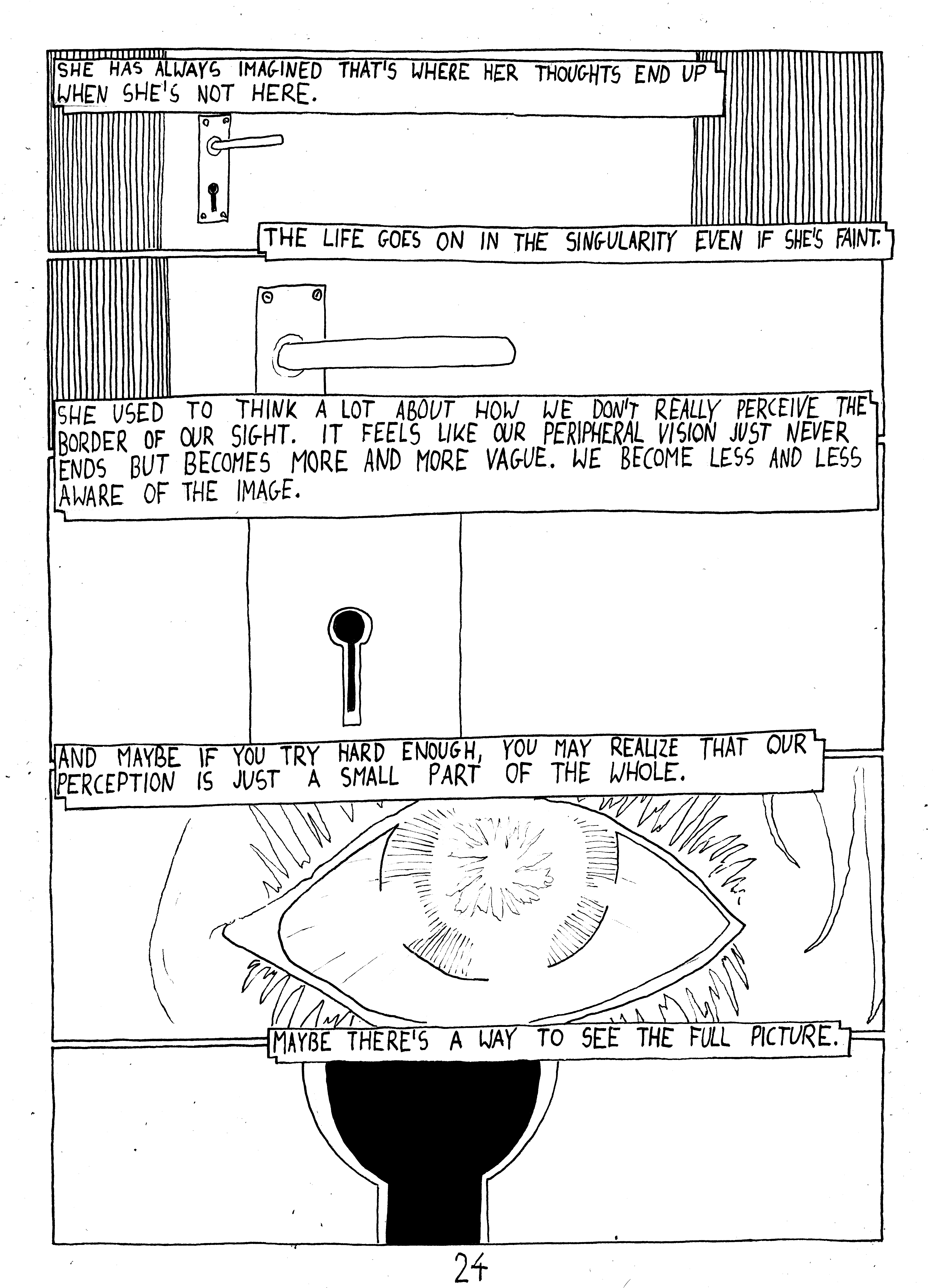
Entropy’s Rotoscope Issue II [page 24/24]

she has always imagined that's where her thoughts end up when she's not here. the life goes on in the singularity even if she's faint. she used to think a lot about how we don't really perceive the border of our sight. it feels like our peripheral vision just never ends but becomes more and more vague. we become less and less aware of the image. and maybe if you try hard enough, you may realize that our perception is just a small part of the whole. maybe there's a way to see the full picture.
preview

next issue in 2027

full comic: kamiokan.de/entropysrotoscope/issue2

all issues: kamiokan.de/entropysrotoscope

RSS: kamiokan.de/entropysrotoscope/rss.xml

draw me something if you like this.

CC0 / Public Domain

if you have ever donated me money, you can have your nick/name on the last page of printed version of thiss, just send me an email (er2 <at> kamiokan <dot> de) with nick you want to be printed and info how did you donate (i won’t be checking that, just don’t lie ok.)

next issue in 2027

full comic: kamiokan.de/entropysrotoscope/issue2

all issues: kamiokan.de/entropysrotoscope

RSS: kamiokan.de/entropysrotoscope/rss.xml

draw me something if you like this.

CC0 / Public Domain

if you have ever donated me money, you can have your nick/name on the last page of printed version of thiss, just send me an email (er2 <at> kamiokan <dot> de) with nick you want to be printed and info how did you donate (i won’t be checking that, just don’t lie ok.)

0

Marte è solo addormentato, trovati indizi di attività vulcanica

preview

Marte è solo addormentato, trovati indizi di attività vulcanica

@scienza

Grazie alla sonda europea Tgo, potrebbero guidare la ricerca di vita

Marte è solo addormentato, trovati indizi di attività vulcanica

@scienza

Grazie alla sonda europea Tgo, potrebbero guidare la ricerca di vita