0

[FoAR] Foundations of Amateur Radio - What does I/Q have to do with anything .. time to poke the bear. #podcast

preview

More than seven years ago I first uttered the phrase: “I/Q”, and palmed it off to future me with “we should look at that [at] some other time”. Since then I’ve referred to it several more times and all but vaguely waved my hands about.

Today I’m going to poke the bear called “I/Q” and to be clear, this is a signal term meaning “In-phase and Quadrature” not “Intelligence Quotient”.

Most explanations I’ve seen jump into the mathematics of this concept, but none ever spoke to me at any fundamental level.

Ultimately, a simple phenomenon underlies all of the magic that hides behind the concept of an “I/Q” signal. So, let’s explore.

When you digitise a signal, you essentially record a voltage each time you take a sample, which can happen many millions of times per second. The aim of this process is to create a digital representation of an analogue signal for the purpose of doing something with it, like decode it. This process happens in billions of devices across the planet.

In its simplest form a signal is a sine wave that starts at zero and oscillates between one and minus one. You might recall that a sine wave is associated with degrees in a circle and that each angle shares the same sine value with another. For example, the sine of 30 degrees and 150 degrees are the same, 0.5.

This means that the value of 0.5 could represent 30 degrees, but it could also represent 150 degrees, which means that our digital representation of a sine wave is incomplete.

A cosine wave has all the attributes of a sine wave. If you were to draw them together you’d notice that its shape is identical but shifted in time and because we’re talking about angles, it’s delayed, or phase shifted, by 90 degrees.

What if you sampled both waves … at the same time?

Doing so removes all angle ambiguity. By convention, the I in “I/Q” represents the In-Phase or cosine signal and the Q in “I/Q” represents the Quadrature or sine signal. And while we’re in the business of naming things, signals that are separated in phase by 90 degrees are “in quadrature”.

So, what does this buy you, or why does it matter?

As it happens, you can represent any radio modulation as an I/Q signal. While until now I’ve talked about digital signals, all this applies to analogue signals, and it applies to transmitted signals as well.

Final piece of the puzzle. To create any modulation from an I/Q signal, all you need is to vary the amplitude of each of the I and Q signals, which means that you can do this with analogue circuits as well as in software using cheap hardware.

If you’ve looked at this phenomenon before, you might wonder why I haven’t said anything about “complex numbers” yet and if you haven’t, those words might scare you off. The concept of “complex” really refers to the idea of embracing two numbers within, for example, it can represent an arrow with a length and a direction. Our I/Q signal, which consists of two numbers for each sample, can also be represented as a complex number and it’s one of several ways to represent an I/Q signal.

One final comment. You can create an I/Q stream from an RF signal by mixing it with a so-called quadrature mixer, one that outputs two signals, 90 degrees out of phase.

Now, I will add that I had porridge for breakfast and I’m operating on five and a half hours of sleep, but I’m fairly confident that I covered the foundations of an I/Q signal in less than four minutes and I even had time to tell you what I had for breakfast.

For my next trick, I’m going to tell you how to make pancakes with just a banana and an egg.

I’m Onno VK6FLAB

More than seven years ago I first uttered the phrase: “I/Q”, and palmed it off to future me with “we should look at that [at] some other time”. Since then I’ve referred to it several more times and all but vaguely waved my hands about.

Today I’m going to poke the bear called “I/Q” and to be clear, this is a signal term meaning “In-phase and Quadrature” not “Intelligence Quotient”.

Most explanations I’ve seen jump into the mathematics of this concept, but none ever spoke to me at any fundamental level.

Ultimately, a simple phenomenon underlies all of the magic that hides behind the concept of an “I/Q” signal. So, let’s explore.

When you digitise a signal, you essentially record a voltage each time you take a sample, which can happen many millions of times per second. The aim of this process is to create a digital representation of an analogue signal for the purpose of doing something with it, like decode it. This process happens in billions of devices across the planet.

In its simplest form a signal is a sine wave that starts at zero and oscillates between one and minus one. You might recall that a sine wave is associated with degrees in a circle and that each angle shares the same sine value with another. For example, the sine of 30 degrees and 150 degrees are the same, 0.5.

This means that the value of 0.5 could represent 30 degrees, but it could also represent 150 degrees, which means that our digital representation of a sine wave is incomplete.

A cosine wave has all the attributes of a sine wave. If you were to draw them together you’d notice that its shape is identical but shifted in time and because we’re talking about angles, it’s delayed, or phase shifted, by 90 degrees.

What if you sampled both waves … at the same time?

Doing so removes all angle ambiguity. By convention, the I in “I/Q” represents the In-Phase or cosine signal and the Q in “I/Q” represents the Quadrature or sine signal. And while we’re in the business of naming things, signals that are separated in phase by 90 degrees are “in quadrature”.

So, what does this buy you, or why does it matter?

As it happens, you can represent any radio modulation as an I/Q signal. While until now I’ve talked about digital signals, all this applies to analogue signals, and it applies to transmitted signals as well.

Final piece of the puzzle. To create any modulation from an I/Q signal, all you need is to vary the amplitude of each of the I and Q signals, which means that you can do this with analogue circuits as well as in software using cheap hardware.

If you’ve looked at this phenomenon before, you might wonder why I haven’t said anything about “complex numbers” yet and if you haven’t, those words might scare you off. The concept of “complex” really refers to the idea of embracing two numbers within, for example, it can represent an arrow with a length and a direction. Our I/Q signal, which consists of two numbers for each sample, can also be represented as a complex number and it’s one of several ways to represent an I/Q signal.

One final comment. You can create an I/Q stream from an RF signal by mixing it with a so-called quadrature mixer, one that outputs two signals, 90 degrees out of phase.

Now, I will add that I had porridge for breakfast and I’m operating on five and a half hours of sleep, but I’m fairly confident that I covered the foundations of an I/Q signal in less than four minutes and I even had time to tell you what I had for breakfast.

For my next trick, I’m going to tell you how to make pancakes with just a banana and an egg.

I’m Onno VK6FLAB

0

Video - The Cuban System Feeding Vulnerable People—Now Under Threat

play · peertube.world
PeerTube.world The Cuban System Feeding Vulnerable People—Now Under Threat peertube.world
preview

Duration - 4:32
[a video on Peertube about Cuba from the news collective Belly Of The Beast]

More than 70,000 Cubans receive support through the Family Assistance System (SAF), a government program that provides meals to the elderly, people with disabilities and others in vulnerable situations.

In Havana’s Rampa neighborhood, home to one of Cuba’s oldest populations, the El Rampeño SAF center provides daily meals and support to vulnerable residents thanks to support from local private businesses.

“A place like this is a blessing,” says Lilian, a retired telephone operator. But as U.S. sanctions and an oil blockade disrupt food deliveries, keeping its kitchen running has become increasingly difficult.

“The U.S. government is making life impossible for us,” says Pedro Garcés, president of the Rampa People’s Council. “It’s suffocating us.”

43

How US bullied Vilnius into dropping support for conference critical of Trump

lrt.lt How US bullied Vilnius into dropping support for conference critical of Trump www.lrt.lt
preview

The US pressured Lithuanian, Canadian and EU diplomats to withdraw their support for the Disinfo 2026 conference in Vilnius, which criticised Donald Trump and America’s interference in other countries’ politics. The pressure was first felt by the conference’s speakers and organisers.

The US pressured Lithuanian, Canadian and EU diplomats to withdraw their support for the Disinfo 2026 conference in Vilnius, which criticised Donald Trump and America’s interference in other countries’ politics. The pressure was first felt by the conference’s speakers and organisers.

0

Ramaswamy-linked drug crashes wiped millions from public pension investments, including Ohio teachers’ fund

preview

An examination of federal securities filings traces nearly $7.5 million in stock-price declines across public retirement funds invested in Axovant and Immunovant. Ohio’s teachers’ pension held shares in both.

An examination of federal securities filings traces nearly $7.5 million in stock-price declines across public retirement funds invested in Axovant and Immunovant. Ohio’s teachers’ pension held shares in both.

0

Mandlebrot Hall (22 min, 2026, creator Ren Abueg)

play · youtube.com
YouTube MANDELBROT HALL: PILOT www.youtube.com
preview

Jackie’s first year at art school curdles into cosmic horror when her friend Jimmy vanishes, and she alone remembers him. Her search for answers leads her to the dilapidated basement of her dormitory, where she comes face to face with the unknowable.

https://www.imdb.com/title/tt43680757/

Jackie’s first year at art school curdles into cosmic horror when her friend Jimmy vanishes, and she alone remembers him. Her search for answers leads her to the dilapidated basement of her dormitory, where she comes face to face with the unknowable.

https://www.imdb.com/title/tt43680757/

0

2025 Halloween Hellbirds <The Nun and the Devil> by wuyi1551

preview

Sourced from artist’s tumblr (sorry, new-tumblr again). The weird artifact in the lower-right is there in the original, I don’t know what it is.

This might be skirting the sauciness rule again. Please LMK if it’s too much.

Bonus Chibi version from same artist, posted like 2 weeks earlier:

Sourced from artist’s tumblr (sorry, new-tumblr again). The weird artifact in the lower-right is there in the original, I don’t know what it is.

This might be skirting the sauciness rule again. Please LMK if it’s too much.

Bonus Chibi version from same artist, posted like 2 weeks earlier:

0

[beetlemoses] fishing

Three panel comic. Panel 1: in an office break room, an excited man inspects a box of donuts. He says, “ooo… who brought donuts?” A coworker behind him says, “idk.” Panel 2: the man is holding tightly to the donut as it is suddenly and forcefully yanked out of frame, sending the table and several objects into the air. Panel 3: two fish are sitting in a canoe wish fishing gear. One grabs tightly to his fishing pole and exclaims, “I got one!”
preview

Attribution: https://bsky.app/profile/beetlemoses.bsky.social/post/3mxrrfy6vqs2d

Pleased to say the artist put alt text on their comic, and I was able to just copy/paste it to Piefed instead of me having to type the alt text description from scratch myself.

Attribution: https://bsky.app/profile/beetlemoses.bsky.social/post/3mxrrfy6vqs2d

Pleased to say the artist put alt text on their comic, and I was able to just copy/paste it to Piefed instead of me having to type the alt text description from scratch myself.

39

Meta may use sweeping new commercial TOS to avoid millions in AI licensing fees

Ars Technica Meta may use sweeping new commercial TOS to avoid millions in AI licensing fees arstechnica.com
preview

Legal experts are sounding alarms that Meta will soon update its commercial terms to require business accounts to allow Meta to train AI on their linked website content, not just their social media posts.

Kicking in on October 30, the TOS update won’t allow businesses to opt out, instead suggesting that businesses stop using Meta services^[oh, the humanity!] if they won’t agree to let Meta bots freely crawl their linked content.

As Nieman Lab reported Thursday, this will affect all business accounts but is particularly shocking for news publishers who could perhaps charge Meta millions in licensing fees to continually access their articles for AI training. Currently news organizations are fighting a battle with OpenAI over whether such training without licensing is fair use, and Meta’s terms seemingly risk granting it sweeping permissions, no matter which way the court leans.

“While journalism isn’t the only industry that will be affected by this update, virtually every news organization has at least one Meta business account^[a k a Stockholm Syndrome after Facebook decided linking out was costing them ad dollars], including Nieman Lab,” the lab said.

Specifically, the updated terms say:

You authorize us (or any entity acting on our behalf) to use automated software (such as web scrapers, bots, robots, spiders, crawlers, and user agents) and create test credentials to access, index, cache, analyze, collect, retrieve, or crawl the domains, web pages, or URLs (and any content available through them) that are associated with your products or services, or that are made available through your or users’ use of Meta Company Products and services, and to periodically pull updates from such domains, web pages, or URLs. Meta may use any content from such domains, web pages, or URLs to provide, develop, improve, research, train, and maintain the integrity of, the Meta Company Products, services, and features provided under these Commercial Terms and any other applicable supplemental terms.

Notably, there is no mention of AI, but it’s inferred from a single use of the word “train” and references to automated scraping and crawling.

Meta’s spokesperson told Nieman Lab that Meta has no plans^[narrator: They do] to use the terms as a legal basis to ignore robots.txt instructions that block scraping on news sites. The company still allows news organizations to opt out of scraping and provides instructions on how to block crawling. A spokesperson told Ars that “there is no change to how Meta uses web crawlers; any suggestion to the contrary is false.”

However, should courts affirm that AI training on non-news articles is fair use, news organizations question if Meta’s stance might change, and the terms could be used to freely grab access to content by legally overriding robots.txt instructions.

0

International Money Transfer

preview

I was using Remitbee, but now I have some doubts about them since:

GoDaddy domain, X socials link, intergrating with WhatsApp (Facebook)

Maybe they are ok, but are there other recommendations? I know credit unions and personal banks will do transfers. Maybe those are better rates?

I was using Remitbee, but now I have some doubts about them since:

GoDaddy domain, X socials link, intergrating with WhatsApp (Facebook)

Maybe they are ok, but are there other recommendations? I know credit unions and personal banks will do transfers. Maybe those are better rates?

0

Nova Scotia to host massive data centre to power Anthropic's AI assistant Claude

CBC Nova Scotia to host massive data centre to power Anthropic&#x27;s AI assistant Claude | CBC News www.cbc.ca
preview

A massive data centre to provide computing power for the artificial intelligence giant Anthropic is under pre-construction just outside Port Hawkesbury in Cape Breton.

EverWind Fuels will build and own the facility, while Anthropic will lease the first phase for a term of at least 20 years. Anthropic said in a news release the data centre “will power Claude models and serve growing demand from Canadian and global customers.”

0

Can't boot a NetBSD install USB

preview

Please bear with me as I am a NetBSD noob.

I am booting NetBSD from a USB, but I can never get past the root device prompt? It shows pk0, pk1, pk2, halt, reboot, and a few other options. I’ve left the USB for a few minutes and nothing has happened. Does the installer start on its own? Usually Linux installers go straight to the install (or in the case of Arch, an install prompt). I’ve reflashed the USB once to no avail.

0

Time is up 🍂 Neue Umwelt-Messungen: Herbst 2026

preview

Aktuelle Messungen, Studien und Berichte zu Klima, Artensterben, Extremwetter, Erdüberlastung etc., von Mark Benecke, Oktober 2026 (Mirrors: Youtube, Yewtu.be)

Playlist aller bisherigen „Time is up“-Vorträge und anderer Umweltvorträge

Aktuelle Messungen, Studien und Berichte zu Klima, Artensterben, Extremwetter, Erdüberlastung etc., von Mark Benecke, Oktober 2026 (Mirrors: Youtube, Yewtu.be)

Playlist aller bisherigen „Time is up“-Vorträge und anderer Umweltvorträge

0

Learning how templates and operator() work!

preview

#include <iostream>

template <typename T, const int length=5> class vector { public: T v[length]; vector operator +(const vector &obj) { vector tmp; for(int i = 0; i < length; i++) tmp.v[i] = v[i] + obj.v[i]; return tmp; /* This method below only works if length is a fixed size return {v[0] + obj.v[0], v[1] + obj.v[1], v[2] + obj.v[2], v[3] + obj.v[3], v[4] + obj.v[4]};*/ } }; int main() { vector<int> a={1,2,3,4,5}; vector<int> b={1,2,3,4,5};

auto c = a + b;

std::cout << "(int) ";
for(int i = 0; i < 5; i++)
    std::cout << c.v[i] << " ";
std::cout << std::endl;

}

0

I've been helping out with Roguelike Celebration 2026!

preview

Hey folks, something a little different today. Over the last few months I’ve been helping out with organizing this year’s Roguelike Celebration, which is happening this weekend!

Roguelike Celebration is a yearly community-generated weekend of talks, games, and conversations about roguelikes and related topics, including procedural generation and game design. It’s for fans, players, developers, scholars, and everyone else!

Its tickets are under a pay-what-you-want model, so if that description interests you at all you should check it out: https://www.roguelike.club/event2026.html

There are a bunch of great talks lined up this year, but a few highlights are:

  • Brian Bucklew and Corey Frang are sharing the in-progress text templating framework that has been taking on the huge task of localizing Caves of Qud, with its complicated grammar structures.
  • Dan Stormont and Michael Howk are presenting a 45 minute special feature on how the source code of Hack (one of the oldest Roguelikes) was recovered and what it took to make a game written for the PDP-11 playable on modern hardware.
  • Andrew Plotkin is going to explore the commonalities of mazes across many genres to try and discover what it is about mazes that leaves you feeling lost.
  • Matt Carney is going to explore how to balance procedural generation and authorial intent, using Terry Riley’s minimalist musical composition tool In C (1964), as a template

I’ve mostly been doing behind-the-scenes work this year, so you won’t see me in the actual conference, but if you see the little gameboy chiptune segments during break periods (this time brought to you by my 3DS!), that is streaming from my desk this year.

32

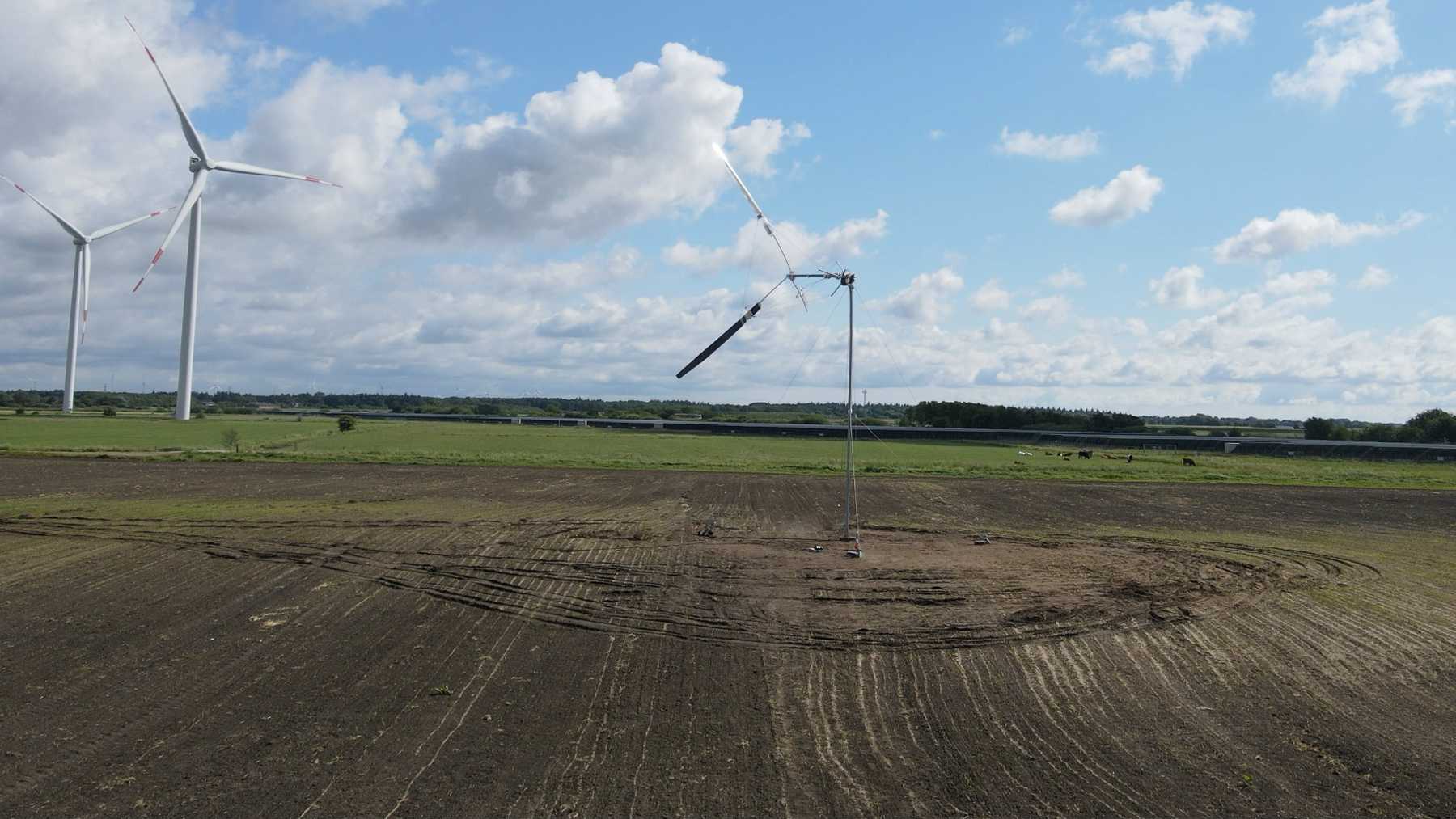
When he (Danish Inventor) was 15, he wanted to impress his mother with a kite, and that crazy idea ended up leading him to design a home turbine.

ECOticias.com When he was 15, he wanted to impress his mother with a kite, and that crazy idea ended up leading him to design a home turbine; what&#039;s more, he has already sold his entire projected production for 2027 www.ecoticias.com
0

Revealed: VW, Ford and Tesla batteries linked to destructive deforestation of indigenous lands

the Guardian Revealed: VW, Ford and Tesla batteries linked to destructive deforestation of indigenous lands www.theguardian.com
preview

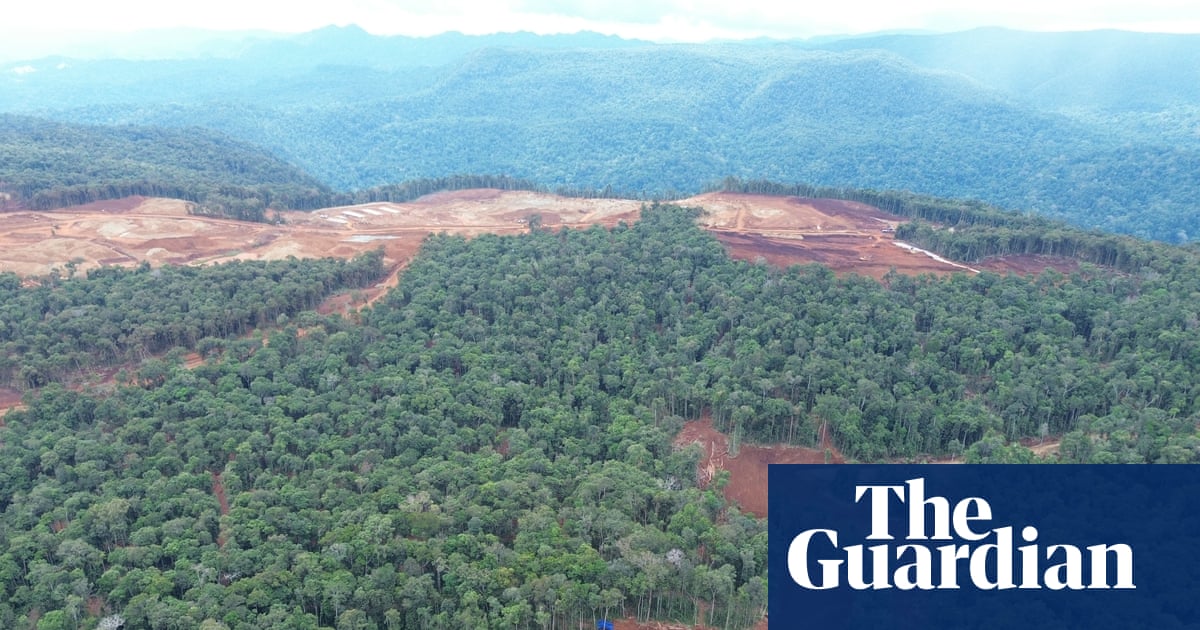
Volkswagen, Ford and Tesla are among the electric carmakers whose batteries may contain nickel mined in indigenous woodlands plagued by deforestation, an analysis has found, highlighting the struggle to make vehicles that are free from environmental destruction.

Corporate disclosures and trade flows from the last two years show mines in the battery supply chains of automotive giants are linked to the loss of trees in Sulawesi, a wildlife hotspot in Indonesia that houses the world’s largest nickel deposits. The metal is widely used in cathodes in car batteries because it boosts energy density and increases range.

Ore from the Cahaya and Hengjaya mines was traced through regional smelters and Chinese processing plants run by Zhejiang Huayou Cobalt, a cathode manufacturer that supplies CATL, the world’s largest battery maker. Huayou’s corporate reports list US and European carmakers as end-users, while additional corporate files and trade data show a separate route from Huayou to LG, a South Korean group that also supplies battery products to leading carmakers, via Poland.

Satellite analysis shows the mines have led to widespread deforestation of primary rainforest in nickel-rich lands inhabited by the indigenous Tolaki people.

0

Neutral density filters for darkroom prints

preview

First off: I hope discussion posts are OK? I don’t see any rules except for tagging photo posts.

I have an old beseler B&W enlarger, no color filters or brightness configuration. I have a set of gels for contrast control.

When I’m printing 5x7 and I have my lens at the manufacturer’s recommended aperture size, exposure times are very short (4-6 seconds). It’s hard to get a good dodge/burn in such a short period. I can dial my lens down to f16, but even then I’m starting around 8 seconds for exposure, I’d like maybe 12-16.

I was thinking 1 or 2 stops of neutral density filter could slow down my exposure and give me more time to execute the print. Is that a thing people do?

0

No, the kernel has not gone "Full AI Slop Code"

preview

There appears to be a few bad actors in the Lemmy community spreading ragebait for personal gain

In fact, the same mechanisms added at the beginning to catch bad human written code are the exact same that catch bad AI code

  1. No, the Linux kernel won’t use AI to auto approve code for inclusion. And no plans to do so
  2. The Kernel actually has a huge number of maintainers. As part of the process, all patches are reviewed by a human who provide feedback as part of the process, and patches get bounced back and forth multiple time.
  3. Patches don’t just magically go straight to master. The maintainers generally have their own branches where it goes to, then it goes to staging trees like Linux-Next. It goes through many eyes, and many tests by the end. The idea that AI code is overrunning the kernel is rediculous
  4. Maintainers also check that the code meets coding guidelines and is written properly, and solves the problem they are trying to solve. Yes, they also ensure the code isn’t slop
  5. LLM’s though might be used to identify obvious problems (bugs / coding guideline issues) with the code. These don’t generate “slop” just find issues
  6. The only thing that matters is the human who submitted the code, as they should be checking the code submitted anyway (including LLM generated code).

Writing bad code isn’t something new, and isn’t unique to LLM’s. Coders (and it seems some “journalists”) have been writing slop since computers were invented.

The process hasn’t gotten less stringent (probably even MORE stringent as there is an additional set of robotic eyes that can also check), and the same mechanisms that were put in place to catch badly written code 10 years ago, are still there now

41

Improving security by separating server duties

preview

Hi selfhosters,

I’m considering improving the security of my homelab/server setup and I’d love to hear some more experienced opinions on my plans.

Like most self-hosters, I started out with a single-server setup: I cobbled together some old hardware, slapped on a NAS-style OS, bolted on Docker and started experimenting. As things go, my setup has grown a lot over the years. I’m running a lot on that machine - NAS capability, local DNS via pihole, a Wireguard VPN endpoint (so I can tunnel into the LAN from outside), many private services (accessible only from inside the LAN), but also some public ones accessible from the open web.

Although I’ve tried to do my homework in terms of security (various hardening measures for SSH and Docker, reverse proxy, proper SSL termination for everything), I realise I’ve put a lot of eggs in that one basket and I might want to introduce some network segmentation.

I don’t think I’m ready for getting a hardware firewall or a router/switch capable of VLANs just yet. What I’m considering, though, is putting my services available from the open internet on a separate server inside my network - a little Pi 5 I’ve still got lying around. My idea is that if a container on that is breached and if an attacker manages to escape the container to gain root access, compromise would be limited to the few of publicly available services I have on the Pi, thus limiting blast radius. If combined with (software) firewall rules that make the Pi a ‘pariah node’ (dropping all incoming connection efforts), lateral movement to other devices on the network could be contained.

An alternative would be to finally make the move to Proxmox. Everything would still be running on one physical machine, but I’d create several VMs: there would be one for private, one for publicly available services, and I’d firewall the latter off rigorously so it cannot connect to anything else.

I’d like your opinion on these plans. Which one would you recommend? Are they both sound, or is there anything I haven’t considered? Are there other (easy, non-hardware intense) things I could do to improve security even more?

0

Tesla driver says he was asleep and using FSD when he crashed into highway patrol cars

The Verge Tesla driver says he was asleep and using FSD when he crashed into highway patrol cars www.theverge.com
preview

Video shows the crash that injured two CHP officers responding to an earlier incident on I-80.

Archived version: archive.is/20261016211719/…/tesla-chp-fsd-crash

Video shows the crash that injured two CHP officers responding to an earlier incident on I-80.

Archived version: archive.is/20261016211719/…/tesla-chp-fsd-crash

0

Afterworld Dev Diary #5 - Bands

preview

Hello and Happy Wednesday Dustlanders! My name is Tudor and I am a game designer on Afterworld. After being an avid dev diary devourer for almost two decades, it is with great delight that I get to pen this dev diary for the first time. Anyhoo… Today I want to tell you more about one of the central features of the game we are making: Bands.

I want to explain how they fit to serve the game vision and why I think they are a very exciting element in the mix!

483

I found my drawing tablet and I'm not afraid to use it

LGBTQIA+ and Tech elly (unhinged edition, now with 100% more gay) (@ellyqw@tech.lgbt) tech.lgbt
preview

For those unaware, Linus Torvalds this year has deeply cast his lot with the hyperscale LLMs for development of Linux code, dismissing arguments that this is an abdication of responsibility over that code base.

For those unaware, Linus Torvalds this year has deeply cast his lot with the hyperscale LLMs for development of Linux code, dismissing arguments that this is an abdication of responsibility over that code base.

0

Alabama Democrats hit back at GOP on affordability: ‘Did transgender people do that?’

Advocate.com Alabama Democrats hit back at GOP on affordability: ‘Did transgender people do that?’ www.advocate.com
preview

“I would, however, like to know, how, precisely have trans women caused families in Baldwin County to struggle to afford groceries, housing, insurance, and healthcare? Our roads are increasingly congested, teachers need support, and Alabama continues to refuse Medicaid expansion while rural hospitals struggle to survive. Did transgender people do that, because I’m pretty sure Republican policies did all that? Mr. Stadthagen says I’m a walking mental disorder. Being transgender is not a mental illness. The American Psychiatric Association has made that distinction clear. I have letters from mental health professionals stating that I am of sound mind. Does he?”

“I would, however, like to know, how, precisely have trans women caused families in Baldwin County to struggle to afford groceries, housing, insurance, and healthcare? Our roads are increasingly congested, teachers need support, and Alabama continues to refuse Medicaid expansion while rural hospitals struggle to survive. Did transgender people do that, because I’m pretty sure Republican policies did all that? Mr. Stadthagen says I’m a walking mental disorder. Being transgender is not a mental illness. The American Psychiatric Association has made that distinction clear. I have letters from mental health professionals stating that I am of sound mind. Does he?”