











0

Home - Down With Data Centers
downwithdatacenters.now

Jensen Huang is a traitor who conspired with China and the Trump administration to aid America’s enemies.
Jensen Huang is a traitor who conspired with China and the Trump administration to aid America’s enemies.



Inspirational credit to @DandomRude@lemmy.world
Inspirational credit to @DandomRude@lemmy.world

Nearly three decades after MediEvil first arrived on the original PlayStation, Sir Daniel Fortesque has been brought back from the dead yet again! This time, though, it’s thanks to BlackLabelHQ, a team of developers who have used static recompilation to bring the original 1998 game natively to modern PCs. Their project, MediEvilRecomp, includes widescreen support, improved controls, higher frame rates, modding tools and plenty of other improvements, all while preserving the original game’s character and unique charm.
Something I found really interesting in this one is the team’s firm position on AI-generated code. As they proudly state, “This Recomp was made by human hands, no AI is involved in writing this code!” They even have a policy rejecting AI-generated contributions. I’ve written an article looking at the history of MediEvil, the technical work behind its latest resurrection, and why projects like this are becoming such an important part of video game preservation.
I mean,
Any Neurodivergent/Edgerunner using its brain as cyberware ? ‘Till it is fried ? The brain fog ? The inevitable evil little engine wanting to go fast but trapped, broken ?
The distance from your body as just a vehicle for your essence ? The little voice that tells you to modify it, just to see if you change with it.
The rotten world breaking the little control and peace you managed. The little help you get fixing the symptoms but never the causes ?
Politically it make a point too, trapped to extract always more of you till you are discarded. The inhumanity! May you live debt free too ! yeah !!!
Unless it is more obvious, more beautiful, more cruel, more simple… It is trauma. And burnout is a part of that too.
Veterans, death of loved ones, decaying bodies, conformism, peer pressures, impossible odds, you can add to this list can you ?
And for what ? Some excec’ having a nice life ? just to be the lap dog of the higher-ups?
Dawn is this show political enough or what ?
Co®ps everywhere, justice absent.

archive.today/…/ron-arad-missing-israel-iran-asga…
On Oct. 16, 1986, an Israeli F4-Phantom jet streaked through the sky over southern Lebanon. Mr. Arad, then a 28-year-old weapons officer, took aim at a Palestine Liberation Organization target and fired.
The bomb detonated prematurely, badly damaging the aircraft. Mr. Arad ejected.
Everyone agrees, after years of investigations, that Mr. Arad was captured by a Lebanese Shiite militia and political group known as Amal. The group’s chief of security, Mustafa Dirani, took charge of the fallen airman.
The militants offered to trade their hostage for millions of dollars and the release of Palestinian and Lebanese prisoners. But Israel’s defense minister at the time, Yitzhak Rabin, had suffered politically for a prisoner swap in 1985 and was reluctant to make a deal.
The most explosive evidence against Iran burst into public view in 1994, and it shaped public opinion and news accounts for decades.
Israeli commandos stormed into Lebanon and kidnapped Mr. Dirani, the militia member who was last known to have held Mr. Arad. They whisked him to an underground prison in an operation known as Poisonous Sting.
Under questioning, Mr. Dirani said he had stashed Mr. Arad in a home in the Lebanese village of Nabi Chit, where a trusted family could watch him. One night, he said, the men assigned to guard Mr. Arad had left the house, probably in response to an unrelated Israeli raid nearby. When they returned, he said, Mr. Arad was gone.
Years had passed, and Mr. Dirani said he did not know where the airman was.
Mr. Dirani’s interrogator did not believe that. “You couldn’t reason with Dirani. The only thing that worked was force,” the interrogator, Doron Zehavi, later recalled in an interview.
Mr. Dirani would later testify that he was physically and sexually tortured — claims that the Israeli government broadly denied. But it acknowledged rough treatment and that Mr. Dirani may have been threatened with sexual assault.
Under harsh interrogation, Mr. Dirani recounted a meeting with an Iranian official who told him that the Revolutionary Guards had snatched Mr. Arad and taken him to an Iranian prison camp.
“After his soul was drained out, when he spat blood, then he tells us about a massive Revolutionary Guards camp complex in Iran,” Mr. Zehavi said.
“The Iranian authorities have been holding Ron Arad for more than six years,” Mr. Rabin said in 1995, “and they are directly and fully responsible for his fate.”
Iran knew that Israel would pay a hefty price for information about Mr. Arad. If Iranian leaders possessed such information, why would they not try to capitalize on it?
Finally, in 2004, it seemed like that might happen.
Israel agreed to free a high-profile Lebanese inmate in exchange for genetic evidence proving what happened to Mr. Arad. Hezbollah’s leader at the time, Hassan Nasrallah, was eager to make that happen, so he enlisted help from the Iranian government.
Iran dispatched Abdullah Saberi, a Revolutionary Guards commander who’d served many years in Lebanon, to help coordinate the search, according to former Israeli and Iranian officials.
The Hezbollah-Iranian investigation concluded with a secret report saying that Mr. Arad had died in 1988 in Nabi Chit, the village in eastern Lebanon where he had been held, according to three former Iranian officials. The document, the details of which have not been previously reported, concluded that he was most likely buried somewhere there.
Why, intelligence officers asked, would Iran have dispatched a Revolutionary Guards commander to lead the search if it had not been involved with the disappearance? To the Israelis, this was evidence of high-level Iranian complicity.
“The fact that a highly important Iranian general flew to Lebanon from Tehran to bring a unique body of knowledge and help Hezbollah locate the grave only added to our deep conviction that Iran was behind this event,” Mr. Zimmt, the former intelligence officer who participated in the review, told The Times.
In 2006, Yuval Diskin, the head of Israel’s domestic security agency, Shin Bet, launched a comprehensive review of the Arad case. After two decades without a breakthrough, investigators re-examined every aspect.
“We went through everything, item by item, and examined all the sources, their reliability and the way the information had been obtained,” Mr. Diskin told The Times in an interview. “We reached the conclusion that all the reports or analyses based on those reports, according to which Ron Arad had been transferred to or had reached Iran at some stage, were incorrect and were based on serious mistakes in reading the intelligence that had been collected, or on unreliable or erroneous information.”
The Shin Bet team concluded that Mr. Arad never fell into the hands of Hezbollah or the Revolutionary Guards. The answer to his disappearance, the team said, most likely rested in the village of Nabi Chit — the very place that the Hezbollah-Iranian investigation had pointed to.
Rather than dropping the Iran theory, the Mossad doubled down with an audacious, and previously unreported, kidnapping operation.
A general in the Quds Force of the Revolutionary Guards named Alireza Asgari had been on the Mossad’s radar for years. The general had close ties with Hezbollah leaders and had risen to be deputy Iranian defense minister. Most important, he had arrived in Lebanon shortly after Mr. Arad vanished.
In December 2006, General Asgari flew to Istanbul and checked into the Ceylan Hotel, according to his wife, Ziba Ahmadi. From there, he vanished.
General Asgari’s disappearance quickly became one of the intelligence world’s biggest whodunits.
The Israelis have steadfastly denied involvement.
Years later, as the United States and Iran negotiated a nuclear deal and prisoner swaps, the Iranians asked their American counterparts what had happened to their missing general. American officials denied involvement, but quietly began asking questions themselves.
Israeli officials told U.S. negotiators that General Asgari was dead, according to a former American official involved in the negotiations. Three other former American officials who worked closely with Israel said that Mossad operatives kidnapped him, interrogated him for weeks and killed him.
One of the former officials said that General Asgari had been questioned aboard a boat and dumped into the Black Sea. They said that the Mossad had questioned the general over potential involvement in Mr. Arad’s disappearance. Interrogators had found no such ties.
General Asgari’s interrogation had failed to turn up evidence of Mr. Arad’s whereabouts. So once again, officials started from scratch.
Mr. Kalo, who led the Israeli military’s missing-in-action unit in 2014, recounted in an interview with The Times how he had examined years of intercepted communications, informant reports and analytical assessments.
He reached the same conclusion that the Shin Bet team and the Hezbollah-Iranian investigation had reached years earlier. Mr. Arad had most likely died in 1988, probably in Nabi Chit. He was never in Iran.
Mr. Kalo said he made clear to Israeli intelligence officers that abducting Iranians would not solve the Arad case.
Mr. Kalo said he delivered his lengthy report to Prime Minister Benjamin Netanyahu of Israel in late 2016. The conclusion quickly appeared on Israel’s Channel 2 news.
But two years later, nearly two decades after he helped coordinate the Hezbollah search for Mr. Arad in Lebanon, General Saberi stepped out of his apartment and ended up inside a refrigerator box and a Mossad moving van.
Gen. Abdullah Saberi, an Iranian commander, stepped out for a jog early one morning in an upscale diplomatic quarter of Syria’s capital. Israeli intelligence officers waited nearby. Posing as movers, they had slipped past the neighborhood’s security checkpoints.
As he headed for a nearby park, General Saberi passed two men who carried an oversize refrigerator box. In a flash, the men restrained the general, drugged him, threw the box over his head, shoved him into a white van and left as if nothing had happened.
He was whisked to Israel for interrogation, according to numerous officials in the Middle East, including senior Iranian officials close to General Saberi and a Syrian official who reviewed video of the September 2021 kidnapping.
As a veteran of Iran’s powerful Islamic Revolutionary Guards Corps, General Saberi knew many secrets. But his interrogators were interested in only one.
What did he know about Ron Arad?
Mr. Arad was the only thing that interrogators asked him about, Iranian officials said.
After a lengthy interrogation, the dazed general was dumped on a street in Johannesburg, South Africa. He later said he was tortured.
As questions swirled in Israel, David Barnea, the Mossad chief at the time, said he had authorized an operation to find information on Mr. Arad. He described the mission as “courageous and daring,” but ultimately a “failure.”
After that, Mr. Barnea told Mossad members that they might as well throw everything they knew about the Arad case into the shredder, associates recall.
None of the operations, the abductions, the raids or the killings had gotten them closer to finding this missing airman. The Mossad began looking seriously at Nabi Chit.
This was the village, Mr. Dirani had told interrogators long ago, where he had stashed Mr. Arad in the care of a trusted family. Those friends had left Mr. Arad alone one night, he had said, to fight Israeli troops nearby. It is also the village that the Hezbollah-Iranian investigation had identified as Mr. Arad’s probable resting place. At least two subsequent Israeli inquiries had reached the same conclusion.
One of the few men suspected of knowing Mr. Arad’s location back in 1988, former Israeli and current Lebanese officials said, was Ahmad Shukr, a retired Lebanese security officer. Last December, Mr. Shukr left home for a meeting about what he thought was a business deal.
He promptly disappeared, and Lebanese officials believe that he was abducted by Israeli agents. Mr. Shukr’s whereabouts remains a mystery, as does what he may have told investigators.
Israeli officials now say that the closest thing the government has to a theory is that Mr. Arad was executed as retribution for the killing of Mr. Shukr’s brother, who died battling Israeli forces that night in 1988.
A few months after Mr. Shukr’s disappearance, Israeli soldiers descended on Nabi Chit in one of the deadliest clashes of this latest round of fighting with Hezbollah. Dozens of Lebanese were killed and wounded.
Israeli soldiers searched a corner of a cemetery, looking for the remains of Mr. Arad, and unearthed a grave. They found nothing, but officials say that the search continues — with a focus now on Lebanon rather than Iran.
Officials who were once certain that Iran was responsible told The Times that they had most likely been wrong all along, including Raz Zimmt, a former Israeli military intelligence analyst who helped write a key 2005 report that pointed blame at Tehran. That assessment, he said in a recent interview, was probably mistaken because of “a natural inclination to pin everything on the regime in Tehran.”
In interviews, nobody suggested that Israeli intelligence officials had intentionally misled the government over the decades about Iran’s role. Rather, they said that the conclusions were based on fragmented or circumstantial evidence and were probably influenced by confirmation bias — the tendency to give more weight to conclusions that fit with previously held beliefs.
Such biases have clouded Israel’s vision before. Before the Oct. 7, 2023, Hamas-led attacks on Israel, officials were preoccupied by Iran and Hezbollah and underestimated the closer threat posed by Hamas, even as it raised millions and prepared for an assault. Israeli officials were so convinced that Hamas could not muster a coordinated attack that they doubted it despite obtaining the battle plans.
Israeli officials were again overconfident in their intelligence before the current war with Iran, when they incorrectly predicted a popular uprising that could topple the government in Tehran.

American Graffiti (1973) per la regia di George Lucas
#unocinema @spettacoli
American Graffiti (1973) per la regia di George Lucas
#unocinema @spettacoli


Welcome one and all to the one of the biggest Fediverse events of the year: the announcement of the 4th Annual Owl of the Year Tournament!
After searching high and low, and far and wide. I’ve gathered some of the best in all of owl-dom to compete for the honor of being your next Owl of the Year.
Thanks to some surprise early round eliminations of some usually popular owls. there have been a number of shake ups in this year’s bracket, giving us a lot of faceoffs we’ve never seen before and also a few tough early decisions for you all to face.
Dreams will come true, but also some hearts will be broken, as we must come to terms with every season, but one thing is for sure, we will have an action packed 2 weeks of exciting playoffs.
I believe I will kick off the festivities on Wed, December 2, when I return from some travel time.
To those that need a refresher or have no idea what I’m talking about: the Owl of the Year is c/Superbowl’s annual bracket tournament where each day we will have pairs of owls going head-to-head competing for your votes for us to find the most popular owls, who will then become our community icon, fill out our banner image, and just in general to give me an idea of what kinds of owls you want to see featured here.
Voting is simple, upvote the owl you like best in each match. I will run 2 matches a day, and voting remains open from when I post to right before I post the next day’s matches. This is usually 24 hours, but some days I get up late, so it may be a little more or less, so get those votes in as soon as you can! Downvotes will be ignored, so you can’t hurt another owl’s score. Make sure you don’t downvote by mistake. Have a friend or partner not on the Fediverse that wants to play? Toss their vote in the comments and I will add it, so you need not always agree be forced to compromise or be excluded. Tiebreakers will be decided by a third party, typically Mrs Anon.
Feel free to convince people to vote for you favorite in the comments of each match. Major strides have been made by people having convincing friendly debates. fan art, memes, or what have you - just keep it friendly, of course!
At the end, the last owl standing is our winner and shall be adorned with praise for the coming year, and you will reminisce about those hard fought wins and crushing losses, but you will have had a superb time nevertheless!
Any questions? Ask below.
Previous Winners
2023: White Faced Owl

2024: Saw Whet Owl

2025: Buffy Fish Owl

Welcome one and all to the one of the biggest Fediverse events of the year: the announcement of the 4th Annual Owl of the Year Tournament!
After searching high and low, and far and wide. I’ve gathered some of the best in all of owl-dom to compete for the honor of being your next Owl of the Year.
Thanks to some surprise early round eliminations of some usually popular owls. there have been a number of shake ups in this year’s bracket, giving us a lot of faceoffs we’ve never seen before and also a few tough early decisions for you all to face.
Dreams will come true, but also some hearts will be broken, as we must come to terms with every season, but one thing is for sure, we will have an action packed 2 weeks of exciting playoffs.
I believe I will kick off the festivities on Wed, December 2, when I return from some travel time.
To those that need a refresher or have no idea what I’m talking about: the Owl of the Year is c/Superbowl’s annual bracket tournament where each day we will have pairs of owls going head-to-head competing for your votes for us to find the most popular owls, who will then become our community icon, fill out our banner image, and just in general to give me an idea of what kinds of owls you want to see featured here.
Voting is simple, upvote the owl you like best in each match. I will run 2 matches a day, and voting remains open from when I post to right before I post the next day’s matches. This is usually 24 hours, but some days I get up late, so it may be a little more or less, so get those votes in as soon as you can! Downvotes will be ignored, so you can’t hurt another owl’s score. Make sure you don’t downvote by mistake. Have a friend or partner not on the Fediverse that wants to play? Toss their vote in the comments and I will add it, so you need not always agree be forced to compromise or be excluded. Tiebreakers will be decided by a third party, typically Mrs Anon.
Feel free to convince people to vote for you favorite in the comments of each match. Major strides have been made by people having convincing friendly debates. fan art, memes, or what have you - just keep it friendly, of course!
At the end, the last owl standing is our winner and shall be adorned with praise for the coming year, and you will reminisce about those hard fought wins and crushing losses, but you will have had a superb time nevertheless!
Any questions? Ask below.
Previous Winners
2023: White Faced Owl
2024: Saw Whet Owl
2025: Buffy Fish Owl

One possible contender are termites, which break down wood and grass in their hindguts. Their global population is estimated to be around 27 quadrillion (that’s 15 zeros) individuals, and they collectively emit 10 teragrams of methane per year.
One possible contender are termites, which break down wood and grass in their hindguts. Their global population is estimated to be around 27 quadrillion (that’s 15 zeros) individuals, and they collectively emit 10 teragrams of methane per year.

greg 👍
greg 👍



Bin ratlos - wie kann man so einer Familie am Besten helfen?
Gibt es Rechtsberater?
Bin ratlos - wie kann man so einer Familie am Besten helfen?
Gibt es Rechtsberater?


📍demonstracja: Dowództwo Garnizonu Warszawa, pl. marsz. Józefa Piłsudskiego 4 → plenum dyskusyjne [szczegóły wkrótce] 🗓️ 20 listopada, piątek
💥 20 listopada młodzi ludzie w całej Europie będą strajkować i mobilizować się przeciwko militaryzacji, zbrojeniom i poborowi do wojska. Dołączamy do międzynarodowej mobilizacji, bo nie chcemy, żeby nasze pokolenie szykowano do wojen w interesie kapitału.
🚫 Rządy znajdują miliardy na kolejne zbrojenia. Jednocześnie brakuje pieniędzy na edukację, ochronę zdrowia, mieszkania i usługi publiczne. Nie zgadzamy się na politykę, która każe nam płacić za wojny i interesy zbrojeniowego biznesu oraz mówimy stanowcze „nie” planom deportacji Ukraińców na front.
‼️ Chcemy szkół i uczelni wolnych od rekrutacji wojskowej oraz publicznych pieniędzy na potrzeby ludzi: szpitale zamiast bomb, mieszkania zamiast zbrojeń.
🫵 20 listopada dołącz do mobilizacji i rozpocznijmy budowę silnego ruchu.
Walczmy o naszą przyszłość, nie o ich wojny! Śledź mobilizację na youthstrike.org.
–
Polskie tłumaczenie: mlodzi.ozzip.pl/youthstrike


cross-posted from: szmer.info/post/17113986
(eng. below) Walczmy o naszą przyszłość, nie o ich wojny!
20.11.2026 godzina 19:00 Kościół Garnizonowy przy Rynku
Łączymy nasze siły i wychodzimy na ulice, by zademonstrować, że nie chcemy takiego świata, jaki przygotowali nam politycy. Od lat toczymy walki na różnych frontach, ale już czas się zjednoczyć i powiedzieć razem, że mamy dosyć brania na siebie konsekwencji działań polityków i kapitalistów. System w którym żyjemy to kryzys. Musimy go zmienić żeby ocalić siebie i środowisko.
Katastrofa klimatyczna trwa i rząd nie robi nic, aby ją zatrzymać. Rzeki wysychają, Odra jest zatruta, rzeka Bóbr została zatruta, a winni nie ponieśli konsekwencji. Co gorsze, rzeki te nadal nie są chronione. Chcemy czystej, pełnej życia Odry, w której możemy się schłodzić latem, której wodę mogą pić zwierzęta. Chcemy czystego powietrza, którym możemy swobodnie napełniać nasze płuca. Chcemy ochrony dla wszystkich starych drzew, jako naszego dziedzictwa.
Kapitalizm wysysa z nas wszystkie soki witalne! Pracujemy ponad siły, często bez żadnej ochrony pracowniczej, bez czasu wolnego, w którym możemy po prostu cieszyć się życiem. Nie interesuje nas Work life balans! Chcemy po prostu mniej pracować. Nie potrzebujemy waszych tandetnych przedmiotów, które każecie nam kupować, a które są wytwarzane przez waszych niewolników w krajach globalnego południa. Chcemy umów o pracę, krótszego dnia pracy i równego podziału dochodu, który same wypracowujemy! Milionowe kwoty przeznaczane na zbrojenia, powinny być wykorzystane na podstawowe potrzeby ludności. Chcemy jedzenia zamiast bomb!
Patriarchat nadal nas zniewala. Kobiety i mężczyźni wciśnięci do stereotypowych ról cierpią i ranią siebie nawzajem. My kobiety nie możemy decydować o swoim ciele, dlatego żądamy bezpiecznej i legalnej aborcji teraz! Żądamy jawności płac, by zlikwidować nierówności płacowe ze względu na płeć. Chcemy pełnego uczestnictwa mężczyzn w życiu rodzinnym, a kobiet w życiu publicznym! Chcemy, aby płeć nas nie definiowała, lecz nasze zdolności i cechy charakteru. Chcemy miłości dla każdej osoby, bezpiecznego związku partnerskiego dla osób tej samej płci!
Chcemy wprowadzenia Bezpłatnej Komunikacji Miejskiej, aby możliwość podróży po mieście nie była uzależniona od możliwości finansowych poszczególnych osób. Aby usługi publiczne przestały być traktowane jak działalność komercyjna, która ma przynosić zyski. Chcemy, by szybka i sprawna komunikacja miejska wyparła ruch samochodowy, powodujący zatrucie powietrza, hałas i korki.
Chcemy tanich mieszkań komunalnych! Przestańcie sprzedawać kamienice i ziemię deweloperom, a zacznijcie budować lokale na wynajem! Oddajcie nam pustostany, które specjalnie niszczycie, żeby się ich pozbyć, a które już teraz mogłyby zlikwidować kolejkę po mieszkania komunalne. My możemy o nie zadbać, tworzyć kooperatywy sąsiedzkie i komuny mieszkaniowe, zamiast deweloperskiego tzw. “chowu klatkowego” odizolowanych, egoistycznych jednostek.
Jednym słowem: chcemy budować świat na naszych zasadach. Nie na zasadach zakłamanych polityków i zepsutych miliarderów. Chcemy pełnej partycypacji w podejmowaniu decyzji o naszym życiu. Zacznijmy mobilizację, protesty i akcje przeciwko elitom. Teraz jest nasz czas! Wykorzystajmy go najlepiej jak potrafimy.
Zapraszamy na demonstrację 20.11.2026 roku. W ten dzień nastąpi masowa mobilizacja w całej Europie. Zachęcamy także do organizowania własnych działań i akcji.
Eng: We will not be paying for your crisis!
20.11.2026, 07:00 PM Kościół Garnizonowy next to Market Square
We’re joining forces and coming out on the streets to demonstrate, that we do not want a world like the one made by politicians. For years we’ve been fighting on different issues, but now is the time to unite and exclaim together, that we’re done taking consequences of actions of politicians and capitalists on ourselves. The system we’re living under is a crisis. To save ourselves and the environment, it has to be changed.
The climate catastophe continues and the government is doing nothing to stop it. The rivers are running dry, the Odra is poisoned, the Bóbr has been poisoned, and those responsible for it have not been punished. What’s worse, these rivers are not yet protected. We want Odra to be clear and full of life, one in which we can refresh ourselves during the summer, one which’s water can be drunk by animals. We want clear air to fill our lungs with. We want protection for all old trees, our heritage.
Capitalism is sucking up all of our lives! We work ourselves to the limit, often without any labour protection, without any free time in which we could just enjoy life. We don’t care about work-life balance! We want to just work less. We don’t need useless junk you make us buy, produced by your slaves in the global south. We want labour contracts, a shorter work day and a fair share of the profits, which we’ve made ourselves. The millions spent on armaments should be put towards fulfilling the basic needs of the people. We want food not bombs!
The patriarchy is still enslaving us. Women and men, forced into stereotypical social roles are suffering and causing harm to each other. We, women cannot decide abour our own bodies, hence we demand safe and legal abortions. Right now. We demand paychecks to be transparent, to eliminate unequality based upon gender. We want full participation of men in family life and of women in public life! We want our gender to not define us, rather our skills and character traits. We want love for every person, safe civil unions for people of the same gender!
We want public transport to be made free, to make travelling around the city independent of financial capabilities that one has. We want public services to not be treated like commercial activity which should make a profit. We want fast and efficient public transport to replace motor traffic, which causes air pollution, noise and traffic jams.
We want cheap public housing! Stop selling land and buildings to real-estate developers and start building rent flats! Give us empty buildings, the ones you deliberately destroy in order to get rid of them, and which could already shorten the queues for public housing. We can care for them, build neighbourhood co-ops and housing collectives instead of the real-estate developers’ so called „battery cages” of isolated egoist individuals.
To put it short: we want to build a world according to our rules. Not on the rules of cunning politicians and rotten billionaires. We want full participation in decision making about our lives. Let’s start mobilising, protesting against the elite. Our time is now! Let’s make the best of it.
We invite you to the demonstration on the 20.11.2026. This day, a mass mobilisation will happen across Europe. We also encourage you to organise your own actions.

This… Well, there are several not-so-hidden cuts in there. But it tries hard to give the impression of a single take and is still well executed, so I’ll just post it. No hard rules yet in here ;)
This… Well, there are several not-so-hidden cuts in there. But it tries hard to give the impression of a single take and is still well executed, so I’ll just post it. No hard rules yet in here ;)




12 Monkeys s4e11 “The Beginning Part 2”
12 Monkeys s4e11 “The Beginning Part 2”

Quante volte ci si chiede se un musicista ormai datato della scena artistica mondiale, con decine e decine di album pubblicati, abbia ancora qualcosa di nuovo da farci sentire?.. Leggi e ascolta…
Quante volte ci si chiede se un musicista ormai datato della scena artistica mondiale, con decine e decine di album pubblicati, abbia ancora qualcosa di nuovo da farci sentire?.. Leggi e ascolta…
Una diva sotto le bombe ad Anzio. Canta in tedesco, shock per la Wermacht
Storia completa qui 👉https://wp.me/pey833-b3I
@cinema @spettacoli @spettacoli@diggita.com
#MarleneDietrich #LiliMarleen #Anzio #SecondaGuerraMondiale #USO
Una diva sotto le bombe ad Anzio. Canta in tedesco, shock per la Wermacht
Storia completa qui 👉https://wp.me/pey833-b3I
@cinema @spettacoli @spettacoli@diggita.com
#MarleneDietrich #LiliMarleen #Anzio #SecondaGuerraMondiale #USO

Elisabetta Maccarini
C’è qualcosa in questa vicenda che faccio davvero fatica a mandare giù.
Una persona vede altre persone ferite, si ferma, tira fuori dei cerotti e presta soccorso. E per questo viene fotografata e multata dalla Digos .
Davvero siamo arrivati al punto in cui, davanti a qualcuno che ha bisogno di aiuto, bisogna prima chiedersi se sia l’ora giusta, se sia il posto consentito, se quel gesto di umanità rientri nelle disposizioni previste?
Ma da quando abbiamo cominciato a mettere le regole davanti alla necessità di soccorrere qualcuno?
Non sto parlando di grandi gesti, di proclami o di atti eroici. Sto parlando di una cosa semplicissima: vedere una ferita e cercare di medicarla.
E c’è qualcosa di profondamente triste nel pensare che, davanti a una persona che ha bisogno, il primo pensiero possa diventare quello di verificare se chi la sta aiutando sia autorizzato a farlo.
Mi chiedo dove stiamo andando. Mi chiedo che cosa stiamo insegnando, quale idea di convivenza stiamo costruendo, quale spazio stiamo lasciando alla coscienza individuale.
Perché una società non dovrebbe mai arrivare al punto di far sentire in colpa chi non riesce a restare indifferente.
Soccorrere qualcuno non dovrebbe essere un gesto di cui avere paura. Dovrebbe essere un esempio, qualcosa che ci fa sentire orgogliosi. Non per dimostrare agli altri quanto siamo bravi, non per ricevere riconoscimenti, ma semplicemente perché, siamo stati capaci di sentirci utili. Perché abbiamo fatto qualcosa di buono per un altro essere umano.
E non c’è niente di cui vergognarsi nell’aiutare. Semmai, dovremmo essere fieri di vivere in una comunità in cui ci sono ancora persone capaci di farlo.
Un cerotto non dovrebbe mai diventare una colpa.
La solidarietà non dovrebbe aver bisogno di un’autorizzazione.
The Rust-based Redox OS open-source operating system is now out with its October development summary that highlights recent software ports, progress on NUMA, and other enhancements made to this from-scratch platform.
Redox OS in October managed to get the Go programming language compiler working on the platform. Golang on Redox OS is working both for cross-compilation and self-hosted compilation. Golang is adapted to use Relibc.
Redox OS also managed to get the GIMP image editor working after months of work. Redox OS has also updated its Servo browser engine port against the newer Servo 0.7 code state.
Redox OS has also confirmed its initial NUMA support is working nicely, fixed RISC-V dynamic linking, and implemented initial rootless package installation in user equivalent paths.
Redox OS in October also simplified its AI policy down to:
"Redox OS does not accept contributions generated by LLMs (Large Language Models), sometimes also referred to as “AI”."
More details on these enhancements plus driver and kernel improvements and more via the Redox-OS.org blog.
I’m providing a link to Donald Capps article from 1992. I just read another near perfect example of the church preaching violence towards kids, and it reminded me of Capps: Church stands by call to execute gay people: “I will not apologize for preaching the Word of God.”
When folks ask me why I’m not a Christian, I have said in the past because “The bible is a book of deception.” It is used to indoctrinate children into Jesus Christ’s New Testament assertions, such as “Love your neighbor as yourself.” Meanwhile, some Christians have practiced a different form of Christianity, one based on hate, violence, and exclusion. These are the types of basic deceptions to which I refer with my statement.
However, there is an even more basic one: There is no god, and assertions to the contrary have been used maliciously, and is still being so used today. The bible is fiction, and it does not have a fiction disclaimer. That is why it is a book of deception.

Talking with a friend who was raised Christian and he played this terrible NES game called Exodus: Journey to the Promised Land, but good goddamn that has some rockin boxart with Moses looking like a badass:

Talking with a friend who was raised Christian and he played this terrible NES game called Exodus: Journey to the Promised Land, but good goddamn that has some rockin boxart with Moses looking like a badass:

Spezielle Laserpulse müssen beide inneren Atomzustände zuverlässig aufspalten und umlenken
Zeit im Doppelpack: Nach Einsteins Relativitätstheorie vergehen Sekunden auf unterschiedlichen Höhen nicht gleich schnell. Ein theoretisches Messverfahren könnte diesen winzigen Unterschied innerhalb einer einzigen räumlich überlagerten Quantenuhr nachweisbar machen. Statt zwei getrennte Uhren zu vergleichen, würde ein Atom gleichzeitig zwei Wege durch das Gravitationsfeld nehmen.
Paper: Gravitational Redshift in Quantum-Clock Interferometry | PDF

Matteotti risponde al fascista La Russa
#IgnazioLaRussa , durante un incontro sulla Costituzione con gli studenti a Palazzo Marino a Milano, ha affermato che “il #fascismo lo ha voluto il popolo”.
ATTENZIONE È ACCADUTO È PUÒ ACCADERE DI NUOVO
Su ciò contano La Russa e camerati.
Giacomo #Matteotti gli ha già risposto il 30 maggio 1924 dai banchi della Camera
"nessun elettore italiano si è trovato libero di decidere con la sua volontà”. Il motivo: “Ciascun cittadino sapeva ‘a priori’ che se anche avesse osato affermare a maggioranza il contrario, c’era una forza a disposizione del Governo che avrebbe annullato il suo voto e il suo responso”.
La forza aveva un nome: la milizia “una milizia armata composta di cittadini di un solo partito, la quale ha il compito dichiarato di sostenere un determinato governo con la forza, anche se ad esso il consenso mancasse”.
Seguirono i fatti, elencati con la pazienza di un contabile. In sei circoscrizioni su quindici la raccolta delle firme per presentare le liste fu impedita con la violenza: “In Puglia fu bastonato perfino un notaio”. Su cento candidati del suo gruppo, circa sessanta “non potevano circolare liberamente nella loro circoscrizione”. Il candidato Piccinini “fu assassinato nella sua casa, per avere accettata la candidatura”. Nei seggi, “nel 90 per cento e, credo, in qualche regione fino al 100 per cento dei casi, tutto il seggio era fascista”, e il rappresentante di lista avversario restava fuori.
Con la “regola del tre”, in molte province, ogni elettore riceveva un bollettino con tre numeri o tre nomi, combinati in modo da riconoscere il voto di ciascuno, uno per uno. I certificati elettorali di chi si asteneva furono affidati a gruppi di individui: “certuni votarono dieci o venti volte” e “giovani di 20 anni si presentarono ai seggi e votarono a nome di qualcuno che aveva compiuto i 60 anni”. Dentro le cabine arrivava “la visita di coloro che erano incaricati di controllare i voti”.
Il bilancio, secco, nelle parole del segretario socialista: “Solo una piccola minoranza di cittadini ha potuto esprimere liberamente il suo voto”. Ai contadini bastava sapere come sarebbe finita: votavano “per tranquillità della famiglia, la terna assegnata a ciascuno dal dirigente locale del Sindacato fascista o del Fascio”.
A ogni interruzione Matteotti ripeté la stessa richiesta: “I fatti o sono veri o li dimostrate falsi”. I banchi della maggioranza risposero con #Farinacci: “Potevate fare la rivoluzione!”. E ancora: “Vi faremo cambiare sistema!”. Un deputato gridò: “Per voi ci vuole il domicilio coatto e non il Parlamento!”.
Il 10 giugno Matteotti fu rapito e ucciso dalla #Ceka, polizia segreta dipendente direttamente da Mussolini, per il tramite del suo capo ufficio stampa, Cesare Rossi. Il quale successivamente avrebbe confessato tutto in un memoriale pubblicato su Il Mondo.
…
Davvero il popolo ha voluto Mussolini e la #dittaturafascista? O è stato costretto a volerla?
Ma non dimentichiamo la responsabilità degli onorevoli che dagli scranni permisero tutto ciò, chiusero gli occhi alle violenze delle camicie nere, negarono quello che stava accadendo in Italia, votarono la legge #Acerbo introducendo il premio di maggioranza che, insieme alle violenze continue e ai brogli, permise a Mussolini di ottenere la carica di primo ministro. Chi erano questi politici?
Leggete bene. E prestiamo attenzione ai cosiddetti moderati filogovernativi.
È accaduto e può accadere di nuovo. Su ciò contano La Russa e camerati.
AI
Forze politiche che votarono a favore
• Partito Nazionale Fascista (#pnf)
• #Liberali e #liberal-conservatori. come Giovanni #Giolitti Antonio #Salandra e Vittorio Emanuele #Orlando.
• #Nazionalisti. già fusi con il PNF nella primavera del 1923.
• #Democraticisociali e gruppi di centro-destra.
Il ruolo decisivo del Partito Popolare Italiano (PPI)
• Astensione al voto finale. Il Partito Popolare Italiano di don #LuigiSturzo era profondamente spaccato al suo interno a causa delle pressioni fasciste e delle minacce anticlericali. Dopo aver permesso il passaggio agli articoli della legge nella votazione preliminare del 15 luglio, il gruppo parlamentare decise di astenersi nel voto finale, consentendo così l’approvazione del testo.
• Scissione interna. L’ala destra del partito (i cosiddetti “clerico-fascisti”) disattese le indicazioni ufficiali di astensione e votò direttamente a favore della legge.
Forze politiche che votarono contro
• Partito Socialista Unitario (#PSU). Guidato da Filippo #Turati e Giacomo Matteotti, si oppose fermamente denunciando la natura autoritaria della riforma.
• Partito Socialista Italiano (#PSI). L’ala massimalista votò compatta contro il provvedimento.
• Partito Comunista d’Italia (#PCd’I). I deputati comunisti respinsero la legge elettorale.
• Partito Repubblicano Italiano (#PRI) e liberali democratici. Votarono contro anche i repubblicani e una minoranza di liberali progressisti, tra cui Giovanni #Amendola
A relay can return HTTP 200 with ordinary latency and still change what the caller actually gets. Three patterns are hard to see from uptime checks alone:
Two common manual checks do not close this gap. Asking a model to name itself is unreliable, because a gateway system prompt or a smaller model’s memorized phrasing can produce a confident identity statement regardless of the weights that answered. Reusing static puzzles is also weak: those items are widely known, and a gateway can cache them or whitelist probe traffic onto a clean route while ordinary production traffic stays degraded.
The method therefore pairs two probe families in the same measurement window.
Current-events probes use recent public facts, timelines, and time-sensitive constraints, then ask for structured reasoning over that material. Because the prompt context keeps moving, a frozen answer cache or a stale snapshot is easier to expose than with a fixed question bank.
Model-fingerprint probes look at habits that differ across model families under multi-step constraints, strict formatting, and structured reasoning paths. Besides whether the final answer looks right, the method records protocol-level signals when they are available: probe agreement across fingerprint checks; input-token and reasoning-token allocation; and returned model-fingerprint fields plus cache-check observations. A route can still produce polished prose after a quiet drop in reasoning effort; agreement and reasoning-token volume often move together in that case. A shift to a different model series can also show up in formatting discipline and fingerprint telemetry even when short answers still pass.
Probes alone are not enough for attribution. If agreement falls in one window, the cause might be relay-side drift, an upstream vendor update, transient lab instability, or the baseline difficulty of a newly written current-events task on the official endpoint itself. The method therefore runs the same current-events and fingerprint probes, in the same window, through isolated official API keys that talk to the provider directly and bypass third-party relays. That live official baseline is the comparison point for each route.
Measurement is also kept at model × service-group granularity. One provider domain can expose several pools—discount tiers, dynamic routes, and higher-cost pools—with different upstream capacity. A single site-wide average can let one healthy pool hide a degraded one. Each model and service group should be compared to the official baseline on its own.
Even then, the signals are early-warning evidence, not a verdict. They should be read across multiple repeated observations, with sample size, consecutive windows, token distributions, and test conditions in view. A single response, or a single low score, does not prove that a model was swapped. Parallel movement with the official baseline points to upstream or task variance; isolated divergence on one model × service-group route is what makes relay-side drift a more specific hypothesis.
Folkbench publishes this telemetry on a website feature called Integrity Monitor. That monitor is a web evaluation view. It is not a local detection feature inside a desktop client.
The full method write-up, including limits and the same interpretive boundaries, is here: folkbench.com/…/how-folkbench-detects-model-degra…

Video description:
Load up and learn what the Liberator brings to the ‘verse… and what your fleet could bring to the Liberator. They don’t call it a logistical powerhouse for nothing.
Video description:
Load up and learn what the Liberator brings to the ‘verse… and what your fleet could bring to the Liberator. They don’t call it a logistical powerhouse for nothing.
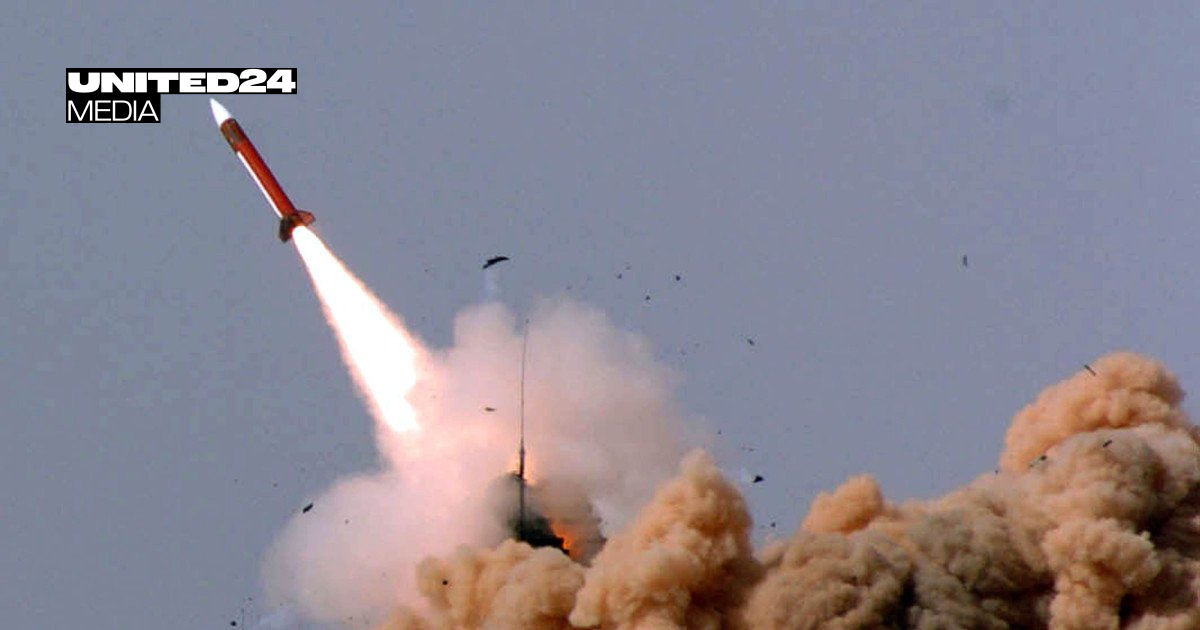
cross-posted from: lemmy.ca/post/73898088
The Patriot Missile shortage for Ukraine WAS CAUSED by Israel and the US launching the Iran War and then shooting off Patriots at Shaheds, this is well documented and undeniable, the US and Israel chose to betray Ukraine on the single most important thing they needed this winter.
Do you think that is a mistake? Do you really think Israel (and the US) is Ukraine’s ally if they chose to do this and didn’t even bother to try to use their Patriots efficiently?
defencesecurityasia.com/…/us-patriot-thaad-interc…
(DEFENCE SECURITY ASIA) — United States missile-defence readiness has entered a strategically consequential phase after estimated Patriot interceptor holdings fell to between 759 and 827 rounds, while Terminal High Altitude Area Defense inventories declined to approximately 234–278 interceptors by late July 2026.
The drawdown reflects intensive engagements during Operation Epic Fury, which began in late February 2026, followed by additional expenditure after the April 8 ceasefire collapsed, converting a regional air-defence campaign into a global force-allocation problem.
Israel convinced the US to betray Ukraine here, that is just what the hard facts say here, you can say Israel was pursuing its own interests but ok… the result is still russia can pummel Ukraine all winter with the cheapest shittiest ballistic missiles they can find and Ukraine is artificially forced to sit and take it because of the choices that Israel and the US made knowing full well this would be the direct consequence.