
0

preview
fiz download de um programa do autodesk pirata no mutaz. net mas está pedindo licença… O que posso fazer?
fiz download de um programa do autodesk pirata no mutaz. net mas está pedindo licença… O que posso fazer?


cross-posted from: quokk.au/…/russia-censors-lgbt-topics-from-pope-f…
The late Pope Francis‘ book Hope: The Autobiography has finally been published in Russia, but readers there won’t get to find out about the late pontiff’s thoughts on LGBTQIA+ issues.
cross-posted from: quokk.au/…/russia-censors-lgbt-topics-from-pope-f…
The late Pope Francis‘ book Hope: The Autobiography has finally been published in Russia, but readers there won’t get to find out about the late pontiff’s thoughts on LGBTQIA+ issues.
fiz download de um programa do autodesk pirata no mutaz. net mas está pedindo licença… O que posso fazer?
fiz download de um programa do autodesk pirata no mutaz. net mas está pedindo licença… O que posso fazer?

cross-posted from: lemmy.ml/post/51532459
I have just started getting into reading magazines and specifically using Libby to read bits of articles here and there. I like the current political stuff and some media coverage but on the whole it hasn’t been a very interesting experience until I came across this short story
I didn’t even realize The New Yorker published short stories, at first I thought it was just an excerpt. It’s about an Indian girl who has to go live with her aunt for a little while while her mom and dad work through the grief of having gone through a miscarriage.
The mystery and intrigue builds up in little blocks, each paragraph showing us a little moment in Nidhi’s (our protagonist) life: her life with her parents, the going away to live with her aunt, meeting her aunt’s mentally handicapped daughter…
I thought it was really well-written and compelling and by the end of it it built such a well-realized cast of characters that each had shades of darkness and human qualities in them that I wanted to explore their stories more, to spend a little more time with their thoughts and personal griefs.
It’s a simple coming-of-age story that read like a thriller that was brilliantly paced and I would love it if other people learned about it as there wasn’t a lot of discourse online


Christain talking smack about another cult. Gotta keep up on the enemy of thinkin. The only pin I could put in it is “repooped turds”
Christain talking smack about another cult. Gotta keep up on the enemy of thinkin. The only pin I could put in it is “repooped turds”

Brzoska na**ał do Metomatu.
Brzoska na**ał do Metomatu.


cross-posted from: lemmy.world/post/50805664
The “Mission Impossible” watch (DW-290) got an upgrade. Another worthy contender for those that want to step dangerously close to G-Shock territory.
cross-posted from: lemmy.world/post/50805664
The “Mission Impossible” watch (DW-290) got an upgrade. Another worthy contender for those that want to step dangerously close to G-Shock territory.

The “Mission Impossible” watch (DW-290) got an upgrade. Another worthy contender for those that want to step dangerously close to G-Shock territory.
The “Mission Impossible” watch (DW-290) got an upgrade. Another worthy contender for those that want to step dangerously close to G-Shock territory.

Not a huge surprise , is it ?
Not a huge surprise , is it ?

Hallo, ich habe heute festgestellt, dass die Flasche meines Sodastream Terra ganz furchtbar nach Chemie müffelt - die ich ohnehin nicht länger als 10/2026 verwenden soll.
Auf der Suche nach einer Ersatzflasche aus Glas dann die Ernüchterung: für mein Modell gibt es nur Plastik 🫣
Da Sodastream ja nun auch nicht unumstritten ist wäre ich grundsätzlich offen für eine Neuanschaffung eines anderen Geräts. Hat jemand eine Empfehlung?


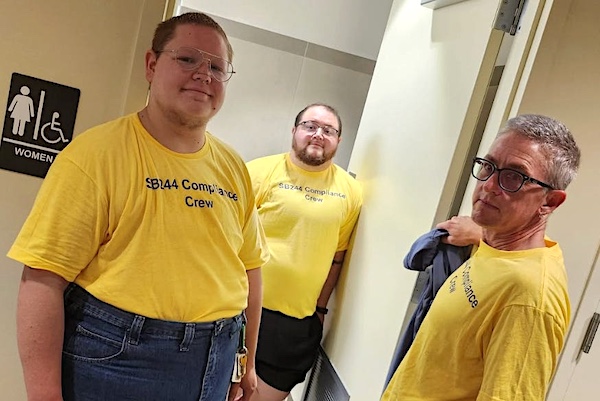
Police called on trans men using women’s restroom as required by Kansas law
The men, dressed in yellow “Compliance Crew” shirts, were part of a small group of trans-masculine Kansans who used the women’s room at facilities across the state that day in a coordinated action.
Police called on trans men using women’s restroom as required by Kansas law
The men, dressed in yellow “Compliance Crew” shirts, were part of a small group of trans-masculine Kansans who used the women’s room at facilities across the state that day in a coordinated action.

Julia Curlee briefed presidents and became the White House’s senior career intelligence official. Then a far-right campaign targeted her for being transgender.
Julia Curlee spent nearly two decades carrying the country’s secrets.
She worked in war zones, traveled to 35 countries, briefed presidents, and boarded Air Force One with the President’s Daily Brief. She was trusted to decide what some of the world’s most powerful people needed to know before beginning their days.
But in a remarkable first-person account published Monday by The Atlantic, Curlee describes how the second Trump administration came to view something else as dangerously sensitive: the fact that one of its most experienced intelligence officials was a transgender woman.
Her identity was never a secret inside the government. Trump officials had known about it during his first term, when Curlee briefed senior White House officials and became Vice President Mike Pence’s daily intelligence briefer. It became intolerable, she writes, only when the public might learn about it.
“The White House had needed me,” Curlee writes. “Trump officials had known I was trans from day one.”
Curlee joined the CIA in 2007 and became the first officer at the agency to transition openly and continue serving. She had dreamed of becoming an intelligence officer since childhood. Her other lifelong conviction — that she should have been born a woman — seemed, for years, incompatible with that calling.
She transitioned in 2013. Her first day at work as Julia passed without incident. Four years later, she wrote about the experience in The Atlantic under the pseudonym Jenny Hall, explaining how living openly had made her a more effective intelligence officer. The CIA later used the essay in college recruiting, according to Curlee.
Then came an assignment to prepare and deliver the President’s Daily Brief during Trump’s first administration. The work required arriving around midnight, studying intelligence through the early morning, and entering the West Wing before dawn.
Curlee eventually became Pence’s briefer. It was an unlikely pairing. Pence had spent years opposing marriage equality and LGBTQ+ rights. Curlee was a gay transgender woman, a wife, and a mother.
Yet Pence, she says, treated her as a trusted professional. He took notes, asked questions, and invited Curlee’s family to the White House when her assignment ended. There, he took her mother’s hand and said, “You must be very proud of your daughter.”
For Curlee, the moment proved that public service could rise above politics. She could serve an administration whose policies she opposed, and its leaders could recognize her expertise and humanity.
That belief brought her back to the White House under President Joe Biden, where she served as a National Security Council director. It also persuaded her to remain when Trump returned to office in January 2025.
As Biden’s political appointees departed, Curlee became the senior career intelligence official in the White House. She helped prepare the incoming administration to assume power, even as colleagues warned that she could become a target.
On Trump’s first day back in office, he signed an executive order directing the federal government to recognize only two sexes. Curlee began leaving the White House complex and crossing Pennsylvania Avenue to use restrooms in nearby coffee shops.
She stayed.
Three days into the administration, roughly 160 National Security Council employees detailed from other agencies were abruptly ordered to leave the White House. Curlee was spared. She assembled what remained of her team and continued briefing officials.
The arrangement lasted 69 days.
Curlee was visiting family in Roanoke, Virginia, when she received a Saturday phone call telling her that her White House assignment had ended. She said that officials did not explain. In the same conversation, they asked her to return Monday because they still needed her work.
After hanging up, Curlee saw that far-right provocateur Laura Loomer had posted about a transgender person “Biden holdover” inside the White House, accused the unnamed official of hating Trump, and asked her followers to help identify the person.
Curlee returned to work anyway. She spent three more days completing a budget project and transferring the portfolio she had managed for nearly two years.
“We need you. We need your service. But we don’t want anyone to know you are here,” she writes of the message she received.
Curlee does not claim to have proof that Trump or Loomer personally ordered her removal because she is transgender. She was never given a reason. But her account leaves little ambiguity about the sequence: Her identity had been known and accepted while her work remained useful and private. Once it threatened to become public, her service no longer protected her.
Days later, Trump fired several other National Security Council officials after meeting with Loomer, who had urged him to purge officials she considered insufficiently loyal.
Curlee returned to the CIA. There, she watched the agency dismantle its LGBTQ+ employee organization, remove Pride flags, and impose the administration’s restrictions on transgender workers. Earlier this year, she finally left the career she had once expected to hold for life.
In an accompanying Radio Atlantic interview, Curlee delivered a painful reversal of the message she once offered LGBTQ+ young people.
“Now I could not in good conscience advise any LGBT American to apply to work at CIA,” she said.


What Sounders Alliance members should know before the GM retention vote: Craig Waibel’s record with sources, the vote rules, and how to vote no confidence.
What Sounders Alliance members should know before the GM retention vote: Craig Waibel’s record with sources, the vote rules, and how to vote no confidence.

Canadian researchers using artificial intelligence to track foreign interest in the Alberta separatism debate have found the province’s political discourse is being targeted online by Russian and American interests in both overt and covert ways.
The U.S. activity, on the other hand, is more overt, with prominent American influencers, podcasts and websites openly promoting Alberta separation, said Brian McQuinn, co-director of the Centre for Artificial Intelligence, Data, and Conflict at the University of Regina.
Statements from right-wing U.S. podcasters and MAGA influencers, meanwhile, have promoted the narrative that Canada is a failed state that Alberta has no choice but to leave.
Such narratives follow statements from Alberta separatist leaders this year who said they met with Trump administration officials in Washington on three occasions, and comments from U.S. Treasury Secretary Scott Bessent who, when asked about Alberta in January, said he had heard “a rumour that they may have a referendum” and called the province “a natural partner for the U.S.”
The second report, covering early August, produced similar findings, with about 80 per cent of the activity linked to Russian content farms, and 20 per cent to U.S. sources.
“They are targeting us every day. The question just becomes, what are they going to target, and how effective of a topic is it to magnify polarization and to amplify division?” Dr. McQuinn said in an interview.
“This report clearly shows they are pounding in on the Canadian ecosystem with topics related to Canada specifically, so is that foreign influence? I think by any sort of normative or practical standard, the answer is yes.”
This is my brief review of all four Plastiboo books published by Hollow Press. I’ll be discussing the books not in chronological order, but however I like.
This review contains no spoilers, except for a very minor one, so you can read it even if you’re not familiar with the books.
The second book in the Vermis series and, in my opinion, the best installment. It differs most significantly from both the first and third books in that it is more narratively focused on the journey of a specific character. It has no choices and significantly fewer gameplay elements, such as loot descriptions and the like, but it tells the story excellently and reveals new lore details.
The typical character creation screen appears at the very end, after the Wayfarer’s story has concluded, which, from a game design perspective, might suggest that what came before was, in a sense, a prologue to the main game? Personally, I prefer the idea that the player was given the chance to create a character at the end of the Wayfarer’s story, after which the closing credits would roll. That would have been a powerful move.
The first part of the series has its own unique atmosphere. It’s short, distinctive, and wonderful in its own way. I can’t say too much about it, except that it’s an excellent book with an interesting plot and beautiful illustrations.
Godhusk differs from Vermis in many ways right off the bat. First, it makes it very clear what kind of game this could be (it’s a Metroidvania). Second, there are multiple endings(!), which is really cool for loreGB and reminded me of those old choose-your-own-adventure books with page-turn options. Third, it’s not fantasy but sci-fi. More specifically, a mix of biopunk and divine machinery.
This is an unusual book with interesting artistic choices that feels most like a guide to a long-lost video game due to its abundance of gameplay mechanics, interactions, and multiple endings. I also like Plastiboo’s art style here. Art is very important in books of this genre, and back in the day, the art style deterred me from buying Bubzium and Final Fentanyl, cause it was quite specific and not particularly appealing to me personally.
The final book (as of this review) in the Vermis series. For me, it’s one big contradiction.
On the one hand, it’s clear that Plastiboo has significantly improved his artistic skills over the years: this book features the best artwork in the entire series. There are also more game guide elements here, such as descriptions of loot, game mechanics, maps, and interactions seem to be about three times more abundant than in the first book. The world has also become more interesting, as has the protagonist’s journey (compared to the first book).
However, the book offers almost nothing new compared to its predecessors. The first book laid the foundation for the genre, and the second told a very interesting and cohesive story. The third, on the other hand, seems to be trying to take the first book and simply make it bigger. Is that a bad thing though? No, not at all. Even though it’s the weakest book in the series, it still deserves a solid 7.5 out of 10 if I had to rate it.
Thank you for reading my thoughts. If you’ve read any books by Plastiboo, please share your opinion, I’d love to hear it. As for me, I’m about to start reading How to Bake a Breadling while I wait for my copy of Age of Rot to arrive.
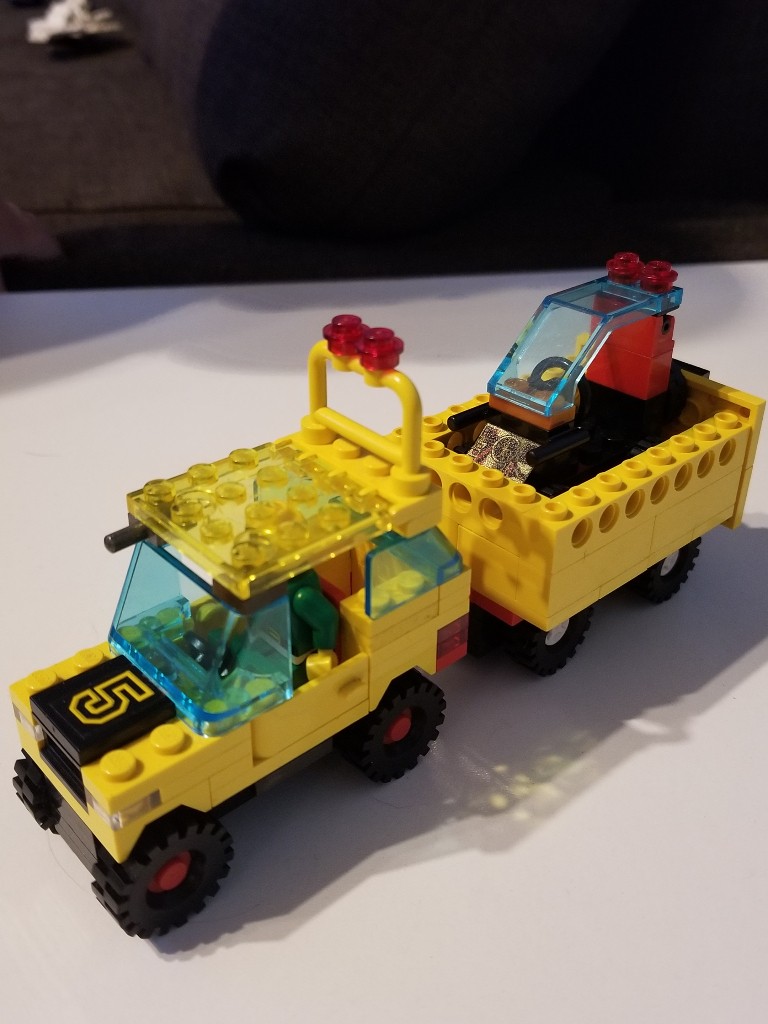
Truck and trailer with a little atv in the trailer.
Truck and trailer with a little atv in the trailer.
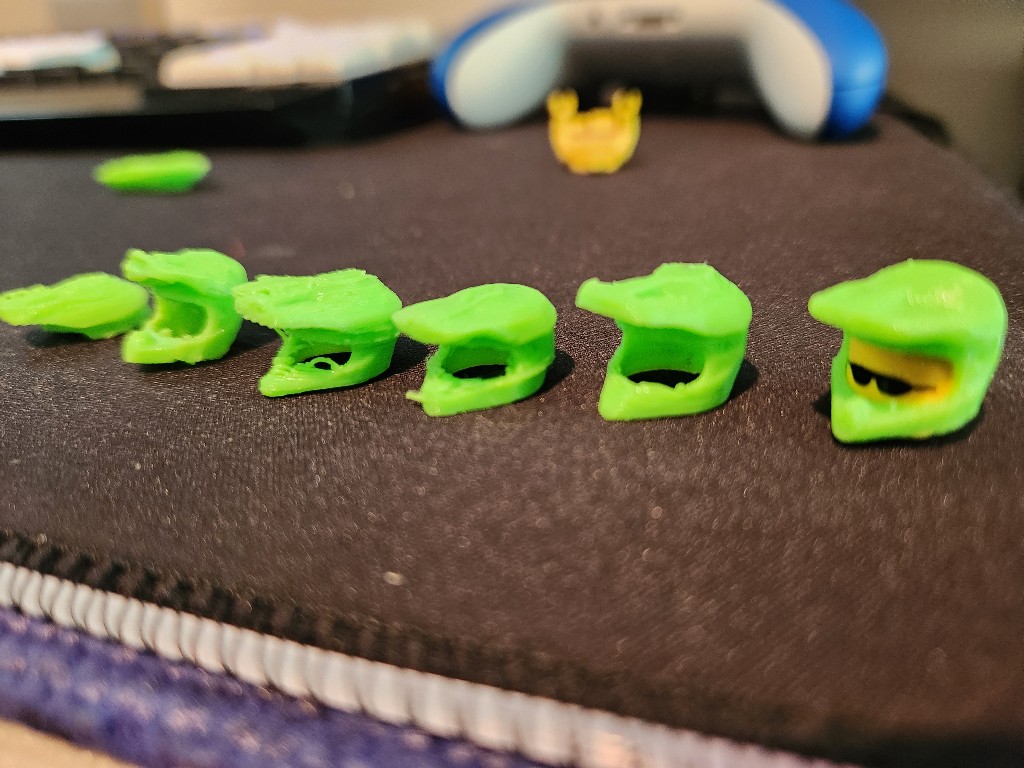
3d printed parts. Tires and helment. Trial and error progression for helment. Modded ender3 pro. Pushing the limit of resolution for the setup, but fun results!
3d printed parts. Tires and helment. Trial and error progression for helment. Modded ender3 pro. Pushing the limit of resolution for the setup, but fun results!
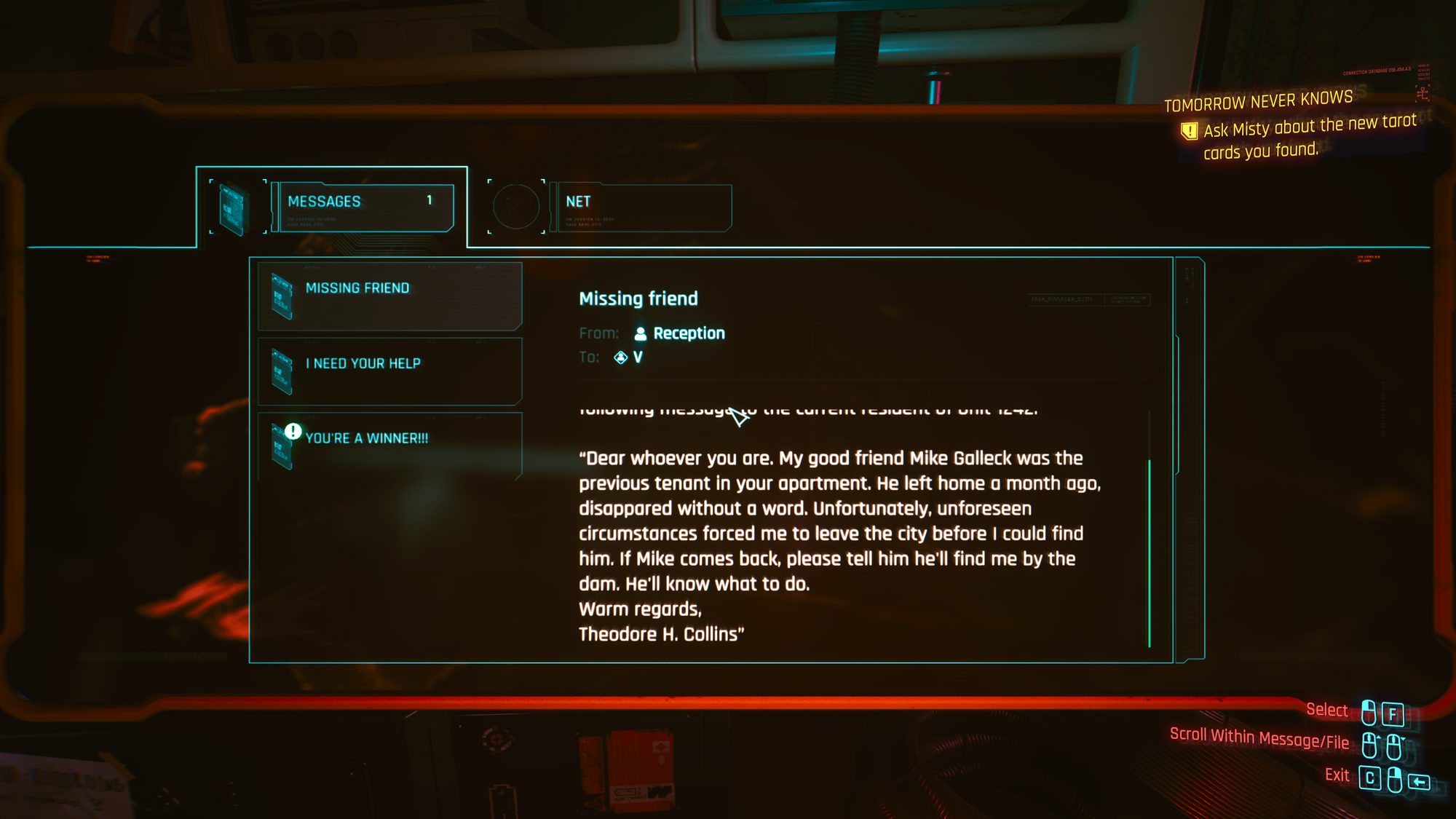
This is found on the computer in V’s Northside apartment.
This is found on the computer in V’s Northside apartment.

Andrew Parsonson ~4 minutes JOHANNESBURG — The European Union has sanctioned the head of a Roscosmos subsidiary developing a synthetic aperture radar satellite system for the Russian military. The sanctions are part of what the bloc says is a broader effort to target Russia’s military space sector over its support for the war in Ukraine. On Aug. 7, the European Union added five Russian defense industry executives to its sanctions list, including Viktor Ivanov, director general of Roscosmos subsidiary NII TP, the developer of the Kasatka-R synthetic aperture radar system. The designation builds on previous EU sanctions imposed on the company itself, extending the pressure beyond its limited commercial exposure to the individuals running Russia’s military-industrial organizations. EU spokesperson Anitta Hipper told SpaceNews that the designation “sends a signal to other personnel working in Russia’s defence-industrial base that personal involvement in supporting the war effort carries direct, individual consequences.” Hipper explained that space and satellite technology had become “increasingly relevant” to EU sanctions because of their roles in reconnaissance, targeting and communications used by Russia in its “war of aggression against Ukraine.” “This designation fits into a broader effort to map and sanction the ecosystem around Russia’s military-industrial complex, including the military space sector that develops and produces technology and equipment used by the Russian military, thereby enabling Russia’s war efforts,” she said. Under the sanctions, any assets Ivanov holds in the EU are frozen, EU persons and entities are prohibited from making funds or economic resources available to him, and he is barred from entering or transiting through EU territory. Those individual restrictions come on top of measures already imposed on NII TP itself. The company was added to the EU sanctions list on June 15 as part of a broader package targeting Russia’s military-industrial complex, nearly three years after the U.S. Treasury Department imposed sanctions on the institute in July 2023. Hipper did not say why the bloc had moved against Ivanov personally less than two months after sanctioning NII TP, except that “sanctions are dynamic and part of a continuously evolving process” and that the discussions “are confidential and fully in the hands of the member states.” Ivanov was not the only individual sanctioned Aug. 7 with ties to Russia’s space sector. The EU also sanctioned Sergey Bashkov, director of Irz-Svyaz, which the bloc described as a systemically important Russian manufacturer of navigation receivers for GPS and the Russian GLONASS satellite navigation system. Aleksandr Dyukarev, director general of Krasnoyarsk Machine-Building Plant, was also listed. The company manufactures the RS-28 Sarmat intercontinental ballistic missile as well as modules for carrier rockets.
Andrew Parsonson ~4 minutes JOHANNESBURG — The European Union has sanctioned the head of a Roscosmos subsidiary developing a synthetic aperture radar satellite system for the Russian military. The sanctions are part of what the bloc says is a broader effort to target Russia’s military space sector over its support for the war in Ukraine. On Aug. 7, the European Union added five Russian defense industry executives to its sanctions list, including Viktor Ivanov, director general of Roscosmos subsidiary NII TP, the developer of the Kasatka-R synthetic aperture radar system. The designation builds on previous EU sanctions imposed on the company itself, extending the pressure beyond its limited commercial exposure to the individuals running Russia’s military-industrial organizations. EU spokesperson Anitta Hipper told SpaceNews that the designation “sends a signal to other personnel working in Russia’s defence-industrial base that personal involvement in supporting the war effort carries direct, individual consequences.” Hipper explained that space and satellite technology had become “increasingly relevant” to EU sanctions because of their roles in reconnaissance, targeting and communications used by Russia in its “war of aggression against Ukraine.” “This designation fits into a broader effort to map and sanction the ecosystem around Russia’s military-industrial complex, including the military space sector that develops and produces technology and equipment used by the Russian military, thereby enabling Russia’s war efforts,” she said. Under the sanctions, any assets Ivanov holds in the EU are frozen, EU persons and entities are prohibited from making funds or economic resources available to him, and he is barred from entering or transiting through EU territory. Those individual restrictions come on top of measures already imposed on NII TP itself. The company was added to the EU sanctions list on June 15 as part of a broader package targeting Russia’s military-industrial complex, nearly three years after the U.S. Treasury Department imposed sanctions on the institute in July 2023. Hipper did not say why the bloc had moved against Ivanov personally less than two months after sanctioning NII TP, except that “sanctions are dynamic and part of a continuously evolving process” and that the discussions “are confidential and fully in the hands of the member states.” Ivanov was not the only individual sanctioned Aug. 7 with ties to Russia’s space sector. The EU also sanctioned Sergey Bashkov, director of Irz-Svyaz, which the bloc described as a systemically important Russian manufacturer of navigation receivers for GPS and the Russian GLONASS satellite navigation system. Aleksandr Dyukarev, director general of Krasnoyarsk Machine-Building Plant, was also listed. The company manufactures the RS-28 Sarmat intercontinental ballistic missile as well as modules for carrier rockets.

Bring back the harpsichord! It’s such a wonderful instrument with a timbre that brings such a unique quality to the music. We are worse off for leaving it behind. I even often like it more than the piano
Bring back the harpsichord! It’s such a wonderful instrument with a timbre that brings such a unique quality to the music. We are worse off for leaving it behind. I even often like it more than the piano
Seriously, that whole thing is a pastiche of things I’ve seen in other movies.
Seriously, that whole thing is a pastiche of things I’ve seen in other movies.
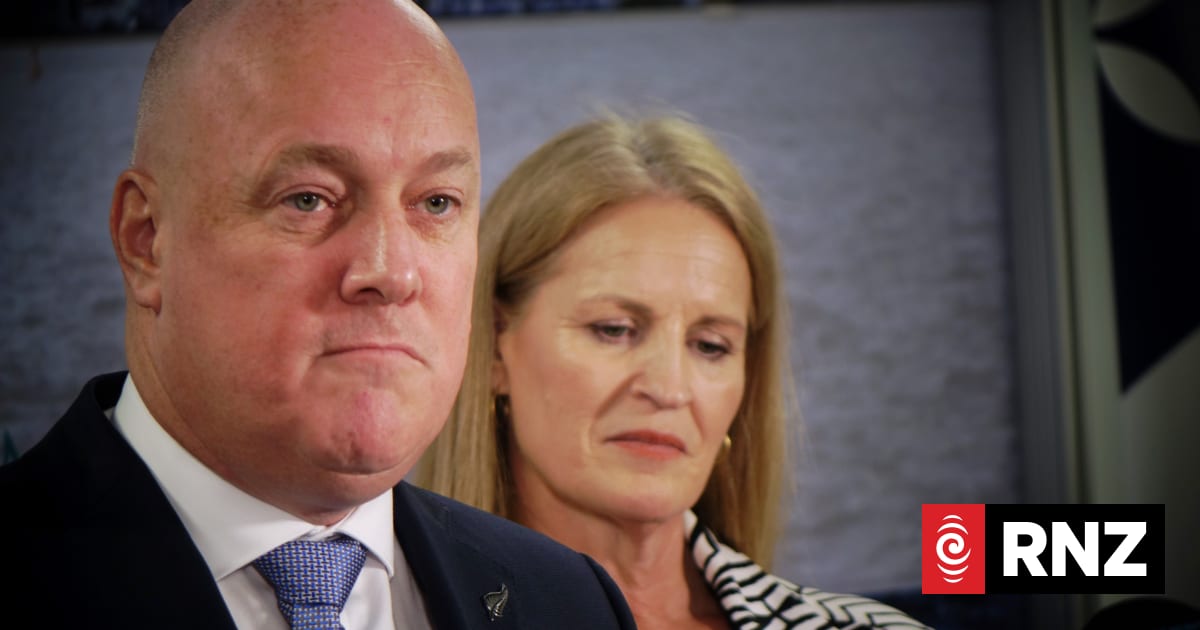
The prime minister and social development minister have offered an apology to thousands of pensioners who did not receive their Winter Energy Payment this year, after an error in a law change meant people who were supposed to get the payment missed out.
The law change, passed under urgency last year, has meant beneficiaries receiving certain payments like the Supported Living Payment, Accommodation Supplement, and Disability Allowance have had to re-confirm their circumstances at least once every 52 weeks, to confirm whether they are still eligible.
However, the Winter Energy Payment, which is supposed to be automatic for superannuitants, veterans, and people receiving a main benefit, were not excluded from the legislation, meaning some people who would have expected to receive the payment did not.
Labour said it is the consequence of rushed legislation, but Social Development Minister Louise Upston is blaming it on a policy omission.
The Post has reported the Ministry of Social Development (MSD) had started to receive complaints, with the ministry working around the clock to correct the error and ensure the correct amounts were backpaid.
The Ministry of Social Development said between 1 May and 7 August, 14,862 superannuitants and veterans had their Winter Energy Payments affected.
Julia Curlee briefed presidents and became the White House’s senior career intelligence official. Then a far-right campaign targeted her for being transgender.
Julia Curlee spent nearly two decades carrying the country’s secrets.
She worked in war zones, traveled to 35 countries, briefed presidents, and boarded Air Force One with the President’s Daily Brief. She was trusted to decide what some of the world’s most powerful people needed to know before beginning their days.
But in a remarkable first-person account published Monday by The Atlantic, Curlee describes how the second Trump administration came to view something else as dangerously sensitive: the fact that one of its most experienced intelligence officials was a transgender woman.
Her identity was never a secret inside the government. Trump officials had known about it during his first term, when Curlee briefed senior White House officials and became Vice President Mike Pence’s daily intelligence briefer. It became intolerable, she writes, only when the public might learn about it.
“The White House had needed me,” Curlee writes. “Trump officials had known I was trans from day one.”
Curlee joined the CIA in 2007 and became the first officer at the agency to transition openly and continue serving. She had dreamed of becoming an intelligence officer since childhood. Her other lifelong conviction — that she should have been born a woman — seemed, for years, incompatible with that calling.
She transitioned in 2013. Her first day at work as Julia passed without incident. Four years later, she wrote about the experience in The Atlantic under the pseudonym Jenny Hall, explaining how living openly had made her a more effective intelligence officer. The CIA later used the essay in college recruiting, according to Curlee.
Then came an assignment to prepare and deliver the President’s Daily Brief during Trump’s first administration. The work required arriving around midnight, studying intelligence through the early morning, and entering the West Wing before dawn.
Curlee eventually became Pence’s briefer. It was an unlikely pairing. Pence had spent years opposing marriage equality and LGBTQ+ rights. Curlee was a gay transgender woman, a wife, and a mother.
Yet Pence, she says, treated her as a trusted professional. He took notes, asked questions, and invited Curlee’s family to the White House when her assignment ended. There, he took her mother’s hand and said, “You must be very proud of your daughter.”
For Curlee, the moment proved that public service could rise above politics. She could serve an administration whose policies she opposed, and its leaders could recognize her expertise and humanity.
That belief brought her back to the White House under President Joe Biden, where she served as a National Security Council director. It also persuaded her to remain when Trump returned to office in January 2025.
As Biden’s political appointees departed, Curlee became the senior career intelligence official in the White House. She helped prepare the incoming administration to assume power, even as colleagues warned that she could become a target.
On Trump’s first day back in office, he signed an executive order directing the federal government to recognize only two sexes. Curlee began leaving the White House complex and crossing Pennsylvania Avenue to use restrooms in nearby coffee shops.
She stayed.
Three days into the administration, roughly 160 National Security Council employees detailed from other agencies were abruptly ordered to leave the White House. Curlee was spared. She assembled what remained of her team and continued briefing officials.
The arrangement lasted 69 days.
Curlee was visiting family in Roanoke, Virginia, when she received a Saturday phone call telling her that her White House assignment had ended. She said that officials did not explain. In the same conversation, they asked her to return Monday because they still needed her work.
After hanging up, Curlee saw that far-right provocateur Laura Loomer had posted about a transgender person “Biden holdover” inside the White House, accused the unnamed official of hating Trump, and asked her followers to help identify the person.
Curlee returned to work anyway. She spent three more days completing a budget project and transferring the portfolio she had managed for nearly two years.
“We need you. We need your service. But we don’t want anyone to know you are here,” she writes of the message she received.
Curlee does not claim to have proof that Trump or Loomer personally ordered her removal because she is transgender. She was never given a reason. But her account leaves little ambiguity about the sequence: Her identity had been known and accepted while her work remained useful and private. Once it threatened to become public, her service no longer protected her.
Days later, Trump fired several other National Security Council officials after meeting with Loomer, who had urged him to purge officials she considered insufficiently loyal.
Curlee returned to the CIA. There, she watched the agency dismantle its LGBTQ+ employee organization, remove Pride flags, and impose the administration’s restrictions on transgender workers. Earlier this year, she finally left the career she had once expected to hold for life.
In an accompanying Radio Atlantic interview, Curlee delivered a painful reversal of the message she once offered LGBTQ+ young people.
“Now I could not in good conscience advise any LGBT American to apply to work at CIA,” she said.

Sounders lose 2-0 as Whitecaps claim Cascadia Cup at Lumen Field.
Sounders lose 2-0 as Whitecaps claim Cascadia Cup at Lumen Field.


Enjoy!
Edit: Better keyboard navigation is coming soon™
Enjoy!
Edit: Better keyboard navigation is coming soon™
“I think it’s more likely than not that the state case goes away with the federal guilty plea,” said Anthony Capozzolo, a former prosecutor with the Manhattan District Attorney’s Office and a former federal prosecutor with the Eastern District of New York.
Capozzolo expects New York prosecutors will be blocked from moving ahead “because it’s likely both offenses will be punishing someone for the murder of the same victim and the elements of the federal and state cases are punishing the same harm or evil.”
“Therefore, the offenses will not be deemed different enough to allow New York to continue to prosecute the case,” he said.




Kind of weird, but no ads show. Maybe just a bug with the latest update?
Kind of weird, but no ads show. Maybe just a bug with the latest update?


Author: Codie C. Lavoie - Pediatric Neurologist and Sleep Specialist, University of Southern California
Caregivers often seek a specific age that their child can be left home alone. However, the neuroscience of brain development suggests that readiness depends on much more than a birthday.
The article is relatively short, so I didn’t bother with a TLDR since I’d lose helpful info. If you want, here is a short checklist

Premier David Eby says his BC NDP-led provincial government already supports creating involuntary care capacity in Vancouver and has been searching for a suitable site, questioning the need for the City of Vancouver to hold a plebiscite on an idea he says has broad agreement.
One of the two public safety plebiscite questions will ask voters whether Vancouver’s municipal government should formally call on the provincial government to convert portions of the old St. Paul’s Hospital — or another similar site — into a secure medical facility providing voluntary care and at least 100 involuntary care beds for people posing a serious risk to themselves or others because of severe addictions and mental health issues.
Asked whether the provincial government would consider Mayor Sim’s old St. Paul’s Hospital proposal if Vancouver voters support it, Eby said he was surprised the City was putting the matter to a public vote because the provincial government already agrees that Vancouver needs such a facility.
“I was, you know, I’ll admit a little surprised to see the proposal for a vote question on which I suspect there would be 100 per cent support, including from our government,” said Eby.
“The mayor knows we’ve been looking for a site in Vancouver for this kind of care. We know that Vancouver requires it, especially with the intense epicentre of the Downtown Eastside.”

Snuneymuxw First Nation has acquired the remaining ownership stake in the Courtyard by Marriott Nanaimo, bringing the Downtown Nanaimo hotel property entirely under the First Nation’s control.
The acquisition was completed through Petroglyph Development Group (PDG), the First Nation’s wholly owned economic development corporation. The hotel had previously been jointly owned with Utah-based real estate investment firm PEG Companies.