







0

Silver screen returns to Selkirk with reopening of Garry Theatre

CBC Silver screen returns to Selkirk with reopening of Garry Theatre | CBC News www.cbc.ca
preview

Hopefully it can stay open! Being run by non-profit now.

I think it’s neat trying to keep some of these old small town things alive. Tickets look cheap on the website.

Hopefully it can stay open! Being run by non-profit now.

I think it’s neat trying to keep some of these old small town things alive. Tickets look cheap on the website.

0

A California company that wants to use sunlight, water and air to synthesize methane has built the cheapest solar in the US, a 1.8 MW off-grid project in Southern California for $1.3 million.

Terraform Industries Blog How Terraform built the cheapest solar in North America terraformindustries.wordpress.com
preview

The problem here is that although the chemistry is sound, the economics are more questionable. Even with this breakthrough, the end methane looks orders of magnitude more expensive than the wholesale price of existing methane. Still, economies of scale are a real thing, and there are lots of use cases for this where it doesn’t have to compete with the wholesale price of methane, for example in very remote locations far away from gas pipes or as grid storage options for solar power. How Terraform built the cheapest solar in North America

The problem here is that although the chemistry is sound, the economics are more questionable. Even with this breakthrough, the end methane looks orders of magnitude more expensive than the wholesale price of existing methane. Still, economies of scale are a real thing, and there are lots of use cases for this where it doesn’t have to compete with the wholesale price of methane, for example in very remote locations far away from gas pipes or as grid storage options for solar power. How Terraform built the cheapest solar in North America

0

How was your turnout this year? I got more than last year, but still not many.

preview

Being a Saturday probably helped, also the weather was nice here.

I got about 30, which is more than last year, but nothing like what I remember from years past. I used to go through four big bowls, last night I only did one.

Being a Saturday probably helped, also the weather was nice here.

I got about 30, which is more than last year, but nothing like what I remember from years past. I used to go through four big bowls, last night I only did one.

0

Heretic 2.0 released: Model modification for everyone - "it can suppress slop, reduce sycophancy, alter emotional alignment, and pretty much anything else that you can think of"

GitHub Release v2.0.0 · p-e-w/heretic github.com
preview

Copied from -p-e-w- from another site:

Dear fellow Llamas,

after almost 5 months of development, I finally have the pleasure of announcing to you the immediate availability of the biggest Heretic release ever, Heretic 2.0: github.com/p-e-w/heretic

Heretic is the leading software for removing censorship from language models. It now boasts 37k GitHub stars and more than 8,500 models on Hugging Face, with 88 million(!!!) total model downloads.

With Heretic 2.0, the project is entering a new era. Heretic is expanding from a purpose-built tool for censorship removal to a general-purpose model modification tool that can do amazing things. Besides removing censorship, it can suppress slop, reduce sycophancy, alter emotional alignment, and pretty much anything else that you can think of. Of course, censorship removal remains the primary and default function, and in fact works much, much better than ever before. Heretic 2.0 is the most advanced refusal suppression system ever built.

Your time is precious, so here’s the TL;DR for this release:

  • Directional abliteration is replaced by Arbitrary-Rank Ablation (ARA), a novel steering method that I developed from scratch for Heretic. It’s vastly superior to abliteration, and has been used with great success by enterprising testers for several months. Now it is the default (classic abliteration remains available as an option).

  • Heretic has been completely rebuilt around plugins. Scorer plugins define what Heretic optimizes for. Modifier plugins implement the actual steering method. Plugins are easy to write, can be loaded directly from a simple Python file, and have a well-defined API.

  • Heretic can now run non-interactively, which among other things has enabled us to implement full end-to-end tests for much tighter quality control. Model support has been expanded to include models with hyper-connections, and support for thinking models has been substantially improved.

  • Heretic 2.0 is not backwards compatible with Heretic 1.x configurations. See the migration guide for what you need to change in order to make your old configurations work.

What hasn’t changed is that removing censorship from a model remains as simple as running

heretic Qwen/Qwen3.5-4B

See the default configuration file for what Heretic has to offer beyond that.

Now for some details…


ARA: Heretic’s new steering method

Directional ablation, or “abliteration”, is based on the assumption that refusals (or whatever else you are trying to suppress) are represented by a single direction (that is, a rank-1 subspace) in residual space. That this is the full picture has been doubted in research for a while, and there are now several papers exploring alternatives such as multi-directional ablation or “representation cones”.

At the beginning of this year, I started experimenting with a method that completely abandons the idea that the ablation transformation must be restricted to a fixed-rank subspace. In March, I published the initial version of Arbitrary-Rank Ablation in this pull request (which was later closed as I re-implemented ARA on top of the plugin system in this PR).

ARA steers model behavior by modifying matrices based on an objective function that encodes the basic properties of the change we want: Harmful prompts should be represented in residual space in a way that’s similar to harmless prompts, while the representations of harmless prompts should change as little as possible. This objective is used with the L-BFGS optimizer to modify matrices one-by-one, a kind of micro-training that steers representations without any rank restriction.

ARA has been extensively tested and refined with the help of the community. Notably, kabachuha made it compatible with Heretic’s LoRA system, and varunbln found a substantial performance improvement.

I intend to post an article explaining ARA in more detail soon.

Using scorer plugins to make Heretic do what you want

Heretic operates by finding modification parameters that optimize scores, values that measure the quality of the resulting model. Ever since the 1.0 release, Heretic has used two hardcoded scores: Refusal count to measure decensoring strength, and KL divergence to measure quality retention.

With Heretic 2.0, you can freely define your own scores by writing and loading scorer plugins. Arbitrarily many scorer plugins can be loaded and optimized for simultaneously, and each score can be either minimized or maximized during optimization. See the default configuration file for how to do this.

The scorer plugin system is the result of months of effort by red40maxxer, with whom I exchanged hundreds of messages over dozens of review cycles to figure out the best possible design. This is a monumental contribution that has changed how Heretic works from the ground up.

Besides the keyword (refusal) count and KLD scorer plugins, which remain the default, Heretic ships with two other scorers: A benchmark scorer, which can compute scores for many standard benchmarks, and a BERT classifier.

The BERT classifier, developed by long-time Heretic contributor Vinay Umrethe, can use an arbitrary ModernBERT-type model to classify LLM responses, and score them based on which labels the classifier produces. Vinay also trained a refusal classifier model (used by default with this plugin), which experiments have shown to be substantially more accurate at identifying model refusals than the naive keyword matching method that Heretic employs by default. While the plugin is slower than keyword matching, the greater accuracy can steer Heretic towards producing a higher-quality modified model. An alternative configuration, which uses an emotion classifier, is also provided in the Heretic repository.

The plugin system is well-documented in both the README and the code. If you are interested in experimenting with custom plugins, an agent should have no difficulty cooking up a plugin and a matching configuration file that together do what you want, after ingesting the Heretic repository.


Well, I hope you like it!

Cheers :)

89

[NEWS] Bocchi the Rock! new film announced: "星のあしあと"

preview

cross-posted from: lemmy.world/post/53864047

cross-posted from: lemmy.world/post/53864046

cross-posted from: lemmy.world/post/53864047

cross-posted from: lemmy.world/post/53864046

0

An Actual Review of RWBY: Grimm Eclipse

play · youtube.com
YouTube An Actual Review of RWBY: Grimm Eclipse www.youtube.com
preview

Apologies to everyone who enjoys the game as this one is pretty critical of it, but the jokes he makes are hilarious and it does give you a good idea of the core game along the way.

A little further backstory for those who may not have heard:

Apparently Grimm Eclipse started as a little fan project which RT caught wind of and decided to bring in and expand into a fully-produced game. I’ve heard that the very original demo still exists out there, only shared between cautious fans which still have the files, but haven’t seen it myself. Word is, it plays a LOT different than the final product and ends up more smoothe and enjoyable somehow (IMHO it wouldn’t be hard as I couldn’t stomach more than a couple of minutes of play, it’s so rough).

AFAIK the story is basically considered non-canon, not that there was much there. You can look up videos of all the story dialogue for the game and it’s really threadbare.

Also, sadly, the crazy-looking fic he showed at the end of the video (where Weiss is a princess and Myrtenaster a dragon) seems to no longer exists, I did my level best to find it and it seems to have been deleted.

0

The Super Duper DnD/TTRPG Music Playlist Compendium

preview

Here’s all playlists I collected, from different users across Spotify and Apple Music. All genres covered, from horror to fantasy. Enjoy!

PLAYLISTERBR - Follow on Spotify

Sci-Fi Atmospheric: Spotify

Dreamy: Spotify

Disturbing: Spotify

Mesmerizing: Spotify

Eerie: Spotify

Hypnotic: Spotify

Haunting: Spotify

Suspenseful: Spotify

Unsettling: Spotify

Unnerving: Spotify

Magical: Spotify

Exotic: Spotify

Futurebleak: Spotify

Gloomy: Spotify

Demonic: Spotify

Despairing/Relieving: Spotify

Daunting: Spotify

Horrifying: Spotify

Synthwave: Spotify

Cyberpunk: Spotify

Retrowave: Spotify;

PLAYLISTERBR2 - Follow on Spotify

Dark Isolation: Spotify

Dark Future: Spotify

Nightmarish: Spotify

Future Nexus: Spotify

Tormentor: Spotify

Abysmal: Spotify

Outgamers: Spotify

Synthpunk: Spotify

Post Apocalypse: Spotify

Apocalypse: Spotify

Syntheticity: Spotify

Tenebrosity: Spotify

Thanatology: Spotify

Anxiety: Spotify

Teratology: Spotify

Pyromania: Spotify

Bushido: Spotify

Conspiracy: Spotify

Phobia: Spotify

Cosmogony: Spotify

Mythology: Spotify

Futurology: Spotify

Taumaturgy: Spotify

Criminology: Spotify

Demonology: Spotify

Chiromancy: Spotify

Technocracy: Spotify

Necromancy: Spotify

Neuromancy: Spotify;

DIMITRI DE ALENCAR Follow on Spotify

Follow his page for the playlists, which are at the bottom of the page. Each one is in the 3-4 hour range and they are:

Dungeon Crawling: dark ambiences for setting the mood for exploring labyrinths/caves/catacombs or dark forests etc.;

Crossing The Ocean: for pirate-themed adventures, or any campaign heavy on nautical/river combat; In The Village: when the group reaches a town, tavern or trading outpost, for generally pacific encounters with villagers and townspeople;

Ruins and Temples: to set the appropriate mood when in sacred places, sacerdotal houses, monuments or exploring sacred ruins, magical buildings or dealing with entities from other planes;

Heroic Fight: for epic battles against powerful dragons, mages, demons or armies, or situations that require heroism from the PCs;

Distant Places: for travels far away from the group’s places of origin, be it distant kingdoms or towns or even other planes.

NEW The Magical Forest: be it when looking for a legendary unicorn or a reclusive mage, the woods can be full of wonders… and dangers.

If you want to go really dark, try the playlist called DARK AMBIENT

Ambient Retrowave: you just landed at Gliese IV, an apparently abandoned planetoid which was a penal colony. As you explore the place, you feel that you’re being watched by someone… or something.;

Instrumental Retrowave: enemy fighters breached the outer rim, and all fighters from your brigade are launched to battle. Like a menacing swarm approaching, you see bogeys right and left that you have to engage;

Synthwave Selection: you are in the biggest space station in the quadrant, looking for your undercover contact. You have to find them first, searching in luxurious halls, rusty and half lit corridors, crowded gateways and suspect entertainment places. Bring your own oxygen though.

Eerie Sci Fi: your space freighter was boarded by a ship from unknown origin. You hear the hiss from hatches being opened. Will the newcomers see you as allies or foes… or food;

If you want to go for a space opera mood, try the one called SPACESURF

Follow these profiles for more thematic playlists:

open.spotify.com/…/313hrgql36wuo6akp3kqvrcwr3di

open.spotify.com/…/312vk67n2vp6zmeecyfkvbeffbry

Here’s all playlists I collected, from different users across Spotify and Apple Music. All genres covered, from horror to fantasy. Enjoy!

PLAYLISTERBR - Follow on Spotify

Sci-Fi Atmospheric: Spotify

Dreamy: Spotify

Disturbing: Spotify

Mesmerizing: Spotify

Eerie: Spotify

Hypnotic: Spotify

Haunting: Spotify

Suspenseful: Spotify

Unsettling: Spotify

Unnerving: Spotify

Magical: Spotify

Exotic: Spotify

Futurebleak: Spotify

Gloomy: Spotify

Demonic: Spotify

Despairing/Relieving: Spotify

Daunting: Spotify

Horrifying: Spotify

Synthwave: Spotify

Cyberpunk: Spotify

Retrowave: Spotify;

PLAYLISTERBR2 - Follow on Spotify

Dark Isolation: Spotify

Dark Future: Spotify

Nightmarish: Spotify

Future Nexus: Spotify

Tormentor: Spotify

Abysmal: Spotify

Outgamers: Spotify

Synthpunk: Spotify

Post Apocalypse: Spotify

Apocalypse: Spotify

Syntheticity: Spotify

Tenebrosity: Spotify

Thanatology: Spotify

Anxiety: Spotify

Teratology: Spotify

Pyromania: Spotify

Bushido: Spotify

Conspiracy: Spotify

Phobia: Spotify

Cosmogony: Spotify

Mythology: Spotify

Futurology: Spotify

Taumaturgy: Spotify

Criminology: Spotify

Demonology: Spotify

Chiromancy: Spotify

Technocracy: Spotify

Necromancy: Spotify

Neuromancy: Spotify;

DIMITRI DE ALENCAR Follow on Spotify

Follow his page for the playlists, which are at the bottom of the page. Each one is in the 3-4 hour range and they are:

Dungeon Crawling: dark ambiences for setting the mood for exploring labyrinths/caves/catacombs or dark forests etc.;

Crossing The Ocean: for pirate-themed adventures, or any campaign heavy on nautical/river combat; In The Village: when the group reaches a town, tavern or trading outpost, for generally pacific encounters with villagers and townspeople;

Ruins and Temples: to set the appropriate mood when in sacred places, sacerdotal houses, monuments or exploring sacred ruins, magical buildings or dealing with entities from other planes;

Heroic Fight: for epic battles against powerful dragons, mages, demons or armies, or situations that require heroism from the PCs;

Distant Places: for travels far away from the group’s places of origin, be it distant kingdoms or towns or even other planes.

NEW The Magical Forest: be it when looking for a legendary unicorn or a reclusive mage, the woods can be full of wonders… and dangers.

If you want to go really dark, try the playlist called DARK AMBIENT

Ambient Retrowave: you just landed at Gliese IV, an apparently abandoned planetoid which was a penal colony. As you explore the place, you feel that you’re being watched by someone… or something.;

Instrumental Retrowave: enemy fighters breached the outer rim, and all fighters from your brigade are launched to battle. Like a menacing swarm approaching, you see bogeys right and left that you have to engage;

Synthwave Selection: you are in the biggest space station in the quadrant, looking for your undercover contact. You have to find them first, searching in luxurious halls, rusty and half lit corridors, crowded gateways and suspect entertainment places. Bring your own oxygen though.

Eerie Sci Fi: your space freighter was boarded by a ship from unknown origin. You hear the hiss from hatches being opened. Will the newcomers see you as allies or foes… or food;

If you want to go for a space opera mood, try the one called SPACESURF

Follow these profiles for more thematic playlists:

open.spotify.com/…/313hrgql36wuo6akp3kqvrcwr3di

open.spotify.com/…/312vk67n2vp6zmeecyfkvbeffbry

0

[Epic] Gladiator: Blades of Fury and Quiztopia: The Ultimate Trivia free until Nov 8 (developer giveaways)

preview

Two developer giveaways on Epic (separate from the weekly free game):

Both free to keep until Sun Nov 8, 12:30 PM CT / 6:30 PM UTC. Region note: Gladiator isn’t available in South Korea or Russia.

Two developer giveaways on Epic (separate from the weekly free game):

Both free to keep until Sun Nov 8, 12:30 PM CT / 6:30 PM UTC. Region note: Gladiator isn’t available in South Korea or Russia.

0

Why China's Social Credit System Is Facing Inside Warnings Over AI Surveillance

Iies Why China's Social Credit System Is Facing Inside Warnings O — Iies www.iies.gusec.edu.in
preview

The criticism and warnings are not new, but now they come from within China.

Archived

[…]

A recent government-funded study out of Sichuan University’s Law School published in the Journal of Sichuan Normal University has triggered a fresh wave of scrutiny regarding China’s social credit system. Authored by doctoral candidate Lin Jianxing, the paper cautions that pouring advanced artificial intelligence and predictive algorithms into social rating frameworks risks turning administrative tools into instruments for mass surveillance.

The core issue isn’t new, but the source is. Critics from Western nations have flagged privacy concerns for years. Now, internal legal scholars are pointing out the exact mechanical pitfalls from within the system’s own academic backyard.

[…]

When the social credit initiative first gained traction years ago, its stated goals sounded straightforward. Officials designed it to build market trust, crack down on corporate fraud, and help banks assess default risks for loans. Think of it as a corporate and financial reliability index, meant to keep bad actors out of public contracts and penalize contract breakers.

Over time, things shifted. Local governments began testing personal credit metrics that tracked minor infractions on public transit, school attendance, and everyday civic habits.

Lin’s research highlights a profound transition. By utilizing big data mining and predictive algorithms, administrative bodies can translate everyday online and offline choices into quantifiable scores. This process aims to forecast a person’s future actions before they happen. That predictive capability is where convenience crosses the line into surveillance.

[…]

When you hand regulatory decisions over to predictive algorithms, several distinct problems emerge.

  • Opaque Logic: When an algorithm lowers a score, finding out why can feel impossible. Citizens face automated restrictions without knowing which specific data point triggered the penalty.
  • Amplified Discrimination: Predictive models rely on historical data. If past enforcement favored certain demographics or penalized specific behaviors unfairly, the algorithm bakes those biases into future decisions.
  • Massive Surveillance Footprint: Real-time tracking requires constant data collection. Facial recognition feeds, smartphone logs, and financial transactions must flow continuously into a centralized scoring apparatus.

[…]

Internal critiques published in state-funded journals show that policy debates inside the country are far from monolithic. Legal scholars and researchers are actively pushing back against the overreach of automated systems, warning that hyper-efficient administrative control carries a steep societal cost.

If algorithms become the ultimate arbiter of who gets a loan, who boards a train, or who qualifies for public services, trust stops being a social contract between people. It becomes a compliance score issued by a machine.

[…]

0

I went to a Halloween dance party as a devil last night!

preview

The cuffs kinda make it more of like a succubus thing. I dunno, everyone said they were a good look.

I was super nervous since this was a public event, but a lot of people liked it.

The cuffs kinda make it more of like a succubus thing. I dunno, everyone said they were a good look.

I was super nervous since this was a public event, but a lot of people liked it.

0

#4 c/Coffee Meta Thread

preview

This is the thread for things you would like to see in the community. This can be suggestions from community picture to weekly/monthly threads.

There will be a Meta thread on the 1st of every month and it will stay until the next month.

What would you like to see?

This is the thread for things you would like to see in the community. This can be suggestions from community picture to weekly/monthly threads.

There will be a Meta thread on the 1st of every month and it will stay until the next month.

What would you like to see?

0

#14 Weekly Coffee Thread

preview

In this thread you can share what new coffee, equipment, techniques etc. you have tried this week.

What have you enjoyed and what didn’t you like? Have you learned anything new?

In this thread you can share what new coffee, equipment, techniques etc. you have tried this week.

What have you enjoyed and what didn’t you like? Have you learned anything new?

0

OK, Zoomer: You’re the First Human Surplus Generation

The New Republic OK, Zoomer: You’re the First Human Surplus Generation newrepublic.com
preview

No, this can’t be it, the kids are miserable just because of social media! All we need to do is ban social media and problem solved!

The old promise of entry-level work, where you find a position, learn the ropes, and make your way up, was already fading. Gen Xers and millennials can tell you that. But AI is quickening the unraveling, disrupting how young people find jobs—if they find jobs—and also what they confront when they get there. Gen Z is squinting into a fog, unsure of what’s coming, yet certain that disembodied decision-makers will have a say in it.

It couldn’t be that feeling like you have no future makes you depressed and unhappy!

0

How do i make a flatpak for a cosmic applet?

preview

I created an applet for cosmic. Now I can’t figure out how to make a flatpak for it to add to cosmic applet repo. I don’t have previous experience making flatpaks.

Is it the same as creating normal flatpaks? What is cargo_sources.json I see in the cosmic applets repo? Is there a just command (or something similar) to create the corfig files automatically?

0

I wore nail polish to work

preview

Been doing my nails at home on the weekends for a bit now and taking them off come Monday, but this week I decided that if I can’t even have painted nails in public then how am I ever gonna come out or present fem?

Nobody cared. Didn’t get a single comment.

I tried to keep it subtle with a nude pink shade so it’s not like I was asking for attention but they were definitely noticeably pink and shiny so I’m sure people saw.

Baby steps but a big win for very masc-presenting me 😎💅

0

My Current NetBSD Laptop Setup

Here's The Beef My Current NetBSD Laptop Setup perotti.org
preview

Just over five months ago (an entirely too long of a time), I installed NetBSD onto my laptop. With my reintroduction to it, I set out to make NetBSD work the way I want it to work. I am the first to admit that I have a love/hate relationship with configuration; I love to tweak settings, but hate that I never settle for the first (or second, or third, or…) attempt at customization. I have been changing things up on this laptop almost on a daily basis, and there is no shortage of buttons to push, knobs to twist, or switches to toggle when it comes to any open-source product. To be fair, the same can be said of most non-libre software as well.

Just over five months ago (an entirely too long of a time), I installed NetBSD onto my laptop. With my reintroduction to it, I set out to make NetBSD work the way I want it to work. I am the first to admit that I have a love/hate relationship with configuration; I love to tweak settings, but hate that I never settle for the first (or second, or third, or…) attempt at customization. I have been changing things up on this laptop almost on a daily basis, and there is no shortage of buttons to push, knobs to twist, or switches to toggle when it comes to any open-source product. To be fair, the same can be said of most non-libre software as well.

235

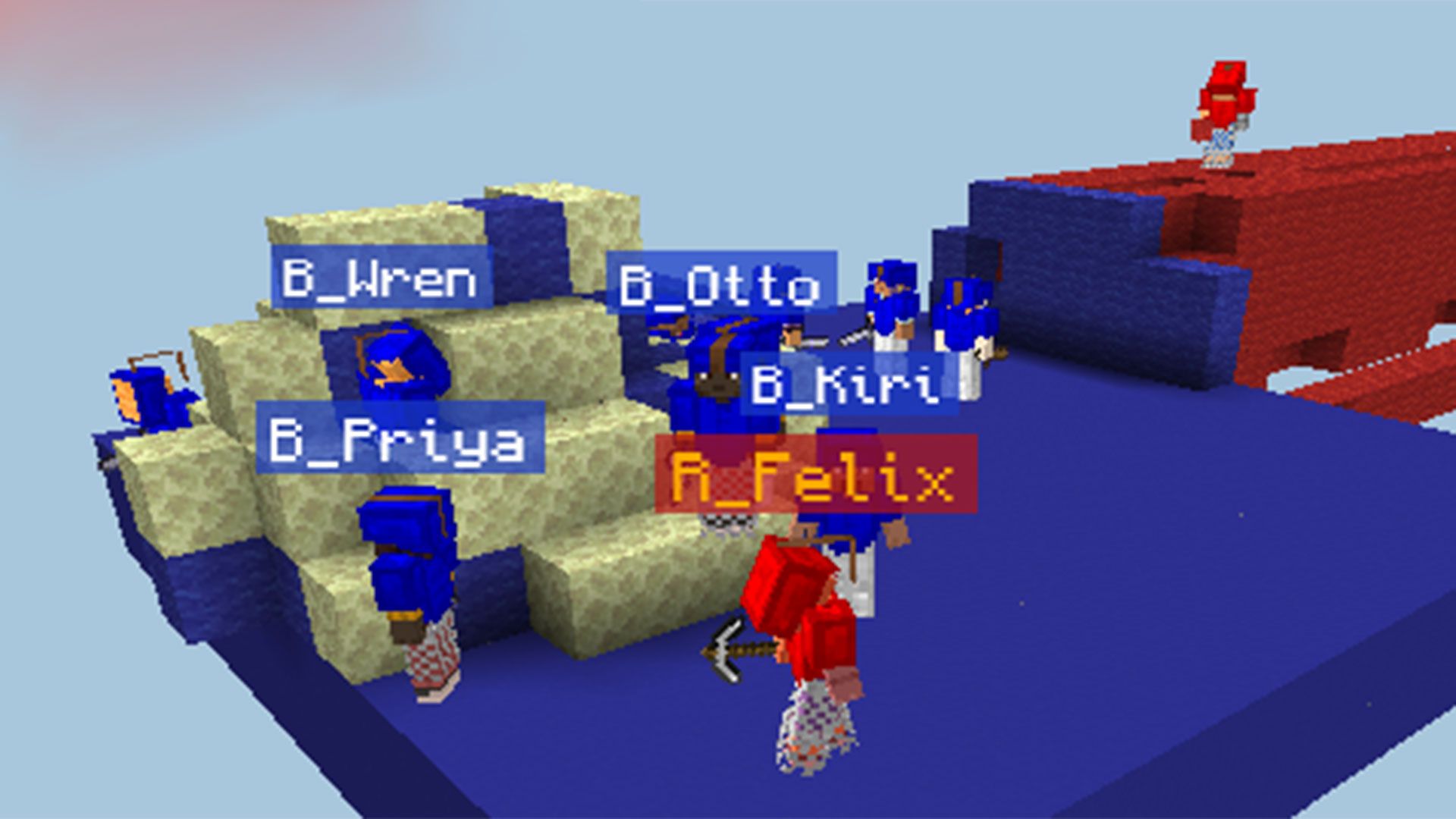
AI agent swarms unleashed in Minecraft to ‘build a thriving civilization’ — 50-agent teams fail after falling into paralyzing bureaucracy: It is hoped game testing can provide insight into recent AI.

Tom's Hardware AI agent swarms unleashed in Minecraft to ‘build a thriving civilization’ — 50-agent teams fail after falling into paralyzing bureaucracy www.tomshardware.com
6

[Episode] Dragon Ball Super: Beerus - Episode 4 discussion

preview

Dragon Ball Super: Beerus, episode 4

banner image

Alternative Names

DBS Beerus


Additional Links

- Info - AniList - Info - Kitsu - Info - MyAnimeList - Info - Official Site (English) - Info - Official Site (Japanese) - Social - Twitter (Japanese) - Streaming - Crunchyroll - Streaming - Netflix


Reminder: Please do not discuss plot points not yet seen or skipped in the show. Failing to follow the rules may result in a ban.


All discussions

Episode Link
1 Link
2 Link
3 Link
4 Link
5 Link

This post was created by a bot. Message the mod team for feedback and comments. The original source code can be found on GitHub.

0

46 novaj artikoloj kaj 26 novaj paĝoj en Esperanto: jen tiuj de oktobro

preview

Saluton el Valencio!

Ni daŭre publikigas multajn novajn artikolojn en Esperanto en nia retejo. Jen ĉiuj, kiujn ni publikigis en oktobro, de la plej nova al la plej malnova. Tiujn de septembro vi trovas ĉi tie.

Artikoloj (46)

Novaj paĝoj (26): la tuta Internacia Pedagogia Revuo, KAE-Informilo, biografio, glosaro kaj gvidiloj

Artikoloj pri Valencio en Vikipedio (9)

Ni tradukas en Esperanton artikolojn pri Valencio el la katalunlingva kaj la hispanlingva Vikipedioj. Jen tiuj de nia listo, kiuj jam aperis:

Komentoj, korektoj kaj ideoj estas bonvenaj: skribu ĉi tie.