






0
0






Mostly involving Discord
Mostly involving Discord

cross-posted from: piefed.zip/c/…/love-rouge-one
cross-posted from: piefed.zip/c/…/love-rouge-one


Written by Lucy Thompson, Senior Research Scientist, University of New Brunswick, Canada
Earth planning date: Friday, Sept. 25, 2026
Before we landed, the area of Gale crater that we planned to explore was divided up into rectangular parcels with designated names. The names were chosen after small towns associated with significant geological features. Our selected targets (mesas, bedrock, soil, boulders, etc.) within those quads were then given unofficial names based on the theme of the quad. See the link here for more details on naming conventions on Mars. Curiosity has long since climbed above the quads that were selected before landing, and before her 14-year, 38-kilometer (24.6-mile) trek, which included more than 1 kilometer (0.6 miles) of elevation gain.
We recently entered the new Cache Creek quad, named after an area of geological diversity in British Columbia, Canada. The area in Canada includes exposures of oceanic crust, marine sediments, volcanic rocks, and glacial deposits, as well as being home to lakes with unusual chemistry that may be analogous to lakes that once existed on Mars. It also lies at the southern end of the 1860s Gold Rush Trail, where miners and prospectors flocked to this part of British Columbia in search of riches. This week we successfully drilled into our 48th rock target in Gale crater (“Basque Lakes”), from the Cache Creek quad. While we may not literally strike gold, we are all eagerly anticipating the outcome of the CheMin X-ray diffraction analysis of our drilled sample that will take place in this weekend plan. What gold mine of minerals will the sample contain? What can they tell us about the depositional and alteration history of this rock exposure — might there be similar minerals present as those associated with some of the lakes in the Cache Creek area of British Columbia?
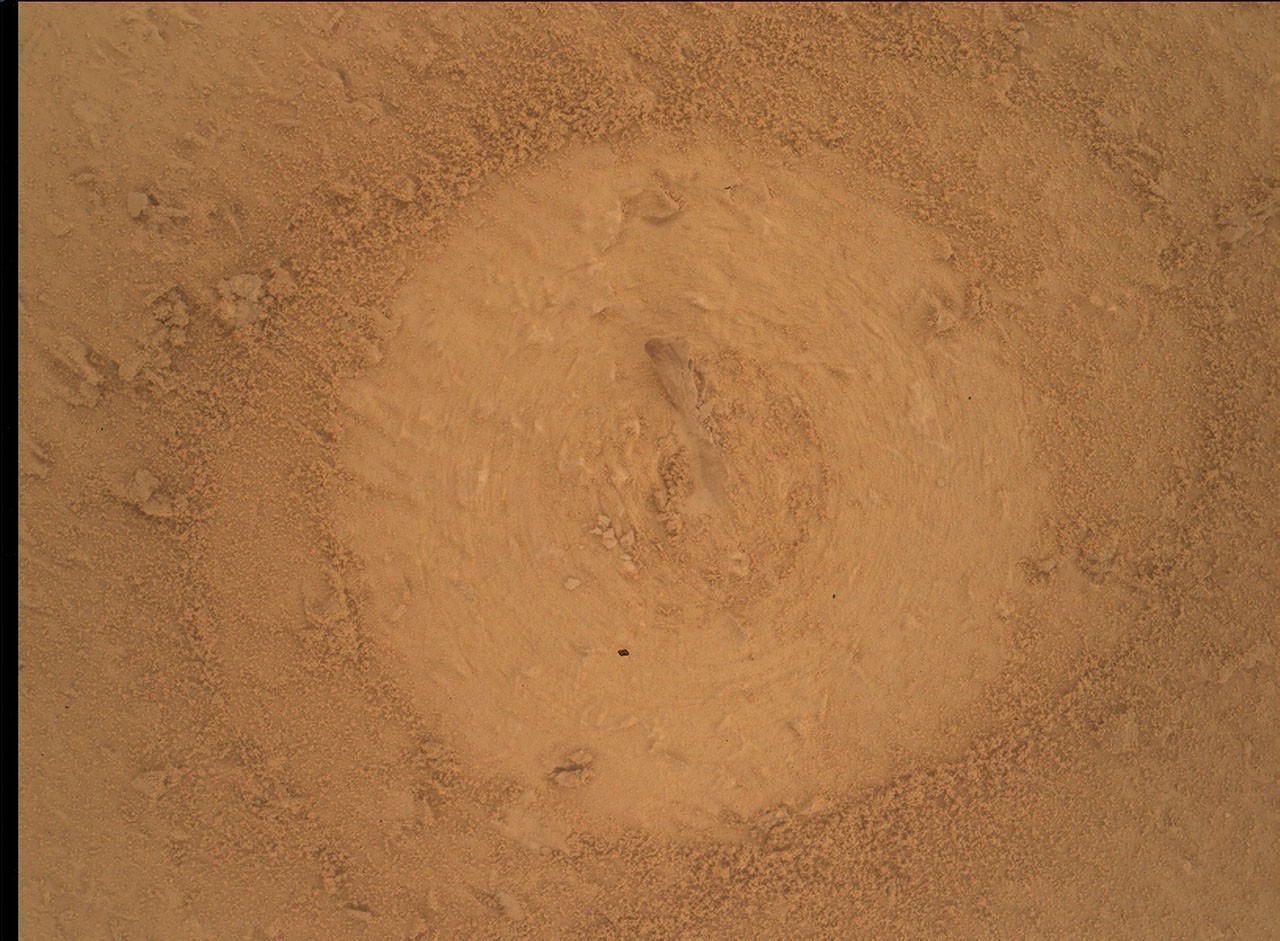
As an APXS uplink lead and strategic planner this week I helped to plan the triage contact science on the potential Basque Lakes drill target and communicate the results to the rest of the team. We placed APXS in contact with the rock target to measure its chemistry, and the MAHLI camera to within 1 centimeter (about 0.4 inches) to examine in detail the textures. ChemCam also fired its laser at the Basque Lakes drill target to further characterize composition. MAHLI also imaged the target after the engineers checked the stability of the rock with a pre-load test. The results from all these activities helped to determine whether to proceed with drilling.
Despite significant power constraints associated with drilling and the accompanying analyses, as well as an aging rover, we were also able to plan additional activities. Mastcam imaged the surrounding terrain to provide context for our new drill sample. ChemCam was able to analyze the chemistry of another nearby bedrock target, “Peace River,” and use its imaging and passive spectroscopic capabilities to look at the new drill hole and surrounding tailings. ChemCam remote imaging was also used to examine an interesting-looking deposit of jumbled blocks at the base of a nearby butte, “Cordillera.”
We also utilized Navcam and Mastcam imaging in the continued monitoring of environmental and atmospheric conditions in Gale crater.
Analysis of the Basque Lakes drill sample should continue next week with delivery of material to SAM, which will reveal more nuggets of information regarding the history of this particular rock sample. Curiosity will likely be at this location for another week, before we dump the sample and drive away to continue our exploration of Mount Sharp and Gale crater.

For context, I have been using a pretty niche OS on my phone for a long time but recently the community and the 3rd party appstores are flooded with LLM content - and fans. Its ethical, geopolitical and societal dangers are handwaved away at best, or ridiculed or countered with stupid non-arguments ("you wouldn’t tell a farmer not to use a tractor").
Everybody is in a hurry to churn out the next pretty port of an Android app.
The actual OS devs have not taken any sort of public stance, not even in comments.
And it got me thinking. If this continues maybe LineageOS & F-Droid (no Gapps of course) might turn out to be a better alternative again, despite it being essentially Android and Not True Linux.
But how do they position themselves with AI?
If you want to suggest a 3rd option, please do so - but only if it works reliably as a daily driver - incl. telephony and messaging - on at least a small number of consumer devices that are no older than 8 years.
And only if they clearly position themselves against AI in code and generally.


The FBI and U.S. prosecutors say Wanying Zhang, also know as Heather, surveilled the Taiwanese president’s son and his family.
The FBI and U.S. prosecutors say Wanying Zhang, also know as Heather, surveilled the Taiwanese president’s son and his family.



CircuitMess launches MAKERphone 2.0, a solder-free ESP32-S3 phone with 4G, MicroPython and C++ support, plus modular hardware expansion.
CircuitMess launches MAKERphone 2.0, a solder-free ESP32-S3 phone with 4G, MicroPython and C++ support, plus modular hardware expansion.

“Democracy has been hailed as, like, the holy grail for the last couple hundred years, but democracies are inefficient,” said the crypto billionaire. “If you get a benevolent dictator, it’s actually extremely efficient.”
“Democracy has been hailed as, like, the holy grail for the last couple hundred years, but democracies are inefficient,” said the crypto billionaire. “If you get a benevolent dictator, it’s actually extremely efficient.”

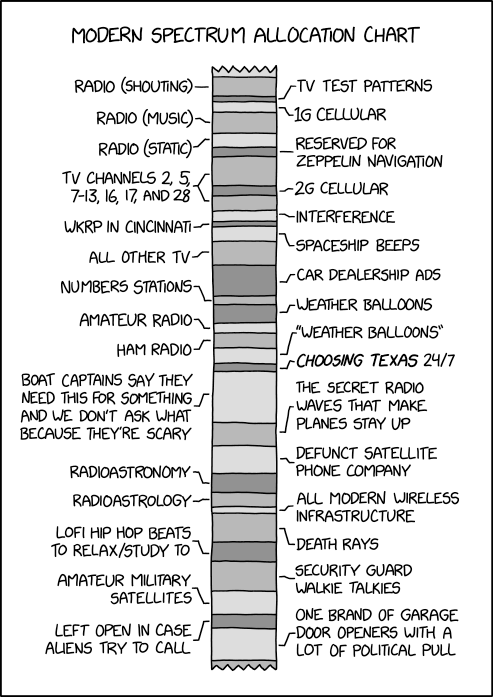
xkcd #3307: Spectrum Allocation
Title text:
Rumor has it that they’re finally auctioning off the zeppelin navigation bands, but everyone is worried that the scary boat captains will express interest.
Transcript:
Transcript will show once it’s been added to explainxkcd.com
Source: xkcd.com/3307/
xkcd #3307: Spectrum Allocation
Title text:
Rumor has it that they’re finally auctioning off the zeppelin navigation bands, but everyone is worried that the scary boat captains will express interest.
Transcript:
Transcript will show once it’s been added to explainxkcd.com
Source: xkcd.com/3307/


cross-posted from: sh.itjust.works/post/67840359
In a letter addressed to Attorney General Todd Blanche, Homeland Security Secretary Markwayne Mullin and Assistant Attorney General for Civil Rights Harmeet Dhillon, Mills asks the DOJ for an “investigation and intervention” of Georgia’s voting systems in connection with ballot secrecy, preservation of election records, and sharing of voter registration and motor vehicle data with outside organizations.
The letter also asks the DOJ to hold Georgia Secretary of State Brad Raffensperger “accountable” if he withholds any information or prevents the review. Raffensperger, a Republican, resisted enormous pressure from President Donald Trump to “find” enough votes in Georgia to overturn his 2020 election loss.

Cleaning out the vents, changing the thermal paste, replacing the system battery.
Cleaning out the vents, changing the thermal paste, replacing the system battery.
I gotta record the required online packets to help bring back multiplayer games.
I gotta record the required online packets to help bring back multiplayer games.
EA has shutdown the servers on April 28, 2026.
Maybe we should start a matrix group for the project?
EA has shutdown the servers on April 28, 2026.
Maybe we should start a matrix group for the project?

cross-posted from: lemmy.world/post/52757891
A great mother. Can you imagine carrying around a few dozen babies until they are big enough to take care of themselves? This Rabida Rabidosa has lost a leg and a pedipalp.
cross-posted from: lemmy.world/post/52757891
A great mother. Can you imagine carrying around a few dozen babies until they are big enough to take care of themselves? This Rabida Rabidosa has lost a leg and a pedipalp.

Video description:
In this first episode, join us for updates on Mission System 2.0, Maelstrom, the new flight model, engineering gameplay, AI blades, suit lockers, medical respawning, and more. Find out what’s changing, what’s coming, and how we’re building toward the future of the ’verse.
[00:00] - Introduction
[00:38] - New Flight Model
[03:38] - Missions 2.0
[09:45] - Engineering
[14:05] - AI Blades
[14:55] - Storage for armors in ships
[18:33] - Maelstrom
[21:09] - Medical respawn and medical screen rework
[23:15] - Recurring issues with operations and sandbox activities
[28:08] - Why is there no storage for players in Siege of Orison
[32:56] - Logging back at the same location you logged out

I saw this unexplained figure in an AI-generated youtube video (mostly as presented, but obscured by information panels or other characters), so I don’t have the prompt that actually made it.
It seems like the head does not match the concept of the body, but when I asked AI to generate a matching head it looked laughable.
If we had a concept of ai-editing-challenge, maybe this could be such a challenge.

Hey hey,
did another performance pass over the game, so here’s a quick patch!
Patch 1.8.3: Smooth as ice
If the game doesn’t run smooth now you get your money back (:
Have fun! 💚
Hey hey,
did another performance pass over the game, so here’s a quick patch!
Patch 1.8.3: Smooth as ice
If the game doesn’t run smooth now you get your money back (:
Have fun! 💚

On a September evening, Adam Johnson, 40, settled on his porch chair in Morgantown, West Virginia, to go over his ballot for the upcoming midterm election.
Chatting through all the races and the different candidates, he worked to figure out who best represented his values. But rather than discussing it with a friend or family member, he held an hours-long discussion with ChatGPT — a chatbot powered by a large language model (LLM) owned by OpenAI, an AI research company.
A graphic designer studying to be an illustrator, Johnson said ChatGPT is a significant part of his life. He uses it for meal planning, assistance in job hunting and various other tasks around the house^[maybe this is a valid use case, if buying groceries is a bit too confusing].
After prompting the AI-powered chatbot to make a list of all the races on his ballot this year, Johnson dug deeper.
Johnson is one of a growing number of voters using chatbots to research their ballots for the first midterm election since AI has taken the country by storm. About half of American adults report using AI-powered chatbots and about 42% of users said they use it to search for information, according to the Pew Research Center.
Several voters NPR spoke with said they rely on chatbots for down-ballot races with thinner news coverage, to make tables comparing candidates for governors’ races and to verify or debunk viral claims. Some have been using it to create tools to help others look up their own ballots. Experts say the properties that make chatbots useful also make them subtly persuasive and eager to please.
“It might select some things that would reinforce and persuade you even more towards the way that you were leaning already,” said Rafael Batista, a postdoctoral fellow at John Hopkins University, who studies the societal and behavioral impacts of AI. “So you leave more confident, without necessarily learning more about the world.”
Having spent the vast majority of my life in states where the Secretary of State’s main job is administering elections and therefore sending out comprehensive voter’s guides four to six weeks ahead of (at least general) statewide elections, I was alarmed to discover Texas does no such thing.
That’s left to the League of Women Voters, and, well, candidates are less than enthusiastic about responding to a nonprofit that will post on a website than making sure their statements are included in something mailed out to every single registered voter.
In states with mail-in voting, such as Oregon, the tempo was whatever you wanted it to be. Generally, the voter’s guide would arrive a week or two before my ballot, which itself arrived three to four weeks ahead of the deadline to return my ballot.
Some years, I’d get through most of it in a single sitting, but when you’re dealing with eight propositions, two of which are sock puppets that look similar to two placed on the ballot in good faith, things can take a bit more time. And this is where the pro/con arguments people can pay to place past the text of the measure and the SoS interpretation of impacts including financial costs and benefits.
That’s real information presented to inform. ChatGPT is neither.
Obligacje od premiera Tuska już dwa lata temu miały łatać budżet Narodowego Centrum Nauki na badania podstawowe. Ale pieniędzy nie ma, a NCN musi świecić oczami przed naukowcami, którzy dostali granty. Dodaj nas do ulubionych źródeł w Google
Badaczki i badacze, którzy niedawno zdobyli granty w Narodowym Centrum Nauki, dostali we wrześniu zaskakujące wieści. Agencja poinformowała ich, że “znalazła się w szczególnej sytuacji”. W związku z tym, wolałaby podpisać z nimi umowy grantowe nie w tym, a w przyszłym roku. A jeśli jednak zdecydują się zrobić to teraz, muszą wiedzieć, że pierwsze wypłaty środków i tak dostaną w 2027 roku. NCN prosi więc o przesłanie nowych kosztorysów uwzględniających te zmiany.
– Zaczynam projekt teraz, ale tylko dlatego, że moja uczelnia zgodziła się założyć te pieniądze za NCN - mówi “Wyborczej” naukowiec z Warszawy. Opowiada, że poczuł się postawiony pod ścianą, bo miał już wszystko przygotowane i chciał, jak najszybciej zacząć kompletować zespół. - Jak to możliwe, że NCN stracił płynność? - zastanawia się.
Jak dowiaduje się “Wyborcza”, problem dotyczy ok. 150 projektów.
Tusk: “Pieniądze, które można chronić przed surowym spojrzeniem ministra finansów”
Cała ta sytuacja to efekt sprawy, która wydawała się już dawno wyjaśniona i zamknięta.
Pod koniec 2024 roku premier Donald Tusk ogłosił, że znalazł dodatkowe pieniądze na badania podstawowe w Polsce. Narodowe Centrum Nauki dostało 500 mln zł w obligacjach skarbowych. - Te pieniądze można uchronić przed surowym spojrzeniem ministra finansów - mówił podczas spotkania z naukowcami - laureatami nagród Prezesa Rady Ministrów. Tłumaczył, że chce w ten sposób zniwelować skutki “surowej dyscypliny budżetowej”.
Naukowcy odetchnęli wtedy z ulgą. Długo walczyli o pieniądze dla NCN. Pisali listy do premiera, przekonywali posłów w Sejmie, organizowali konferencje w tej sprawie. Robili to dlatego, że w projekcie budżetu na 2025 r. NCN-owi nie dopisano ani złotówki więcej. Mimo że Rada Naukowa wyliczyła wówczas, że potrzeba dodatkowych 300 mln zł i “konsekwentnego, długofalowego zwiększenia nakładów w kolejnych latach”. W przeciwnym razie będzie trzeba rozważyć zawieszenie niektórych konkursów (m.in. Miniatury i Sonatiny, oba skierowane do młodych doktorów) i ograniczenie liczby pozostałych.
Rząd znalazł dodatkowe 50 mln zł, drugie tyle dodali posłowie podczas sejmowych prac nad budżetem. Wtedy sytuację uratował premier: zdecydował się dorzucić NCN-owi dwa razy więcej niż brakowało. Tyle że w obligacjach skarbowych.
– Chciałbym, żeby to było potraktowane jako znak, że nie trzeba mnie przekonywać, że w tym wielkim wyścigu, także o bezpieczeństwo Polski i Europy, wasz wysiłek, praca i myślenie będą miały absolutnie kluczowe znaczenie - mówił naukowcom podczas spotkania w kancelarii.
Obligacje od premiera wracały jako argument w kolejnych dyskusjach z naukowcami. Bo rok później sytuacja się powtórzyła. Budżet Centrum na kolejny rok ani drgnął, naukowcy pisali listy, przekonywali posłów. Tym razem bez skutku: NCN miał spieniężać obligacje i tak łatać swoje wydatki.
Czy na pewno można wydać obligacje na badania naukowe?
Ale z obligacjami dla NCN od początku był problem. Pieniądze miały początkowo zasilić konkursy rozstrzygane na przełomie 2025 i 2026 roku. Ale nie było jasne, czy w ogóle można ich użyć w ten sposób. Wiceministra nauki Karolina Zioło-Pużuk przyznała wówczas w rozmowie z PAP, że problem jest poważny. I wymaga “bardzo głębokich zmian w ustawie”. Bo z przepisów wynika, że NCN może finansować badania naukowe tylko ze środków przekazanych mu z budżetu państwa w formie dotacji celowej.
Wyjaśnienie tej sprawy zajęło pół roku. Dopiero w połowie 2025 roku Ministerstwo Finansów oświadczyło, że środki z obligacji mogą zostać przeznaczone na granty bez konieczności zmiany prawa.
Resort nauki zapewniał, że choć obligacje mają terminy wykupu od 2027 roku, będzie można skorzystać z nich wcześniej.
“Narodowe Centrum Nauki może korzystać z przekazanych przez premiera obligacji skarbowych. Dzięki interpretacji Ministerstwa Finansów i wyjaśnieniu wątpliwości prawnych, środki będą uruchamiane sukcesywnie od 2026 roku” - ogłosił wówczas NCN na swojej stronie.
W grudniu doprecyzował, że w 2026 r. planuje uruchomić z tego źródła około 150 mln zł. “Pieniądze zostaną przeznaczone w szczególności na wsparcie projektów realizowanych przez naukowców na wczesnych etapach kariery” - czytamy w komunikacie.
Ministerstwo finansów “nie zidentyfikowało przestrzeni” na obligacje
Plany sobie, rzeczywistość sobie. Kiedy NCN zawnioskował o zmianę planu finansowego i uwzględnienie w nim środków z obligacji, usłyszał od Ministerstwa Finansów, że to w tym roku niemożliwe.
Ministerstwo Finansów odsyła nas z kwitkiem. W odpowiedzi z biura prasowego czytamy, że resort nie ma informacji o wystąpieniu w NCN szczególnej sytuacji, o którą pytamy oraz o “ewentualnych jej przyczynach”. I dalej, że granty NCN to przecież sprawa Ministerstwa Nauki.
MNiSW tłumaczy “Wyborczej”, że wszystkiemu winna stabilizująca reguła wydatkowa (SRW). Czyli mechanizm prawny z zakresu finansów publicznych. Określa limit wydatków dla jednostek sektora publicznego, a to ma zapewniać stabilność finansową państwa.
W odpowiedzi z biura prasowego resortu nauki czytamy, że wcześniejsze uzgodnienia z Ministerstwem Finansów “dotyczyły przede wszystkim sposobu ujmowania obligacji w księgach rachunkowych NCN oraz ogólnego sposobu postępowania w zakresie wnioskowania o wcześniejszy wykup obligacji”.
“Każde wystąpienie o wcześniejszy wykup obligacji wymaga odrębnych uzgodnień z resortem finansów, a ewentualna zgodna jest uzależniona od dostępnej przestrzeni wydatkowej, wyznaczanej przez stabilizującą regułę wydatkową” - tłumaczy resort nauki. I dodaje: “Z pisma MF wynika, że w aktualnej sytuacji finansowej na rok bieżący takiej przestrzeni nie zidentyfikowano”.
Co w takiej sytuacji ma zrobić NCN? Czekać. W ministerstwie słyszymy, że przecież w przyszłym roku budżet Centrum wzrośnie o 400 mln zł. A to pozwoli nie tylko na zwiększenie budżetów konkursów grantowych, ale też “pokrycie zobowiązań wobec grantobiorców przesuwanych w czasie”.
Wygląda też na to, że obligacje jednak nie będą łatać budżetu NCN wcześniej. “Zgodnie z rekomendacją Ministerstwa Finansów i Gospodarki, NCN po raz pierwszy wykorzysta środki pochodzące z wykupu obligacji w styczniu 2027 roku, kiedy przypada termin zapadalności pierwszej serii obligacji o wartości nominalnej 75 mln zł” - informuje nas Anna Korzekwa-Józefowicz, rzeczniczka NCN.
A MNiSW dodaje: “Zgoda na wcześniejszy wykup kolejnych transz będzie przedmiotem odrębnych analiz resortu finansów w zależności od kondycji finansowej budżetu państwa i potrzeb NCN”.
Pieniądze w przyszłym roku: część zimą, reszta wiosną
NCN szacuje, że sytuacja dotyczy wspomnianych ok. 150 projektów. Ale ostateczna liczba może się zmienić, bo proces formalnego zawierania umów jest w toku. “Dokładamy wszelkich starań, aby przeprowadzić ten proces możliwie sprawnie. Opiekunowie projektów po stronie NCN pozostają w stałym kontakcie z grantobiorcami” - zapewnia rzeczniczka i dodaje: “Tak jak pisaliśmy w liście do jednostek naukowych, w drugiej połowie tego roku NCN znalazło się w szczególnej sytuacji. Ma ona charakter przejściowy i zmieni się w ciągu kilku miesięcy”.
W praktyce 75 mln zł z obligacji, które będzie można uruchomić na przełomie stycznia i lutego 2027 r., pójdzie w całości na te umowy. Brakującą kwotę NCN dosztukuje z obiecanych dodatkowych 400 mln zł. A te przyjdą dopiero na przełomie marca i kwietnia 2027 r.




cross-posted from: lemmy.dbzer0.com/post/76516444
cross-posted from: lemmy.dbzer0.com/post/76516412
cross-posted from: lemmy.dbzer0.com/post/76516444
cross-posted from: lemmy.dbzer0.com/post/76516412
cross-posted from: lemmy.dbzer0.com/post/76516412
cross-posted from: lemmy.dbzer0.com/post/76516412