0

preview
When they took away the candy names and nerfed multitasking.
When they took away the candy names and nerfed multitasking.

FEN = 4R3/2K2pB1/4BP2/2p1kNpp/1p2p1b1/pq2R1P1/Q4P1N/8 w - - 0 1
FEN = 4R3/2K2pB1/4BP2/2p1kNpp/1p2p1b1/pq2R1P1/Q4P1N/8 w - - 0 1

When they took away the candy names and nerfed multitasking.
When they took away the candy names and nerfed multitasking.
It is the longest officially software supported iPhone.
The model could be the longest running smartphone on the market.
It is the longest officially software supported iPhone.
The model could be the longest running smartphone on the market.






Sorry it’s late, big recruiting weekend for us this weekend (not a football coach). The football weekend was kinda sloppy, but that’s part of what makes our sport so special. As always poll and pick em links can be found here!
Poll Link: docs.google.com/forms/d/e/…/viewform?usp=publish-…
In the pick 'em I was pleased to score a 6 myself this week! But then heronhousehamilton decided to make it less special for me by doing it as well.
| User | Week 5 | Sum | Average |
|---|---|---|---|
| g0d0fm15ch13f | 6 | 24 | 4 |
| HeronHouseHamilton | 6 | 30 | 5 |
| olmecssb | 4 | 22 | 4.4 |
| Gloriousgashole | 9 | 4.5 | |
| Yeehawboy | 4 | 4 | |
| milkisklim | 4 | 9 | 3 |
| wjrii | 5 | 5 | |
| redkid1234 | 2 | 2 | |
| njm1314 | 4 | 11 | 3.666666667 |
| WVbrU | 3 | 5 | 2.5 |
| Sharkticon | 2 | 2 | 2 |
This week’s pick 'em can be found here at the following link, good luck everyone!
Pick 'em: docs.google.com/forms/d/e/…/viewform?usp=publish-…

I wrote this article. I can’t take credit for the ‘yes’ idea, but some of these scammer’s reactions were funny. I feel like I caught a few of them at the end of a long day.
I wrote this article. I can’t take credit for the ‘yes’ idea, but some of these scammer’s reactions were funny. I feel like I caught a few of them at the end of a long day.
cross-posted from: lemmy.bestiver.se/post/1380235
cross-posted from: lemmy.bestiver.se/post/1380235


As a hobbyist developer, I dunno whether this is good or sad programmer humor…
As a hobbyist developer, I dunno whether this is good or sad programmer humor…
I’m not seeing new posts from fedia.io communities since the bot problem from two weeks ago. !firefox@fedia.io is the community I mainly go to.
I’m not seeing new posts from fedia.io communities since the bot problem from two weeks ago. !firefox@fedia.io is the community I mainly go to.

Lək̓ʔəŋən [LEKWUNGEN] TERRITORY / VICTORIA, B.C. — BC Greens Leader Emily Lowan, candidate for Saanich North and the Islands, today unveiled the Fair Share Act, a plan to require British Columbians whose wealth is more than $50 million to pay their fair share. The Act is estimated to raise $22.2 billion in its first year and $5.4 billion every year after that. This revenue can help fund universal childcare, free public transit, and housing people can afford.
“Families and workers across BC keep hearing the same answer from this government: the money isn’t there,” said Lowan. “But the cupboard isn’t bare, the government just hasn’t looked in the multi-car garages. The money exists in this province. It sits with the people who make more in their sleep than a worker makes in a year. We just haven’t had a government with the political will to ask for it.”
Canadian household wealth grew by more than $1 trillion in 2025, largely because of appreciating financial assets. The wealthiest 1 per cent of families now hold almost a quarter of the country’s net wealth.
Emma Davis, board member of Patriotic Millionaires Canada and B.C. resident stated: “I don’t want to watch my wealth grow endlessly while my friends and neighbors struggle to survive. A wealth tax on the ultra-rich is a great way to start building a better B.C.”
“Unlike Premier Eby’s tax, which focuses on the income of those earning more than $190k, we are looking at the wealth of households with over $50 million,” said Lowan. “It targets what the ultra-wealthy own, not what they’re paid, because massive fortunes don’t grow through wages, they grow through untaxed stocks and real estate. It also raises far more: an estimated $22.2 billion in its first year, compared with roughly $225 million from the Premier’s plan. That’s 98 times more—enough to make sure the services people count on, and the workers who deliver them, aren’t left out to dry.”
“The Fair Share Act fixes the tax loopholes that the ultra-wealthy exploit,” said Lowan. “Nurses, teachers, and tradespeople already pay their share. Asking someone with multiple homes and massive stock portfolios to give a sliver of their wealth to ensure British Columbians can live an affordable, safe, dignified life is what fairness looks like.”
The BC Greens will:
Please find the Fair Share Act policy brief below.
-30-
The BC Greens believe that working people should not be asked to carry more of the burden while a small number of the ultra-wealthy are able to structure their finances to pay far less than their fair share. Those who have benefited most from our economy have a responsibility to pay their fair share back into the communities that made that success possible just like everyone else.
Most British Columbians contribute to society through taxes on their income. But for the very wealthy, much of their economic gain comes from rising values of shares, businesses, real estate, and other assets rather than a paycheque. This allows enormous fortunes to grow in ways that are treated very differently by our tax system than ordinary employment income.
The BC Greens will introduce the Fair Share Act to ensure that people with more than $50 million in net wealth contribute their fair share. The Act will establish a one-time tax on extreme wealth, followed by a smaller annual wealth tax. It will affect only a very small number of the wealthiest households in British Columbia and would not increase taxes on ordinary British Columbians; instead it will provide much needed revenue to support community services, reduce costs for British Columbians, or help us shrink the deficit.
Canadian household wealth grew by more than $1 trillion in 2025, largely because of appreciating financial assets, and the wealthiest 1 per cent of families own almost a quarter of the country’s net wealth. British Columbia is a wealthy province, but an increasing share of that prosperity is concentrated among those who already have the most. Yet British Columbians are still being asked to make do with underfunded health care, education and public services while the public is told we don’t have the resources to invest in the housing, infrastructure and economy that our future depends on. Cutting services, running ever-larger deficits, or asking ordinary British Columbians to pay more are not the only choices before us.
Paying tax is part of the shared responsibility. The infrastructure we build together, an educated and healthy workforce, strong public institutions and thriving communities all help create the conditions in which wealth can be built. Those who have accumulated extraordinary wealth have benefited enormously from these foundations, but our tax system does not currently require them to contribute their fair share toward maintaining them. The Fair Share Act would help to ensure that those who have benefited most from our economy contribute their fair share to building its future.
The BC Greens will:


The requirements:
- My business uses a .CA domain as its primary domain name
- My business is Canadian
- My business website has an e-commerce checkout (for shipping or curbside pickup)
If you reach out to some Canadian businesses, you can leave a comment here to let people know you already reached out.

The gender reveal party developed in the late 2000s. An early example was recorded in the 2008 posts of Jenna Karvunidis on her ChicagoNow blog High Gloss and Sauce announcing the sex of her fetus via a cake; she had previously had several miscarriages and wished to celebrate that her pregnancy had developed to the point that the sex of the fetus could be determined.
In 2019, Karvunidis observed an increase in extreme reveal events over the preceding five years, with parents “burning down forests and exploding cars, bringing alligators into the mix”. She expressed regret at having helped start the trend, learning how the LGBT and intersex communities feel, and finally revealing the daughter they announced back in 2008 to be a gender-nonconforming individual who wears suits while still identifying as female.
I am scheduling posts for a TV show where the full details are not out yet. I will need to periodically schedule more episodes.
Test 1: @otter@lemmy.ca
I am scheduling posts for a TV show where the full details are not out yet. I will need to periodically schedule more episodes.
Test 1: @otter@lemmy.ca

Historical low, not new historical low.
Historical low, not new historical low.

The separatist movement is putting the Conservatives Party’s loyalties—and its rhetoric—to the test
The separatist movement is putting the Conservatives Party’s loyalties—and its rhetoric—to the test

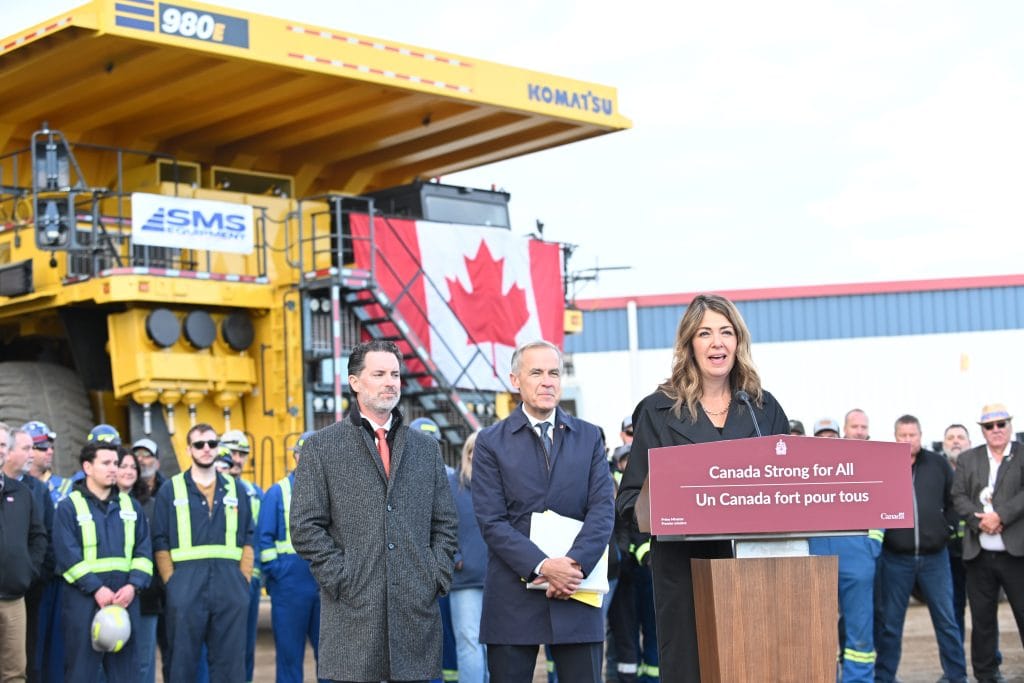




Mostly involving Discord
Mostly involving Discord

cross-posted from: piefed.zip/c/…/love-rouge-one
cross-posted from: piefed.zip/c/…/love-rouge-one



Written by Lucy Thompson, Senior Research Scientist, University of New Brunswick, Canada
Earth planning date: Friday, Sept. 25, 2026
Before we landed, the area of Gale crater that we planned to explore was divided up into rectangular parcels with designated names. The names were chosen after small towns associated with significant geological features. Our selected targets (mesas, bedrock, soil, boulders, etc.) within those quads were then given unofficial names based on the theme of the quad. See the link here for more details on naming conventions on Mars. Curiosity has long since climbed above the quads that were selected before landing, and before her 14-year, 38-kilometer (24.6-mile) trek, which included more than 1 kilometer (0.6 miles) of elevation gain.
We recently entered the new Cache Creek quad, named after an area of geological diversity in British Columbia, Canada. The area in Canada includes exposures of oceanic crust, marine sediments, volcanic rocks, and glacial deposits, as well as being home to lakes with unusual chemistry that may be analogous to lakes that once existed on Mars. It also lies at the southern end of the 1860s Gold Rush Trail, where miners and prospectors flocked to this part of British Columbia in search of riches. This week we successfully drilled into our 48th rock target in Gale crater (“Basque Lakes”), from the Cache Creek quad. While we may not literally strike gold, we are all eagerly anticipating the outcome of the CheMin X-ray diffraction analysis of our drilled sample that will take place in this weekend plan. What gold mine of minerals will the sample contain? What can they tell us about the depositional and alteration history of this rock exposure — might there be similar minerals present as those associated with some of the lakes in the Cache Creek area of British Columbia?
As an APXS uplink lead and strategic planner this week I helped to plan the triage contact science on the potential Basque Lakes drill target and communicate the results to the rest of the team. We placed APXS in contact with the rock target to measure its chemistry, and the MAHLI camera to within 1 centimeter (about 0.4 inches) to examine in detail the textures. ChemCam also fired its laser at the Basque Lakes drill target to further characterize composition. MAHLI also imaged the target after the engineers checked the stability of the rock with a pre-load test. The results from all these activities helped to determine whether to proceed with drilling.
Despite significant power constraints associated with drilling and the accompanying analyses, as well as an aging rover, we were also able to plan additional activities. Mastcam imaged the surrounding terrain to provide context for our new drill sample. ChemCam was able to analyze the chemistry of another nearby bedrock target, “Peace River,” and use its imaging and passive spectroscopic capabilities to look at the new drill hole and surrounding tailings. ChemCam remote imaging was also used to examine an interesting-looking deposit of jumbled blocks at the base of a nearby butte, “Cordillera.”
We also utilized Navcam and Mastcam imaging in the continued monitoring of environmental and atmospheric conditions in Gale crater.
Analysis of the Basque Lakes drill sample should continue next week with delivery of material to SAM, which will reveal more nuggets of information regarding the history of this particular rock sample. Curiosity will likely be at this location for another week, before we dump the sample and drive away to continue our exploration of Mount Sharp and Gale crater.

For context, I have been using a pretty niche OS on my phone for a long time but recently the community and the 3rd party appstores are flooded with LLM content - and fans. Its ethical, geopolitical and societal dangers are handwaved away at best, or ridiculed or countered with stupid non-arguments ("you wouldn’t tell a farmer not to use a tractor").
Everybody is in a hurry to churn out the next pretty port of an Android app.
The actual OS devs have not taken any sort of public stance, not even in comments.
And it got me thinking. If this continues maybe LineageOS & F-Droid (no Gapps of course) might turn out to be a better alternative again, despite it being essentially Android and Not True Linux.
But how do they position themselves with AI?
If you want to suggest a 3rd option, please do so - but only if it works reliably as a daily driver - incl. telephony and messaging - on at least a small number of consumer devices that are no older than 8 years.
And only if they clearly position themselves against AI in code and generally.
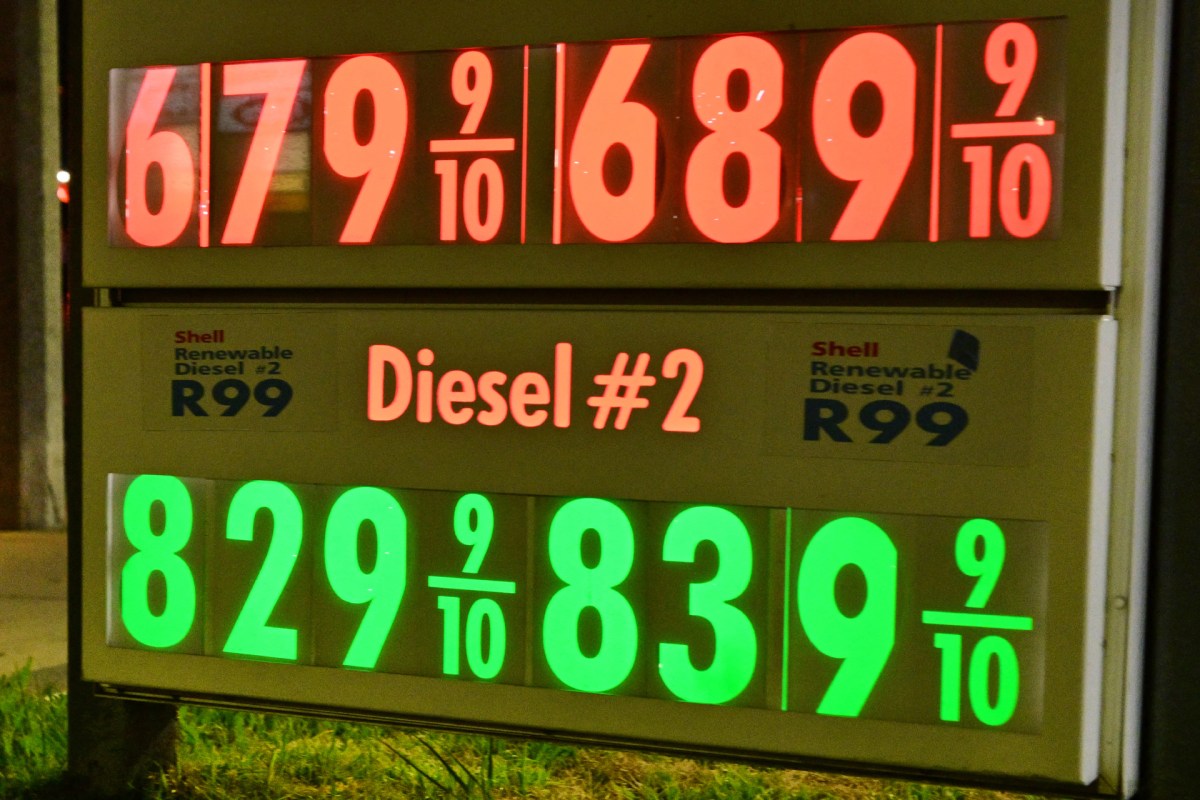
Statistically speaking, you probably don’t drive a diesel. Oil burners represent a tiny chunk of light-duty vehicle sales, even when you factor in heavy-duty pickups and the like. But in the freight world, if you’re hauling heavy loads, chances are you’re fueling up with diesel—or maybe you were, if you drove for one of the 16 trucking companies that went bankrupt last quarter.
According to multiple sources, the rising cost of diesel fuel was the straw the broke the camel’s back for 16 freight operators that filed for either Chapter 7 or Chapter 11 bankruptcy protection in late August and early September. Some were small, single-operator outfits. Others were larger, operating dozens of vehicles.
Four of those operators were based in Texas, where Governor Abbott just proclaimed a statewide disaster in order to ease restrictions on the use of untaxed diesel fuel on public highways. The move was largely intended to provide relief for agricultural transportation, as most untaxed (dyed) diesel is produced for farm use.
But the issue is much bigger than just agricultural trucking. High fuel prices are contributing to inflation in other sectors too. One outfit that filed for Chap. 11 protection in September was a Florida-based Amazon delivery contractor.
So, the solution to high diesel prices is checks notes bringing farm diesel up to parity with road diesel in terms of price.


The FBI and U.S. prosecutors say Wanying Zhang, also know as Heather, surveilled the Taiwanese president’s son and his family.
The FBI and U.S. prosecutors say Wanying Zhang, also know as Heather, surveilled the Taiwanese president’s son and his family.



CircuitMess launches MAKERphone 2.0, a solder-free ESP32-S3 phone with 4G, MicroPython and C++ support, plus modular hardware expansion.
CircuitMess launches MAKERphone 2.0, a solder-free ESP32-S3 phone with 4G, MicroPython and C++ support, plus modular hardware expansion.

“Democracy has been hailed as, like, the holy grail for the last couple hundred years, but democracies are inefficient,” said the crypto billionaire. “If you get a benevolent dictator, it’s actually extremely efficient.”
“Democracy has been hailed as, like, the holy grail for the last couple hundred years, but democracies are inefficient,” said the crypto billionaire. “If you get a benevolent dictator, it’s actually extremely efficient.”