39

Meta may use sweeping new commercial TOS to avoid millions in AI licensing fees

Ars Technica Meta may use sweeping new commercial TOS to avoid millions in AI licensing fees arstechnica.com
preview

Legal experts are sounding alarms that Meta will soon update its commercial terms to require business accounts to allow Meta to train AI on their linked website content, not just their social media posts.

Kicking in on October 30, the TOS update won’t allow businesses to opt out, instead suggesting that businesses stop using Meta services^[oh, the humanity!] if they won’t agree to let Meta bots freely crawl their linked content.

As Nieman Lab reported Thursday, this will affect all business accounts but is particularly shocking for news publishers who could perhaps charge Meta millions in licensing fees to continually access their articles for AI training. Currently news organizations are fighting a battle with OpenAI over whether such training without licensing is fair use, and Meta’s terms seemingly risk granting it sweeping permissions, no matter which way the court leans.

“While journalism isn’t the only industry that will be affected by this update, virtually every news organization has at least one Meta business account^[a k a Stockholm Syndrome after Facebook decided linking out was costing them ad dollars], including Nieman Lab,” the lab said.

Specifically, the updated terms say:

You authorize us (or any entity acting on our behalf) to use automated software (such as web scrapers, bots, robots, spiders, crawlers, and user agents) and create test credentials to access, index, cache, analyze, collect, retrieve, or crawl the domains, web pages, or URLs (and any content available through them) that are associated with your products or services, or that are made available through your or users’ use of Meta Company Products and services, and to periodically pull updates from such domains, web pages, or URLs. Meta may use any content from such domains, web pages, or URLs to provide, develop, improve, research, train, and maintain the integrity of, the Meta Company Products, services, and features provided under these Commercial Terms and any other applicable supplemental terms.

Notably, there is no mention of AI, but it’s inferred from a single use of the word “train” and references to automated scraping and crawling.

Meta’s spokesperson told Nieman Lab that Meta has no plans^[narrator: They do] to use the terms as a legal basis to ignore robots.txt instructions that block scraping on news sites. The company still allows news organizations to opt out of scraping and provides instructions on how to block crawling. A spokesperson told Ars that “there is no change to how Meta uses web crawlers; any suggestion to the contrary is false.”

However, should courts affirm that AI training on non-news articles is fair use, news organizations question if Meta’s stance might change, and the terms could be used to freely grab access to content by legally overriding robots.txt instructions.

0

International Money Transfer

preview

I was using Remitbee, but now I have some doubts about them since:

GoDaddy domain, X socials link, intergrating with WhatsApp (Facebook)

Maybe they are ok, but are there other recommendations? I know credit unions and personal banks will do transfers. Maybe those are better rates?

I was using Remitbee, but now I have some doubts about them since:

GoDaddy domain, X socials link, intergrating with WhatsApp (Facebook)

Maybe they are ok, but are there other recommendations? I know credit unions and personal banks will do transfers. Maybe those are better rates?

0

Nova Scotia to host massive data centre to power Anthropic's AI assistant Claude

CBC Nova Scotia to host massive data centre to power Anthropic's AI assistant Claude | CBC News www.cbc.ca
preview

A massive data centre to provide computing power for the artificial intelligence giant Anthropic is under pre-construction just outside Port Hawkesbury in Cape Breton.

EverWind Fuels will build and own the facility, while Anthropic will lease the first phase for a term of at least 20 years. Anthropic said in a news release the data centre “will power Claude models and serve growing demand from Canadian and global customers.”

0

Can't boot a NetBSD install USB

preview

Please bear with me as I am a NetBSD noob.

I am booting NetBSD from a USB, but I can never get past the root device prompt? It shows pk0, pk1, pk2, halt, reboot, and a few other options. I’ve left the USB for a few minutes and nothing has happened. Does the installer start on its own? Usually Linux installers go straight to the install (or in the case of Arch, an install prompt). I’ve reflashed the USB once to no avail.

0

Time is up 🍂 Neue Umwelt-Messungen: Herbst 2026

preview

Aktuelle Messungen, Studien und Berichte zu Klima, Artensterben, Extremwetter, Erdüberlastung etc., von Mark Benecke, Oktober 2026 (Mirrors: Youtube, Yewtu.be)

Playlist aller bisherigen „Time is up“-Vorträge und anderer Umweltvorträge

Aktuelle Messungen, Studien und Berichte zu Klima, Artensterben, Extremwetter, Erdüberlastung etc., von Mark Benecke, Oktober 2026 (Mirrors: Youtube, Yewtu.be)

Playlist aller bisherigen „Time is up“-Vorträge und anderer Umweltvorträge

0

Learning how templates and operator() work!

preview

#include <iostream>

template <typename T, const int length=5> class vector { public: T v[length]; vector operator +(const vector &obj) { vector tmp; for(int i = 0; i < length; i++) tmp.v[i] = v[i] + obj.v[i]; return tmp; /* This method below only works if length is a fixed size return {v[0] + obj.v[0], v[1] + obj.v[1], v[2] + obj.v[2], v[3] + obj.v[3], v[4] + obj.v[4]};*/ } }; int main() { vector<int> a={1,2,3,4,5}; vector<int> b={1,2,3,4,5};

auto c = a + b;

std::cout << "(int) ";
for(int i = 0; i < 5; i++)
    std::cout << c.v[i] << " ";
std::cout << std::endl;

}

0

I've been helping out with Roguelike Celebration 2026!

preview

Hey folks, something a little different today. Over the last few months I’ve been helping out with organizing this year’s Roguelike Celebration, which is happening this weekend!

Roguelike Celebration is a yearly community-generated weekend of talks, games, and conversations about roguelikes and related topics, including procedural generation and game design. It’s for fans, players, developers, scholars, and everyone else!

Its tickets are under a pay-what-you-want model, so if that description interests you at all you should check it out: https://www.roguelike.club/event2026.html

There are a bunch of great talks lined up this year, but a few highlights are:

  • Brian Bucklew and Corey Frang are sharing the in-progress text templating framework that has been taking on the huge task of localizing Caves of Qud, with its complicated grammar structures.
  • Dan Stormont and Michael Howk are presenting a 45 minute special feature on how the source code of Hack (one of the oldest Roguelikes) was recovered and what it took to make a game written for the PDP-11 playable on modern hardware.
  • Andrew Plotkin is going to explore the commonalities of mazes across many genres to try and discover what it is about mazes that leaves you feeling lost.
  • Matt Carney is going to explore how to balance procedural generation and authorial intent, using Terry Riley’s minimalist musical composition tool In C (1964), as a template

I’ve mostly been doing behind-the-scenes work this year, so you won’t see me in the actual conference, but if you see the little gameboy chiptune segments during break periods (this time brought to you by my 3DS!), that is streaming from my desk this year.

32

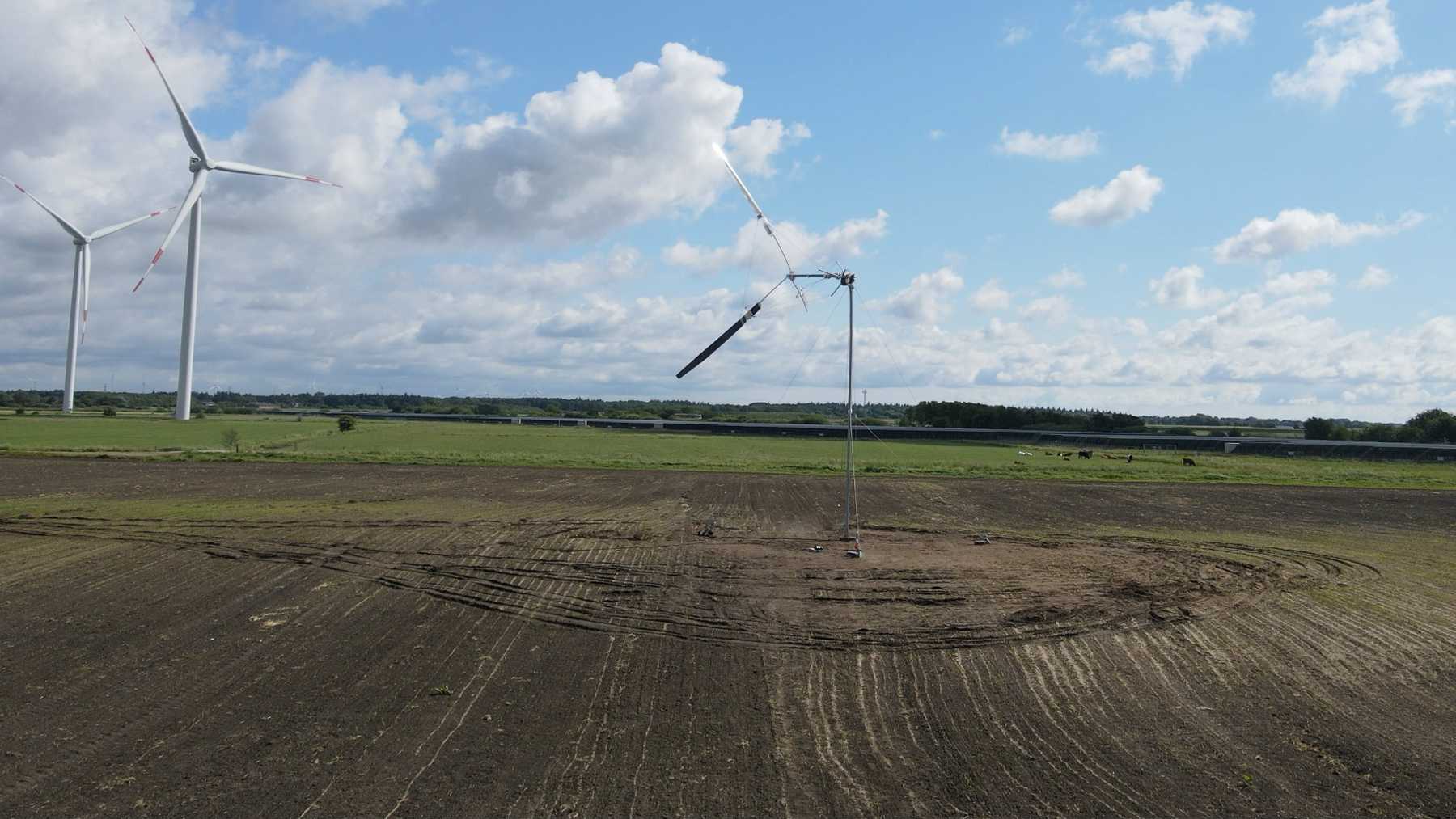
When he (Danish Inventor) was 15, he wanted to impress his mother with a kite, and that crazy idea ended up leading him to design a home turbine.

ECOticias.com When he was 15, he wanted to impress his mother with a kite, and that crazy idea ended up leading him to design a home turbine; what&#039;s more, he has already sold his entire projected production for 2027 www.ecoticias.com
0

Revealed: VW, Ford and Tesla batteries linked to destructive deforestation of indigenous lands

the Guardian Revealed: VW, Ford and Tesla batteries linked to destructive deforestation of indigenous lands www.theguardian.com
preview

Volkswagen, Ford and Tesla are among the electric carmakers whose batteries may contain nickel mined in indigenous woodlands plagued by deforestation, an analysis has found, highlighting the struggle to make vehicles that are free from environmental destruction.

Corporate disclosures and trade flows from the last two years show mines in the battery supply chains of automotive giants are linked to the loss of trees in Sulawesi, a wildlife hotspot in Indonesia that houses the world’s largest nickel deposits. The metal is widely used in cathodes in car batteries because it boosts energy density and increases range.

Ore from the Cahaya and Hengjaya mines was traced through regional smelters and Chinese processing plants run by Zhejiang Huayou Cobalt, a cathode manufacturer that supplies CATL, the world’s largest battery maker. Huayou’s corporate reports list US and European carmakers as end-users, while additional corporate files and trade data show a separate route from Huayou to LG, a South Korean group that also supplies battery products to leading carmakers, via Poland.

Satellite analysis shows the mines have led to widespread deforestation of primary rainforest in nickel-rich lands inhabited by the indigenous Tolaki people.

0

Neutral density filters for darkroom prints

preview

First off: I hope discussion posts are OK? I don’t see any rules except for tagging photo posts.

I have an old beseler B&W enlarger, no color filters or brightness configuration. I have a set of gels for contrast control.

When I’m printing 5x7 and I have my lens at the manufacturer’s recommended aperture size, exposure times are very short (4-6 seconds). It’s hard to get a good dodge/burn in such a short period. I can dial my lens down to f16, but even then I’m starting around 8 seconds for exposure, I’d like maybe 12-16.

I was thinking 1 or 2 stops of neutral density filter could slow down my exposure and give me more time to execute the print. Is that a thing people do?

0

No, the kernel has not gone "Full AI Slop Code"

preview

There appears to be a few bad actors in the Lemmy community spreading ragebait for personal gain

In fact, the same mechanisms added at the beginning to catch bad human written code are the exact same that catch bad AI code

  1. No, the Linux kernel won’t use AI to auto approve code for inclusion. And no plans to do so
  2. The Kernel actually has a huge number of maintainers. As part of the process, all patches are reviewed by a human who provide feedback as part of the process, and patches get bounced back and forth multiple time.
  3. Patches don’t just magically go straight to master. The maintainers generally have their own branches where it goes to, then it goes to staging trees like Linux-Next. It goes through many eyes, and many tests by the end. The idea that AI code is overrunning the kernel is rediculous
  4. Maintainers also check that the code meets coding guidelines and is written properly, and solves the problem they are trying to solve. Yes, they also ensure the code isn’t slop
  5. LLM’s though might be used to identify obvious problems (bugs / coding guideline issues) with the code. These don’t generate “slop” just find issues
  6. The only thing that matters is the human who submitted the code, as they should be checking the code submitted anyway (including LLM generated code).

Writing bad code isn’t something new, and isn’t unique to LLM’s. Coders (and it seems some “journalists”) have been writing slop since computers were invented.

The process hasn’t gotten less stringent (probably even MORE stringent as there is an additional set of robotic eyes that can also check), and the same mechanisms that were put in place to catch badly written code 10 years ago, are still there now

41

Improving security by separating server duties

preview

Hi selfhosters,

I’m considering improving the security of my homelab/server setup and I’d love to hear some more experienced opinions on my plans.

Like most self-hosters, I started out with a single-server setup: I cobbled together some old hardware, slapped on a NAS-style OS, bolted on Docker and started experimenting. As things go, my setup has grown a lot over the years. I’m running a lot on that machine - NAS capability, local DNS via pihole, a Wireguard VPN endpoint (so I can tunnel into the LAN from outside), many private services (accessible only from inside the LAN), but also some public ones accessible from the open web.

Although I’ve tried to do my homework in terms of security (various hardening measures for SSH and Docker, reverse proxy, proper SSL termination for everything), I realise I’ve put a lot of eggs in that one basket and I might want to introduce some network segmentation.

I don’t think I’m ready for getting a hardware firewall or a router/switch capable of VLANs just yet. What I’m considering, though, is putting my services available from the open internet on a separate server inside my network - a little Pi 5 I’ve still got lying around. My idea is that if a container on that is breached and if an attacker manages to escape the container to gain root access, compromise would be limited to the few of publicly available services I have on the Pi, thus limiting blast radius. If combined with (software) firewall rules that make the Pi a ‘pariah node’ (dropping all incoming connection efforts), lateral movement to other devices on the network could be contained.

An alternative would be to finally make the move to Proxmox. Everything would still be running on one physical machine, but I’d create several VMs: there would be one for private, one for publicly available services, and I’d firewall the latter off rigorously so it cannot connect to anything else.

I’d like your opinion on these plans. Which one would you recommend? Are they both sound, or is there anything I haven’t considered? Are there other (easy, non-hardware intense) things I could do to improve security even more?


Hi selfhosters,

I’m considering improving the security of my homelab/server setup and I’d love to hear some more experienced opinions on my plans.

Like most self-hosters, I started out with a single-server setup: I cobbled together some old hardware, slapped on a NAS-style OS, bolted on Docker and started experimenting. As things go, my setup has grown a lot over the years. I’m running a lot on that machine - NAS capability, local DNS via pihole, a Wireguard VPN endpoint (so I can tunnel into the LAN from outside), many private services (accessible only from inside the LAN), but also some public ones accessible from the open web.

Although I’ve tried to do my homework in terms of security (various hardening measures for SSH and Docker, reverse proxy, proper SSL termination for everything), I realise I’ve put a lot of eggs in that one basket and I might want to introduce some network segmentation.

I don’t think I’m ready for getting a hardware firewall or a router/switch capable of VLANs just yet. What I’m considering, though, is putting my services available from the open internet on a separate server inside my network - a little Pi 5 I’ve still got lying around. My idea is that if a container on that is breached and if an attacker manages to escape the container to gain root access, compromise would be limited to the few of publicly available services I have on the Pi, thus limiting blast radius. If combined with (software) firewall rules that make the Pi a ‘pariah node’ (dropping all incoming connection efforts), lateral movement to other devices on the network could be contained.

An alternative would be to finally make the move to Proxmox. Everything would still be running on one physical machine, but I’d create several VMs: there would be one for private, one for publicly available services, and I’d firewall the latter off rigorously so it cannot connect to anything else.

I’d like your opinion on these plans. Which one would you recommend? Are they both sound, or is there anything I haven’t considered? Are there other (easy, non-hardware intense) things I could do to improve security even more?

0

Tesla driver says he was asleep and using FSD when he crashed into highway patrol cars

The Verge Tesla driver says he was asleep and using FSD when he crashed into highway patrol cars www.theverge.com
preview

Video shows the crash that injured two CHP officers responding to an earlier incident on I-80.

Archived version: archive.is/20261016211719/…/tesla-chp-fsd-crash

Video shows the crash that injured two CHP officers responding to an earlier incident on I-80.

Archived version: archive.is/20261016211719/…/tesla-chp-fsd-crash

0

Afterworld Dev Diary #5 - Bands

preview

Hello and Happy Wednesday Dustlanders! My name is Tudor and I am a game designer on Afterworld. After being an avid dev diary devourer for almost two decades, it is with great delight that I get to pen this dev diary for the first time. Anyhoo… Today I want to tell you more about one of the central features of the game we are making: Bands.

I want to explain how they fit to serve the game vision and why I think they are a very exciting element in the mix!

483

I found my drawing tablet and I'm not afraid to use it

LGBTQIA+ and Tech elly (unhinged edition, now with 100% more gay) (@ellyqw@tech.lgbt) tech.lgbt
preview

For those unaware, Linus Torvalds this year has deeply cast his lot with the hyperscale LLMs for development of Linux code, dismissing arguments that this is an abdication of responsibility over that code base.

For those unaware, Linus Torvalds this year has deeply cast his lot with the hyperscale LLMs for development of Linux code, dismissing arguments that this is an abdication of responsibility over that code base.

0

Alabama Democrats hit back at GOP on affordability: ‘Did transgender people do that?’

Advocate.com Alabama Democrats hit back at GOP on affordability: ‘Did transgender people do that?’ www.advocate.com
preview

“I would, however, like to know, how, precisely have trans women caused families in Baldwin County to struggle to afford groceries, housing, insurance, and healthcare? Our roads are increasingly congested, teachers need support, and Alabama continues to refuse Medicaid expansion while rural hospitals struggle to survive. Did transgender people do that, because I’m pretty sure Republican policies did all that? Mr. Stadthagen says I’m a walking mental disorder. Being transgender is not a mental illness. The American Psychiatric Association has made that distinction clear. I have letters from mental health professionals stating that I am of sound mind. Does he?”

“I would, however, like to know, how, precisely have trans women caused families in Baldwin County to struggle to afford groceries, housing, insurance, and healthcare? Our roads are increasingly congested, teachers need support, and Alabama continues to refuse Medicaid expansion while rural hospitals struggle to survive. Did transgender people do that, because I’m pretty sure Republican policies did all that? Mr. Stadthagen says I’m a walking mental disorder. Being transgender is not a mental illness. The American Psychiatric Association has made that distinction clear. I have letters from mental health professionals stating that I am of sound mind. Does he?”

0

The Fatal Trap MBS Manufactured For Himself

play · youtube.com
YouTube The Fatal Trap MBS Manufactured For Himself www.youtube.com
preview

Houthi missiles have hit King Khalid International Airport in Riyadh, killing at least 13 people including Umrah pilgrims. Is Saudi crown prince Mohammed bin Salman (MBS) facing the biggest crisis of his rule?

Saudi Arabia is now under fire from Yemen, cut off at sea and short of allies. And it’s a crisis that could threaten MBS himself.

So how did Muhammad bin Salman end up here? Why do I say this was a crisis of his own making? What role is the UAE and Mohammed bin Zayed (MBZ) playing? And what happened when MBS asked Trump for help against the Houthis?

In this video I go through the decisions, the alliances and the people behind one of the biggest shifts in the Middle East right now. Let me explain inshaAllah.

131

Musk approached Trump to slow down Starlink in Ukraine

preview

https://archive.ph/20261016180353/https://www.telegraph.co.uk/world-news/2026/10/16/musk-approached-trump-slow-down-starlink-help-ukraine/

https://archive.ph/20261016180353/https://www.telegraph.co.uk/world-news/2026/10/16/musk-approached-trump-slow-down-starlink-help-ukraine/

0

[CPU/fan speed] Why do my chassi and CPU fans go crazy immediately?

preview

I have fine tuned my fan curves in the BIOS and normally, even when I used to game, the fans wouldn’t speed up unless there was actual heat to dissipate. Now, I’m digitizing analog tapes using ffmpeg on Linux with the encoder h.246. This smart little thing auto detects the number of CPU cores available - 18 in my case - and uses them all. As soon as I hit ENTER (“start” or the likes for Windows users), my fans blast at full speed. Not that I’m trying to determine CPU temps by hand feel, but the air coming out of the chassi doesn’t feel hot at all - at least compared to when I used to game, but maybe that was more the heat from the GPU? Even so, how could the CPU heat up to temps requiring maximum fan speed in an instant? Or is it so that the fans (or their controller or the likes) anticipate high temps and spin up preemptively?

I have fine tuned my fan curves in the BIOS and normally, even when I used to game, the fans wouldn’t speed up unless there was actual heat to dissipate. Now, I’m digitizing analog tapes using ffmpeg on Linux with the encoder h.246. This smart little thing auto detects the number of CPU cores available - 18 in my case - and uses them all. As soon as I hit ENTER (“start” or the likes for Windows users), my fans blast at full speed. Not that I’m trying to determine CPU temps by hand feel, but the air coming out of the chassi doesn’t feel hot at all - at least compared to when I used to game, but maybe that was more the heat from the GPU? Even so, how could the CPU heat up to temps requiring maximum fan speed in an instant? Or is it so that the fans (or their controller or the likes) anticipate high temps and spin up preemptively?

0

Elon Musk is the main donor to corrupt anti-LGBTQ+ Senate candidate Ken Paxton

LGBTQ Nation Elon Musk is the main donor to corrupt anti-LGBTQ+ Senate candidate Ken Paxton - LGBTQ Nation www.lgbtqnation.com
preview

Transphobic billionaire Elon Musk donated $158 million to Texas PAC, a super PAC supporting Texas’ rabidly anti-transgender Attorney General Ken Paxton’s (R) Senate campaign, Axios reported yesterday. Paxton is running a high-profile race against pro-LGBTQ+ progressive Christian state Rep. James Talarico (D), who could be the first Texas Democrat to win a US Senate seat in over three decades.

Transphobic billionaire Elon Musk donated $158 million to Texas PAC, a super PAC supporting Texas’ rabidly anti-transgender Attorney General Ken Paxton’s (R) Senate campaign, Axios reported yesterday. Paxton is running a high-profile race against pro-LGBTQ+ progressive Christian state Rep. James Talarico (D), who could be the first Texas Democrat to win a US Senate seat in over three decades.

0

Trump’s Birthday Gift To Putin: A Yuge Win

preview

cross-posted from: lemmy.world/post/53221600

They tell me he is a tough man. A hard bargainer. I have sat across from hard men; a hard man does not open by wishing you mnogaya leta, many happy years. There was a call, you understand, on the ninth, the birthday of our President, and your President sang him the warm wishes, and passed along the fond regards of his wife, and the two of them talked for an hour and a half, two old friends, and when it was finished our spokesman told your press, with a composure I confess I could not have held, that neither man had wanted to be the first to hang up the telephone, so they hung up at the same instant, together, in harmony. Two nuclear powers, and the final sticking point, the one irreconcilable difference, was which of them would be so rude as to end the call. I have done this work a long time. I have never watched a nation bargain so ferociously for the privilege of being liked by the people it is being robbed by. There is a word for a man like that where I come from. We call him rubakha-paren, the shirt-off-his-back fellow, the big warm open soul who gives everything away at the table and wakes with no shirt and calls it a wonderful party. We toast such men. We do not fear them.

Now the part your newspapers chew but cannot swallow, so I will swallow it for them, as a courtesy between professionals.

We gave up nothing. I must be exact, because precision is the whole art, the difference between a surgeon and a butcher. Not “a little.” Not “a small concession for the optics, a bone for the cameras.” Nichego. Nothing. We did not commit to resume the talks; our man allowed only that we would “think about when.” We did not agree to any ceasefire; and when your President announced one regardless, declared from his telephone that an energy ceasefire now existed and that both parties had agreed to it, we kept striking their power stations that very night, in the dark, as the cold came on, because a ceasefire you announce on my behalf is not a ceasefire. It is a press release. And I am not bound by your press releases. Your President was asked, directly, how he could announce a peace that both armies flatly denied, and he answered, and I have had this translated three separate times because twice I assumed an error, “They agreed because I said they agreed.”This is not statecraft. This is a man who names his dog Poslushnyy, “Obedient,” and then points to the collar as proof the animal obeys.

And the following day our foreign minister, a man I admire the way one admires deep winter, something that does not negotiate and cannot be charmed and simply outlasts you, was asked whether Russia would honor this sacred respite. He said the Ukrainian president “has not earned a respite.” The day after the ceasefire was proclaimed. We did not sustain the fiction for even one full news cycle. We did not have to. That is the gift the appeaser makes you: he needs the arrangement so desperately that he will keep its corpse warm himself, bent over it, breathing into its blue lips, long after the other party has put on its coat and walked out into the snow. We broke the thing in public and he defended it in public. We were not even his partners in the lie, you understand.

0

‘It seems intentional’: Massachusetts town officials face questions over rainbow crosswalk removals

Advocate.com ‘It seems intentional’: Massachusetts town officials face questions over rainbow crosswalk removals www.advocate.com
preview

“Swampscott remains committed to being an inclusive and welcoming community for all,” the post continues. The town disabled comments on the post.

Some residents remain skeptical, though.

“I was dumbfounded and disappointed — it seems intentional,” Melissa Weinand told ABC affiliate WCVB. “I know they’re saying it’s routine maintenance, but if that’s the case then there should have been more discussion about potentially adding the color back, which there clearly has not been.”