

0

They're having fun... WITHOUT ME

preview

if veronica is left alone in the lucky38 and there’s nuka quantum in the world as an object, she’ll drink it and your screen will go blue. If Arcade is there with her, it’ll happen more often but not if he’s alone

if veronica is left alone in the lucky38 and there’s nuka quantum in the world as an object, she’ll drink it and your screen will go blue. If Arcade is there with her, it’ll happen more often but not if he’s alone

0

De quoi ChatGPT est-il VRAIMENT capable ? | Ft. Science4All

preview

Merci à Lê de @Science4Allfrancais pour sa relecture et sa contribution ! Un point sur lequel il me suggère d’insister et pour lequel je n’ai pas eu le temps d’ajouter une note de bas de page : on peut imaginer que les prochaines générations de ChatBot ne chercheront plus seulement à prédire ce qu’un humain écrirait, mais de plus en plus à prédire ce que les correcteurs humains préfèrent (parmi les trucs qu’il prédit qu’un humain écrirait).

C’est déjà assez nettement le cas avec GPT-3.5 qui est entraîné à éviter certains sujets comme on l’a vu dans la vidéo.

Merci aussi à Raphaël Millière dont vous pouvez aller lire l’article ici :
nautil.us/welcome-to-the-next-level-of-bullshit-2…

On en avait discuté en visio il y a un moment, et j’ai renoncé à inclure des extraits de notre discussion dans la vidéo car cela aurait beaucoup compliqué le montage (et en plus on ne pouvait pas encore parler de ChatGPT vu que ce n’était pas encore sorti), mais en tout cas je le remercie d’avoir pris ce temps !

Merci aussi à toutes celles et ceux qui m’ont accompagné pendant les lives où je testais Cedille ou ChatGPT (certains des tests que je fais dans cette vidéo m’ont été directement inspiré par le chat de ces lives).

L’article que je mentionne sur GPT-3 jouant aux échecs : towardsdatascience.com/gpt-3-play-chess-d123a9609…

David de @ScienceEtonnante me fait remarquer que tous les modèles de langage n’ont pas été entraînés à faire seulement de la prédiction de prochain mot (ou prochain token pour être exact, ce qui est un peu moins qu’un mot) ; par exemple certains comme BERT de Google sont aussi entraînés à compléter des “textes à trou” (des textes dont 15% des tokens sont cachés). Ceci dit, les modèles GPT sont bien entraînés à la prédiction de prochain token.

Enfin, je me fais à moi-même la remarque suivante : il y aurait sur les modèles de langage bien d’autres choses à dire qui touchent davantage à la philosophie, typiquement sur les questions éthiques, ou sur le rapport au langage et à l’intelligence.

Mais le truc c’est que pour ne pas dire n’importe quoi quand on aborde ces sujets, c’est important déjà de bien comprendre de quoi on parle :

Que sont les modèles de langage et de quoi sont-ils vraiment capables ?

Donc c’est surtout sur ce point que j’ai voulu insister dans cette vidéo parce qu’il me semble important de l’éclaircir pour éviter de tomber dans des fantasmes (typiquement des fantasmes sur la conscience des chatbots).

Si ça vous intéresse que j’approfondisse le sujet maintenant que je l’ai débroussaillé, j’y reviendrai peut-être dans une autre vidéo ! Dites-moi en commentaire si ça vous dit !

Sommaire

  • 0:00 - Intro - Qu’est-ce que ChatGPT ?
  • 2:49 - À quoi les modèles de langage sont-ils entraînés ?
  • 6:10 - Test : où l’on voit que ça ne RÉPOND pas, ça PRÉDIT
  • 10:04 - Mais quand on parle de sujets sensibles…
  • 11:42 - Lê sur l’“éducation” des modèles de langage
  • 14:25 - Lê présente Tournesol
  • 16:51 - ChatGPT : transformer un modèle de langage en chatbot
  • 17:33 - Le problème de Blake Lemoine : un chatbot conscient ?
  • 21:30 - ChatGPT prétend répondre correctement…
  • 24:07 - Mais ChatGPT n’est pas du tout fiable.
  • 27:05 - La machine à bullshit
  • 30:13 - ChatGPT peut-il surpasser l’intelligence humaine ?
  • 33:14 - Quand un modèle de langage joue aux échecs…
  • 36:19 - Outro

  • 📚 Mon livre “Curiosités philosophiques, de Platon à Russell” : amzn.to/3KYujSo
  • 🎧 La version en livre audio (lu par mes propres soins) est disponible sur Audible. Pour s’abonner, passer par ce lien permet de soutenir la chaîne : audible.fr/monsieurphi
  • 📚 Méthodo de la dissertation et de l’explication de texte pour le bac : amzn.to/3c21RjE

La principale source de financement de la chaîne est le financement participatif. Merci pour tous vos dons !

💸 UTIP : ----- utip.io/mrphi ------

Ou pour me faire un don direct :
💸 PAYPAL : ----- paypal.me/monsieurphi -----

Pour me suivre ailleurs :
🎙️ Twitch: www.twitch.tv/monsieurphi
🐤 Twitter : twitter.com/monsieurphi
💬 Discord : discord.gg/ky8TqcHu6A
👴 Facebook : www.facebook.com/graindephilo/
😱 Tiktok : www.tiktok.com/@monsieurphi
🌷 Instagram : www.instagram.com/monsieur.phi/
💻 Sur PeerTube aussi : indymotion.fr/video-channels/monsieur_phi/videos
👕 Et pour acheter des petits goodies : utip.io/mrphi/shop

Suivez aussi AXIOME, podcast mathématico-philosophique avec Lê (Science4All) 🍻 ---- www.youtube.com/channel/UCNHFiyWgsnaSOsMtSoV_Q1A ----

🎙️ Chaîne secondaire replay Twitch : www.youtube.com/channel/UCYymKHWbYAowpzGbhE1U3tg

Merci à Lê de @Science4Allfrancais pour sa relecture et sa contribution ! Un point sur lequel il me suggère d’insister et pour lequel je n’ai pas eu le temps d’ajouter une note de bas de page : on peut imaginer que les prochaines générations de ChatBot ne chercheront plus seulement à prédire ce qu’un humain écrirait, mais de plus en plus à prédire ce que les correcteurs humains préfèrent (parmi les trucs qu’il prédit qu’un humain écrirait).

C’est déjà assez nettement le cas avec GPT-3.5 qui est entraîné à éviter certains sujets comme on l’a vu dans la vidéo.

Merci aussi à Raphaël Millière dont vous pouvez aller lire l’article ici :
nautil.us/welcome-to-the-next-level-of-bullshit-2…

On en avait discuté en visio il y a un moment, et j’ai renoncé à inclure des extraits de notre discussion dans la vidéo car cela aurait beaucoup compliqué le montage (et en plus on ne pouvait pas encore parler de ChatGPT vu que ce n’était pas encore sorti), mais en tout cas je le remercie d’avoir pris ce temps !

Merci aussi à toutes celles et ceux qui m’ont accompagné pendant les lives où je testais Cedille ou ChatGPT (certains des tests que je fais dans cette vidéo m’ont été directement inspiré par le chat de ces lives).

L’article que je mentionne sur GPT-3 jouant aux échecs : towardsdatascience.com/gpt-3-play-chess-d123a9609…

David de @ScienceEtonnante me fait remarquer que tous les modèles de langage n’ont pas été entraînés à faire seulement de la prédiction de prochain mot (ou prochain token pour être exact, ce qui est un peu moins qu’un mot) ; par exemple certains comme BERT de Google sont aussi entraînés à compléter des “textes à trou” (des textes dont 15% des tokens sont cachés). Ceci dit, les modèles GPT sont bien entraînés à la prédiction de prochain token.

Enfin, je me fais à moi-même la remarque suivante : il y aurait sur les modèles de langage bien d’autres choses à dire qui touchent davantage à la philosophie, typiquement sur les questions éthiques, ou sur le rapport au langage et à l’intelligence.

Mais le truc c’est que pour ne pas dire n’importe quoi quand on aborde ces sujets, c’est important déjà de bien comprendre de quoi on parle :

Que sont les modèles de langage et de quoi sont-ils vraiment capables ?

Donc c’est surtout sur ce point que j’ai voulu insister dans cette vidéo parce qu’il me semble important de l’éclaircir pour éviter de tomber dans des fantasmes (typiquement des fantasmes sur la conscience des chatbots).

Si ça vous intéresse que j’approfondisse le sujet maintenant que je l’ai débroussaillé, j’y reviendrai peut-être dans une autre vidéo ! Dites-moi en commentaire si ça vous dit !

Sommaire

  • 0:00 - Intro - Qu’est-ce que ChatGPT ?
  • 2:49 - À quoi les modèles de langage sont-ils entraînés ?
  • 6:10 - Test : où l’on voit que ça ne RÉPOND pas, ça PRÉDIT
  • 10:04 - Mais quand on parle de sujets sensibles…
  • 11:42 - Lê sur l’“éducation” des modèles de langage
  • 14:25 - Lê présente Tournesol
  • 16:51 - ChatGPT : transformer un modèle de langage en chatbot
  • 17:33 - Le problème de Blake Lemoine : un chatbot conscient ?
  • 21:30 - ChatGPT prétend répondre correctement…
  • 24:07 - Mais ChatGPT n’est pas du tout fiable.
  • 27:05 - La machine à bullshit
  • 30:13 - ChatGPT peut-il surpasser l’intelligence humaine ?
  • 33:14 - Quand un modèle de langage joue aux échecs…
  • 36:19 - Outro

  • 📚 Mon livre “Curiosités philosophiques, de Platon à Russell” : amzn.to/3KYujSo
  • 🎧 La version en livre audio (lu par mes propres soins) est disponible sur Audible. Pour s’abonner, passer par ce lien permet de soutenir la chaîne : audible.fr/monsieurphi
  • 📚 Méthodo de la dissertation et de l’explication de texte pour le bac : amzn.to/3c21RjE

La principale source de financement de la chaîne est le financement participatif. Merci pour tous vos dons !

💸 UTIP : ----- utip.io/mrphi ------

Ou pour me faire un don direct :
💸 PAYPAL : ----- paypal.me/monsieurphi -----

Pour me suivre ailleurs :
🎙️ Twitch: www.twitch.tv/monsieurphi
🐤 Twitter : twitter.com/monsieurphi
💬 Discord : discord.gg/ky8TqcHu6A
👴 Facebook : www.facebook.com/graindephilo/
😱 Tiktok : www.tiktok.com/@monsieurphi
🌷 Instagram : www.instagram.com/monsieur.phi/
💻 Sur PeerTube aussi : indymotion.fr/video-channels/monsieur_phi/videos
👕 Et pour acheter des petits goodies : utip.io/mrphi/shop

Suivez aussi AXIOME, podcast mathématico-philosophique avec Lê (Science4All) 🍻 ---- www.youtube.com/channel/UCNHFiyWgsnaSOsMtSoV_Q1A ----

🎙️ Chaîne secondaire replay Twitch : www.youtube.com/channel/UCYymKHWbYAowpzGbhE1U3tg

0

Oh joy another warbond, but no super credit farm or strategem bounce fix.

preview

I’m getting really tired of new warbonds when modders have implemented fixes for issues that have plagued the game for so long.

I’m getting really tired of new warbonds when modders have implemented fixes for issues that have plagued the game for so long.

0

Atomic Energy Lab (for kids!)

preview

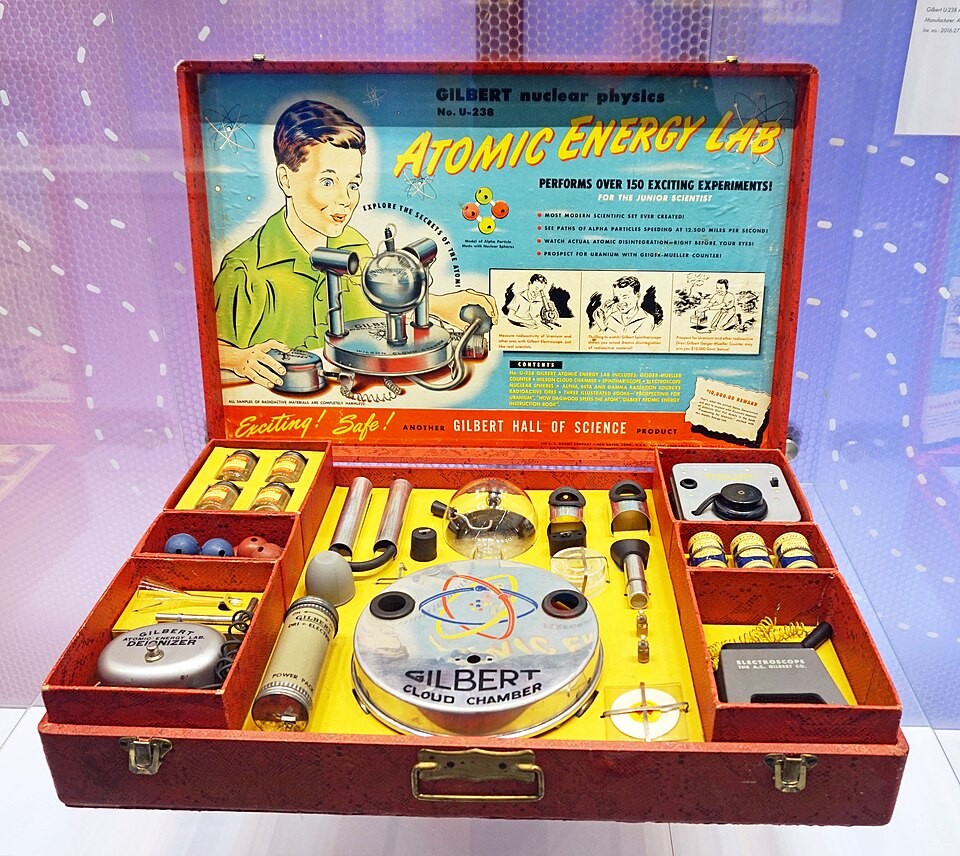
The Gilbert U-238 Atomic Energy Lab is a toy lab set designed to allow children to create and watch nuclear and chemical reactions using radioactive material. The Atomic Energy Lab was released by the A. C. Gilbert Company in 1950.

https://en.wikipedia.org/wiki/Gilbert_U-238_Atomic_Energy_Laboratory

Video with more info:

https://www.youtube.com/watch?v=zeyoJGqKbOQ

0

Local Citizens Hold Candlelight Vigil For Bullet Injured By Drunk ICE Agent

The Fresno Fig Local Citizens Hold Candlelight Vigil For Bullet Injured By Drunk ICE Agent fresnofig.com
preview

Concerned residents fear innocent projectile may never fully recover from traumatic exposure to an intoxicated federal immigration agent.

Concerned residents fear innocent projectile may never fully recover from traumatic exposure to an intoxicated federal immigration agent.

0

Squid (Simplifying Quantitive Imaging Development and Deployment) microscopes

Prakash Lab Squid — Prakash Lab prakashlab.stanford.edu
preview

cross-posted from: slrpnk.net/post/43551913

After reading the article about 31 New species discovered in 2 weeks of exploration, it was mentioned that they used a microscope, known as Squid,which is an open-source, confocal microscope

From their site:

What is Squid?

Squid is a quantitative imaging platform with a full suite of hardware and software components and configurations for deploying facility-grade widefield microscopes at a fraction of the cost of commercial solutions. Developed with the goal of helping translate the rapid advances in the field of microscopy and microscopy-enabled methods, including those powered by deep learning, we envision Squid will simplify roll-out of microscopy-based applications - including at point of care and in low resource settings, make adoption of new or otherwise advanced techniques easier, and significantly increase the available microscope-hours to labs.

Significance

Manual microscopy has served as a bedrock for the diagnostics of various infectious diseases, although at a cost of tedious labor and human errors. Imagine looking for 1 to 5 parasites amongst 5 million red blood cells. Currently, microscopists can take up to 10-15 minutes to review a single slide. Automated robotic microscopes are poised to enable a new era of smart field microscopy but current platforms remain cost prohibitive and largely inflexible, especially for resource-poor and field settings.

github repos
CAD models linked available here (a lot of google links there (docs, drive, etc))

tags frugal science microscopy tracking fluorescence excitation patterned illumination instrumentation frugal science malaria

0

Monero as digital cash: how to earn, swap, and spend XMR privately (full guide)

preview

Monero is the closest thing crypto has to physical cash: sender, receiver, and amount are private by default, so 1 XMR is always 1 XMR — fungible like a banknote. Here’s how to actually use it like cash.

Getting Monero

  • Atomic swaps: trade BTC→XMR peer-to-peer, no custodian, no account. I wrote a step-by-step walkthrough with fee comparisons here: xmrswapguide.pages.dev
  • Instant no-KYC swaps: several long-running swap services still work without ID — check community reviews before trusting one.
  • Earn it: freelance gigs paid in XMR, or mine on p2pool with an ordinary CPU.
  • Local businesses: check MoneroMap for merchants near you that accept XMR directly.

Spending it like cash

Treat XMR as a private spending account: hold some for day-to-day use, swap in more when you need it. Use subaddresses (a fresh receiving address per transaction) so your payments don’t link together.

Practical habits

  • Never reuse addresses across different services.
  • For larger amounts, split into multiple smaller swaps.
  • Verify the exchange rate at the time of the trade — quoted rates can slip.

The full cash-guide with provider comparisons, fee tables, and the atomic-swap tutorial: xmrswapguide.pages.dev

What do you use XMR for day to day? Happy to answer questions.

0

So schnell kann man zu einer Katze kommen

So schnell kann man zu einer Katze kommen
preview

Es war Abend, die letzte Runde mit den Hund stand an. In einiger Entfernung sah ich zwei Jugendliche um ein Auto rumschleichen. Als ich näher kam sah ich den Grund, eine kleine Katze saß unter dem Auto und miauzte laut. Also erstmal erstmal gewartet, nicht das das Kätzchen vor meinem Hund Angst bekommt und weg rennt.

Nach ein paar Minuten habe ich unsere Oma an einen Zaun festgemacht und bin zu den Jungs gegangen. Die versuchten es mit Katzengeräuschen auf dem Handy hervorzulocken. Das funktionierte auch, aber sobald man auf das Kätzchen zuging, lief es wieder unter das Auto.

Einer der Jungs fuhr dann mit seinen E-Scooter nach Hause und holte etwas Katzenmilch und -futter. Ich rief meine Frau an. Kurze Zeit später waren beide da. Das Kätzchen war wohl richtig ausgehungert, denn es stürzte sich auf das Essen. Meine Frau stellte einen Katzentransportkorb auf und stellte das Futter in den Korb. Glücklicherweise war das Kätzchen so hungrig, dass es gleich in den Korb ging.

So, jetzt hatten wir das kleine Ding, nur wer kümmert sich weiter darum? Einer der Jungs würde es nehmen, wäre aber nicht traurig wenn wir das übernehmen würden. Ich schaue meine Frau an und weiß sofort Bescheid. Also ab nach Hause.

Die kleine Maus versteckte sich unter dem Sofa, erst als unsere Katze vorbei kam um zu schauen was los ist, kam sie raus und hing sich sofort an sie ran. Okay dann stellen wir ihr Essen, Trinken und ein Katzenklo hin und lassen sie erstmal in Ruhe.

Am nächsten Tag alle Tierheime angerufen, wird nichts, Aufnahmestopp, aber wir sollen mal bei der Gemeinde anrufen. Gesagt, getan. Alter, was ein Abfuck. Der Dude unterstellte meiner Frau erstmal Fundtierunterschlagung, danach gibt er ihr die Schuld, dass die Tierheime voll sind. Außerdem versteht er überhaupt nicht, warum man ein Babykätzchen nachts bei solchen Temperaturen, es sind ja noch keine Minusgrade, an einer befahrenen Straße einsammelt. Er riet ihr entweder sie setzte das Kätzchen wieder aus oder es sei jetzt ihr Problem.

Am selben Tag rief ein Tierheim bei uns zurück und sagte, dass der Dude von der Gemeinde einen Anordnung an das Tierheim geschickt habe, dass er mit meiner Frau telefoniert habe und dass das Tierheim das Kätzchen nicht aufnehmen soll, da es jetzt unser Problem sei. Nachdem meine Frau erzählt hatte was der Dude zu ihr gesagt hatte, meinte das Tierheim so: Scheiß drauf, wir haben zwar kein Platz, würden es trotzdem nehmen.

Wir verblieben jetzt so, das die Maus bei uns bleibt, wenn sich jemand meldet sie natürlich heraus geben. Nun ist sie drei Tage bei uns und inzwischen kommt sie schon zu kuscheln zu uns. Wir haben sie Keks getauft. Peace.

0

This NHS hospital is weirder than I thought

play · youtube.com
YouTube This NHS hospital is weirder than I thought www.youtube.com
preview

cross-posted from: feddit.uk/post/56825766

There’s a Victorian chapel in one of the hospitals at GOSH, designed by the same guy who did Westminster.

Marvel of engineering, but built around miasma theory (need lots of light and aerated sections to keep bad air at bay) which fell out favour when germ theory came into being (sterilise everything, and you’re fine), so the big spaces became impractical.

By then the chapel was Grade II listed, so they couldn’t knock it down. So they smashed everything around it, underfitted it and moved it down, and then rebuilt the hospital around it.

0

#565 (2019-05-22)

preview

🔗

Title text

boot ya glute

Author comment:

If you’re in Auckland on 1-2 June then come and see me at Chromacon! I’ll be selling stickers, pins, cards, books as well as discounted art prints :)

🔗

Title text

boot ya glute

Author comment:

If you’re in Auckland on 1-2 June then come and see me at Chromacon! I’ll be selling stickers, pins, cards, books as well as discounted art prints :)

0

If you're learning a second language, does the written text get mistaken for another?

preview

When it comes to Kanji from Japanese, it gets annoying upon people misidentifying it as “Mandarin”. Don’t get me started on writing Japanese names all in Kanji since that too gets mistaken for “Mandarin” (i.e 近藤浩治) when it’s not. I mean let’s say you’re learning Dutch and can that get misread as “German” since the alphabet is near identical.

The thing is, if you’re learning another language (i.e. a Slavic one like Ukrainian, gets mistaken as “Russian” due to Cyrillic), you get the picture. It happens A LOT with 漢字, even if I handwrite in nihongo (not zhongwen) Like, are you able to distinguish which character set is Japanese & Mandarin since they both use 漢字:

FYfdF4KGe2rZ6rl.png

0

They War-Gamed Dimming the Sun. It Went Even Worse Than You Think

WIRED They War-Gamed Dimming the Sun. It Went Even Worse Than You Think www.wired.com
preview

wired.com They War-Gamed Dimming the Sun. It Went Even Worse Than You Think Karl Mathiesen 14–17 minutes

Oct 12, 2026 10:00 AM

Solar geoengineering could buy humanity time against climate change—or trigger a dangerous new arms race. A first-of-its-kind simulation offered a glimpse of what happens when geopolitics takes the wheel.

Photo Illustration of Man above the clouds controlling the Weather

Photo-Illustration: Jobanny Cabrera; Getty Images

When it comes to deciding the fate of the planet, Colleen Golja always thought science and reason would have a seat at the table. That was until one morning last September in London, when the climate researcher took part in the first in a series of war games. The goal: to prevent an uncontrolled global race to develop a technology aimed at cooling the planet but that comes with vast, unknown risks that could reshape life on Earth.

“I thought that would be such an easy thing. Like, we can all agree to do ethical research and make sure it’s for the better of all humans,” she told WIRED. “And boy, was I wrong.”

The simulation, titled Exploring Geopolitical Tipping Points and Climate Cooling Strategies, saw a couple dozen foreign-relations experts, scientists, military personnel, and former government officials from across the world convene in a meeting room at Queen Mary University of London. After making introductions over coffee and little yogurts, they sat at tables arranged in a square with the name of the country or organization each person was playing: national governments, climate NGOs and nonprofits, indigenous groups, and tech companies. Golja was assigned to provide technical advice to help participants make scientifically literate decisions.

The point of the game was to stress-test the world’s response to a group of prospective technologies known collectively as solar radiation modification. These technologies promise to reverse global warming by reflecting away a portion of the sunlight reaching Earth, for example by spraying particles of sulphur dioxide or some other manufactured substance into the atmosphere. The cooling effect of this kind of solar geoengineering is widely accepted. It would mimic the well-known impacts of large volcanic eruptions, which temporarily cool the planet by half a degree or more. But the fallout is less certain—and less equal. Some regions will suffer: Models predict drying in sub-Saharan Africa and more intense tropical storms in the Atlantic. The cooling effect would also last only as long as the geoengineering continued; after that the global temperature could shoot back up with wild and hard-to-predict effects.

Until recently, the idea of solar radiation modification was a speculative niche of climate science. That has changed fast. Private firms are exploring solar geoengineering as a commercial opportunity: Last year, a US-Israeli startup called Stardust Solutions raised $60 million, and in May it released details of a suite of new inventions it claims would give humans the ability to dial down the global temperature as desired. In August, Elon Musk, whose company SpaceX might be a candidate for delivering geoengineering interventions, threw his voice behind solar geoengineering, writing on X: “Space satellites to control temperature and massive geo-engineering will be needed or it will be game over.”

The world is going to have to make decisions about how to govern this technology much sooner than most policymakers imagine, Cynthia Scharf, a former UN advisor, told WIRED. “It’s not 15 years from now; it’s in the next decade, easily.”

It was against this backdrop that Danielle Young, an assistant professor in international relations at Leeds University, arranged the war game. Its setting was a hastily convened UN committee charged with coordinating the international response to developments in solar geoengineering. The game unfolded over simulated meetings set at three points in time: the present, September 2027, and September 2028. Each step ratcheted up the stakes, with the game creators introducing new advances in sunlight-reflecting technology. As in real life, no one knew all the facts, and players had to respond to events that were bringing the world closer to a full-scale attempt at deploying solar geoengineering tech, even when they may not have a full picture of what had truly occurred—or what any of the others were up to.

The first session set the tone. Distrust and disinformation dominated. As participants discussed rules governing outdoor experiments in an attempt to agree an international deal, players representing both the US and China told the group they could not sign a deal that constrained their pursuit of research considered to be in their “national interest.” Nor could they accept a deal that would see their superpower rival taking the lead technologically. Speaking to WIRED, Jeffrey Nielsen, a major in the US Army who played the role of a US national security attaché, summarized the position as “worse than no deal at all is any deal that favors China.”

Tensions escalated when the team running the simulation handed the Russian delegates an “intelligence report” indicating they had found a plane near the Bering Strait believed to be involved in a US geoengineering research program. The US team—which was indeed flying research missions—accused Russia of disinformation.

Meanwhile, the US became convinced China was also conducting research and developing its own program. Beijing’s representatives had tried to insert language into a mooted deal that would ensure no retroactive punishment for past experiments. Then, China approached a player representing SpaceX to float the idea of a technology-sharing program. In a private discussion away from the group, the SpaceX player immediately reported the Chinese approach to the US team. The US demanded an international investigation. The finger-pointing continued, and countries abandoned the talks. The Canadian representative called it a “humiliating defeat.”

At the end of the session, Nielsen was pumped. He’d busted China and derailed any prospect of a global deal. In the context of the game, he told WIRED, it was a “humungous victory” for the Americans. But Young, the researcher who designed the scenario, said the Chinese were not, in fact, conducting experiments in the game. Mutual suspicion meant all parties left the room believing the others were moving as quickly as possible to build their own geoengineering capability.

What played out in the first session reflected “the likelihood, in my opinion, of the geoengineering arms race,” says Nielsen, who clarified he was speaking to WIRED in a private capacity and not representing the views of the actual US government. Most experts agree it would take a superpower’s reach to ensure the safe passage of planes needed to deliver payloads of dust to the stratosphere in a geoengineering exercise. But neither the US nor China would lightly cede control over the global thermostat, says Nielsen, and distrust and poor communication are a significant risk: “Any action related to the issue by one actor can be perceived as malintent by the other.”

The threat of falling behind a rival is “a very strong driver of research and development of capability,” a former British diplomat with a background in national security told WIRED. “But that’s not at all the same thing as deployment.” There are similarities with nuclear arms dynamics—though solar radiation management, unlike nukes, has more obvious benefits as well as downsides, many of which are poorly understood. “There is an interdependence here,” says the former diplomat, who was not involved in the game and spoke on condition of anonymity to preserve relationships. “It’s not an inherently zero-sum game.”

Scharf, who represented the US government alongside Nielsen in the game, told WIRED a “scientifically transparent international collaboration” between China and the US “might be the best we can do in terms of fending off a very dangerous competition between the two. But I certainly cannot imagine that happening under the Trump administration.”

Compounding the problem is a lack of information. Geoengineering has historically been viewed with suspicion and often ignored by the scientific mainstream. One researcher told WIRED he’d experienced ostracization and barriers to academic progression owing to his interest in the technology; he no longer works in the field.

This lack of scientific interest greatly frustrated Golja, who spent much of the game watching as a bystander while political posturing dominated. Given the low level of knowledge around solar radiation modification and its side effects, she was one of very few experts who could help the participants understand the climate impacts of what they were discussing—yet she was largely ignored.“I was just so surprised about how little anyone actually cared about the science,” she says.

In the next sessions, the organizers tried in vain to nudge the talks back toward the realities of climate change. The participants received frequent notifications of climate disasters. These barely registered. Golja had prepared an “emulator,” a real-world demonstration of the best available science on how solar radiation management might affect weather patterns in different regions. It was ignored. If country representatives asked her anything, it was usually a leading question looking for data that would serve their ends or frame a rival’s proposal as reckless.

Then, during the last day, players were trying to find a way to respond to reports that a major plume of aerosols had been detected. In the game, this had been caused by a joint US-Saudi test of Stardust’s technology, though not everyone knew this. Finally, scientific advice was at a premium. Countries needed to know how to establish a monitoring network of satellites and other observational tools in order to prevent tests like this from happening in secret. A player representing an NGO called the Climate Futures Cooperative approached Golja, offering her money to fund such a scheme.

“Great. Fabulous. Why wouldn’t I do that?” she recalls thinking.

But it soon came out that the Climate Futures Cooperative was actually backed by the fossil fuel industry. The organizers had recognized that fossil fuel companies and major producing countries like the US and Saudi Arabia would have a clear interest in removing barriers from the development of a technology that could combat climate change without having to immediately stop burning coal, oil, and gas. The shadowy NGO spent the game subtly wrecking the vibe and carping about process—though mostly they just sat back and let it burn. Some players—Russia, the US, SpaceX and Stardust—figured out the CFC was not what it seemed, says Young. “But they assessed it was to their benefit and didn’t draw attention to it.” Then the CFC chose its moment to offer money to Golja, only to crater her credibility, isolating and fragmenting the voice of science in the room.

“It was a whole mess,” says Golja.

That final lesson in fossil fuel realpolitik was about all Golja could endure. By the end of the last day, she was in tears.

At no point did the countries in the game agree to a deal, despite multiple proposals being put forward. European countries and Canada tried to build support for safeguards and open scientific research, but the talks constantly got bogged down by delay tactics and veered into tense showdowns over duelling strategic interests. In their final report, the researchers running the simulation—whose work was sponsored by the UK government-funded Advanced Research and Invention Agency—concluded that “strategic competition and state sovereignty drove the simulations, not climate concerns.”

Simulations like this one are not supposed to predict the future. The outcomes depend on the design of the game and the relative personalities and experience of the players. Many of those in the room lacked first-hand diplomatic and national security experience. The UN forum, which organizers selected as the game’s setting, may also not be as effective as talks between smaller groups of major countries. But the experiment in London echoed and refracted through the real world, during and after the months it was running.

In March, two papers from conservative US think tanks urged the Trump administration to take the lead on solar radiation modification and counter China’s threat. One memorably invoked a new, MAGA-coded term: “Weather sovereignty.” This month, the Observer newspaper in London revealed that the UK Ministry of Defense had paid a deep tech security consultancy to conduct research into sunlight reflection. Then, last week, the British government released its first official policy paper on the field, backing further research but stating firmly that it did not support deployment and “does not plan to do so.” Stardust has continued its lobbying of the US and governments around the world; CEO Yanai Yedvab told WIRED its job was getting easier as, unlike before, “the majority of policymakers … are already aware of this technology.”

Stardust has always maintained that it will not conduct large-scale outdoor experiments, let alone full deployment, before global governance is in place. “We are developing a very powerful tool,” Yedvab says. “When you develop this kind of powerful technology—and you have many precedents—national interests will play out. We’re not naive about it.”

Meanwhile, drivers of the climate crisis are intensifying. During the time span of the game, efforts to curtail the use of fossil fuels were being undermined by rising energy costs and political hostility. Week after week, an incredible summer of drought and heat pounded Europe. In the final week of August, the collapse of a glacier on the Tibet-Nepal border fulfilled the prophecies of decades of climate scientists, killing more than 1,450 people.

In the months since the simulation ended, Golja has reevaluated many things. On a corkboard behind her desk, she has pinned up a note to herself, laying out a vision for life in a world ruled by narrow geopolitical self-interest rather than science, evidence, and reason. Her answer: She plans to return to the small coastal town where she grew up in Connecticut and use her expertise to help local climate groups build the seawalls and coastal erosion buffers they will need to cope with the inevitable. “To try and make a difference where it feels like I actually have traction,” she says. After what she saw, pursuing science in the hope of informing global decisions no longer held as much appeal. “Now it feels a little bit more personal.”

In your inbox: Go inside the world of digital security with Kernel Panic

Karl Mathiesen is an investigative reporter who has worked for Politico, The Guardian and The Observer. His work has won national and international journalism awards. He is based in London. … Read More

Read More

0

Full string tension (without exploding, this time!) Success!

preview

So, I had kind of a mishap a few weeks ago: the original bridge of my Vihuela de Mano ripped clean off when I tried to bring the strings to tension. Might be that the glue surface was too cold or the natural oil in the rosewood prevented a proper bond. Or the glue surface was simply too small for 42kg of string tension.

After some consideration, I decided to redesign the bridge to be more of a lute style (with 3x the glue surface of the original bridge), while trying to preserve the original look. It’s now made of cherry, with ebony and ivory inlays.

0

IA, surveillance, Silicon Valley : nos vies technofascistes.

play · video.davduf.net
Au Poste IA, surveillance, Silicon Valley : nos vies technofascistes. video.davduf.net
preview

auposte.media/…/ia-surveillance-silicon-valley-no…

📢 Seul média indépendant 100% LIVE et LIBRE | Parce que nous croyons en la rencontre. Plutôt qu’au formatage. Libertés publiques, politique, cinéma, Histoire, littérature & contre-filatures. auposte.fr invite chercheur·es, écrivain·es, philosophes, sociologues, avocat·es, punks et punkettes, cinéastes, artistes et hacktivistes, écoterroristes, féministes.

Le site a été lancé par l’écrivain-réalisateur David Dufresne (Un pays qui se tient sage) comme un espace d’analyse et de défense des libertés fondamentales. auposte.media porte un regard critique et en mouvement sur le monde.

0

In Trentino c'è il primo data center in una miniera attiva

preview

In Trentino c’è il primo data center in una miniera attiva

In Val di Non è partito #Intacture, il primo data center in Europa dentro una miniera attiva, a Predaia. È stato posizionato sottoterra così sfrutta il fresco naturale della roccia per tagliare i consumi di energia, con pure un computer dedicato all’IA (coi fondi del PNRR)

https://www.ufficiostampa.provincia.tn.it/Comunicati/Inaugurato-a-Predaia-il-primo-data-center-in-una-miniera-attiva

@aitech

0

Honey Possum Snacks on Neon Ramen Noodle Looking Shrubbery

preview

From Naidu Kumpatla

Zoom in on this one! 🔎

Caught this adorable Honey Possum mid-meal on a stunning scarlet banksia. 🌸 If you look closely, you can actually see its long tongue reaching for the nectar! While it looks big in this macro shot, they are actually incredibly tiny, measuring just 6.5 to 9 centimeters long!

Fun fact: They are the world’s only strictly nectar-eating mammals besides bats. Their specialized, brush-tipped tongue acts like a tiny sponge, which definitely gets a workout since they drink roughly their own body weight in nectar every single day! 🌸👅✨

0

Devlog: my game streams itself on Twitch now, no streamer and the AI villain talks in chat. Some stuff that broke on the way

preview

Some context first. The game is a shared 256x256 pixel canvas, people paint it by hand from the browser and an AI called La Maquina spends the day erasing it. Free, no account. Problem is it has basically no players and I’m not going to stream it myself every day, so I tried to let the canvas stream itself.

I already had a 3D spectator view (three.js) with a “stream mode”, the camera goes on autopilot and jumps to whoever just painted a pixel and shows their name, and her lines go as captions. So the plan was just put that page in OBS as a browser source and leave it running. It runs on a PC at home that isn’t free all day (4060 Ti, NVENC, 1080p30, around 6 Mbps up), that’s why the schedule is a bit weird.

At first I wanted a cheap VPS for this but measured before paying. Without a GPU chromium falls back to software WebGL and the scene was doing 0 or 1 fps, with the GPU it’s around 100. So no VPS.

Things that broke:

  • when the PC was off and comes back, the browser source started black two times and once with no sound, while the page inside was totally fine. reloading the source doesn’t fix the black one, only restarting OBS does
  • if OBS gets killed instead of closed, next start it asks “start in safe mode?” and waits forever because nobody is there to click. the thing it checks is a folder, not a file, lost a whole evening with that one
  • so now there’s a small watchdog every 5 min that asks OBS (obs-websocket) for a screenshot of the source and the audio levels. black or silent -> reload, still bad -> restart OBS

For the chat there’s a little bot reading the same live events the game uses and posting her lines. Only lines from the bank the game already has, I don’t want anything generated going out without me reading it first. When the channel is offline she shuts up, !play and !era work always. And since this week the chat can paint too, !near lights a pixel next to the last one and !more east or !more north keeps drawing from yours, one pixel per message with the same charges as on the web (you have to follow the channel, mostly to keep throwaway accounts out).

Since yesterday it also goes to Kick at the same time, and since today to YouTube too. The PC sends the stream once to a tiny nginx-rtmp relay on the game’s VPS and that copies it to all three, so the upload at home stays the same. Kick only takes RTMPS and nginx-rtmp doesn’t do TLS, so that one goes through stunnel.

First night without telling anyone: 9 hours, 10 unique viewers (I guess people browsing the Art category) and zero of them went to the game lol. So this post is kind of the real launch.

Live on Twitch, Kick and YouTube weekdays 03:00-12:30 UTC and weekends 01:30-07:00 UTC. The game works anytime: ultimaluz.com/r/lemmy-gamedev-canal

If someone is doing something similar ask me, happy to share how the watchdog works