0

He Helped China Repress Uyghurs. He Says He’s a Victim, Too.

He Helped China Repress Uyghurs. He Says He’s a Victim, Too. www.nytimes.com
preview

cross-posted from: lemmy.sdf.org/post/56856501

After nearly 10 years carrying out Chinese government repression in Xinjiang, a former police officer is now seeking asylum in Germany.

Archived

Halfway through a short speech he was giving at the German Bundestag, Zhang Yabo began to choke back tears.

Mr. Zhang had served for nine years as a police officer in Xinjiang, an enforcer in China’s campaign to surveil, detain and indoctrinate that region’s Uyghur population. At the campaign’s height, an estimated one million Uyghurs and other Muslim minorities were held in internment camps.

Tens of thousands of police officers carried out China’s state oppression in Xinjiang, but Mr. Zhang is a rare voice speaking out about it. Standing before German lawmakers and human rights activists in June, he described Xinjiang as a giant prison enclosed by an “ironclad wall.” “That wall imprisoned not only countless innocent Uyghurs,” he said, “but also the souls of those ordered to enforce it.”

Mr. Zhang related the pressure of participating in China’s security apparatus: endless shifts, sleeping in the office and constant fear of punishment. After he requested asylum in Germany last summer, Chinese authorities froze his bank accounts, he said, branded him a traitor and harassed his family.

[…]

By the end of the speech, he was sobbing “like a child,” he later told me. He hurried from the room and did not return.

[…]

Mr. Zhang’s account of his time in Xinjiang corroborates what has long been documented about the Chinese Communist Party’s brutal repression of the Uyghurs while adding detail and an inside perspective to that record. It also reveals what an ordinary man pursuing upward mobility could gain, and lose, by helping to carry out those repressive policies.

Mr. Zhang provided extensive documentation of his service history, including copies of his police identification and pay and social security records, as well as photos of him at interrogations and political propaganda sessions. But I could not corroborate exactly what he did or did not do in Xinjiang; I relied on his telling of the story, and there may have been things he did not share.

[…]

With China’s record of retaliating against citizens in exile, Mr. Zhang has shown considerable courage in coming forward as a witness to injustice. But he is asking for something more than praise; he wants to be recognized as a victim himself — a victim of the apparatus he participated in for nearly a decade.

[…]

A Grim Path Out of Poverty

For Mr. Zhang, moving to Xinjiang, and later joining its police force, offered a way to move up in the world. Born in 1986 into a poor rural Han Chinese family, Mr. Zhang lived in a village in central Henan Province that did not have electricity until he was 8. He moved to Xinjiang for college in 2006 and stayed to teach mathematics at a rural primary school. He married a woman from his home province, and they had a son in 2011.

In late 2014, he left teaching for better pay as a guard at a detention center in the Hotan region, where about 90 percent of the population was Uyghur. His monthly wages rose to about $650, from $400 as a teacher.

For nearly two years, he said, his duties included monitoring surveillance footage, distributing food and medicine and gathering incriminating information from detainees, most of them Uyghurs. He heard screams from the interrogation rooms and saw detainees beaten up and deprived of sleep. He sometimes found broken batons when picking up the detainees. At the time, he said, he accepted the government’s claims that the men being interrogated were terrorists and separatists.

[…]

In early 2017, Chen Quanguo, the new Communist Party secretary of Xinjiang, called for a “smashing, obliterating offensive,” including, according to leaked government documents, the detention of anyone who displayed “symptoms” of religious radicalism or antigovernment views. Those symptoms could be the wearing of long beards, studying Arabic and praying.

[…]

For much of 2017, Mr. Zhang traveled in bus convoys transporting hundreds, and sometimes thousands, of Uyghur detainees to prisons across Xinjiang, which is nearly four times the size of California. The detainees were handcuffed, hooded and ordered to use plastic buckets as toilets during the journey. Mr. Zhang distributed bread and water.

[…]

In late 2018, when he was assigned to a police station, he began to grow despondent. His colleagues brought in Uyghur prisoners at all hours, he said, and he was responsible for searching them and helping determine where they would be sent. His sleep was constantly interrupted, and his superiors were short-tempered.

He was pleased to be briefly reassigned to supervise about 3,000 Uyghur laborers who had been sent to pick cotton for Han Chinese farmers. They rose at 5 a.m., traveled for hours to the cotton fields and were not returned to their dormitories until late at night.

[…]

He learned of the international criticism of forced labor in Xinjiang through statements by China’s foreign ministry and accepted the government’s claim that the accusations were false and intended to vilify China. “I didn’t think much about it,” he said. “I never paused to consider whether it was true or not.”

[…]

The government’s surveillance system generated automatic alerts for “abnormal” activity. If a household’s electricity use rose, he said, the officers would visit and ask what had kept the family awake.

Police work brought Mr. Zhang money, status and privileges: expedited treatment at hospitals, free parking. By 2023, his monthly take-home pay had risen to about $1,250.

[…]

The overtime was relentless, and he was separated from his family for long periods. He had not celebrated Lunar New Year with his parents since 2017 and was denied leave for his sister’s wedding. On average, he could visit his wife and his son once a month.

There were also quotas to meet. Starting in 2023, he was required to produce one lead a week that could be used to justify a detention. Mr. Zhang said he had frequently failed to hit the quota and had to submit self-criticism reports and work 24-hour shifts as punishment. Working closely with the villagers began to challenge the stereotypes he had absorbed about Uyghurs. He became increasingly reluctant to enter their homes or search their private communications, even as he continued to carry out the surveillance his job required.

[…]

[Now] he has applied for asylum and lives in a shelter in southern Germany, where his son is staying at a foster facility not far away. Over a dinner of pasta, the 15-year-old told me that he missed Xinjiang’s spicy stir-fried rice noodles. Mr. Zhang’s wife remains in Xinjiang, and the couple have filed for divorce.

[…]

“Of the millions of Chinese police officers, he is the only one who has come forward to speak the truth,” said Haiyuer Kuerban, an official at the World Uyghur Congress who has been helping Mr. Zhang settle in Germany. He said his organization had initially viewed Mr. Zhang with deep skepticism, but that its doubts had begun to ease after reviewing his documents.

[…]

Mr. Zhang insisted that he had never personally tortured or mistreated any Uyghurs. He described himself as a small cog in the state machinery who filled out forms, guarded facilities and handled logistics. Responsibility lay with senior officials and with the Uyghur police assistants who, he said, carried out many of the most direct and abusive tasks. Low-level Han Chinese police officers like him, he insisted, were innocent.

It is unclear whether Mr. Zhang’s self-exoneration is a form of self-protection, an inability to bear what a fuller recognition would mean or simply a habit of mind formed by years inside the system. Haiyuer Kuerban [an official at the World Uyghur Congress ] said he did not believe the blindness was deliberate. After repeatedly pressing Mr. Zhang, I had come to a similar conclusion: He seemed genuinely unable to see his role in the wider context of the immense injustice inflicted on the Uyghurs.

[…]

Working inside an abusive system did not automatically make someone a monster, Mr. Kuerban said. But neither did performing a minor function, or not personally carrying out the worst abuses, eliminate responsibility.

Mr. Zhang said his faith had taught him that his responsibility now was to speak out.

“If you stay silent,” he said at the end of his Bundestag speech, “you’re part of the problem.”

[…]

cross-posted from: lemmy.sdf.org/post/56856501

After nearly 10 years carrying out Chinese government repression in Xinjiang, a former police officer is now seeking asylum in Germany.

Archived

Halfway through a short speech he was giving at the German Bundestag, Zhang Yabo began to choke back tears.

Mr. Zhang had served for nine years as a police officer in Xinjiang, an enforcer in China’s campaign to surveil, detain and indoctrinate that region’s Uyghur population. At the campaign’s height, an estimated one million Uyghurs and other Muslim minorities were held in internment camps.

Tens of thousands of police officers carried out China’s state oppression in Xinjiang, but Mr. Zhang is a rare voice speaking out about it. Standing before German lawmakers and human rights activists in June, he described Xinjiang as a giant prison enclosed by an “ironclad wall.” “That wall imprisoned not only countless innocent Uyghurs,” he said, “but also the souls of those ordered to enforce it.”

Mr. Zhang related the pressure of participating in China’s security apparatus: endless shifts, sleeping in the office and constant fear of punishment. After he requested asylum in Germany last summer, Chinese authorities froze his bank accounts, he said, branded him a traitor and harassed his family.

[…]

By the end of the speech, he was sobbing “like a child,” he later told me. He hurried from the room and did not return.

[…]

Mr. Zhang’s account of his time in Xinjiang corroborates what has long been documented about the Chinese Communist Party’s brutal repression of the Uyghurs while adding detail and an inside perspective to that record. It also reveals what an ordinary man pursuing upward mobility could gain, and lose, by helping to carry out those repressive policies.

Mr. Zhang provided extensive documentation of his service history, including copies of his police identification and pay and social security records, as well as photos of him at interrogations and political propaganda sessions. But I could not corroborate exactly what he did or did not do in Xinjiang; I relied on his telling of the story, and there may have been things he did not share.

[…]

With China’s record of retaliating against citizens in exile, Mr. Zhang has shown considerable courage in coming forward as a witness to injustice. But he is asking for something more than praise; he wants to be recognized as a victim himself — a victim of the apparatus he participated in for nearly a decade.

[…]

A Grim Path Out of Poverty

For Mr. Zhang, moving to Xinjiang, and later joining its police force, offered a way to move up in the world. Born in 1986 into a poor rural Han Chinese family, Mr. Zhang lived in a village in central Henan Province that did not have electricity until he was 8. He moved to Xinjiang for college in 2006 and stayed to teach mathematics at a rural primary school. He married a woman from his home province, and they had a son in 2011.

In late 2014, he left teaching for better pay as a guard at a detention center in the Hotan region, where about 90 percent of the population was Uyghur. His monthly wages rose to about $650, from $400 as a teacher.

For nearly two years, he said, his duties included monitoring surveillance footage, distributing food and medicine and gathering incriminating information from detainees, most of them Uyghurs. He heard screams from the interrogation rooms and saw detainees beaten up and deprived of sleep. He sometimes found broken batons when picking up the detainees. At the time, he said, he accepted the government’s claims that the men being interrogated were terrorists and separatists.

[…]

In early 2017, Chen Quanguo, the new Communist Party secretary of Xinjiang, called for a “smashing, obliterating offensive,” including, according to leaked government documents, the detention of anyone who displayed “symptoms” of religious radicalism or antigovernment views. Those symptoms could be the wearing of long beards, studying Arabic and praying.

[…]

For much of 2017, Mr. Zhang traveled in bus convoys transporting hundreds, and sometimes thousands, of Uyghur detainees to prisons across Xinjiang, which is nearly four times the size of California. The detainees were handcuffed, hooded and ordered to use plastic buckets as toilets during the journey. Mr. Zhang distributed bread and water.

[…]

In late 2018, when he was assigned to a police station, he began to grow despondent. His colleagues brought in Uyghur prisoners at all hours, he said, and he was responsible for searching them and helping determine where they would be sent. His sleep was constantly interrupted, and his superiors were short-tempered.

He was pleased to be briefly reassigned to supervise about 3,000 Uyghur laborers who had been sent to pick cotton for Han Chinese farmers. They rose at 5 a.m., traveled for hours to the cotton fields and were not returned to their dormitories until late at night.

[…]

He learned of the international criticism of forced labor in Xinjiang through statements by China’s foreign ministry and accepted the government’s claim that the accusations were false and intended to vilify China. “I didn’t think much about it,” he said. “I never paused to consider whether it was true or not.”

[…]

The government’s surveillance system generated automatic alerts for “abnormal” activity. If a household’s electricity use rose, he said, the officers would visit and ask what had kept the family awake.

Police work brought Mr. Zhang money, status and privileges: expedited treatment at hospitals, free parking. By 2023, his monthly take-home pay had risen to about $1,250.

[…]

The overtime was relentless, and he was separated from his family for long periods. He had not celebrated Lunar New Year with his parents since 2017 and was denied leave for his sister’s wedding. On average, he could visit his wife and his son once a month.

There were also quotas to meet. Starting in 2023, he was required to produce one lead a week that could be used to justify a detention. Mr. Zhang said he had frequently failed to hit the quota and had to submit self-criticism reports and work 24-hour shifts as punishment. Working closely with the villagers began to challenge the stereotypes he had absorbed about Uyghurs. He became increasingly reluctant to enter their homes or search their private communications, even as he continued to carry out the surveillance his job required.

[…]

[Now] he has applied for asylum and lives in a shelter in southern Germany, where his son is staying at a foster facility not far away. Over a dinner of pasta, the 15-year-old told me that he missed Xinjiang’s spicy stir-fried rice noodles. Mr. Zhang’s wife remains in Xinjiang, and the couple have filed for divorce.

[…]

“Of the millions of Chinese police officers, he is the only one who has come forward to speak the truth,” said Haiyuer Kuerban, an official at the World Uyghur Congress who has been helping Mr. Zhang settle in Germany. He said his organization had initially viewed Mr. Zhang with deep skepticism, but that its doubts had begun to ease after reviewing his documents.

[…]

Mr. Zhang insisted that he had never personally tortured or mistreated any Uyghurs. He described himself as a small cog in the state machinery who filled out forms, guarded facilities and handled logistics. Responsibility lay with senior officials and with the Uyghur police assistants who, he said, carried out many of the most direct and abusive tasks. Low-level Han Chinese police officers like him, he insisted, were innocent.

It is unclear whether Mr. Zhang’s self-exoneration is a form of self-protection, an inability to bear what a fuller recognition would mean or simply a habit of mind formed by years inside the system. Haiyuer Kuerban [an official at the World Uyghur Congress ] said he did not believe the blindness was deliberate. After repeatedly pressing Mr. Zhang, I had come to a similar conclusion: He seemed genuinely unable to see his role in the wider context of the immense injustice inflicted on the Uyghurs.

[…]

Working inside an abusive system did not automatically make someone a monster, Mr. Kuerban said. But neither did performing a minor function, or not personally carrying out the worst abuses, eliminate responsibility.

Mr. Zhang said his faith had taught him that his responsibility now was to speak out.

“If you stay silent,” he said at the end of his Bundestag speech, “you’re part of the problem.”

[…]

0

"Un acte de vandalisme environnemental" : deux sites de baignade fermés à Paris après une pollution au fioul (Bercy et bras Marie)

France 3 Paris Ile-de-France "Un acte de vandalisme environnemental" : deux sites de baignade fermés à Paris après une pollution au fioul france3-regions.franceinfo.fr
preview

Deux sites de baignade, dans les 4e et 12e arrondissement de Paris, sont fermés au public par intermittence depuis dimanche. En cause, le déversement de 3000 litres de fioul dans la Marne et qui contamine désormais la Seine.

Deux sites de baignade, dans les 4e et 12e arrondissement de Paris, sont fermés au public par intermittence depuis dimanche. En cause, le déversement de 3000 litres de fioul dans la Marne et qui contamine désormais la Seine.

0

MLS owners to hear proposed changes to league’s roster, spending rules: Sources

preview

The MLS board of governors will convene around the All-Star Game in Charlotte, and some high-impact items are on the agenda

The MLS board of governors will convene around the All-Star Game in Charlotte, and some high-impact items are on the agenda

0

Unbekannte Strukturen im Orionnebel entdeckt

DER STANDARD Unbekannte Strukturen im Orionnebel entdeckt www.derstandard.de
preview

Ein Forschungsteam unter Leitung der Universität Wien schuf die bisher schärfste Karte des neutralen atomaren Wasserstoffs im Orionnebel und stellt bisherige Massenschätzungen infrage

Ein Forschungsteam unter Leitung der Universität Wien schuf die bisher schärfste Karte des neutralen atomaren Wasserstoffs im Orionnebel und stellt bisherige Massenschätzungen infrage

0

Précieux allié contre les incendies, le castor est de retour dans les rivières françaises

preview

Précieux allié contre les incendies, le castor est de retour dans les rivières françaises

« Le castor est un véritable ingénieur de son écosystème. S’il constate que le niveau du cours d’eau baisse, notamment lors des sécheresses, il construit des barrages, qui retiennent l’eau. Il participe aussi à la stabilisation des berges en faisant tomber les grands arbres tout en conservant leurs systèmes racinaires »

0

Riesenstern Beteigeuze ist nicht allein

preview

500 Millionen Mal größer als die Sonne, kurz vorm Explodieren und einer der hellsten Sterne am Himmel. Nun wird Beteigeuze noch außergewöhnlicher.

500 Millionen Mal größer als die Sonne, kurz vorm Explodieren und einer der hellsten Sterne am Himmel. Nun wird Beteigeuze noch außergewöhnlicher.

0

European traffic signals explained

Mastodon.online Daniel Gibert (@danielgibert@mastodon.online) mastodon.online
preview

I just made this silly but accurate thing. I’m silly too and i love it, but also i’m serious in my silliness.
Daniel Gilbert

Alt text :
An image of four European traffic signals, one of each basic type, all containing the image of a banana. On top it reads "European traffic signals explained"

  • First is square and blue, with a white banana. It says "You could eat a banana"
  • Second is round and blue, with a white banana. It says "You must eat a banana"
  • Third is white round with red border and a black banana. It says "You can’t eat a banana"
  • Fourth is a white triangle with red border and a black banana. It says “Caution, a banana!”
0

When They Insist Upon the Torment Nexus

When They Insist Upon the Torment Nexus substack.com
preview

“If they invent self-driving cars, they’ll just drive people to jail. You know that, right?” My friend told me.

I didn’t have a response for him, because he was right. There was never any chance that a carceral society like the USA was going to develop self-driving cars as anything other than an extension of social control and punitive justice.

So I wrote a story about it, sold it to Vice, and tried not to think about it too much since.

Ten years later, that story came true.

I’ve become an avid reader of socialist and queer sci-fi, and Margaret Killjoy is one of my favorite modern authors. I haven’t read “One Star”, but I’ve read enough of her work to be wholely unsurprised that one of her stories has become another example of our oppressors building the Torment Nexus.

I feel like there’s something to be said for sci-fi/fantasy authors writing about what’s happening already as a counterpoint to the tech oligarchs necessarily taking inspiration from the most evil concepts in fiction. As she points out in this post, it doesn’t take prophetic vision to see that a new technology created under fascism will serve the interests of those in power over the interests of the people. The historical context goes back at least as far as the industrial revolution and the original Luddites. I see no reason to let any of that get in the way of a good meme, though.

0

[Jeff Foust] Swift reboost mission encounters attitude control problems

SpaceNews Swift reboost mission encounters attitude control problems spacenews.com
preview
Article text

Jeff Foust 4–5 minutes WASHINGTON — A spacecraft launched nearly a month ago in a high-risk bid to boost the orbit of a NASA astrophysics satellite is suffering from attitude control problems that could jeopardize its mission. In a July 28 update posted on social media, Katalyst Space Technologies said its Link spacecraft, launched July 3, was in a “multi-axis spin” caused by attitude control issues that also affected spacecraft communications. “During commissioning, the Katalyst team encountered a series of technical issues related to attitude control of the spacecraft,” the company stated. “Over the last 72 hours, the LINK spacecraft has been in a multi-axis spin, causing a temporary loss of communications and subsequent bus reset.” The company said that two of the three reaction wheels on Link, used for attitude control, were not functioning and that the spacecraft’s reaction control system thrusters were only partially working. Link launched into low Earth orbit on a Pegasus XL on a mission to rendezvous and dock with NASA’s Neil Gehrels Swift Observatory, or Swift, spacecraft. That gamma-ray observatory is in a decaying orbit and will reenter late this year or early next year without intervention. NASA awarded Katalyst Space a $30 million contract last September to attempt a reboost mission. Katalyst has provided few updates on the status of Link since its launch. In a July 15 statement, the company said it completed initial post-launch checkouts, including getting the spacecraft into a stable attitude. The company said then there had been some problems during the commissioning process. “Early in commissioning, mission operations identified attitude control and communications anomalies during flight operations,” it stated. “The team implemented flight software patches and operational updates that restored reliable communications and enabled three-axis stabilized attitude control, allowing LINK to accurately point and orient itself in space.” In a July 24 update, the company said it had started testing the spacecraft’s electric thrusters, performing two burns to raise the spacecraft’s altitude by about 2 kilometers. Those tests, it said, were designed “to prepare for the longer, multi-hour burns it will execute in the rendezvous phase.” Katalyst Space said that other key subsystems on Link, including communications, propulsion and robotics systems needed to grapple Swift, were working properly. “Over the coming days, Katalyst will work to reduce the body rates using the gimbaled electric propulsion thrusters and stabilize the spacecraft. We have already begun this series of burns and are seeing the intended effect,” the company stated. It then plans over the next few weeks to update the spacecraft guidance, navigation and control systems “to reflect the current spacecraft configuration” and, after testing, begin its approach to Swift. “The mission remains active and we continue to believe that with these changes, LINK has a viable path to rendezvous with Swift,” the company stated. Before the launch of Link, NASA said that efforts to raise Swift’s orbit needed to begin before the spacecraft’s altitude fell below 300 kilometers. Swift is currently at an altitude of about 350 kilometers, and at a prelaunch briefing NASA said the agency expected Swift to reach the 300-kilometer altitude threshold in October.

0

[Jeff Foust] NASA selects successor to CAPSTONE lunar mission

SpaceNews NASA selects successor to CAPSTONE lunar mission spacenews.com
preview
Article text

Jeff Foust 4–5 minutes WASHINGTON — NASA has selected Advanced Space to fly a successor to a cislunar smallsat mission that will test rendezvous and proximity operations around the moon. NASA announced July 24 it awarded a contract to Advanced Space for the CAPSTONE 02 mission, a pair of small satellites planned to launch in 2027. The twin 400-kilogram satellites, built by Lockheed Martin subsidiary Terran Orbital, will operate in cislunar space. The spacecraft will test the ability to operate in proximity to one another under the influence of both terrestrial and lunar gravity, while also performing navigation and communications demonstrations and measuring the radiation environment around the moon. The two spacecraft will perform rendezvous and proximity operations, or RPO, with the spacecraft switching between the target and the chaser. The spacecraft will carry an advanced imager from Lawrence Livermore National Laboratory that will be used for those RPO tests as well as for imaging the moon. Both NASA and Advanced Space billed CAPSTONE 02 as a risk-reduction activity ahead of Artemis missions that will require the Orion spacecraft to dock with landers in lunar orbit. “With CAPSTONE 02, we are taking the next step toward routine, resilient operations in cislunar space,” Brad Cheetham, president and chief executive of Advanced Space, said in a statement. “By maturing autonomous rendezvous and proximity operations in this complex environment, we are directly enabling the future of lunar exploration, development, and long-term presence,” he said. “CAPSTONE 02 can reduce risk for Moon Base, Artemis and every lunar mission that follows.” “Achieving our most ambitious space exploration goals requires iterative, risk-tolerant demonstrations in partnership with industry,” said Christopher Baker, lead for the in-space infrastructure portfolio in NASA’s Research and Technology Mission Directorate, in an agency statement. “Technology development through flight testing is how we convert hard problems into the lasting capabilities needed for a permanent presence at the moon.” CAPSTONE 02 is a follow-on to the original CAPSTONE, or Cislunar Autonomous Positioning System Technology Operations and Navigation Experiment, mission. That used a single cubesat-class spacecraft, built by Terran Orbital for Advanced Space, that tested operations in a near-rectilinear halo orbit around the moon that NASA had planned to use for the lunar Gateway. CAPSTONE launched on a Rocket Lab Electron in 2022. NASA concluded a series of extended missions for the spacecraft in June, testing autonomous navigation technologies and delay-tolerant networking. “CAPSTONE demonstrated what is possible in cislunar operations with small-satellite technology and rapid mission timelines,” said Alec Forsman, chief engineer for CAPSTONE 02 at Advanced Space, in a statement. “The CAPSTONE 02 mission will push that envelope even further by demonstrating RPO in a three-body orbit, enabling demonstration of cislunar communications architectures and proving autonomy capabilities that future lunar missions will depend on.” Neither NASA nor Advanced Space disclosed the value of the contract for the CAPSTONE 02 mission. The agency provided few details about CAPSTONE 02 before the contract announcement. House appropriators, in a report accompanying a fiscal year 2027 spending bill in May, directed NASA to spend at least $20 million, and up to $60 million, on CAPSTONE 02 in 2027.

0

Canvas 2026 poster sale ends August 1st (in like 2 days)

preview

If you’re located within the US, you can order directly on sc07.shop, if you’re located outside the US, fill out this form

As always, it was a blast running Canvas 2026, glad everyone enjoyed it :)

Links:

If you’re located within the US, you can order directly on sc07.shop, if you’re located outside the US, fill out this form

As always, it was a blast running Canvas 2026, glad everyone enjoyed it :)

Links:

0

Polska poderwała myśliwce. Mieszkańców Lublina obudziły syreny alarmowe

Polska poderwała myśliwce. Mieszkańców Lublina obudziły syreny alarmowe www.rmf24.pl
preview

Dźwięk syren alarmowych obudził przed 4 rano mieszkańców wschodniej Polski. Alarm słyszany był między innymi w Lublinie. Wcześniej Dowództwo Operacyjne Rodzajów Sił Zbrojnych poinformowało o poderwaniu dyżurnych myśliwców w związku z uderzeniami Rosji na terenie Ukrainy.

Zgodnie z zaleceniami trzeba włączyć radio podczas alarmu. A w radiu muzyka pop. Wspaniale działa ten alert RCB.

0

Sweden’s hidden rare earth deposits could help break China’s grip as Stockholm eases mining permits to cut reliance

ScienceDaily Sweden’s hidden rare earth deposits could help break China’s grip www.sciencedaily.com
preview
  • Sweden holds some of Europe’s largest untapped rare earth deposits. Now the government designated critical mineral mining as a national security priority, a move that will speed up permitting for new rare earth mines. Officials cite reducing dependence on Chinese mineral supplies as the goal.

  • Instead of extracting one target metal, researchers are cataloging everything contained in Swedish mineral deposits. They will then develop magnets using those naturally available combinations, potentially reducing pollution, waste, and reliance on China.

…

Swedish researchers are exploring how the country’s mineral resources could support cleaner production of rare earth elements (REE) and the powerful magnets made from them. As part of the Sustainable materials and material flows research area, Martin Sahlberg is studying whether Sweden’s deposits could become the foundation for a more sustainable magnet industry.

Many of the materials needed for cleaner energy systems and advanced technologies are still produced through processes that carry significant environmental costs. Rare earth magnets, for example, are largely manufactured in China, where environmental rules and industrial standards differ from those in Sweden.

…

“In Sweden our possibilities for extracting REE, even when compared internationally, are relatively good,” he says.

Sweden has known rare earth mineral deposits in Kiruna, Bergslagen and Norra Kärr outside Gränna. Sahlberg’s work aims to create the scientific foundation needed to extract these resources domestically while also developing new functional magnets.

Rather than forcing Swedish minerals to fit existing manufacturing formulas, the researchers want to design magnets whose chemical composition closely matches the materials naturally present in local deposits. This approach could reduce the amount of processing required and lower the environmental impact of both purification and manufacturing.

“Today, China basically has a world monopoly, but we not only have deposits but also good access to water and relatively cheap energy. There is also an interest in leading the green transition here in Sweden,” he continues.

…

Last week, Sweden declared the mining of critical metals and rare earth minerals to be a national security interest.

…

This should ease and accelerate the permit process for new extraction projects and help attract investments, according to Energy Minister Ebba Busch, who is also deputy prime minister.

“We believe that this can contribute significantly to both Sweden’s the EU’s and NATO’s defense capabilities,” Busch said, calling European industry’s dependence on China a “systemic risk.”

Busch also said the move would make it easier for the state to assign land for mining projects, an area of tension with the Sami reindeer-herding indigenous people, who say the expansion of mining could spell the end for their traditional way of life.

…

Four of the EU’s 47 strategic projects aimed at reducing mineral dependence on China are located in Sweden.

…

Archived

0

Matt Damon’s Biceps in That ‘Odyssey’ Fight Scene? They’re Hers.

Matt Damon’s Biceps in That ‘Odyssey’ Fight Scene? They’re Hers. www.nytimes.com
preview

A shot of Dalton from behind in the scene, holding a sword and ready to pounce at the giants, is used in one of the posters for the movie.

A shot of Dalton from behind in the scene, holding a sword and ready to pounce at the giants, is used in one of the posters for the movie.

0

Oil prices jump, while the Dow drops more than 1,100 as sinking AI stocks drag Wall Street lower

preview

Oil prices got back to jumping on Wednesday, while sinking technology stocks dragged Wall Street lower amid uncertainty about what the Federal Reserve will do to get high inflation under control.

The S&P 500 fell 1.5% after swinging sharply between gains and losses in the last hour of trading. The Dow Jones Industrial Average dropped 1,153 points, or 2.2%, and the Nasdaq composite slumped 1.7% to fall 9.8% below its record set last month.

The action was more decisive in the oil market, where the price of Brent crude leaped 7.3% to settle at $88.09 per barrel after fighting resumed in the war with Iran and raised worries about the global flow of oil.

0

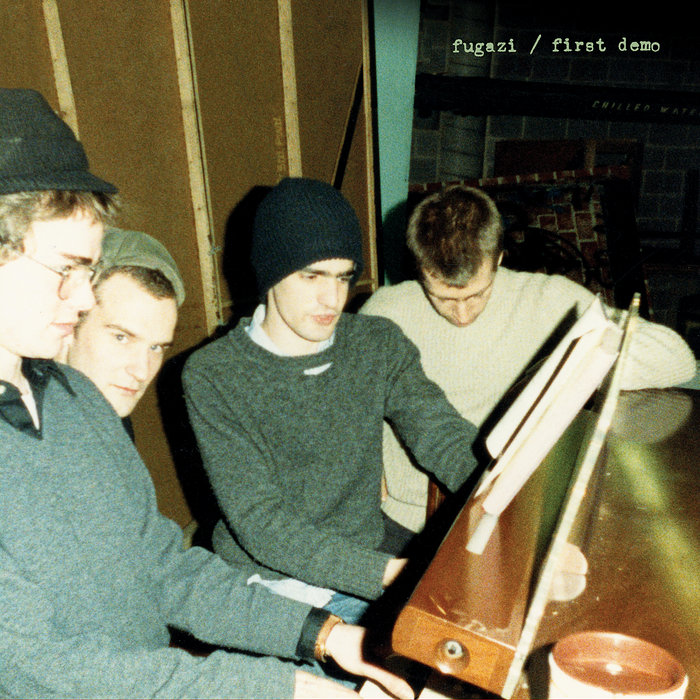
First Demo, by Fugazi

play · bandcamp.com
Fugazi First Demo, by Fugazi fugazi.bandcamp.com
preview

First Demo by Fugazi

  1. Waiting Room (Demo)
  2. Merchandise (Demo)
  3. Furniture (Demo)
  4. Song #1 (Demo)
  5. The Word (Demo)
  6. Badmouth (Demo)
  7. Break-In (Demo)
  8. Turn Off Your Guns (Demo)
  9. And The Same (Demo)
  10. In Defense of Humans (Demo)
  11. Joe #1 (Demo)

This is Fugazi’s first demo, 11 songs recorded with Don Zientara at Inner Ear Studios in 1988.

0

Reportage: Brotbacken im Gemeindebackhaus in 1970 (40 min)

Datei:Brotbacken im Gemeindebackhaus.webm – Wikipedia de.wikipedia.org
preview

Reportage von 1970, wie in Löhndorf im Gemeindebackhaus Brot gebacken wurde.


Fand ich spannend, weil man einen ganz guten Einblick in die Kultur von damals bekommt. Also auch, dass man einfach schon durch das gemeinsame Backhaus direkt einen sozialen Anknüpfungspunkt hat. Da ist es echt egal, ob man sich besonders mag, man backt halt gemeinsam Brot und redet dann auch miteinander, weil Handy ist noch nicht.

Also auch, wie gut eingespielt die miteinander sind. Da kann ich auch verstehen, wenn man frisch Zugezogene erstmal beäugt hat, weil sie die ganzen Abläufe logischerweise nicht kennen können.

Und naja, auch einfach, was das auf heute bezogen bedeutet. Viele Leute, die in der Zeit aufgewachsen sind, sind immer noch am Leben und prägen die Kultur gerade in Dörfern auch weiterhin.
Das war eben auch eine Zeit, wo man echt noch Arbeit reinstecken musste, um das tägliche Leben zu bestreiten. Und wo man erstmal mit dem Leuten im Dorf klarkommen musste.

Also dass auch einfach mit dem im Hinterkopf dann ein gewisses Unverständnis für progressivere Themen einher kommt. Warum sollte man sich z.B. Östrogen geben, wenn man die Muskelkraft doch echt gut für’s Teig kneten brauchen kann? Warum sollte man vegan leben, wenn man dann am Abendtisch mit den acht anderen Familienmitgliedern nicht das essen kann, was es eben gerade gibt?

Dass es da eben auch eine starke Verlagerung gab. Damals musste man mit der Gemeinschaft klarkommen. Heute muss man vielmehr mit sich selbst klarkommen.

Ja, keine Ahnung, ist spät und wahrscheinlich philosophiere ich da viel zu viel hinein, aber fand ich eben spannend, um auch so meine eigenen Erfahrungen als Dorfkind einordnen zu können.

0

Will the US Attack Iran Again? | Mohammad Marandi on Saudi Arabia, Yemen & Multipolarity

play · youtube.com
YouTube Will the US Attack Iran Again? | Mohammad Marandi on Saudi Arabia, Yemen & Multipolarity www.youtube.com
preview

Will the United States return to military confrontation with Iran, or can diplomacy produce a lasting settlement? How is Saudi Arabia repositioning itself amid renewed regional tensions? Why is Ukraine becoming increasingly involved in West Asia? And what does today’s multipolar world mean for the global struggle against imperialism?

In this exclusive interview, Iranian political analyst Mohammad Marandi examines the evolving geopolitical landscape following recent US-Iran tensions. He discusses whether Washington’s strategy of periodic military pressure followed by negotiations can produce lasting stability, the changing relationship between Iran and Saudi Arabia, the role of Yemen in regional politics, Ukraine’s expanding presence in West Asia, and why the emerging multipolar order differs fundamentally from the Cold War.

Topics Covered Will US-Iran negotiations produce lasting peace? Is Washington pursuing a “strike and pause” strategy? Saudi Arabia’s changing regional calculations Yemen and the future of Iran-Saudi relations Ukraine’s growing role in West Asia Russia, China and the changing global balance How today’s multipolar world differs from the Cold War The future of resistance against US imperialism

If you enjoy independent geopolitical analysis from the perspective of the Global South, support India & Global Left by liking, subscribing, and sharing this interview.

0

How do you handle elevated areas in maps?

preview

My world doesn’t have many mountain ranges in a way that’s easy to draw. Rather, the whole center of the continent is raised like one big mountain island.^1^

I’m drawing a map of an area about 200x219 km, to give an idea of the scale i’m working with, ranging in height from sea level to about 50km above that.

Single mountains or mountain ranges like the ones in the maps in The Lord of the Rings aren’t too hard, but when one side of a mountain covers the entire map i don’t know how to show that.

A map of Oz on Wikipedia has little hair-like lines to show elevation at Happy Valley (bottom left). Is there any other strategy for showing height differences on this scale?


^1^ This is because instead of tectonic plates, it has something like geophysical cooling that forms mountains. I won’t get into that just now.

0

Education through Entertainment -- Our Dreams at Dusk & IS

preview

Today’s entry in the “education through entertainment” series is a two-fer: manga series Our Dreams at Dusk (Shimanami Tasogare) and IS – The Gender that Is Neither Male nor Female (IS – Otoko demo Onna demo Nai Sei).

Our Dreams at Dusk follows a found family of people who feel like outcasts for being gay, trans, or asexual, while IS tells the stories of people born intersex.

“Education” does not just refer to facts and figures, but also to increased understanding, which is precisely where these two series excel. I stumbled across IS some time in the 2000s, back when the acronym for non-heteronormative folks was still just four letters: LGBT; I had never even heard of the term “intersex” prior to reading IS. While the 17 volume (!!) series is a bit light on facts, it focuses on people, specifically the challenges the intersex characters and their family and friends face because they do not fall under the binary of male and female. Similarly Our Dreams at Dusk covers the turmoils and stigmas attached to the rest of the LGBTQIA spectrum (I wrote a comprehensive review of that series here).

These two series provide a more accurate and sympathetic view into gender dysphoria than I’ve seen almost anywhere else, both in the world of manga and beyond. Given the bigotry that the LGBTQIA+ community continues to face, even in the most “progressive” of places, I believe a better understanding of the non-heteronormative experience is among some of the most important education a person can receive today.

Unfortunately most LGBTQIA “representation” in manga/anime is exploitative (e.g. yaoi, futanari, etc), so I’m always heartened to encounter realistic and sympathetic portrayals of sexual minorities. Have you ever encountered a comic or work of animation that expanded your horizons regarding sexual minorities or other marginalized populations?

0

Senate Commerce Committee will markup KOSA and the SCREEN Act on Wednesday, August 5

preview

A “markup” involves amendments and a vote. So, if you’re in the US, now’s a great time to contact your Senators – www.badinternetbills.com makes it easy.

A “markup” involves amendments and a vote. So, if you’re in the US, now’s a great time to contact your Senators – www.badinternetbills.com makes it easy.

0

Release 2026.07.16 is out everywhere

A share pic saying 'new release 2026.07.16 with two screenshots for the new lane guidance and the route preview screeen
preview

After Google Play took it’s time, release 2026.07.16 is finally out on all platforms. Among other things, it includes lane guidance on iOS/CarPlay, a route preview screen and many more. See codeberg.org/comaps/comaps/…/v2026.07.16-10 for the full list of changes!

After Google Play took it’s time, release 2026.07.16 is finally out on all platforms. Among other things, it includes lane guidance on iOS/CarPlay, a route preview screen and many more. See codeberg.org/comaps/comaps/…/v2026.07.16-10 for the full list of changes!

0

Need help identifying missing bays (Cooler Master ATCS ATC-710-GX2)

preview

I got hold of this beautiful Cooler Master ATC-710-GX2 that is missing all the drive mounts. From my research it has same internal layout as Enermax CS-710

5.25” optical rails:

Review (hexus.net/tech/…/341-coolermaster-atc-710-gx1/?pa…) says they are standard Chieftec rails. Also found a pic for CS-710 rails which look the same. Can some one confirm they are compatible? (third photo)

3.5” HDD + floppy trays:

These are the sliding cartridge/sled style. Same review has a low-res photo of them. Looking for: high-res photos, any info or anyone who has spare original tray.

Any help appreciated ♥

(Yes I know my room is a mess I’m during a major reorganisation of my things)

0

New suites and clubs

District Momentum New DC Arena & Entertainment District | District Momentum districtmomentum.com
preview

My wife turned 40 a few years ago, so we rented a suite at Capital One for a party. It was great. Especially being able to watch a play, then turn to the TV and see it happen again, with better replays. Private bathroom, too. I’ll admit, it was hard to go back to the regular seats.

Anyway, that was a long way of saying that I’m on the suite mailing list now, and they sent out this link to the renovations. The suites look nice. Check out the club (Acela club a long time ago, but I forget what it has been called me recently), too, which is pretty clearly aimed at businesses.

I told my wife it’s probably a good thing she turned 40 before these renovations. I think we were in for something like $7k before it was all over (which included tickets for ~19 people, free food and beverages, the cake, etc). I suspect it would be a lot more now.

I know you’re wondering: The Caps lost to Nashville the night we were in the suite.

We regularly check out “our” suite and see it empty at many games we go to. (It’s easy to see from our regular seats.)

0

DMs how do you introduce your new campaigns?

preview

Hello friends first time DM here who foolhardily decided to jump into world building rather than running a cookie cutter adventure.

I’m hoping some battle tested dungeon masters could throw me a couple pointers on how you introduce players to your worlds to help flesh out my pages of notes 😅

Hello friends first time DM here who foolhardily decided to jump into world building rather than running a cookie cutter adventure.

I’m hoping some battle tested dungeon masters could throw me a couple pointers on how you introduce players to your worlds to help flesh out my pages of notes 😅

0

Server issue, double posting and phantom error messages

preview

Is this the place to report server issues or is somewhere else better?

I just now tried to post a comment on transjoy, it gave an error message. I retried and it worked. However, the comment posted twice. I can only assume the first error message was given in error.

I assume the same thing happened to someone else this morning. A double post on transjoy with an apperant error on the first attempt.

I’m having a similar issue when loading comment threads, error first attempt, works the second time. I think they might be related. Tested when logged in on jerboa and alexandrite. I get the following errors upon loading a comment thread:

Lemmy Error: couldn't_mark_post_as_read (status 400)

Lemmy Error: Couldn't find post (status 400) 

Then it works on the second attempt. I’ve not been able to reproduce the issue when logged out.

First attempt at posting: “couldn’t_like_post”

Edit: second time success

Edit 2: no errors during edits

Edit 3: first attempt did post despite error message. I deleted the initial post and then got an error posting this edit.

0

Your Call Will Be Recorded by Abrazos

preview

We’re turning their wheels
They don’t care if we’re stressed
With no time to think
We’re all left depressed

They need us too scared to stand up and strike
They need us compliant not looking for rights
There’s more of us, we need to rise up
There’s more of us, we need to stand up

If we get together a worker lead movement
We don’t need statistics
Or their management

They need us too scared to stand up and strike
They need us compliant not looking for rights
There’s more of us, we need to rise up
There’s more of us, we need to stand up
We need to stand up and fight