0

First Public Working Draft: Animation Triggers

preview

The CSS Working Group has published a First Public Working Draft of Animation Triggers. It defines CSS properties and an API for creating mechanisms that affect animation playback, based on DOM events resulting from user interaction, or on entry/exit of ranges on animation timelines.

In simple terms: this will let you start animations based on defined triggers, like mouse clicks or certain scroll (progress) events.

0

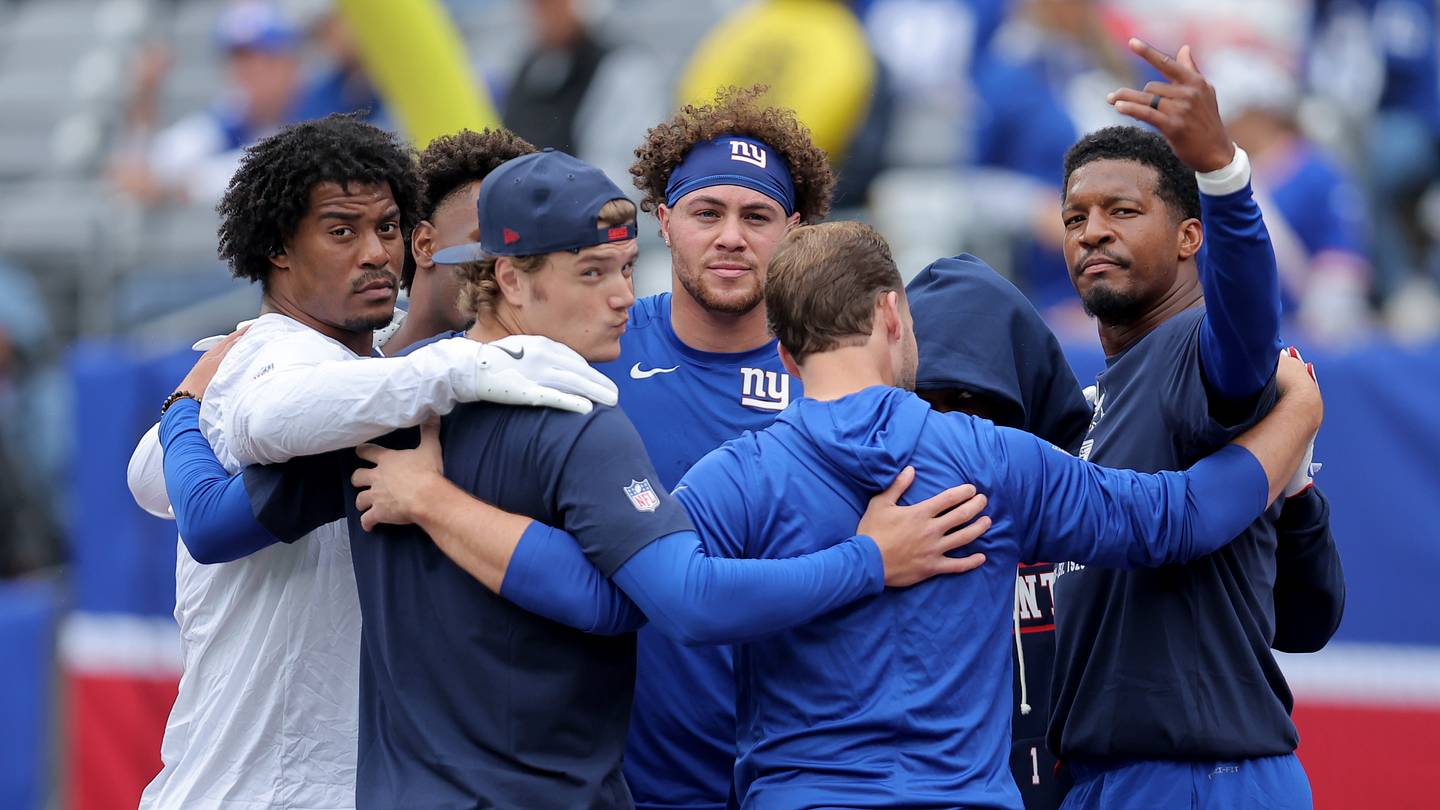
Giants Have Bigger Problems Than the QB Decision

New York Giants On SI Giants Have Bigger Problems Than the QB Decision www.si.com
preview

It’s the run game.

They have the pieces. The line can block, they can open lanes. Their backs can run and break tackles. Both of these things have been demonstrated this season.

Giants need to get these pieces working together to beat the Texans and be successful this season because their schedule for the rest of the season is going to be much more difficult than the beginning was.

0

Enabling Sensitive Conversations with Consent Boundaries: Moa, a Platform for Discussing PhD Advising Relationships [as a testcase] | Proceedings of the ACM on Human-Computer Interaction

preview

I think this is a really interesting example of how the Fediverse has so much potential that goes far beyond the visions of social media that Corporations and rightwing extremist billionaires could ever provide us.

Yes a great use of a social media platform, if structured well and locally moderated by human beings, could absolutely be useful for certain cases like this in a way that would be superbly difficult to arrange otherwise.

Individuals who suffer from problematic power dynamics, such as mistreatment or abuse from someone in power, can benefit from identifying allies, whether it is to seek advice or remedial action. Here, we use the word “ally” to refer to any individual who is sympathetic and can offer some kind of help, ranging from sharing useful information to actively navigating the situation together. Example contexts include workplace bullying [91], political persecution [57], and sexual harassment [23]. In contexts where potential allies are initially unknown, however, someone must make at least a partial disclosure of their experience for what we call ally discovery1 to succeed. But, disclosure is risky because the exact conditions under which these situations arise heighten concerns of exposure and retaliation [3, 21]. That is, one cannot know whom to trust about an issue until one discloses being affected by it; yet one cannot disclose before knowing whom to trust.

Some of the most helpful information in navigating problematic power dynamics can come from individuals who share similar traits regarding the context, e.g., women working with the same manager. How can we facilitate the flow of information in such situations, so that individuals who need it most can discover allies while maintaining one’s anonymity? We consider this problem in the context of PhD students experiencing advising challenges. Because the advising relationship is fraught with power dynamics and ripe for exploitation [14, 47, 54, 80], ally discovery is critical for enabling students to connect with peers who might offer advice or partnership toward remedial action. Yet, research shows that ally discovery within the same PhD program can be difficult [24, 27].

…

Social media platforms are typically structured around a predefined network (e.g., followers) or space (e.g., group) [92]. In contrast, Moa focuses on the question: “How does each user want to design their audience per post or comment?” As a result, Moa does not implement any network model nor does it include user profile pages (REQ3).4 Furthermore, instead of letting users have access to the same content if they are in the same space, Moa’s users see different sets of posts (and comments) depending on their own and others’ consent boundaries (Section 4.2). In terms of the Form-From matrix [92], we believe Moa is closest to a Threaded Space, but consent boundaries considerably weaken both the threading and the space.

…

Taking a consent-centered approach was essential to developing Moa. While consent and privacy are closely related, there is a subtle difference in emphasis. Speaking strictly from an engineering standpoint, consent boundaries are like privacy settings—they give different permissions to different sets of users. But, they differ from traditional privacy settings with respect to the categories of user-sets that can be formed, the granularity of control, and most importantly, the way the categories align with users’ own preferences for control. Below, we reflect further on how consent differs from privacy, and what consent means for system development.

To begin, privacy is a fuzzy concept—scholars disagree on how exactly to define it, though definitions cluster around themes such as the right to be left alone, restriction of access, secrecy, control over personal information, personhood, and intimacy [77]. One relevant ambiguity in the context of computing is about who provides privacy: Privacy can be conferred to a user by the user themselves, or by a privacy-protecting system.

In contrast, the essence of consent is that it is strictly user-determined. The only entity who can grant an individual’s consent is the individual herself; there is no definition of “consent” in which a system can grant itself consent to do something to a user that the user does not herself wish to allow. Thus, relying on the term “privacy” can obscure the central role of the user, as privacy encompasses multiple, often ambiguous meanings. Arguably, the reason why “user-centered privacy” is a term distinct from general privacy is because the user-centeredness of privacy is not a given. Yet, even within the usable privacy and security community, discussions of consent have been limited to the notice-and-choice paradigm [13]. Consent is not cast as a foundational principle for system design.

Based on this view, systems frequently define privacy options in advance (i.e., the system is conferring some privacy), with users only able to accept or decline them. In practice, these options are often difficult to find or understand, further limiting true user consent. For instance, many of Facebook’s privacy settings are often hidden [30].

As the feminist affirmative consent framework recommends [35],14 consent should not merely be a mechanism for relaxing privacy constraints, but a foundational principle of design: individuals affected by an action should have the agency to define exactly what their consent boundary is, in the way that they conceive as relevant to a particular context.

…

Currently, Moa is maintained by the lead author in order to minimize privacy risks. Running the platform with 47 users turned out to be feasible—the lead author was diligent in moderating and seeking user feedback, and no incidents of abuse or negative feedback occurred. However, how could Moa and the concept of consent boundaries scale?

One way to scale is having multiple instances of Moa, one per organization or group, each with its own administrator, similar to Mastodon. This approach reflects an important assumption that local system admins are important for earning users’ trust, which was confirmed by our Phase 3 study. And, just as research shows that Reddit’s moderators have their own network of giving each other support [9], we imagine that there should be a support network for Moa’s administrators and moderators. This would ensure that each instance is not entirely isolated, and that when sensitive incidents happen, there would be cross-instance resources on how to resolve them.

It is possible to imagine building Moa as a larger, monolithic platform such as Facebook or Reddit, but we imagine even on such a platform, communities would have their own moderators—each trusted by their respective communities—who are empowered to provide the kind of meaningful oversight over identity that the Moa prototype included. For this study, it was easy for users to verify and understand that the moderator was also a PhD student in the same institution. At larger scale, there would need to be a process for selecting such moderators, and proving their identity to other members of the community.

In terms of consent boundaries, they are likely to be applicable to other contexts beyond PhD advising, such as among workplace employees [18, 67], survivors of sexual misbehavior by one group of people [16, 48], or potential whistleblowers at the same organization [19].

One aspect of the Moa prototype described in this paper was that there was an implicit consent boundary formed by the community of PhD students from the same institution—no user needed to consider whether their content would be revealed to non-students. Communities could be formed much like Slack’s channels around different topics, though additional mechanisms such as member-sponsored invitations to join or formal background checks would be required to ensure that community members satisfy membership requirements.

We also imagine consent boundaries could be used in general platforms such as Facebook or Reddit, likely in less sensitive contexts. Consent boundaries could help users carve out a group of people they want to interact with, without having to designate a particular space or network [92]. 6

0

Forbidden - DCLXVI

preview

Time for more of the other old Bay Area bands to get some time to shine with a new release! Been listening to the singles that trickled out over the past year, and some are meh and some are good but don’t merit more than a few spins. So I think I’ll just link a personal highlight for me. Starts off slow n heavy before kicking it up in tempo. Other highlights are a couple of the singles - the opener and Divided by Zero.

They still play thrash metal thankfully, but like with all other contemporaries, heavy amounts of groove have been incorporated within. At least the album isn’t so predictable as others.

Immediately you’ll notice the original singer is not here; he’s retired from the industry, replaced by Norman Skinner. Vocal delivery is definitely different, more abrasive on the aggressive parts, softer during the quieter bits. There was one point though, I was thinking to myself, that he can match the cadence of older material nearly perfectly in Divided by Zero. Can’t speak for the rest of the band, they preform as expected, though I really enjoyed some guitarwork during the middle of Psyclops.

Tidal, RateYourMusic, Encyclopaedia Metallum

0

Giants Have Bigger Problems Than the QB Decision

New York Giants On SI Giants Have Bigger Problems Than the QB Decision www.si.com
preview

It’s the run game.

They have the pieces. The line can block, they can open lanes. Their backs can run and break tackles. Both of these things have been demonstrated this season.

Giants need to get these pieces working together to beat the Texans and be successful this season because their schedule for the rest of the season is going to be much more difficult than the beginning was.

It’s the run game.

They have the pieces. The line can block, they can open lanes. Their backs can run and break tackles. Both of these things have been demonstrated this season.

Giants need to get these pieces working together to beat the Texans and be successful this season because their schedule for the rest of the season is going to be much more difficult than the beginning was.

0

[Poll] Do you keep Steam running in the background all the time?

StrawPoll Do you keep Steam running in the background all the time? - StrawPoll strawpoll.com
preview

cross-posted from: lemmy.ml/post/54454819

On machines where you start Steam manually in order to play a game, do you keep Steam running in the background after play session is over? Meaning if you no longer play any game for the moment, and just keep it running to be ready. Or do you close Steam, after the play session?

0

[Poll] Do you keep Steam running in the background all the time?

StrawPoll Do you keep Steam running in the background all the time? - StrawPoll strawpoll.com
preview

On machines where you start Steam manually in order to play a game, do you keep Steam running in the background after play session is over? Meaning if you no longer play any game for the moment, and just keep it running to be ready. Or do you close Steam, after the play session?

On machines where you start Steam manually in order to play a game, do you keep Steam running in the background after play session is over? Meaning if you no longer play any game for the moment, and just keep it running to be ready. Or do you close Steam, after the play session?

0

New prize launches for books co-written with AI

the Guardian New prize launches for books co-written with AI www.theguardian.com
preview

cross-posted from: piefed.world/…/new-prize-launches-for-books-co-wr…

cross-posted from: piefed.world/…/new-prize-launches-for-books-co-wr…

cross-posted from: piefed.world/…/new-prize-launches-for-books-co-wr…

cross-posted from: piefed.world/…/new-prize-launches-for-books-co-wr…

0

🎲 Notre test de King of Tokyo Godzilla est en ligne !

Gaming Family Test King of Tokyo Godzilla : le roi des monstres entre dans l’arène www.gaming-family.com
preview

🎲 Notre test de King of Tokyo Godzilla est en ligne !Règles accessibles, Évolutions propres aux kaijus et superbes illustrations japonaises : une édition séduisante pour découvrir ces batailles de monstres. Le hasard et l’élimination des joueurs restent à prendre en compte.⭐ 4/5 — Jeu reçu de la part de l’éditeur.gaming-family.com/test-king-of#KingOfTokyo #JeuxDeSociete #GamingFamily

🎲 Notre test de King of Tokyo Godzilla est en ligne !Règles accessibles, Évolutions propres aux kaijus et superbes illustrations japonaises : une édition séduisante pour découvrir ces batailles de monstres. Le hasard et l’élimination des joueurs restent à prendre en compte.⭐ 4/5 — Jeu reçu de la part de l’éditeur.gaming-family.com/test-king-of#KingOfTokyo #JeuxDeSociete #GamingFamily

0

Clearing broken filament from Prusa core one+

preview

I bought the assembled version of the Prusa core one+ (gen 2). Got through the setup and calibration until hitting a (literal) snag when attempting to calibrate the filament sensors.

The assembled printer is supposed to come with a bit of orange PLA filament already loaded, sticking out of the end near the spool holder. I can see the orange filament in the PTFE tube, but the bit that’s supposed to stick out seems to have snapped off. Telling the printer to unload the filament doesn’t do anything.

I’m coming from a BambuLab A1 Mini, so I’m very much in the printing side of the hobby and not the printer side of the hobby, and I get a bit lost when the first step seems to be to completely disassemble the business end of the printer.

0

What happens to your pack if you die when falling?

preview

I made a mistake trying to use a wand of blast wave to trigger a plant effect (not sure if that works anyway) and knocked myself off a ledge, and then got resurrected with a non-blessed ankh. Looked around the level and eventually died, and when it then shows the full map I could see the backpack anywhere.

Is it possible it was hidden under another object, or does it appears on the level you fell from?

0

Unable to login to piefed.blahaj.zone

preview

Since this morning (2026-10-24 Stockholm/Europe), I haven’t been able to login to piefed.blahaj.zone . I have tried from my home network, from mobile network, with and without VPN, with and without the eMudhra certificates enabled (considering the recent shenanigans).

The login page in the picture shows up every now and then, but it takes a ridiculously long time (15 or so minutes?).

Is something going on?

0

Pisses me off that the 'people' who bought and moved into my neighbours house is to easily dispatch tow trucks .. not to actually live in

preview

people need housing… and this company just buys this house to have their employees sit there 24/7 while waiting for tow truck calls.

2-3 people sitting in the living room, zero furniture but folding chairs and 1 table.

loud AF flatbeds idling in the parking lot.

it’s painfully obvious no one is living here now. I want people to LIVE there not just use it as a parking lot and giant storage building.

0

Friday essay: AI is devastating higher education, but the system was already broken

The Conversation Friday essay: AI is devastating higher education, but the system was already broken theconversation.com
preview

The unhappiness pertains to the insane workloads now normalised across the sector. “I didn’t have a weekend off for five months straight last year,” one worker reported in the NTEU report. But it is also related to what the university has become.

The problems aren’t caused by AI. As historian Nils Gilman says, “the arrival of large language models is acting as a catalytic solvent, titrating out the incoherence that was always there”. We might think of AI as a nucleation site where other issues crystallise and become visible.

Because of that, it may yet prove a focus of resistance, as the concept of “AI populism” implies. In early September, staff at the University of Sydney walked out on strike. One of their demands pertained to AI. Peter Chen, the union branch president, declared:

Higher education is the canary in the coalmine. Where we go on AI […] will travel through the rest of the economy.

That’s obviously true. The state of higher education should serve as a warning about the path we are hurtling down.

A great wholistic description of the way in which higher education in the US was collapsing even before AI came along to supercharge the process.

0

Questions about seedboxes

preview

I decided to ditch the cable connection and drive my internet through my cellphone. It sort of works, but it makes me a piece of shit because I can’t seed (slow uplink, minimal storage, battery drain).

Enter seedboxes, where I can ul a little better and store a little more.

Most of the guides are written by seedboxes themselves so I thought I’d turn to the community for the nitty-gritty. Questions:

  1. How do I protect my anonymity from the seedbox company if I’m paying them?
  2. Do seedboxes protect their own anonymity or do I need to also hook up a VPN to the seedbox?
  3. Recommendations for cheap seedboxes with minimal storage? I’m really only an occassional d/l’er and already have quite a backlog, so I doubt I’d be moving more than 40gigs/month. \

Thanks!

*The dedicated seedbox forum is pretty darn dead.

0

The Hobbit illustrated by Tove Jansson

preview

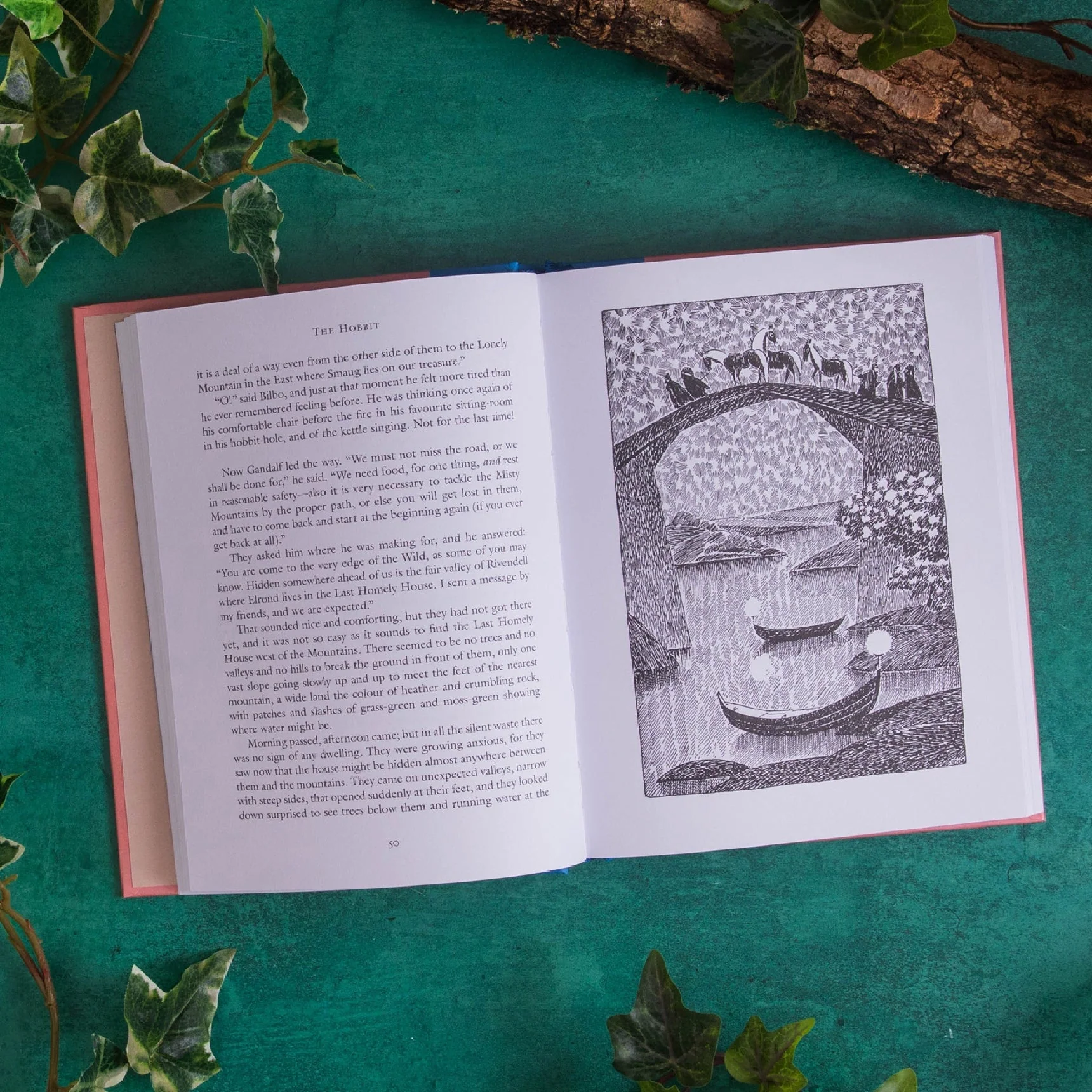
I just found out that Tove Jansson did illustrations for The Hobbit back in 1960. Some more info and pictures:

tovejansson.com/hobbit-tolkien/

shop.moomin.com/…/the-hobbit-illustrated-by-tove-…

Interesting that she drew Gollum as so large. The page above notes that Tolkien added a note about Gollum’s size in later editions of the book because she wasn’t the only one that did that.

0

The Kikimora Class Light Cruiser.

The Kikimora Class Light Cruiser.
preview

cross-posted from: retrofed.com/…/the-kikimora-class-light-cruiser

A poster showcasing the Kikimora class light cruiser, asset of the Eusan Nation Navy, based on a Signalis fanfic ship design by Derpswithwolves
The Chinese text at the top (輕巡洋艦) translates to “Light Cruiser”.

cross-posted from: retrofed.com/…/the-kikimora-class-light-cruiser

A poster showcasing the Kikimora class light cruiser, asset of the Eusan Nation Navy, based on a Signalis fanfic ship design by Derpswithwolves
The Chinese text at the top (輕巡洋艦) translates to “Light Cruiser”.

23

Norway Tests NSM Anti-Ship Missile Container Launcher With Twice the Capacity of U.S. Marines’ NMESIS

preview

The Naval Strike Missile, or NSM, is a precision-guided cruise missile Kongsberg developed to engage surface ships and selected land targets. Kongsberg currently advertises an engagement range exceeding 300 kilometers (186 miles), without disclosing an exact maximum, and high subsonic speed. It combines sea-skimming flight and evasive maneuvers with a passive imaging infrared seeker and automatic target recognition. Its warhead and programmable fuze are intended to damage or destroy the selected target, while precise impact-point selection helps concentrate damage on vulnerable areas. A hit does not automatically guarantee a sinking.

To give a sense of scale to this to illustrate how much these missiles shut down any kind of naval threat russian can pose to Norway…

Take the line with your eyes and place one end on the coast or interior of Norway and start to rotate the other end around and think about how impossible it would be for russian ships to completely clear a littoral region of anti-ship missiles…

Of course this goes both ways, but it is easy to see why russia can’t really project power through the Baltic Sea except with small unmanned craft designed for sabotage, any outright movement of concentrated naval power would get erased by these missiles in the event of war and russia would probably not even know where the missiles came in the wake of it given the immense amount of possibilities a range like this opens up for coastal defense.

0

Can't upload media

preview

I’m trying to upload a 140KB jpg for a post but keep getting the error

{“data”:{“files”:null,“msg”:“No space left on device (os error 28)”},“state”:“success”}

I’m trying to upload a 140KB jpg for a post but keep getting the error

{“data”:{“files”:null,“msg”:“No space left on device (os error 28)”},“state”:“success”}

-23

what are Windows cloud GPU options in 2026?

preview

Hello, I’ve been enjoying Paperspace instances (A4000 these days) for a while. However, since a week, I had catastrophic storage performances. I suspect they started virtualizing Windows (since they announced dropping support for new users).

Can someone suggest an alternative?

Here are my criterias:

  • support for Windows templates
  • no upfront cost (210€ upfront on Akamai, 100€ for OVH, seriously for 0.8$/h instances!)
  • available in EU
  • GPU models appropriate for gaming
  • affordable prices, I’m currently paying 0.8$/h + 11$ for monthly storage (500GB SSD + one snapshot)